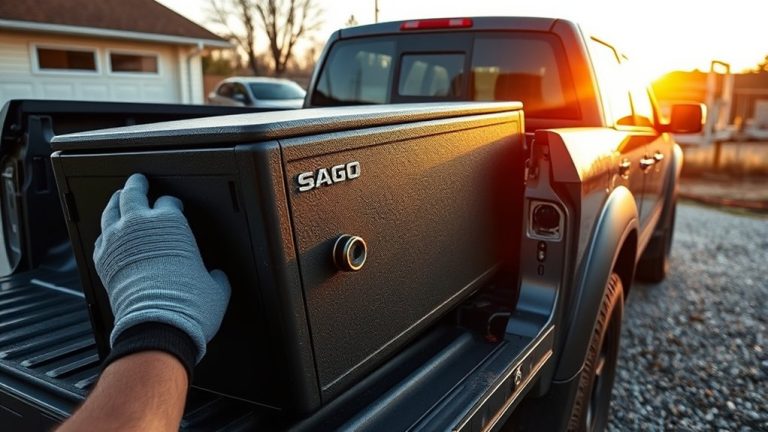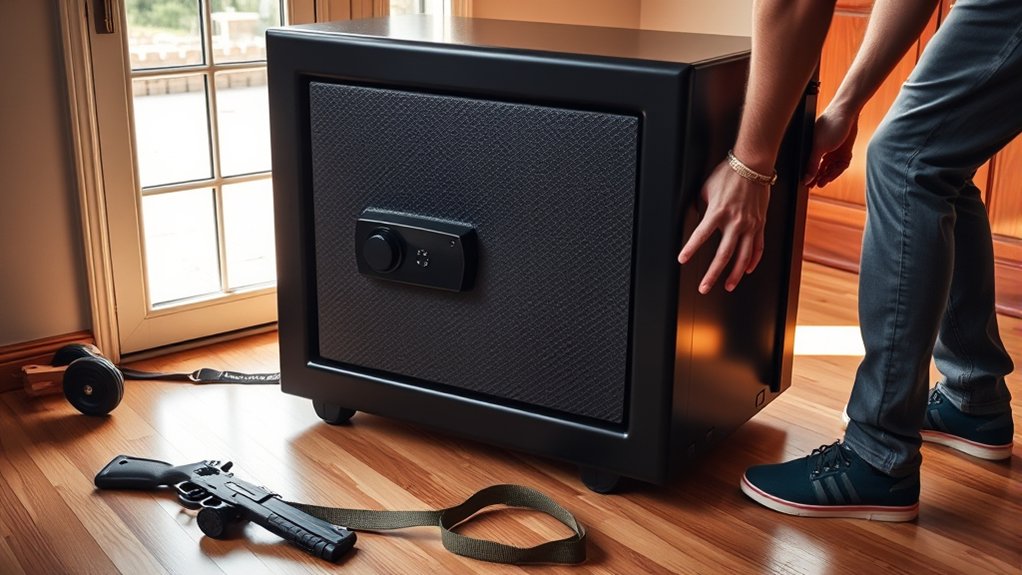
Move a Gun Safe Yourself in 10 Steps
To move a gun safe yourself, first measure it and clear your path to avoid obstacles. Empty and securely store all contents. Then gather heavy-duty tools like a dolly, ratchet straps, and protective gear.
Wrap the safe with moving blankets and strap it tightly to the dolly. Navigate stairs and tight spaces slowly with extra help. Load and secure it upright in your vehicle.
Finally, anchor and level it at the new location. Keep following these steps for a safe, efficient move. It might take some effort, but doing it right makes all the difference.
Measure Your Gun Safe and Clear the Moving Path

Before you move your gun safe, measure its width, height, and depth carefully to confirm it fits through all doorways, hallways, and staircases along the route.
Check each entry point’s dimensions and clear the moving path of obstacles like furniture and rugs to guarantee safe passage.
Knowing the safe’s weight from manufacturer specifications helps you determine if special equipment or extra help is necessary, especially if it exceeds 500 pounds.
Remove any fixtures obstructing the path or consider disassembling them.
Protect your floors by laying down protective materials such as moving blankets or Masonite boards while maneuvering the safe.
Thoroughly measuring and clearing the route minimizes risks, safeguards your home, and prepares you for a smooth, efficient move.
Empty and Secure All Contents
To move your gun safe safely, start by removing every firearm, ammunition, and valuable from inside.
Empty your gun safe completely to reduce weight and prevent damage from shifting contents during transport. Store firearms and ammunition separately in locked containers to follow legal safety tips and guarantee secure handling.
Empty your gun safe to lighten the load and securely store firearms and ammo separately during transport.
Before moving, confirm the safe is empty and in good condition. Secure the safe door by locking it and taping it shut to prevent accidental opening while using moving equipment.
Document the contents with photographs for inventory and proof.
This thorough preparation minimizes risks and streamlines the move. By following these steps, you’ll maintain safety, protect your belongings, and set the foundation for a smooth, controlled relocation of your gun safe.
Get the Right Tools and Safety Gear
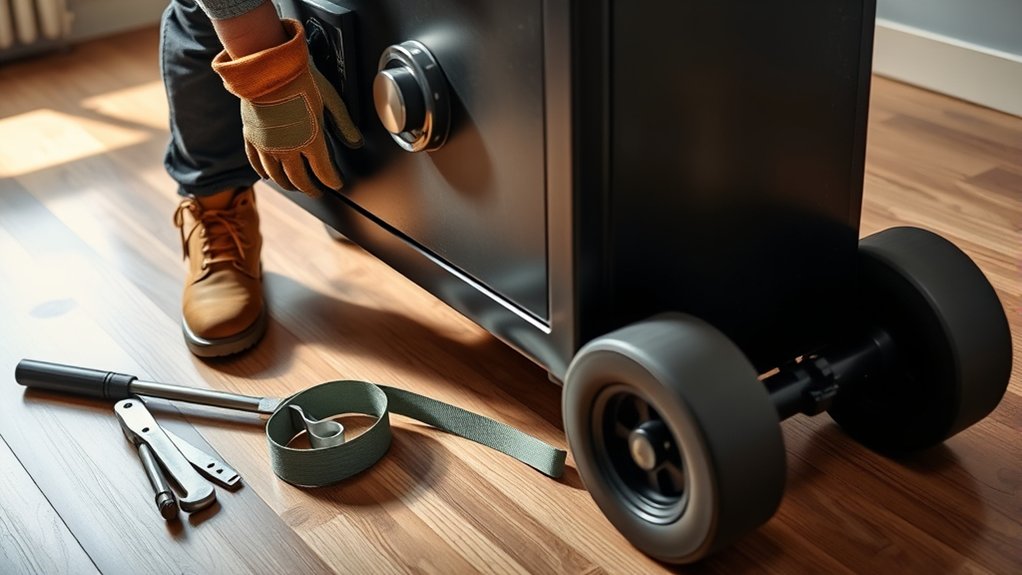
You’ll want a heavy-duty appliance dolly that can handle at least 1,000 pounds, along with some strong ratchet straps to keep the safe secure during the move.
It’s also a good idea to wear steel-toed boots and durable gloves to protect yourself from any injuries.
Using moving blankets or sliders can really help prevent damage to your floors and make it easier to maneuver the safe without putting too much strain on yourself.
Essential Moving Equipment
Although moving a gun safe demands strength, having the right equipment makes the task manageable and safe. To secure your safe properly, you need specialized tools that match the safe’s weight and dimensions.
Use a heavy-duty appliance dolly rated for at least 1,000 pounds to support the load without bending. Heavy-duty ratchet straps will secure your safe tightly to the dolly, preventing dangerous shifts during transport.
Protect surfaces and floors by wrapping the safe in thick moving blankets. Always wear protective gear to minimize injury risks when handling the heavy load.
Consider additional aids like sliders for smooth floor maneuvering.
Key equipment includes:
- Heavy-duty appliance dolly
- Heavy-duty ratchet straps
- Moving blankets
- Protective gear
- Specialized sliders or track systems
Protective Gear Importance
Having the right equipment is only part of safely moving a gun safe. Protecting yourself with proper gear plays an equally important role. Using quality protective gear reduces risks when handling heavy items.
Steel-toed boots shield your feet from dropped loads. Work gloves improve grip and prevent hand injuries. Close-toed shoes with traction minimize slips on stairs or uneven surfaces.
Consider knee pads to cushion your knees during lifting or positioning. Always choose safety equipment designed for heavy-duty tasks to avoid injuries.
| Protective Gear | Purpose |
|---|---|
| Steel-toed boots | Protect feet from heavy impacts |
| Work gloves | Enhance grip, prevent hand cuts |
| Close-toed shoes | Prevent slips, protect feet |
Securing The Safe
When moving a gun safe, securing it properly with the right tools and safety gear is essential to prevent accidents and damage. You need to use heavy-duty equipment and protective gear to guarantee safe handling.
Always secure the safe firmly to prevent shifting during transport. It’s a good idea to rely on teamwork to manage the load efficiently and move it without injury.
Key steps include:
- Use a heavy-duty appliance dolly rated for at least 1,000 pounds
- Secure the safe with heavy-duty ratchet straps
- Wear protective gear like steel-toed boots and gloves
- Utilize moving sliders or track systems on uneven surfaces
- Have two to three strong helpers to coordinate teamwork and prevent accidents
Following these guidelines will help you secure your gun safe properly and move it safely. Just take your time and stay safe!
Wrap and Pad Your Gun Safe for Protection
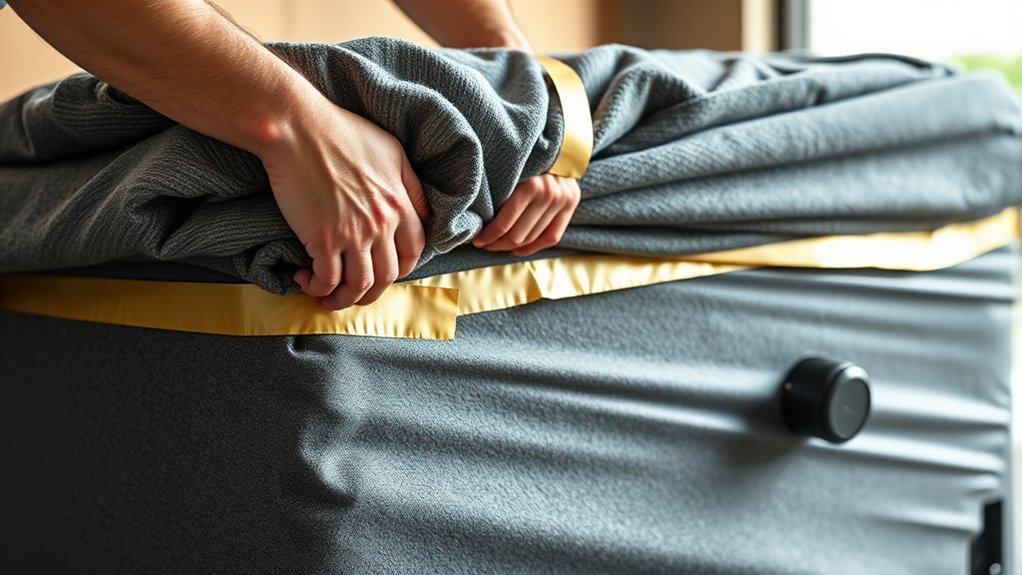
Start by wrapping your gun safe in multiple moving blankets to shield it from scratches and dents during transport. Focus on padding vulnerable areas like corners and edges, as they’re most prone to damage.
Use moving blankets to wrap the entire safe, ensuring thorough protection. Secure the blankets tightly with packing tape or stretch wrap so they don’t shift during the move.
For extra protection against dirt and moisture, cover the wrapped safe with plastic shrink wrap. This layer also helps keep the padding in place and prevents internal contents from shifting, which could compromise the locking mechanism.
Taking these steps to wrap and pad your gun safe properly will safeguard it throughout the move and preserve its condition for years to come. It’s a simple process that really pays off in the long run.
Position the Dolly and Strap the Safe Tight
Position the dolly close enough so it can support the safe’s full weight without tipping.
Then, carefully tilt the safe onto the platform.
Next, use heavy-duty ratchet straps to secure the safe tightly on all sides.
Make sure the weight is balanced evenly as you do this.
Finally, double-check the straps and keep the safe upright.
This helps prevent damage and keeps everything stable during the move.
Dolly Placement Techniques
Placing the dolly correctly is essential for a safe move. To position the dolly and secure the safe effectively, follow these steps:
Place the heavy-duty dolly on a flat surface near the safe. This helps prevent tipping during the tilt. Make sure the area is clear and stable before you start.
Use at least two people to tilt the safe carefully onto the dolly. Teamwork here means better control and less chance of accidents. It’s important to keep the safe balanced as you move it.
Confirm the safe’s weight is evenly distributed on the dolly to maintain stability. Keeping the safe upright on the dolly protects its internal mechanisms and makes navigating easier.
Finally, secure the safe tightly with heavy-duty ratchet straps. Wrap them from multiple angles for the best hold. This way, the safe won’t shift while you’re moving it.
Securing Straps Importance
Securing the safe with at least two heavy-duty ratchet straps is essential to prevent shifting or tipping during transport. You need to wrap the securing straps around all sides of the safe and dolly to guarantee maximum stability.
Tighten straps firmly to minimize movement but avoid over-tightening, which could damage the safe’s structure.
Keeping the safe upright is really important to protect its internal mechanisms from damage. Before moving, double-check that the straps are properly tightened and the safe is securely positioned on the dolly.
Using heavy-duty ratchet straps properly not only prevents shifting and tipping but also keeps both the safe and you safe during transport.
Balancing Weight Distribution
After firmly strapping the safe to the dolly, focus on aligning the dolly directly beneath the safe’s center of gravity. Proper weight distribution prevents tipping and guarantees smooth transport.
Remember to tilt carefully when loading the safe onto the dolly to balance the load and protect your back.
Use heavy-duty ratchet straps to secure the safe tightly, wrapping them around all sides for minimal movement. Always have two people assist, one to guide and one to manage balance.
Key steps to balance weight distribution:
- Position the dolly underneath the safe’s center of gravity
- Use heavy-duty ratchet straps to secure the safe
- Tilt carefully while lifting onto the dolly
- Confirm the dolly’s weight rating exceeds the safe’s weight
- Have two people assist during maneuvering for safety
Move the Safe Through Doorways and Hallways
Before moving the safe through doorways and hallways, carefully measure their width, height, and depth to confirm the safe will fit without obstruction. If clearance is tight, consider removing door hinges or hardware to create more space.
When you move the safe through narrow doorways, tilt it slightly backward to maintain stability and prevent tipping. Protect walls and door frames by applying protective padding to avoid damage during navigation.
Communicate clearly with your team to coordinate every move, ensuring everyone knows their role and timing. As you navigate these tight spaces, proceed slowly and deliberately, constantly checking for clearance and stability.
Taking these steps guarantees a smooth, safe passage through doorways and hallways without incident. Just remember, a little preparation goes a long way in making the move easier and safer for everyone involved.
Navigate Stairs and Tight Spaces With Your Gun Safe
When you’re moving your gun safe up or down stairs, it’s a good idea to use a stair-climbing dolly that has three wheels on each leg. This helps keep everything stable and makes the job a bit easier.
Make sure you have at least two other people helping out—one person at the top of the stairs, another at the bottom, and a spotter to keep an eye on things. Working together like this helps control the safe’s movement and keeps everyone safe from accidents.
When you come across tight corners, try tilting the safe slightly backward.
Also, don’t forget to protect the walls with some padding so nothing gets scratched or damaged along the way.
Stair-Climbing Dolly Benefits
Because maneuvering stairs with a heavy gun safe is challenging, using a stair-climbing dolly makes the process safer and more efficient. This heavy-duty dolly features specialized wheels that “walk” up and down stairs, ensuring stability and reducing tipping risks. It supports weights up to 1,500 lbs, handling most residential gun safes with ease.
You’ll experience less physical strain during maneuvering, especially in tight spaces and stairways. Safe shifts become manageable with this tool, but it’s best used with a small team for ideal control.
Key benefits of a stair-climbing dolly include:
- Specialized tri-wheel design for stair navigation
- Enhanced stability compared to standard dollies
- Reduced physical strain on movers
- Supports heavy gun safe weights safely
- Enables smooth, safe shifts on stairs and tight spaces
Team Coordination Essentials
Although moving a gun safe is physically demanding, coordinating a team of at least three to four strong individuals guarantees even weight distribution and reduces injury risk.
Assign specific roles, like one person at the top of the stairs and another at the bottom, to keep communication steady throughout the move.
Use a stair-climbing dolly to smoothly navigate stairs while keeping control of the safe’s weight.
Before starting, measure doorways and hallways to make sure the safe fits without scraping walls or fixtures.
Protect floors and walls with moving blankets to prevent damage as you maneuver.
Effective team coordination assures safety and efficiency, minimizing risks of injury or property damage while moving your gun safe through stairs and tight spaces.
Maneuvering Tight Corners
- Tilt the safe slightly backward to manage tight corners and maintain balance.
- Use a stair-climbing dolly with three wheels per leg for safe stair navigation.
- Clear all obstacles and measure doorways; remove hinges if needed for extra clearance.
- Apply protective padding on walls and door frames to prevent damage during turns.
- Communicate clearly and move slowly, allowing time to adjust the safe’s position as you proceed.
Taking it slow and steady really helps when you’re navigating tricky spots.
Just keep an eye on your surroundings and don’t rush.
Load the Safe Into Your Vehicle Carefully
Secure the safe firmly to a heavy-duty dolly before loading it into your vehicle. This helps prevent any shifting during transport.
Make sure the safe is securely strapped with ratchet straps to the dolly for ideal stability.
Use a sturdy ramp or lift gate that’s rated for the safe’s weight to load it smoothly and safely.
Position the safe upright against the front wall of your vehicle as the first item loaded. This helps keep your load balanced throughout the trip.
Double-check all ratchet straps and tie-downs once the safe is on the ramp to make sure it won’t move during loading.
Also, verify the load ratings of both your vehicle and ramp before moving a gun safe. This step is key to avoiding accidents or damage.
Secure the Gun Safe Inside the Transport Vehicle
Once you position the gun safe upright against the vehicle’s front wall, use heavy-duty ratchet straps to anchor it firmly. These straps are essential to secure the gun safe inside the transport vehicle, providing stability and preventing damage.
Follow these key steps:
Tighten heavy-duty straps to hold the safe firmly without causing harm. Verify the gun safe is stable by pushing gently from multiple angles. Avoid placing other items on top to prevent damage.
Check strap tension and safe position frequently during stops. Confirm no shifting occurs before closing the vehicle doors. Keeping an eye on these details helps ensure your safe stays put during transport.
Anchor and Level Your Gun Safe at Its New Location
Before you finalize your gun safe’s placement, choose a spot near a load-bearing wall to guarantee maximum stability. Next, use shims or leveling supports to level the safe precisely, preventing internal malfunctions.
Anchor your safe securely to the floor or wall with heavy-duty bolts per the manufacturer’s instructions. This assures stability and deters theft or tipping after moving.
Once installed, test stability by gently pushing the safe to confirm it’s firmly set. Finally, inspect locking mechanisms to verify they work properly post-installation.
| Step | Tools Needed | Purpose |
|---|---|---|
| Choose Location | Tape measure | Maximize stability |
| Level Safe | Shims, level tool | Prevent malfunctions |
| Anchor Safe | Heavy-duty bolts | Secure installation |
Frequently Asked Questions
What Is the Average Weight of a Gun Safe?
The average weight of a gun safe ranges from 200 to 1,500 pounds, depending on safe materials and construction.
When moving one, you’ll need to take into account weight distribution carefully. Use proper dolly techniques and lifting methods, and always wear safety gear.
Secure contents to avoid damage. For heavier safes, check if transportation permits are required.
Being detail-oriented guarantees you handle the safe efficiently and safely throughout the move. Just take your time and plan ahead to make everything go smoothly.
Can a Gun Safe Be Moved Alone Safely?
You generally shouldn’t move a gun safe alone safely, especially if it’s over 200 pounds. Proper gun safe preparation includes reviewing a safety precautions checklist and using moving equipment essentials like a heavy-duty dolly and securing the safe with straps.
Make sure you follow a lifting techniques guide to avoid injury, and plan for maneuvering tight spaces. It’s really important not to rush through this part.
Afterward, focus on post-move setup to guarantee stability and security in its new location. Taking these steps will help keep you and your safe protected during the move.
How Do You Handle Gun Safe Locks During the Move?
You handle gun safe locks by securing lock mechanisms firmly. Lock the door and tape it to prevent accidental opening. Keep combination dials unchanged to avoid confusion.
Also, remove batteries from electronic locks to protect lock maintenance and prevent damage. Make sure to document key security info beforehand for easy access.
After moving, inspect for tamper resistance and perform lock troubleshooting to guarantee full functionality.
This approach helps safeguard your safe’s locking system throughout the move.
What Type of Vehicle Is Best for Transporting a Gun Safe?
You want a box truck or a large cargo van with enough space and strength to handle your safe’s weight.
Use a heavy-duty dolly to move the safe onto the vehicle using loading ramps. Secure it tightly with tie-down techniques, focusing on even weight distribution to prevent shifting.
Don’t forget safety gear like gloves and straps.
Depending on local laws, check if you need transport permits for oversized loads. This can help guarantee a smooth and legal move.
Are There Legal Requirements for Moving a Gun Safe?
Yes, you have legal obligations when moving a gun safe. State laws often mandate safe storage and transport regulations to guarantee firearm safety and prevent accidents.
You must secure firearms separately and comply with any permits required. Ignoring these rules can lead to liability issues.
Also, document the safe’s condition for insurance considerations. Always check your specific state laws to avoid legal trouble during transport and protect yourself effectively.
Conclusion
Moving your gun safe yourself is completely doable with proper planning and the right tools. You might worry about damaging the safe or injuring yourself, but careful measuring, padding, and securing every step minimizes risks.
Take your time maneuvering tight spots, and never skip safety gear. Follow these steps diligently, and you’ll save money while ensuring your gun safe arrives intact and secure at its new home.
You’ve got this. Just stay focused and methodical.