3 Steps to Get a Gun Safe Into the Basement
To get your gun safe into the basement, first measure all access points, including doorways, staircases, and landings. Make sure you have at least an inch of clearance and clear the path of any obstacles.
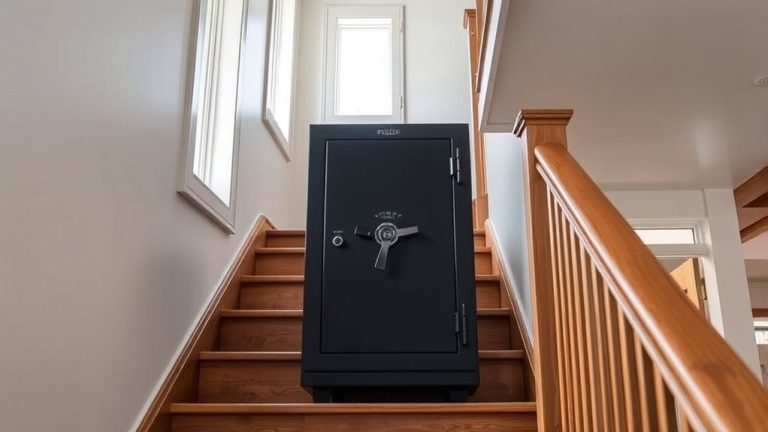
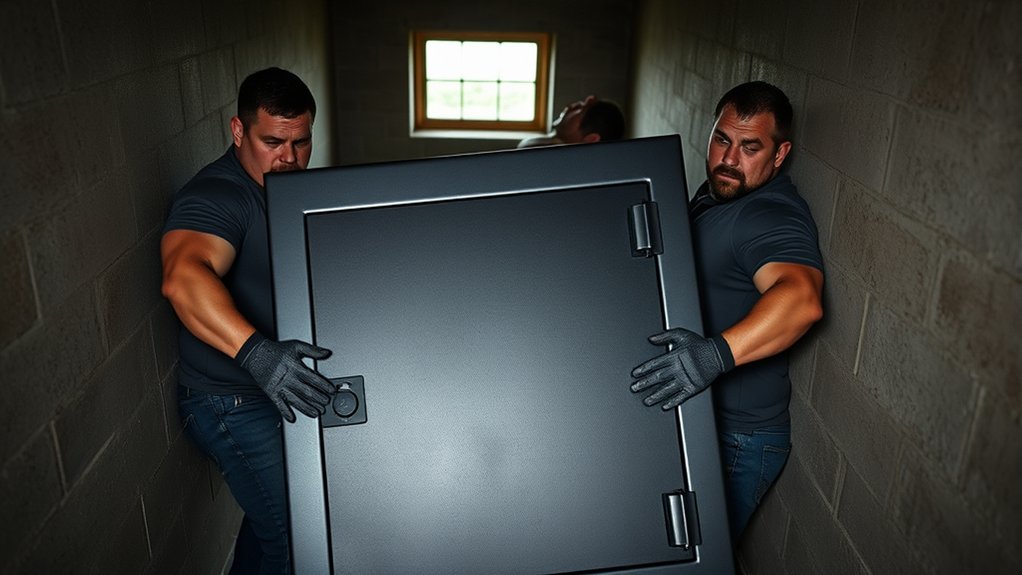
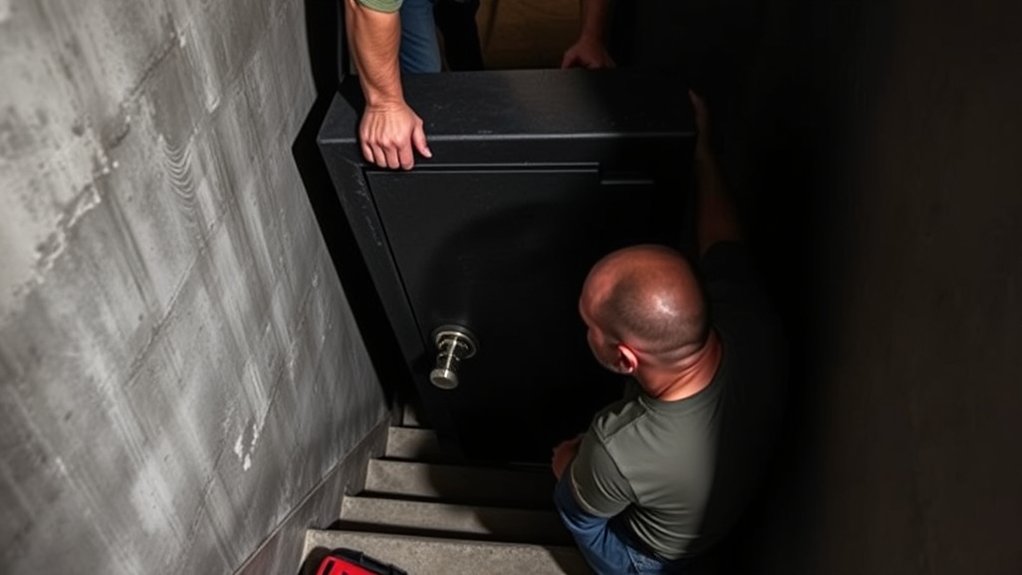
Next, use essential equipment like a stair climbing dolly and plywood sheets to safely move the heavy safe down the stairs. It’s important to have at least two helpers for this part to keep things steady and safe.
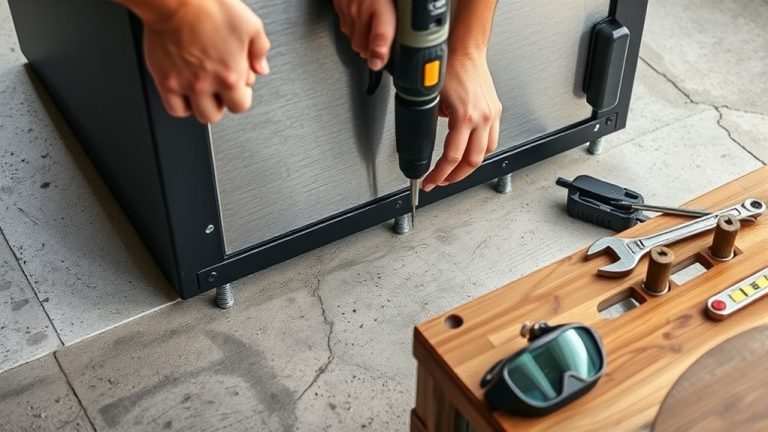
Finally, securely anchor your safe to the floor or wall using steel bolts and elevation methods. This will help prevent tipping and protect it from moisture. Following these key steps will set you up for safe installation and long-term protection.
Measure Your Basement and Clear the Pathway for Moving the Gun Safe
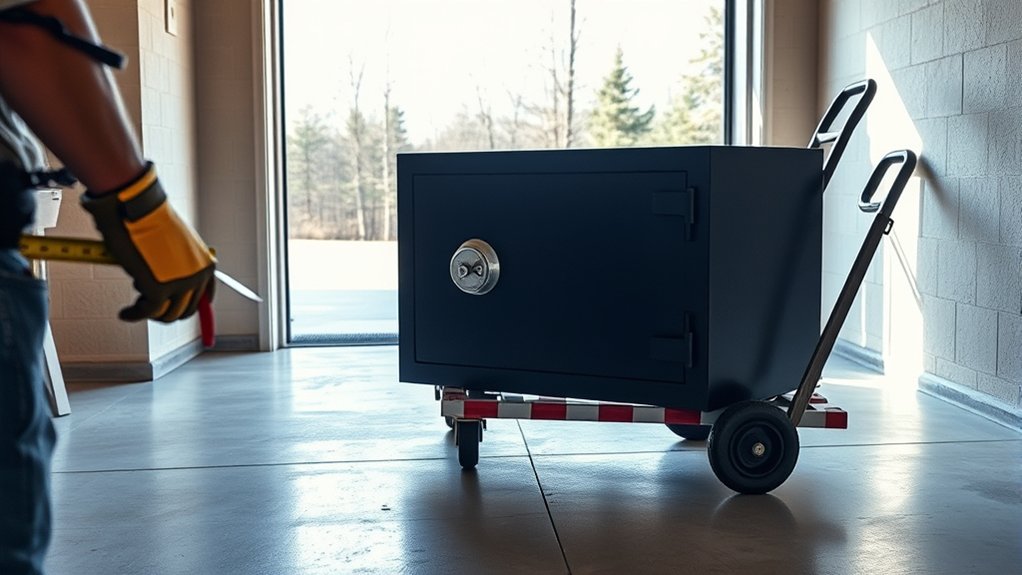
Before moving your gun safe into the basement, measure both the safe and all doorways carefully. Make sure there’s at least an inch of clearance on every side to avoid tight fits.
You also want to measure staircases, landings, and the basement ceiling height to confirm there’s enough space for maneuvering.
Clear the pathway by removing furniture, rugs, and any obstacles that could get in the way. It’s a good idea to plan your route in advance, so you know where the tight corners and narrow spots are. That way, you can decide if you’ll need a stair climbing dolly.
Checking these measurements and clearing the path helps reduce risks and makes the move smoother.
Taking these steps ensures the safe will pass through every doorway and stairwell without damage or delay. This lets you transport it efficiently and securely into your basement.
Use the Best Tools and Safety Tips to Move Your Gun Safe Downstairs
Two key tools you’ll need to move your gun safe downstairs safely are a stair climbing dolly and plywood sheets. The stair climbing dolly, a specialized appliance dolly, reduces strain and improves control while traversing stairs. Lay plywood sheets on the steps to protect surfaces and create a smooth sliding path.
Removing the gun safe door decreases its weight, making it easier to maneuver. Consider using a come along or winch to control the descent, ensuring safety.
| Tool | Purpose |
|---|---|
| Stair Climbing Dolly | Handles heavy safe on stairs |
| Plywood Sheets | Protects stairs, smooth sliding |
| Come Along | Controls slow, safe descent |
| Appliance Dolly | Supports moving on flat surfaces |
Always have at least two strong people assisting for the best control. It really helps to have a team so you can move the safe with confidence and keep everyone safe.
Anchor and Protect Your Gun Safe After Installing It in the Basement
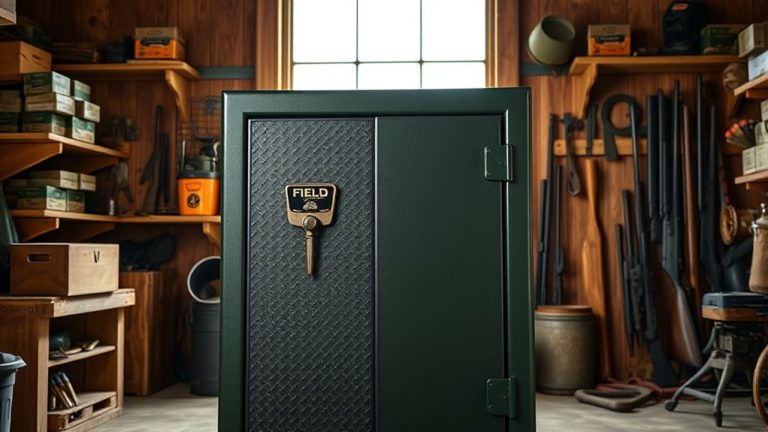
Once you’ve installed your gun safe in the basement, anchoring it securely becomes essential to prevent tipping and deter theft. Use steel anchors or heavy-duty bolts to firmly anchor the safe to the floor or wall. This ensures it can withstand forced entry attempts or shifting caused by water damage.
To protect your safe from moisture, elevate it on a platform or place it on a waterproof mat. Avoid direct contact with concrete since that promotes rust. It’s a simple step but makes a big difference.
Maintain ideal humidity by installing a dehumidifier in the basement. This helps reduce internal moisture that can damage the contents of your safe.
Also, regularly inspect seals and joints to confirm they remain intact. This keeps humidity and water from sneaking in.
Taking these steps secures and protects your investment against both environmental and security risks. It’s all about keeping your safe—and what’s inside it—well protected.
Frequently Asked Questions
What Type of Gun Safe Is Best for Basement Storage?
For basement storage, you want a gun safe designed specifically for firearm security under challenging basement conditions.
Choose one with moisture-resistant safe features to combat humidity and potential flooding. That way, your guns stay protected no matter what.
It’s a good idea to prioritize a weight capacity under 600 lbs to make installation and accessibility easier.
Also, make sure the safe has strong locking mechanisms and bolting options to keep theft at bay.
Finally, double-check the safe’s dimensions so it fits through your basement entryways without any hassle. This will make delivery and placement much smoother.
How Do I Maintain Humidity Control in the Basement Safe?
Imagine your safe as a fortress guarding treasures from an unseen tide. To maintain humidity control, use dehumidifiers and desiccant options like silica gel inside the safe.
Guarantee safe ventilation to promote air circulation, preventing stagnant moisture.
Regular moisture monitoring with a hygrometer lets you adjust your strategy proactively.
Can I Use a Stair-Climbing Dolly for Moving the Safe?
Yes, you can use a stair-climbing dolly to move your gun safe, as long as you check its weight capacity to match your safe’s weight.
Make sure to focus on safety features like secure straps to keep the safe from shifting around.
Stair climbing takes some practice, so it’s a good idea to get comfortable with the dolly before tackling the stairs.
Also, protect your floors and walls to avoid any damage during the move.
And don’t forget—always work with a partner. Having someone to help makes the whole process safer and more controlled.
What Should I Do if the Safe Doesn’T Fit Through the Door?
If your safe doesn’t fit through the door, first consider door frame modifications or exploring alternative entryways like windows or bulkhead doors.
You might also want to evaluate safe disassembly options by removing shelves or the door to reduce its size.
If these don’t work, professional moving services can offer specialized solutions. They’ve experience with tricky installations and can often find a way around tight spots.
Alternatively, investing in custom-sized safes tailored to your space guarantees a smoother installation.
This way, you avoid extensive alterations or risks during the move. It’s definitely worth thinking about if space is tight.
Are There Insurance Benefits to Installing a Gun Safe in the Basement?
Installing a gun safe in your basement can reduce insurance premiums by up to 15%, thanks to enhanced theft prevention and asset protection.
Insurers recognize that securing firearms lowers liability coverage risks, which often translates into discounts.
Beyond cost savings, you get peace of mind knowing your firearms are safely stored and accidental access is less likely.
Plus, documenting your safe’s installation and contents can strengthen your claim position.
All in all, it’s a smart and responsible investment that benefits both your security and your wallet.
Conclusion
Moving a gun safe into your basement demands careful planning and execution. By measuring thoroughly and clearing the path, you prevent costly mistakes. Using the right tools and prioritizing safety guarantees a smooth move.
Anchoring the safe protects both it and your valuables. Remember, “measure twice, cut once” applies here. Paying attention to detail now saves you headaches later.
Follow these steps precisely, and your gun safe will be secure and accessible where you need it most.