Is It Safe to Own a Gun?
Owning a gun can make you feel safer and more in control, especially for personal protection. But it also increases risks like accidental injuries, suicides, and domestic violence-related harm.
Defensive gun use is pretty rare and often less effective than people expect. Also, concealed carry laws might be linked to higher violent crime rates.
Safe storage and proper training are really important to reduce those dangers. If you want to understand the full impact, it’s a good idea to explore the complexities behind gun ownership and safety.
Why Do Americans Own Guns for Safety?
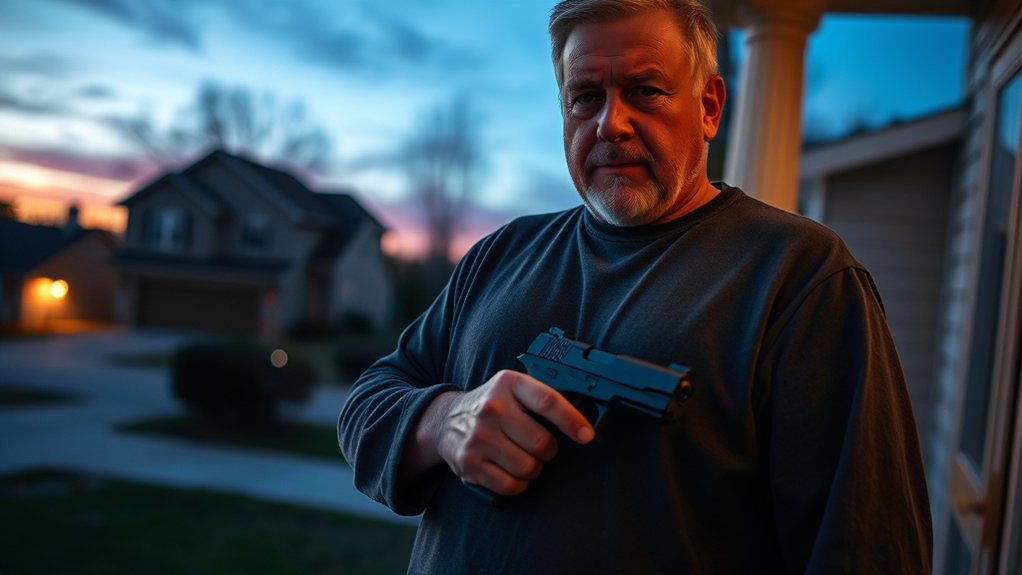
Although many Americans believe that owning a gun increases their safety, the reasons behind this perception are pretty complex. About 72% of gun owners say personal protection is their main reason for having a gun, tying it closely to how safe they feel.
Many Americans feel owning a gun boosts safety, with 72% citing personal protection as their main reason.
You might feel safer having a firearm at home, especially with all the public fears that popped up during events like the COVID-19 pandemic.
But here’s the thing—research shows that homes with guns actually face higher risks of homicide and suicide. That raises some serious concerns about gun safety.
The gun industry plays a big role in shaping this idea by promoting fear-driven stories that often overlook the fact that crime rates have been going down and ignore the real risks that come with firearms.
How Often Are Guns Used for Self-Defense?
While many people believe that owning a gun greatly improves their safety, the actual use of firearms for self-defense is surprisingly uncommon.
Defensive gun use (DGU) occurs in fewer than 1% of all personal and property crimes. Estimates suggest around 69,000 incidents annually, but that’s likely an overestimate.
The National Crime Victimization Survey confirms that self-defense involving firearms is rare. This really challenges the common perceptions among gun owners.
Research shows that victims using guns for defense are 2.5 times less likely to escape their attackers. They’re also 10% more likely to suffer injury compared to those using other defense methods.
Plus, many DGUs involve unarmed individuals, which raises concerns about the risks of gun violence.
What Are the Risks of Keeping a Gun at Home?

Owning a gun at home doubles your risk of homicide and triples your risk of suicide, making firearm possession a serious safety concern. Gun ownership increases the likelihood of domestic violence-related gun homicides and accidental firearm injuries, especially among children.
Improper storage raises these risks even further. Suicide attempts with guns are more often fatal, which really shows how dangerous having a firearm accessible can be during a crisis.
| Risk Type | Impact of Gun Ownership |
|---|---|
| Homicide | Doubles risk at home |
| Suicide | Triples risk; more fatal attempts |
| Domestic Violence | 65% higher gun homicides in high ownership states |
| Accidental Injuries | More common with improper storage |
Understanding these risks is really important for anyone thinking about owning a gun. It helps you make a safer choice for yourself and your family.
How Does Owning a Gun Affect Your Mental Health?
When you own a gun, you might feel more in control and safer.
But at the same time, this can bring on extra anxiety and make you stay on high alert all the time. Being aware of possible threats can create a cycle where wanting security actually makes you feel more stressed.
On the other hand, owning a gun can also give you a sense of community and responsibility, which adds another dimension to how it affects your mental health.
Sense of Control
A sense of control plays an essential role in how owning a gun affects mental health. Gun ownership often gives you a heightened sense of control over your personal safety. Studies show that 81% of owners feel safer with firearms.
Psychological studies reveal that merely thinking about guns can boost this feeling of control and self-protection. However, this sense of control is complex.
While it addresses distrust in institutions and fulfills a need for security, it can also be accompanied by increased anxiety. The awareness of potential threats linked to gun ownership may elevate stress, making your mental health balance a bit more complicated.
Anxiety and Vigilance
Although having a gun can boost your sense of safety, it often comes with increased vigilance and anxiety. Gun ownership gives many a feeling of control, with 81% reporting enhanced safety.
But this sense of security can coexist with heightened alertness and anxiety, even in safe environments. Studies show that easy access to firearms may escalate vigilance, driven by concerns about self-protection and distrust in institutions like the police.
This constant state of alertness can create a “doom loop,” where your mental health suffers as you remain focused on potential threats.
While a firearm might help you feel safer, it’s important to recognize how gun ownership can affect your anxiety levels and overall mental health, potentially undermining the very safety you seek.
Community and Connection
Feeling safer with a firearm often goes beyond just personal protection. It can influence how you relate to your community and find meaning in life. Gun ownership might boost your mental well-being by giving you a sense of control and connection.
But it’s not always straightforward. Sometimes, it can also increase anxiety because you stay more alert and watchful.
Think about these points when it comes to gun ownership and community:
- 81% of owners feel safer, which helps improve their mental well-being through self-protection.
- Many people say they’ve stronger community ties and a deeper sense of purpose.
- Distrust in institutions can make some feel they’ve to protect themselves, which might raise stress levels.
What Does Research Say About Guns and Accidental Injuries?
When you bring a gun into your home, research shows you greatly increase the risk of accidental injuries, particularly among children. Gun ownership correlates with higher rates of accidental firearm injuries, especially when firearms aren’t stored properly.
Studies reveal that proper storage, like locking up guns and ammunition, can reduce injury risks by 85%.
After events like the Sandy Hook shooting, increased gun sales corresponded with a rise in accidental gun deaths. This highlights the dangers of new ownership without adequate safety measures.
Furthermore, having easy access to firearms triples suicide risk, particularly for adolescents. Over one-third of teens report accessible loaded guns at home.
This really shows the urgent need for firearm safety education and responsible storage to prevent tragic outcomes.
Prioritizing safe storage is key to reducing accidental and self-inflicted gun injuries. It’s one of the most effective ways to keep everyone in the household safe.
How Do Guns Impact Domestic Violence and Family Safety?
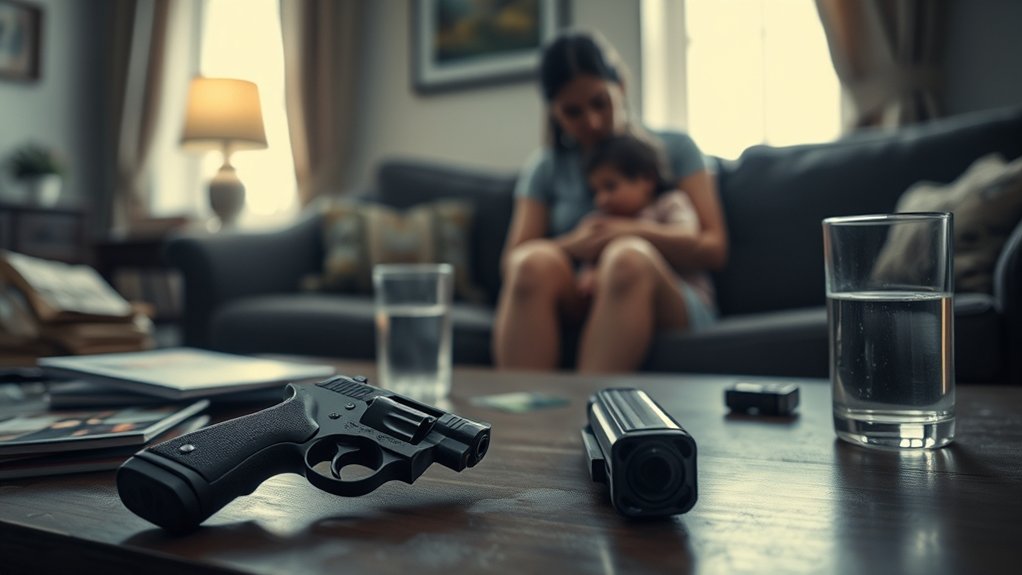
Because firearms increase the lethality of domestic conflicts, having a gun in the home raises the risk of serious injury or death for family members. High levels of gun ownership correlate with a 65% rise in domestic gun homicides, showing how firearms worsen domestic disputes.
Unsafe storage further endangers family safety, especially during violent incidents.
Consider these facts:
- Homes with guns face double the homicide risk and triple the suicide risk for family members.
- Unsafe storage of firearms increases injury rates within households.
- The presence of guns during domestic disputes markedly raises the chance of lethal outcomes.
Understanding these risks can help you weigh the impact of gun ownership on domestic violence and family safety. It’s important to think about how guns can change the danger level in your home.
Do Concealed Carry Laws Affect Crime Rates?
How do concealed carry laws influence crime rates in communities?
Research shows states with “shall-issue” concealed carry laws often see a 13-15% rise in violent crime rates after these laws take effect. Homicide rates also tend to increase in such states, with analyses linking expanded concealed carry rights to higher murder rates.
Data from 2019 and 2020 further indicate that crime incidents, including homicides, surged in cities following greater access to concealed carry, especially during the pandemic.
Crime rates, including homicides, surged in cities with increased concealed carry access during the pandemic.
Furthermore, states with high gun ownership experienced a 65% increase in domestic gun homicides linked to concealed carry laws.
While proponents argue these laws enhance safety, the evidence suggests that increased concealed carry correlates with elevated violent crime and homicide rates.
This raises concerns about community safety.
How Do Gun Owners View Responsibility and Control?
You probably get that a lot of gun owners view their firearms as more than just tools—they see them as a symbol of personal responsibility.
They really focus on things like safe storage and making sure everything is handled carefully. Because of this, they tend to be more aware of potential dangers around them, which makes them extra vigilant in their surroundings.
That said, this heightened vigilance can come with mixed emotions.
On one hand, guns offer a kind of psychological comfort. On the other, this comfort might also come with some underlying anxiety.
Responsibility and Ownership Identity
Although gun ownership carries significant responsibilities, many owners view their firearms as tools that enhance their accountability and control. You might see gun ownership as fulfilling psychological needs for safety and autonomy while shaping your cultural identity.
This sense of responsibility often stems from a distrust in institutions, leading you to prioritize self-protection.
To illustrate:
- 81% of gun owners believe owning a firearm makes them more responsible than average.
- You may feel a duty to protect yourself and loved ones, linking ownership to personal identity.
- Distrust in police or government often motivates the belief that firearms are essential for safety.
Understanding this perspective clarifies how responsibility and ownership identity intertwine for many gun owners.
Control and Environmental Vigilance
When you own a gun, a strong desire for control over your personal safety often shapes your experience. Gun ownership is primarily driven by personal protection, with 72% of owners citing this reason.
You likely feel that your firearm enhances your sense of security, a sentiment shared by 81% of gun owners. This sense of control encourages heightened environmental vigilance, as you remain alert to potential threats around you.
Responsibility plays a central role in how you view gun ownership. You may consider yourself more responsible than average despite the complexities involved.
Distrust in societal institutions, such as the police and government, often underpins your decision to own a gun. This feeling reinforces your commitment to self-protection and constant awareness of your surroundings.
It’s all about staying prepared and looking out for yourself.
Psychological Comfort Versus Anxiety
How does owning a gun affect your psychological state? Gun ownership often provides psychological comfort by giving you a sense of control and self-protection.
Yet, it can also increase anxiety because you become more vigilant about potential threats. Many gun owners balance these feelings carefully.
It’s shaped by their responsibility as a firearm owner and their trust, or lack of trust, in institutions.
Consider these points:
- 81% of gun owners report feeling safer. They link their responsible firearm use to psychological comfort.
- Distrust in police and government fuels reliance on guns for self-protection. This, in turn, intensifies vigilance and anxiety.
- This dynamic can create a “doom loop” where fear reinforces the perceived need for firearms, which impacts mental well-being.
Understanding this balance is essential for evaluating the psychological effects of gun ownership.
Safe Storage and Training Practices to Reduce Gun Risks
Because access to a gun considerably raises the risk of suicide and accidental injury, you must prioritize safe storage and training practices to reduce these dangers.
Implementing secure storage, like locking up firearms and ammunition, can lower firearm injuries among children by 85%.
Proper training is just as important. It helps you become a responsible owner and ensures you understand safe handling along with legal requirements.
Many states actually require safety information and training for gun buyers to highlight risks like suicide, homicide, and unintentional deaths.
By committing to these steps, you’re not only protecting yourself and your household but also helping keep the community safer.
Focusing on safe storage and ongoing education really cuts down risks and makes owning a firearm more responsible and secure.
Where Can You Find Help and Resources for Gun Safety?
Where can you turn for reliable information and support to guarantee safe gun ownership? Accessing trusted resources is vital for practicing responsible ownership and reducing unintentional injuries.
Here are three essential places to start:
1. Be SMART Initiative
Offers extensive guidance on gun safety and secure storage to prevent accidental shootings, especially involving children.
2. State Firearm Training Programs
Many states require firearm training for buyers. These programs ensure you understand safe handling, local safe storage laws, and responsible usage.
3. Educational Reports like “Not An Accident”
These provide detailed insights into the risks of unsecured firearms and emphasize the importance of secure storage and education.
Frequently Asked Questions
How Does Gun Ownership Vary Across Different Countries?
You’ll notice gun ownership varies widely due to cultural attitudes and legal frameworks. In the U.S., many own guns for personal protection, influenced by cultural norms.
Meanwhile, countries like Japan have strict laws reflecting concerns about public safety and crime rates.
Hunting traditions shape ownership in places like Canada. Mental health considerations also factor into regulations.
Understanding these differences helps you see how ownership links to societal outcomes and safety policies globally.
What Are the Historical Origins of Gun Laws in the U.S.?
You’ll find the historical origins of gun laws in Colonial America, where local militias formed and basic regulations emerged.
The Second Amendment, ratified in 1791, enshrined your right to bear arms within a broader civil rights framework.
Over time, state regulations responded to changing societal needs.
Gun control evolved through federal laws like the 1968 Act.
All of this was shaped by the historical context of balancing individual rights with public safety concerns.
How Do Gun Manufacturers Influence Gun Policy and Culture?
Gun manufacturers influence gun policy and culture through lobbying efforts that push for relaxed industry regulations.
Their marketing strategies often highlight fear and self-defense, shaping cultural narratives that emphasize personal protection.
Safety campaigns may downplay risks, affecting public perception by portraying firearms as essential for security.
This coordinated approach reinforces demand and impacts legislation.
What Technological Advances Exist for Non-Lethal Self-Defense?
Think of a shield that doesn’t wound but warns. Pepper spray and stun guns act in this capacity as barriers, temporarily halting threats.
You can also use personal alarms and self-defense keychains to create noise and signal danger.
Advances in taser usage and non-lethal ammunition provide safer distance and control.
These tools enhance your protection without lethal force. They offer cautious yet effective means to defend yourself while minimizing harm.
How Do Insurance Companies Handle Gun-Related Incidents?
Insurance companies handle gun-related incidents by conducting a thorough risk assessment. They often require proof of safe firearm storage to reduce liability coverage risks.
Your homeowner insurance might’ve policy exclusions for gun-related injuries or damages. Because of that, you may need specialized coverage.
The claims process can get complicated, especially if firearm theft or accidents are involved. This might lead to higher premiums or even cancellations.
Staying informed about these factors helps you manage your insurance effectively.
It’s always a good idea to check with your insurer about what’s covered and what’s not.
Conclusion
Owning a gun can offer protection, but it also comes with significant risks, like accidental injuries or increased mental health challenges. For instance, consider a family who safely stores their firearm and completes training. This reduces risks drastically.
You should weigh the benefits against potential dangers carefully. It’s really important to prioritize responsible ownership through education, secure storage, and understanding local laws. Doing these things can help keep yourself and others safe.