How to Tell if an Old Gun Is Safe to Shoot in 7 Steps
To tell if an old gun is safe to shoot, start by identifying the barrel material and checking proof marks for steel or Damascus. Inspect the barrel closely for rust, pitting, or cracks. Verify the chamber size matches your ammunition.
Next, clean the gun thoroughly and test the action for smooth operation. Measure headspace accurately and consult a certified gunsmith for a professional safety check. Following these steps guarantees you handle your firearm confidently and safely.
Keep exploring for details on each essential part of the process.
Identify Barrel Material and Verify Proof Marks
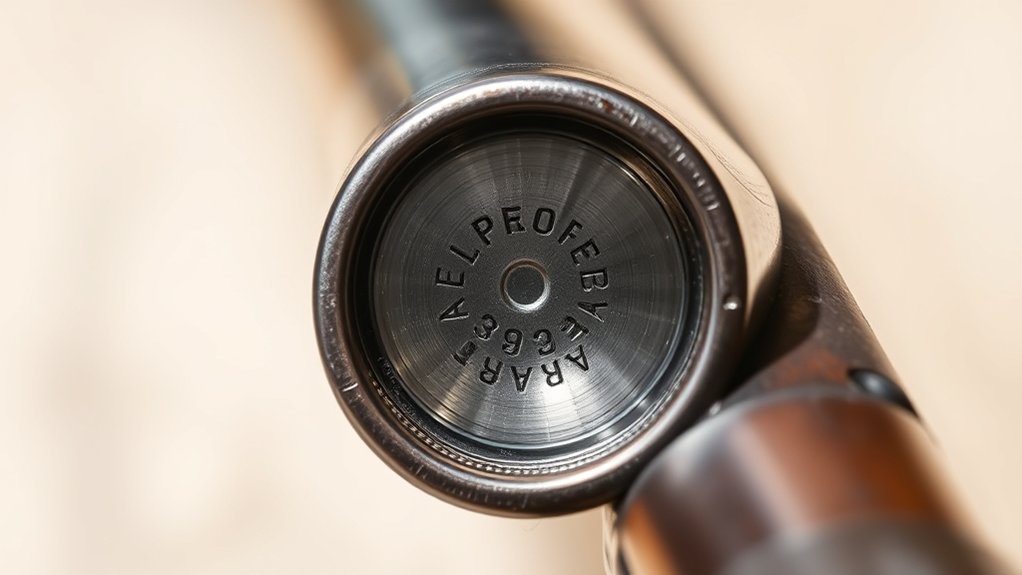
Before you consider firing an old gun, you need to identify the barrel material by checking its proof marks. These marks are essential in determining safety. For example, an “S” typically indicates steel, while a “D” marks a Damascus barrel, which may not be safe with modern ammunition.
You should also research common barrel materials like Krupp and fluid steel, as they usually handle modern smokeless powder safely.
To accurately identify barrel material, consult barrel codes and historical context to understand your firearm’s design limitations.
Verifying these details guarantees you don’t expose yourself to unnecessary risks. By focusing on proof marks and barrel composition, you’ll make a well-informed decision about whether your old gun can be safely fired.
Check Barrel of Your Old Gun for Rust, Pitting, and Cracks
You’ll want to take a close look at your gun’s barrel for any signs of rust and pitting. Deep damage like that can make it unsafe to fire, so it’s important not to overlook it.
Also, keep an eye out for any visible cracks or splits, especially around critical spots like the breech face. These areas take a lot of stress, so any damage there’s a big red flag.
And don’t forget to check what material the barrel is made from. You want to make sure it’s suitable for modern ammunition and strong enough to handle the pressure without failing.
Identifying Rust And Pitting
Three key indicators, rust, pitting, and cracks, can reveal whether the barrel of your old gun is safe to shoot. When shooting older shotguns, it’s important to inspect the barrel closely. Light surface rust might be harmless, but deep pitting can weaken the barrel and harm accuracy.
Use a flashlight to check inside for severe pitting or corrosion. These signs usually mean unsafe conditions. Any cracks or splits mean you should not fire the gun.
If you find any flaws, it’s best to consult a gunsmith for expert evaluation.
| Indicator | What to Look For |
|---|---|
| Rust | Surface discoloration vs deep corrosion |
| Pitting | Small pits vs severe bore damage |
| Cracks | None vs visible splits |
| Barrel Interior | Clear vs obstructed or corroded |
| Safety Action | Safe to shoot vs seek professional help |
Detecting Barrel Cracks
While rust and pitting reveal much about your gun’s condition, cracks in the barrel present a more immediate danger. When detecting barrel cracks, carefully inspect the exterior and interior surfaces for visible splits or fractures.
Use a bore light to illuminate the inside, looking for any deep cracks or damage that could cause catastrophic failure during shooting. Even small cracks can compromise safety, so never ignore these signs.
Severe rust or pitting also weakens the metal and may hide cracks, making thorough examination vital. If you spot any irregularities, consult a qualified gunsmith immediately for expert evaluation.
Detecting barrel cracks early helps prevent accidents and guarantees your old gun remains safe to shoot. Prioritize safety by addressing any damage before firing.
It’s always better to be safe than sorry when it comes to your firearm.
Evaluating Barrel Material Safety
Although evaluating an old gun’s barrel material might seem challenging, it’s vital for guaranteeing safe shooting. Start by identifying the barrel’s steel type. Krupp and fluid steel are generally safe with modern smokeless powder, while Damascus barrels pose significant risks.
Look for proof marks. An “S” indicates steel, and a “D” signals Damascus. Check closely for rust, severe pitting, and visible cracks, especially near the breech face and receiver. These defects compromise barrel material safety and increase the risk of failure.
Finally, research barrel codes and confirm compatibility with current ammunition. By thoroughly evaluating these factors, you’ll guarantee the barrel material safety of your old gun and protect yourself during shooting.
Verify Chamber Size and Ammunition Compatibility
You need to measure your shotgun’s chamber accurately to make sure it matches the ammunition you plan to use.
Using a chamber gauge is a great way to confirm the correct shell length and avoid any dangerous mismatches.
Also, always check your gun’s markings and proof codes. This helps you confirm that it can safely handle modern powders and cartridges.
Chamber Measurement Techniques
A chamber gauge provides an accurate way to measure your shotgun’s chamber size, guaranteeing you select compatible ammunition. Using proper chamber measurement techniques, you’ll avoid dangerous mismatches, such as fitting a 2¾” shotshell into a 2½” chamber. That’s a risky error causing hazardous overpressure.
Start by inserting the chamber gauge to identify the exact length. Then, verify any markings or proof stamps on the barrel that specify chamber dimensions and whether the firearm is rated for black powder or modern smokeless powder.
Researching barrel codes linked to your shotgun further confirms if it safely accommodates contemporary ammunition.
Ammunition Compatibility Risks
How can you guarantee your old shotgun handles modern ammunition safely? Start by verifying the chamber size with a chamber gauge. Many older shotguns are designed for 2½” shells, while modern shells are often 2¾” or 3”.
Using longer shells in a shorter chamber creates significant ammunition compatibility risks, including dangerous pressure buildup.
Check your shotgun for markings indicating whether it’s rated for black powder or modern smokeless powder. Mixing these can be hazardous.
Research barrel codes and proof marks to confirm which ammunition types your firearm can safely handle. Always match ammunition to the exact chamber size and pressure rating specified for your shotgun.
Ignoring these steps increases the risk of malfunctions, damage, or injury.
Clean the Gun Thoroughly Before Testing
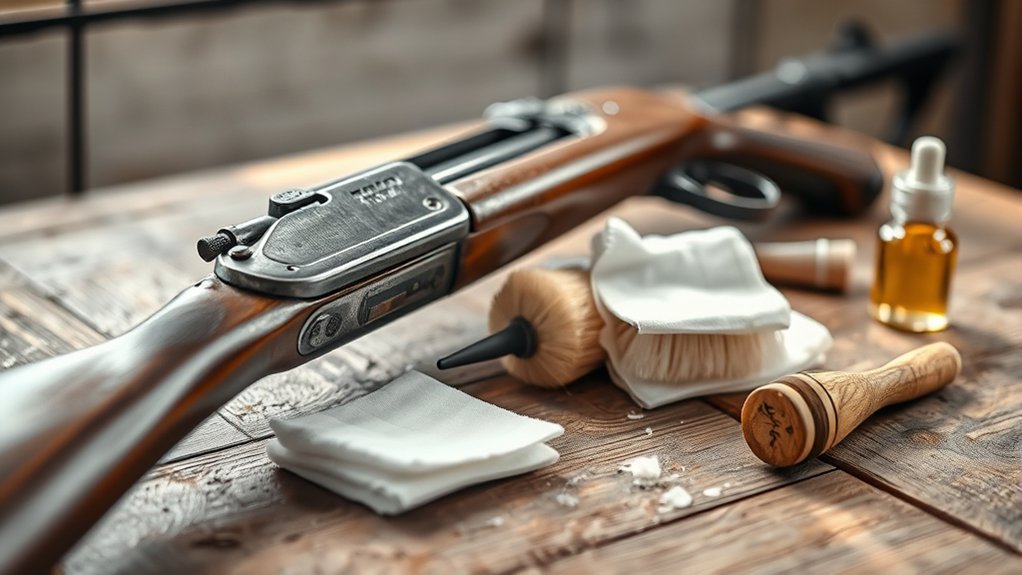
Start by thoroughly cleaning the firearm to remove any cosmoline, rust, or debris that could obstruct its mechanism. You need to clean the gun thoroughly before testing to prevent dangerous malfunctions, especially in older models like the SKS 45, where blocked firing pins can cause slam fires.
Use proper firearms cleaning solvents and tools to guarantee every surface, including the bore and chamber, is free from rust and residue.
Disassemble the firearm carefully to clean internal parts. Check for deep pitting or corrosion that may signal safety concerns.
After cleaning, inspect the gun for visible wear or damage.
Only when the firearm is clean and inspected can you proceed confidently. This way, you keep your gun safe and reliable for testing and use.
Inspect the Action and Moving Parts to Ensure Proper Operation
Thoroughly inspecting the action and moving parts is essential to verify your firearm operates safely and reliably. When you inspect the action, look for smooth operation without stiffness, grinding, or binding. These could indicate wear or damage affecting safety.
Check all moving parts for excessive wear, rust, or corrosion that can compromise function. Make sure bolts, slides, or levers engage securely. Loose or misaligned components can cause malfunctions during firing.
Operate the action multiple times without ammunition to verify proper cycling and that parts reset smoothly to their original position.
If you encounter unusual resistance or noises during your inspection, it’s a warning sign of deeper mechanical issues. At this stage, further professional evaluation is advisable to guarantee safe use.
Consult a Certified Gunsmith About Your Old Gun
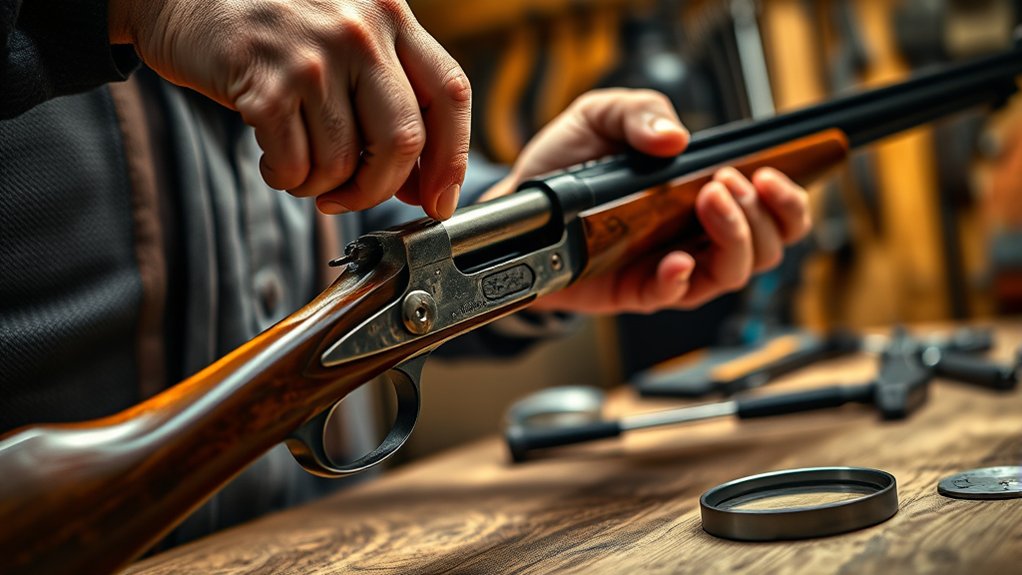
Enlist the expertise of a certified gunsmith to confirm your old firearm is safe to shoot. When you consult a certified gunsmith, they’ll thoroughly examine the barrel for deep pitting, bulges, or cracks that could compromise safety.
They’ll also assess the chamber and throat for erosion or damage. This helps determine if the firearm can handle modern ammunition or should be limited to black powder loads.
A gunsmith verifies the firearm meets original specifications by checking for any modifications that might affect function or safety.
Most importantly, they accurately measure headspace, a critical factor in older firearms’ safe operation.
Perform a Dry Function Test and Measure Headspace
After your gunsmith’s inspection, you can perform your own dry function test to verify the firearm’s mechanical operation. Cycle the action smoothly, ensuring no binding or unusual resistance. This confirms proper function.
During this dry function test, observe the firing pin’s operation closely. Any malfunction could lead to misfires or unsafe discharges, so it’s important to watch carefully.
Next, use a headspace gauge to measure the chamber’s headspace and confirm it meets the manufacturer’s specifications. Incorrect headspace or a poor fit between the bolt and receiver can cause dangerous malfunctions when firing.
Make sure to document your dry function test results and headspace measurements carefully. This record supports ongoing safety assessments and helps you track the firearm’s condition over time.
That way, you can be confident it remains safe to shoot.
Frequently Asked Questions
How Should I Store My Old Gun to Maintain Its Condition?
You should use proper storage techniques to maintain your old gun’s condition.
Store it in a cool, dry place to prevent rust and corrosion. Use a gun safe with a dehumidifier or silica gel packs to control moisture.
Wrap the firearm in a soft cloth or gun sock to avoid scratches.
Regularly inspect and clean your gun before storing it.
These steps will help preserve its functionality and value over time.
Can I Use Modern Ammunition in an Antique Firearm?
About 30% of antique firearms aren’t designed for modern pressures, so you need to be cautious.
You can use modern ammunition in an antique firearm only if you’ve confirmed Ammunition Compatibility. Always check the cartridge dimensions and pressure ratings against the firearm’s specifications.
Using incompatible ammo risks damage or injury. When in doubt, consult a gunsmith or use specially made lower-pressure ammo designed for vintage guns to guarantee safety.
It’s always better to be safe than sorry with these older pieces.
What Are the Legal Requirements for Owning an Old Gun?
You need to follow specific ownership regulations for old guns, which vary by location.
Generally, you must comply with federal, state, and local laws, including background checks and registration where required. Some antique firearms may be exempt from certain restrictions, but you should verify your jurisdiction’s rules.
Always guarantee you have proper documentation and avoid transferring ownership without legal compliance.
Staying informed helps you legally and responsibly own your old firearm. It’s really important to know the rules so you don’t run into trouble later on.
How Often Should Old Guns Be Inspected by a Professional?
You should schedule a professional inspection for old guns at least once every one to two years.
If you use the firearm regularly or notice any unusual wear, increase inspections to yearly. Regular inspections help catch issues early, ensuring your gun stays safe to shoot.
Don’t skip this step. A thorough inspection by a qualified gunsmith protects you from potential malfunctions or accidents caused by aging components.
It’s worth staying on top of this to keep your firearm in good shape.
Are There Specific Signs of Unsafe Modifications to Watch For?
Yes, you should watch for modification risks like poorly fitted parts, amateur welds, or unauthorized barrel changes.
If you spot altered firing pins, mismatched serial numbers, or signs of over-polishing, those are red flags. Such modifications can compromise the gun’s integrity and safety.
Always have a qualified gunsmith inspect any suspicious changes before you consider shooting.
Don’t take chances with altered or improperly maintained firearms. It’s better to be safe than sorry when it comes to your safety and the safety of others.
Conclusion
Think of your old gun like a vintage clock. Both tell stories but need careful attention to keep ticking safely. By following these seven steps, you guarantee your firearm’s history doesn’t become a hazard.
Just as a clockmaker examines every gear, you must inspect every part of your gun. Trust the process, seek expert advice, and handle it with respect. Only then can you safely honor its legacy and keep it firing true.