How to Store a Gun in a Safe: 10 Steps
To store your gun safely in a secure safe, always unload it completely and keep ammunition separate. Choose a heavy, fire-resistant safe with reliable, easy-to-use locks like biometric or combination keypads.
Prepare the interior with padding to prevent damage, then position your gun upright or in a rack. Limit safe access to trusted adults only and maintain both the gun and safe regularly.
Following these steps guarantees safety and security. There are more important details to explore for thorough protection, so keep digging into best practices!
Unload Your Gun Completely Before Safe Storage
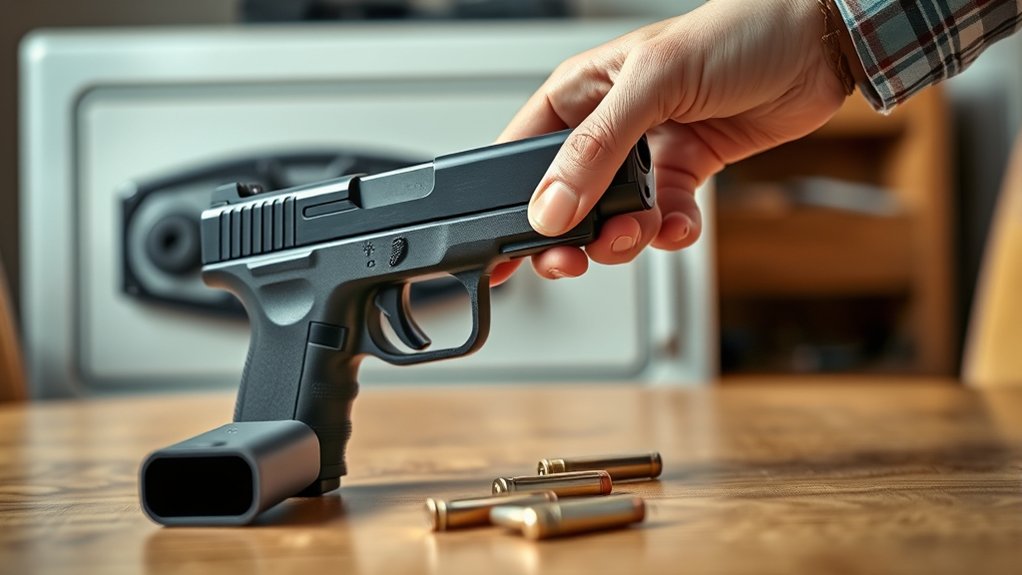
Before storing your gun in a safe, always unload it completely by checking the chamber, magazine, and receiver to make sure no ammunition remains inside.
To unload your gun safely, do it in a designated area away from others and follow strict gun safety protocols. Keep the action open after unloading to provide a clear visual cue that the firearm is empty.
Remove all ammunition and store it separately in a locked container to prevent unauthorized access.
It’s a good idea to regularly inspect your firearm during storage to confirm it stays unloaded and is pointed in the correct safe direction. These steps help minimize risks and maintain ideal gun safety.
By unloading your gun thoroughly, you’re laying the foundation for responsible firearm storage.
This ensures your firearm stays secure and is only ready when you intend it to be. Taking these precautions keeps everyone safer and gives you peace of mind.
Choose the Right Safe for Your Gun
When choosing a safe for your gun, you want to make sure it fits your firearm’s size and storage needs.
It’s important that it has strong security features, like pry-resistant doors and reliable locking mechanisms.
Think about the type of safe that works best for you—whether that’s biometric, electronic, or the traditional kind.
Also, consider its capacity so it can hold your gun along with any accessories you might have.
Don’t forget to look for a safe that’s heavy and offers fire or water resistance.
That way, you can feel confident your firearms will stay protected no matter what happens.
Safe Types Overview
When selecting the right safe for your gun, understanding the different types available is essential for balancing security, accessibility, and compliance with local regulations. Gun safes weighing at least 50 pounds offer robust protection against theft. Biometric safes use fingerprint recognition to guarantee only authorized users gain access quickly.
Lock boxes provide portable yet secure storage, ideal for emergencies. Trigger locks and cable locks add another safety layer by preventing unauthorized firing or use during transport.
| Safe Type | Key Feature |
|---|---|
| Gun Safes | Heavy, theft-resistant |
| Biometric Safes | Fingerprint access |
| Lock Boxes | Portable, quick emergency access |
| Trigger Locks | Blocks trigger activation |
| Cable Locks | Prevents firearm operation |
Choose your safe type carefully to guarantee effective, compliant safe storage.
Security Features Importance
Selecting the right safe type sets the foundation, but focusing on the security features guarantees your firearm remains protected against theft, fire, and unauthorized access. Choose a safe weighing at least 50 pounds to deter thieves effectively.
Prioritize DOJ-approved security features like biometric locks. They provide quick access while preventing unauthorized use.
Verify your safe has a reliable fire-resistant rating to protect both your firearm and ammunition from heat damage. Multiple locking mechanisms, such as combination and key locks, add layers of security, reducing accidental access risks.
Regularly maintain these locks to keep them functioning smoothly. Treat your safe as more than a gun case; it’s a critical component of firearm safety that safeguards your investment and verifies responsible storage.
Size And Capacity
Although security features are essential, the size and capacity of your gun safe play an equally important role in guaranteeing proper storage. You need a safe with enough size and capacity to hold all your firearms, including accessories and ammunition.
Make sure to measure your largest firearm to confirm the safe’s interior dimensions allow easy access without damage. Choose a safe designed specifically for firearms since these often have customizable shelving and compartments for organized storage.
Think about the safe’s weight too; aim for at least 50 pounds to help resist theft.
Also, it’s a good idea to think ahead and evaluate your storage needs over time so you can accommodate future firearms acquisitions.
Picking the right size and capacity ensures your collection stays secure, accessible, and well-organized for years to come.
Get the Safe Ready Inside for Your Gun
Before placing your gun inside the safe, make sure to clean the interior thoroughly. This helps get rid of any dust and debris that might damage your firearm.
Next, take some time to organize the storage compartments. This way, your gun stays secure but is still easy to access when you need it.
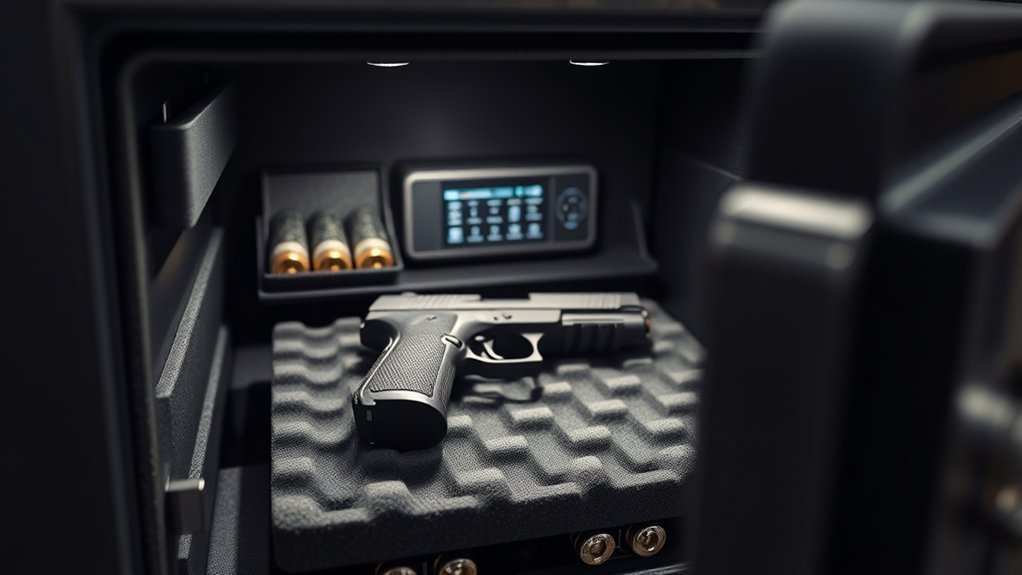
Also, consider adding some protective padding inside the safe. It can prevent scratches and absorb any shocks when you open or close the door.
This little extra step really helps keep your gun in great condition.
Clean Interior Thoroughly
Thoroughly clean the interior of your safe to create an ideal environment for storing your gun. Use a lint-free cloth to wipe down all surfaces, removing dust, debris, and any particles that might scratch or damage your firearm.
Make certain the safe is completely dry to prevent rust and corrosion.
To maintain maximum safety, consider placing a dehumidifier or silica gel packets inside to control moisture levels effectively.
Check the interior for sharp edges or protrusions that could harm your gun during storage and remove or cover them if necessary.
Finally, regularly inspect the safe’s interior to guarantee it remains clean and dry. This helps preserve the safe environment needed to store your firearm securely and maintain its condition over time.
It’s a simple step that really pays off in the long run.
Organize Storage Compartments
Start by removing all unnecessary items from your safe to create a dedicated space for your firearm and related accessories.
To store firearms properly, organize compartments using dividers or foam inserts that prevent movement and protect your guns from scratches or damage.
Make sure to designate separate sections for ammunition, keeping it locked away and stored separately from firearms. This is key to maintaining essential safety precautions.
Clearly label compartments or use color-coded markers to quickly identify where each firearm or accessory belongs. This will help streamline access while keeping everything secure.
Don’t forget to regularly inspect the organization of your safe to make sure all items remain securely stored and comply with safety standards and local laws.
Add Protective Padding
When you add protective padding inside your safe, you create a secure environment that prevents your firearm from shifting and sustaining damage.
Start with foam inserts tailored to your firearm’s shape; these fit snugly, minimizing movement. Use soft fabric or felt padding to shield your firearm’s finish from scratches.
Don’t forget to add padding around loose items like magazines or scopes to keep them secure and prevent abrasion. Choose padding materials with moisture resistance to guard against humidity and rust. This is a crucial step in preserving your firearm.
If you store multiple guns, customize dividers or cut padding to keep each firearm securely separated.
Position Your Gun Safely Inside the Safe
Before placing your gun inside the safe, make certain it’s completely unloaded to prevent any accidental discharge. This essential safety step helps you store firearms responsibly and avoid hazards.
When you keep a gun inside, position it carefully. Point the muzzle away from any contact points to reduce injury risk if the safe opens unexpectedly.
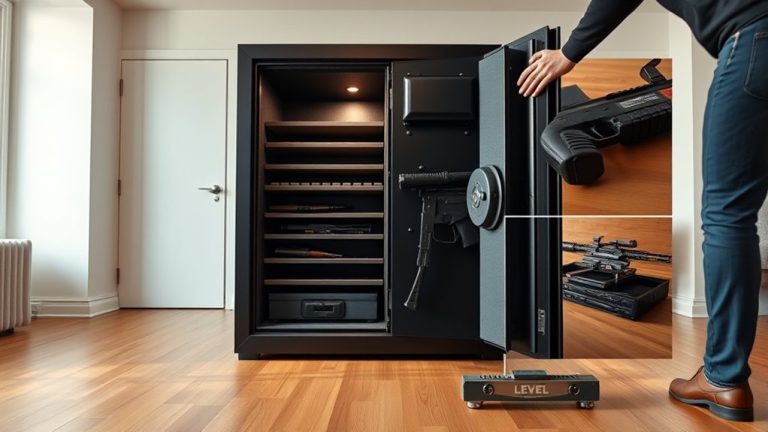
Use a dedicated gun case or sleeve to protect the firearm from scratches and corrosion. Store the gun upright or in a rack to maximize space while keeping it secure.
Regularly inspect the safe’s interior for moisture or corrosion and adjust storage as needed.
Following these safety steps guarantees your unloaded gun stays protected, secure, and ready when you need it.
Use a Reliable Locking Mechanism on the Safe
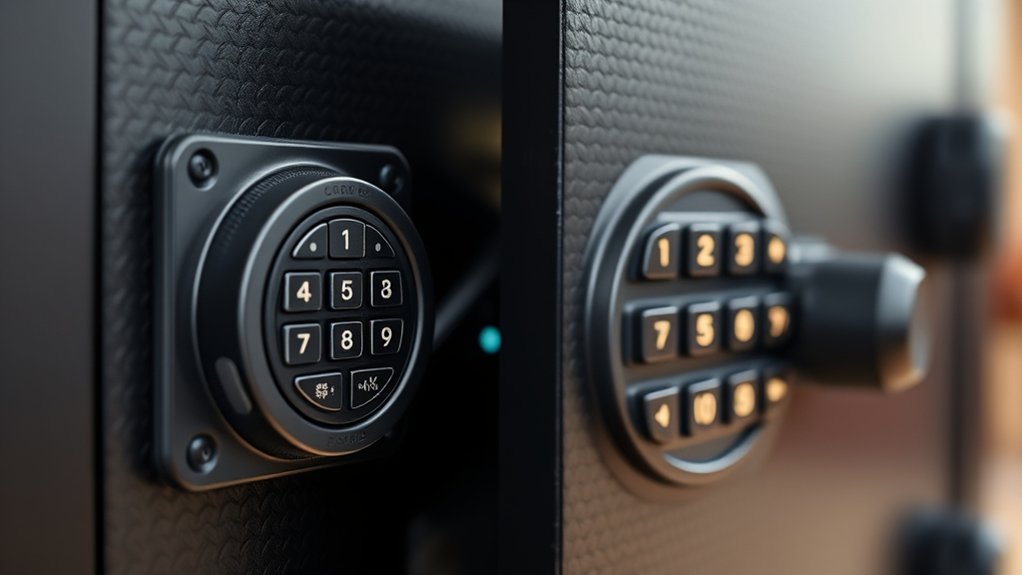
Although selecting a gun safe with a reliable locking mechanism might seem straightforward, it’s crucial to prioritize security features like biometric locks or combination keypads that prevent unauthorized access.
These advanced locking mechanisms provide secure storage, guaranteeing only you or trusted adults can access your safe gun.
Choose a lock that’s easy for you to operate but difficult for children or unauthorized users to bypass. Regularly test the locking mechanism to verify it functions smoothly and reliably, avoiding potential malfunctions that could compromise security.
Also, opt for a heavier safe, ideally weighing at least 50 pounds, to deter theft.
Finally, store your safe’s key or combination in a secure place accessible only to trusted individuals, further protecting your firearm from unauthorized access.
Separate and Lock Up Ammunition
You should always store ammunition separately from your firearm, and make sure it’s locked up in a secure container. This helps prevent unauthorized access, which is super important.
It’s a good idea to pick a cool, dry spot for storage.
Also, don’t forget to check your rounds regularly for any signs of damage or corrosion.
Keeping your ammunition both secure and well-maintained isn’t just about safety—it also helps ensure your ammo works reliably when you need it.
Store Ammunition Separately
Because safely storing your ammunition is just as important as securing your firearms, you should always keep ammunition in a locked container separate from your guns. This practice helps prevent unauthorized access and accidental discharges, enhancing overall firearms safety.
To effectively store ammunition separately, follow these key steps: Use a dedicated locked container, such as a cabinet or drawer, exclusively for ammunition storage.
Make certain the container is sturdy and out of reach of children or unauthorized users.
Regularly inspect ammunition for damage or deterioration to avoid safety hazards.
And don’t forget to educate all household members about the importance of separating ammunition from firearms. It’s a simple step that makes a big difference in keeping everyone safe.
Use Locked Containers
Every firearm should be stored unloaded inside a locked container, like a gun safe or lockbox that meets DOJ-approved safety standards.
Using a secure locked container is really important for effective gun safety. Always unload your firearm before placing it inside to prevent accidental discharge.
Also, keep ammunition in a separate locked container to reduce risks even more. Make sure all keys or combinations stay hidden and aren’t accessible to unauthorized users, especially children.
It’s a good idea to regularly check that your locked containers work properly so security stays tight.
By following these steps, you’ll lower the chance of unauthorized access or accidents. This makes your storage practices responsible and compliant.
Proper use of locked containers is essential for anyone serious about safe and secure firearm storage.
Regularly Inspect Ammunition
While storing firearms securely is essential, you shouldn’t overlook the importance of keeping ammunition separately locked and regularly inspected.
To guarantee safety and reliability, you must store ammunition in a locked container separate from your firearms and make it inaccessible to unauthorized users.
Regularly inspect ammunition for signs of damage like corrosion or dents to prevent malfunctions.
It’s a good habit to check your ammo often so you’re always confident it will work when needed.
Follow these key steps to manage firearms and ammunition effectively:
- Store ammunition in a dedicated, locked container away from firearms
- Inspect ammunition frequently for any signs of damage or wear
- Keep a detailed inventory of ammunition types and quantities
- Dispose of any wet or damaged ammunition safely and promptly
Limit Safe Access to Trusted Adults
Although you might trust many people in your household, you should limit access to the gun safe strictly to trusted adults. Limiting access guarantees responsible firearm storage and prevents unauthorized or unsafe handling.
Use a unique combination or key known only to designated adults to minimize risk.
Choose a secure combination or key shared only with trusted adults to reduce unauthorized access risks.
Consider installing a biometric lock for added security. This allows quick yet secure access exclusively to authorized users.
Regularly review and update who can access the safe, especially if household circumstances change.
Make sure to educate all trusted adults on proper secure handling and the importance of firearm security. This helps reinforce responsible gun ownership.
Regularly Inspect and Maintain Your Safe’s Security
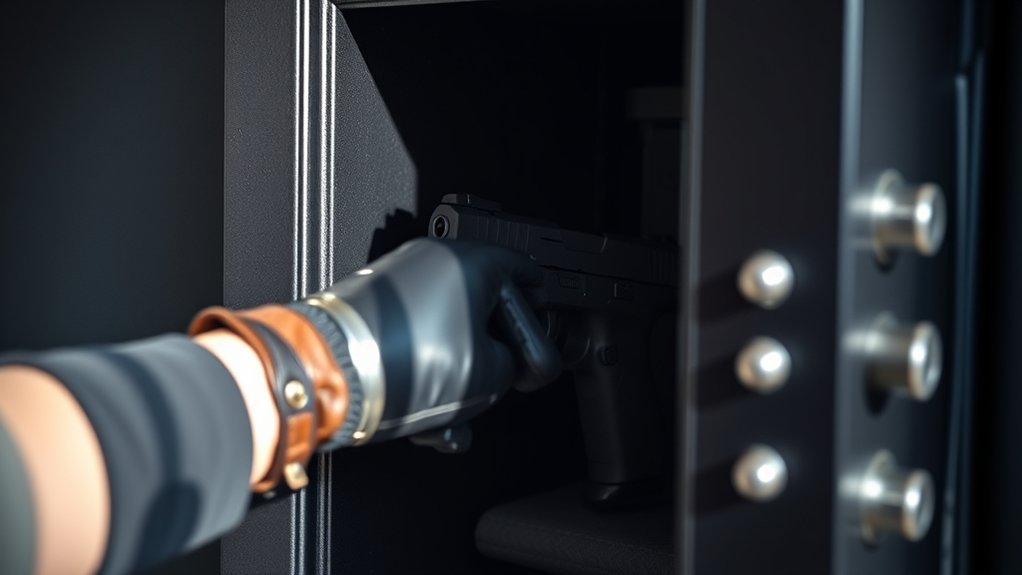
Since your gun safe plays a critical role in firearm security, you need to inspect and maintain it regularly to make sure it works perfectly. Neglecting maintenance can lead to problems with the locking mechanisms or even structural issues, which puts your firearms at risk.
Make it a habit to inspect the locking mechanisms to ensure they engage securely and operate smoothly.
Also, check both the safe’s interior and exterior for any damage or wear that could reduce security.
Don’t forget to lubricate hinges and locks to prevent rust and keep everything working properly.
And always confirm that the safe’s weight and mounting are enough to stop unauthorized removal or tampering.
Educate Household Members About Safe Gun Storage
Because firearms pose significant risks if mishandled, you must educate everyone in your household about safe gun storage practices. Stress that all guns should always be unloaded and stored locked to prevent unauthorized access, especially by children.
Regularly hold gun safety discussions to highlight that 50% of unintentional firearm injury deaths happen at home.
Explain the specific safe storage methods you use, like gun safes or lockboxes, and emphasize storing ammunition separately. Teach family members to recognize unsafe storage signs and encourage them to report concerns.
Reinforce that 90% of child gun-related deaths involve firearms accessed at home.
By fostering awareness and responsibility, you create a safer environment, ensuring your firearms remain secure and your household informed about critical gun safety protocols.
It’s all about keeping everyone safe and informed.
Keep Your Gun Storage Safe and Up to Date
To maintain maximum safety, you should regularly evaluate your gun storage methods and update them to comply with current standards. Proper storage is essential for gun safety, reducing risks of accidents and unauthorized access.
Make certain to secure firearms in a DOJ-approved safe or lockbox weighing at least 50 pounds to deter theft. Store ammunition separately in a locked container to prevent accidental discharge.
Conduct routine checks on locks and storage conditions to verify all mechanisms work properly.
Keep a checklist of your storage practices and review it regularly to guarantee compliance with best safety protocols.
Frequently Asked Questions
Can I Store Multiple Guns in One Safe?
Yes, you can store multiple guns in one safe, but it’s important to prioritize safe organization and ammunition management. Arrange your firearms carefully to avoid any damage. You’ll also want to make sure they’re easy to access when you need them.
Using racks or foam inserts is a great way to keep guns separated and secure. It helps prevent them from moving around and scratching each other. Plus, it keeps everything neat and tidy.
Keep your ammunition in a separate compartment inside the safe to help prevent accidents.
Always think about how quickly you might need to get to each firearm. It’s all about balancing security with convenience to store your guns effectively.
What Is the Best Way to Clean My Gun Before Storing It?
Like tuning a finely crafted instrument, cleaning your gun guarantees it performs flawlessly.
Start with quality gun cleaning supplies like brushes, patches, solvent, and oil. Follow cleaning frequency guidelines based on how often you use it to avoid rust buildup.
Be sure to disassemble your firearm carefully. Clean each part thoroughly, and apply proper lubrication to the moving parts. This helps prevent corrosion and keeps everything working smoothly.
Regular, attentive cleaning preserves your gun’s reliability and safety for years to come. It’s really worth taking the time to do it right.
How Do I Choose the Right Type of Safe Lock?
You’ll want to pick a safe lock that fits your security needs and ease of use.
Digital locks offer quick access but rely on batteries. Mechanical locks never need power, so they’re reliable but slower to open.
Biometric safes use fingerprints, giving fast, personalized entry. Combination locks are durable and don’t require power but need you to remember the code.
Think about what matters most to you—speed, reliability, or convenience—when choosing the right type.
Should I Use a Gun Case Inside the Safe?
You absolutely should use a gun case inside the safe. It’s like giving your firearm a VIP suite!
Gun case benefits include protecting your weapon from scratches and dust, while helping with humidity control to prevent rust.
Plus, it makes safe organization easier by keeping things neat. You’ll enjoy faster firearm accessibility when needed.
Don’t underestimate how a simple case can transform your storage and protect your investment.
How Often Should I Update My Safe’s Security Features?
You should review your safe’s security features at least once a year as part of safe maintenance tips.
Security upgrade frequency depends on new technology and threat levels, but integrating an alarm system is a smart move every few years.
Consider biometric lock advantages for faster access and enhanced security.
Regularly updating guarantees your safe stays resilient against break-ins, keeping your firearms protected and your peace of mind intact.
Conclusion
By unloading your gun completely, choosing the right safe, and positioning it securely inside, you guarantee maximum safety. Using a reliable locking mechanism and limiting access to trusted adults helps you maintain strict control.
Regularly inspecting your safe is important too. It ensures everything stays secure and works properly. Plus, educating household members about gun safety fosters responsibility and awareness.
Keeping your storage updated is another key step. Follow these steps consistently, and you’ll protect your firearm, your family, and your peace of mind with confidence and care.