How to Organize a Gun Safe in 5 Steps
Start by fully emptying your gun safe to assess and catalog each item with photos and serial numbers. Group firearms and accessories by type, using dividers and containers to keep things accessible.
Maximize vertical space with adjustable shelves, handgun hangers, and door panel storage. Control humidity between 30-50% with a dehumidifier and monitor it to prevent damage.
Finally, keep the safe clean and update your inventory regularly to protect your collection. More detailed tips can help you tailor your setup perfectly.
Clear Out Your Gun Safe and Take Stock
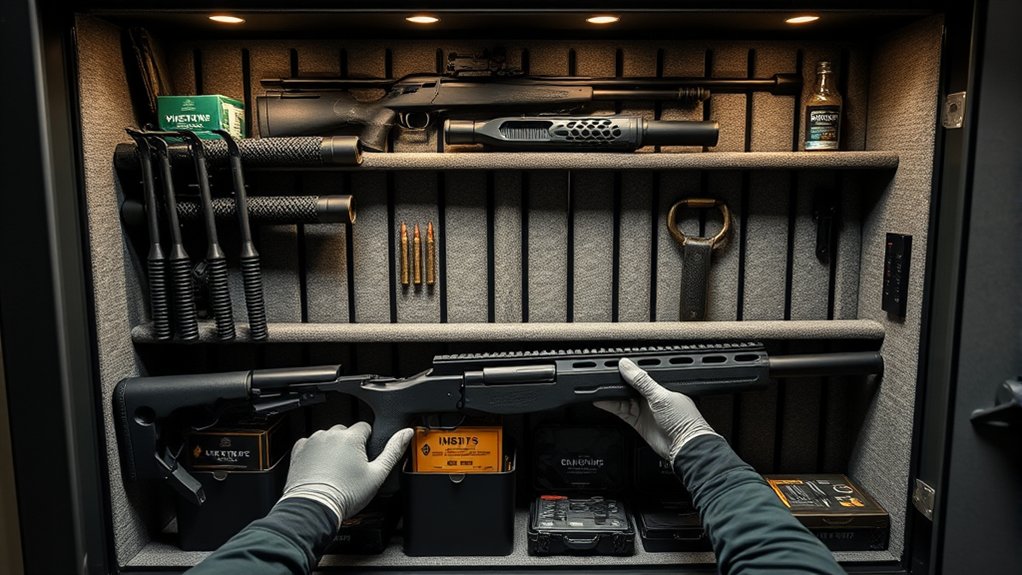
A thorough reorganization starts by completely emptying your gun safe. When you clear out everything, you can better assess the contents and identify items that no longer belong or need maintenance.
As you remove firearms, inspect each for signs of rust or damage and plan necessary upkeep before returning them.
Next, create an inventory list detailing serial numbers, descriptions, and photos to maintain accurate records. Sort all items into clear categories such as rifles, handguns, ammunition, and accessories.
Create a detailed inventory with serial numbers, descriptions, and photos, then categorize items for streamlined organization.
This categorization streamlines organization and guarantees safe storage. Be sure to discard or store ammunition and any unrelated items properly, keeping only essential firearms and accessories in the safe.
This initial step lays a solid foundation for efficient, secure gun safe organization.
Group Firearms and Accessories in Your Gun Safe by Type
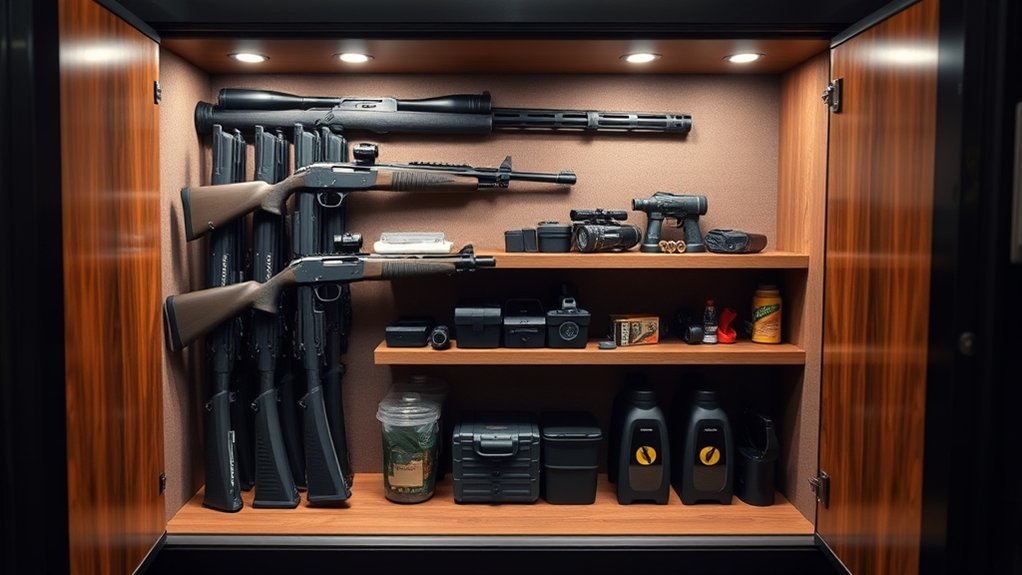
When you group firearms by type, placing rifles with rifles and handguns with handguns, you’ll improve both accessibility and inventory management within your gun safe. This approach maximizes storage space and guarantees quick access to the firearm you need.
Use dividers to maintain separation between different firearms and firearm accessories. This keeps your safe clutter-free and protects your collection from damage.
Designate containers for magazines and cleaning supplies to streamline gun safe organization further. Adjustable shelving can help you optimize the available space.
Plus, organized vertical storage with gun mounts or racks frees up floor space efficiently.
Make it a habit to regularly reassess your setup so you keep frequently used items within easy reach. By grouping firearms by type, you create a safe that’s both functional and secure.
Use Vertical Space in Your Gun Safe With Shelves and Hangers
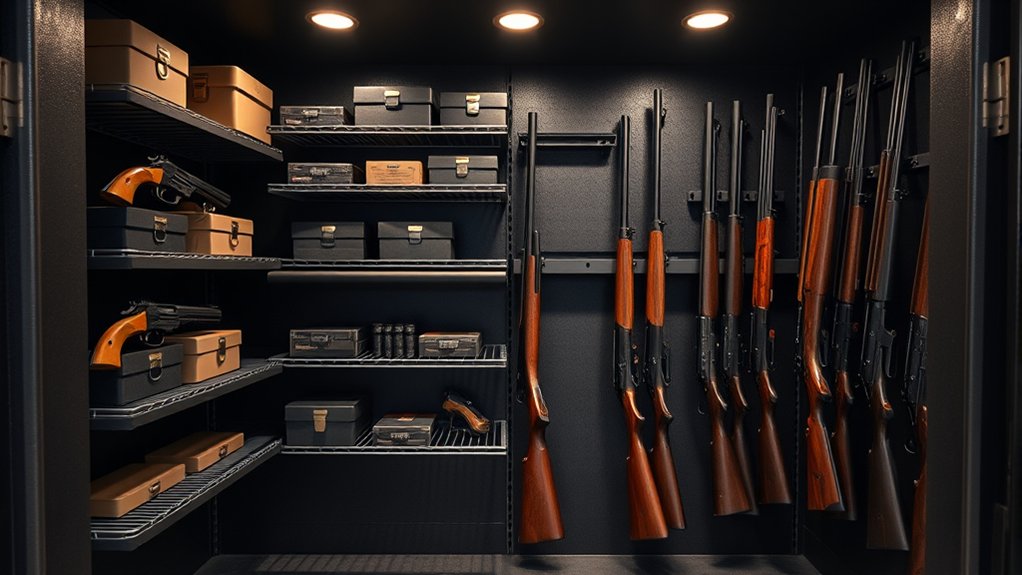
Maximizing vertical space in your gun safe greatly increases storage capacity and accessibility. Start by installing adjustable shelves to create a customized organization system that fits various firearm sizes. This helps you maximize vertical space efficiently.
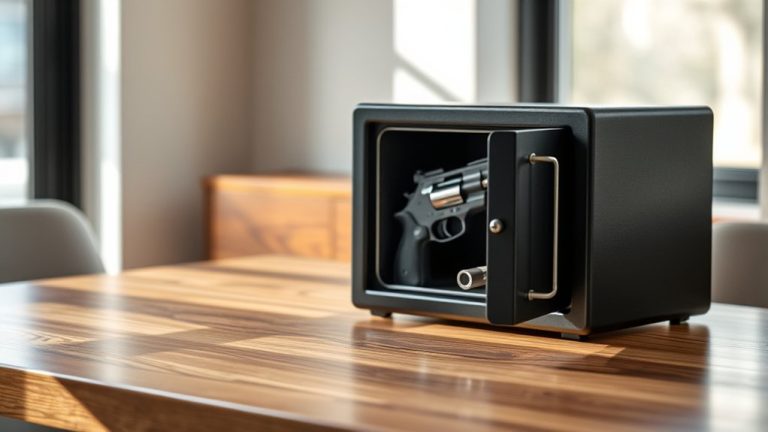
Use handgun hangers to store pistols vertically. This frees up shelf space and prevents overcrowding. You can also incorporate rifle rods to stack long guns, which lets you store up to 50% more firearms than traditional racks.
Don’t overlook the door panel as a valuable storage solution. It offers additional vertical space for magazines, cleaning supplies, and accessories.
For safes without fabric lining, pegboards or magnetic strips provide effective organization for tools and gear.
These strategies help you organize your safe systematically while fully utilizing every inch of vertical space. It’s all about making your safe work smarter, not harder.
Control Humidity to Protect Your Firearms
Properly controlling humidity inside your gun safe is essential to prevent rust and corrosion on your firearms. Keep humidity levels between 30% and 50% to protect your guns from moisture damage. Use a dehumidifier or silica gel desiccants to regulate moisture effectively.
Place a hygrometer inside your gun safe to monitor humidity levels regularly and make sure they stay in ideal condition. In humid climates, check your safe at least once a month to catch any signs of moisture buildup or corrosion early. It’s a simple step that can save you a lot of trouble.
Also, make sure your gun safe has proper ventilation to improve air circulation and reduce humidity risks even more.
Maintain Cleanliness and Review Inventory Regularly
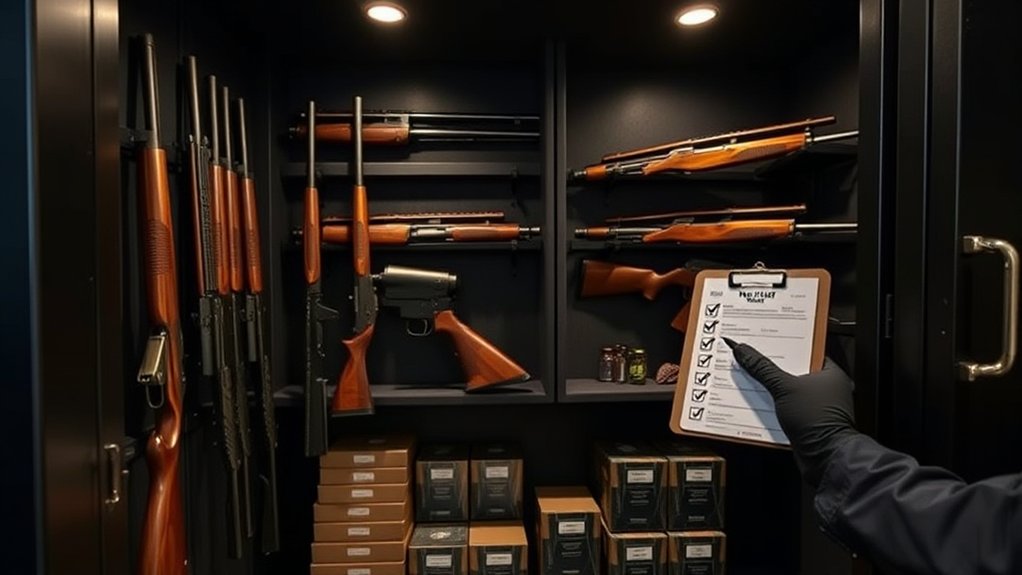
Keeping your gun safe clean and reviewing your firearm inventory regularly are essential steps for maintaining ideal condition and security. Make sure to clean both the interior and exterior of your safe regularly to prevent dust and fingerprints.
When cleaning your firearms, use ammonia-free cleaners to avoid rust caused by natural salts.
It’s a good idea to inspect your safe every month to check for rust and corrosion, especially if you live in a humid area. Try to keep the moisture level below 50%.
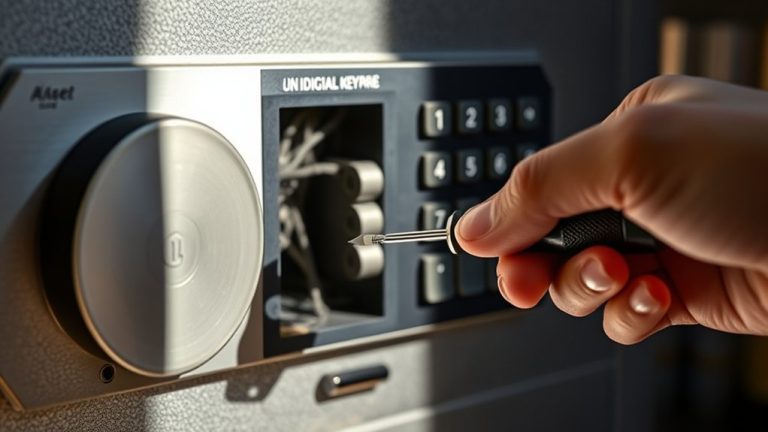
Also, schedule deep cleaning sessions where you can examine the seals and locks to make sure your safe functions properly.
Keeping an accurate and up-to-date inventory is just as important. Include serial numbers, descriptions, and photos, and store this information securely. This will help with loss prevention and insurance claims.
By focusing on cleanliness and thorough inspections, you’ll protect your firearms from damage and keep your safe secure and organized.
It’s all about staying on top of maintenance so you don’t run into problems later.
Frequently Asked Questions
What Type of Lock Is Best for a Gun Safe?
You’ll find biometric security offers the fastest, most reliable access with fingerprint recognition.
But digital locks and combination locks balance convenience and safety well.
Key locks are less secure and riskier if lost.
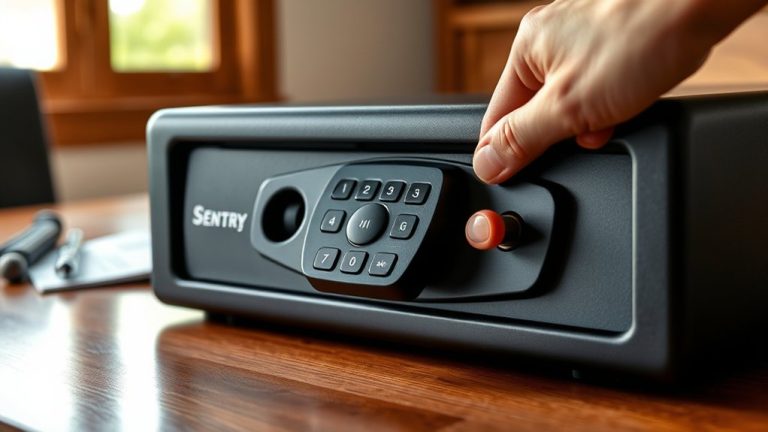
So, it’s smart to prioritize lock durability, fire resistance, and rust prevention to protect your investment.
Electronic access often includes tamper alerts, which really enhance security.
Always choose locks that meet strict safety standards to make sure your gun safe stays secure and functional under all conditions.
How Do I Secure Ammunition Separately Within the Safe?
You should secure ammunition separately by using dedicated, labeled containers designed specifically for ammunition storage. Make sure to keep different calibers separated to avoid any mix-ups. It’s all about staying organized and safe.
Also, remember to control humidity by using silica gel packs inside the containers. Adding childproofing measures is a smart move too. If you can, opt for fireproof storage solutions to add an extra layer of protection.
Keep these containers accessible but secure at the same time. Don’t forget to follow legal requirements by documenting your inventory, tracking quantities, and noting expiration dates.
This way, you’ll have safe, organized, and efficient ammunition storage within your safe.
Can I Store Other Valuables Besides Firearms in My Gun Safe?
Of course, your gun safe isn’t just for firearms. You can store other valuable items too. With the right organizational systems, you’ll keep documents, jewelry, and cash secure while still maintaining proper firearm storage.
Don’t forget about humidity control. Using desiccants helps prevent damage to your valuables.
Also, fire ratings and electronic locks boost theft prevention, giving you extra peace of mind.
Regular safe maintenance and inventory updates are important. They protect your valuables and help you comply with legal requirements.
Plus, these steps support insurance considerations, making sure your prized possessions stay safe.
What Is the Recommended Temperature Range Inside a Gun Safe?
You should keep your gun safe’s temperature between 50°F and 70°F to prevent heat damage and avoid temperature fluctuations.
Proper humidity control is essential, so consider dehumidifier options and safe insulation to maintain stable conditions. Use temperature monitoring tools regularly.
Also, place your safe away from direct heat sources.
Whether you choose electronic locks or manual locks, ensuring fire resistance and ideal safe placement helps protect your firearms effectively.
It’s all about creating the right environment to keep your guns in top shape.
How Often Should the Gun Safe’s Locking Mechanism Be Serviced?
You mightn’t realize it, but lock maintenance is essential, so you should service your gun safe’s locking mechanism at least once a year.
If you face high humidity, increase servicing frequency to every six months.
Combine DIY checks with professional inspection, focusing on lubricant application and corrosion prevention.
Different locking mechanism types need tailored care to avoid common issues.
Staying updated on technology upgrades guarantees your safe meets current safety standards.
It’s a simple way to keep your safe secure and working smoothly.
Conclusion
By clearing out your gun safe and grouping your firearms by type, you’re already halfway to a safer, more efficient setup. Using vertical space with shelves and hangers not only maximizes storage but also makes access quicker.
Controlling humidity and regularly cleaning guarantees your firearms stay in peak condition. The effort you put into organizing now will save you time and frustration later.
It’s all about making your gun safe work exactly how it should.