10 Best Places to Store a Gun Safe
You should store your gun safe in climate-controlled spots like basements or closets, where temperature and humidity stay stable to prevent rust and damage. Secure it with proper anchoring on solid floors and consider fire-resistant locations for added protection.
Bedrooms offer quick emergency access, while garages demand extra security due to exposure. Balancing concealment and accessibility is key, along with using furniture or hidden panels to disguise safes.
Keep exploring to uncover the best methods for ideal safety and access.
Choosing Climate-Controlled Locations for Gun Safes
When you choose a location for your gun safe, guaranteeing consistent temperature and humidity levels is essential to preserving your firearms and ammunition.
Opt for a climate-controlled environment that maintains temperatures between 50°F and 70°F. This helps prevent damage from extreme fluctuations.
Effective humidity control is critical. Keep relative humidity between 30-50% to avoid rust and corrosion. If your space tends to be moist, installing a dehumidifier can really help.
Also, select a location with fire resistance, like a dedicated safe room with fire-rated walls, to protect your investment from potential fire hazards.
Make sure to regularly monitor temperature and humidity to confirm conditions remain ideal.
By prioritizing climate control, humidity management, and fire resistance, you’ll greatly extend the life and reliability of your firearms stored in the gun safe.
It’s worth the effort to keep your collection safe and sound.
Basements as Ideal Gun Safe Locations
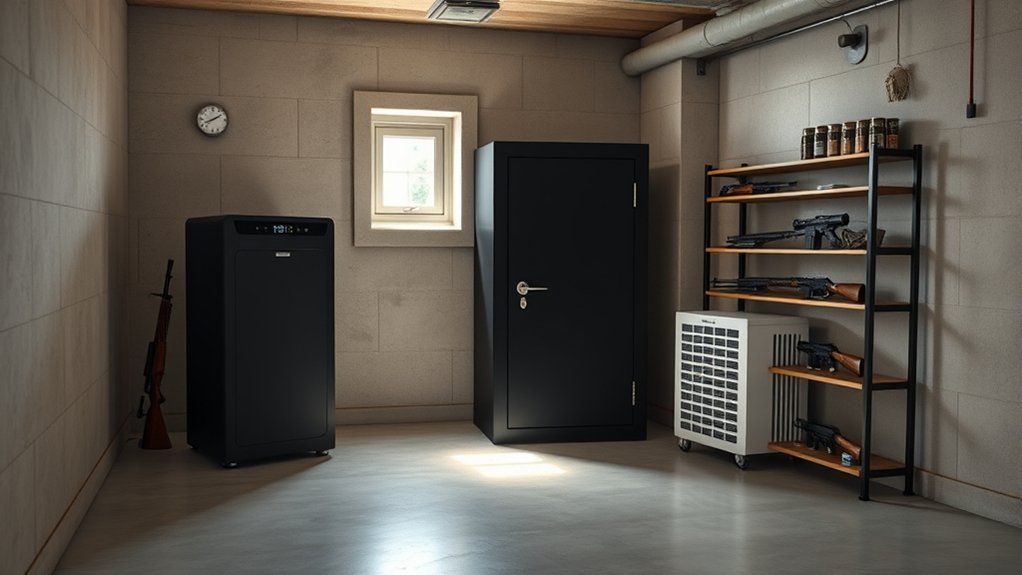
Maintaining stable temperature and humidity is essential, which makes basements an excellent choice for storing gun safes. Basements typically have cooler, more consistent climates, reducing humidity risks that can damage firearms.
Using a dehumidifier further protects your firearm storage from corrosion and moisture buildup.
A dehumidifier helps prevent corrosion and moisture damage in your firearm storage.
The concrete flooring in basements allows you to securely bolt your basement safe, enhancing stability and theft resistance. Plus, basement clutter acts as an extra layer of security by deterring burglars from thorough searches.
While accessing a basement safe during emergencies may be less convenient, its concealment offers superior protection against theft.
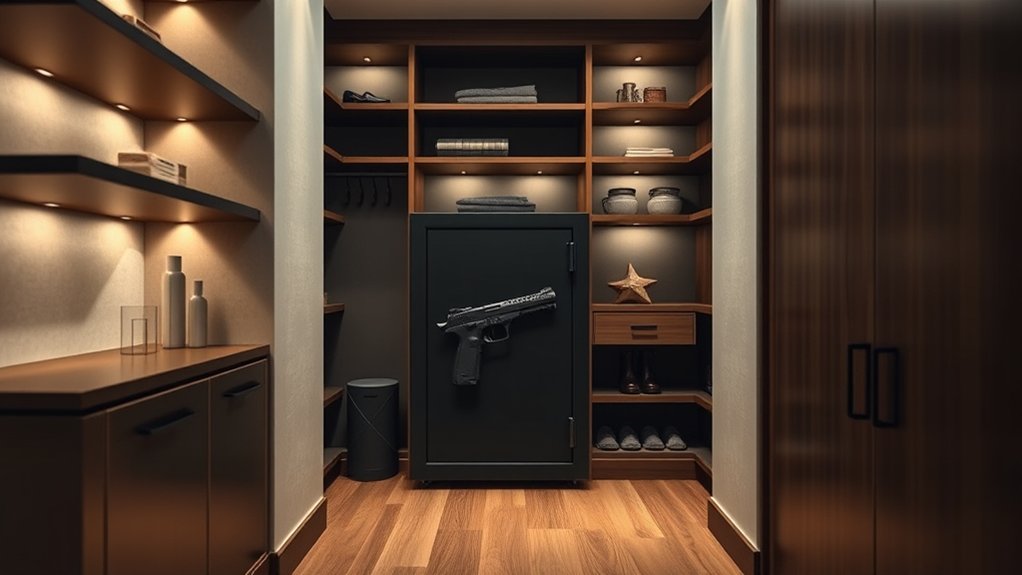
Closet Gun Safe Placement and Security
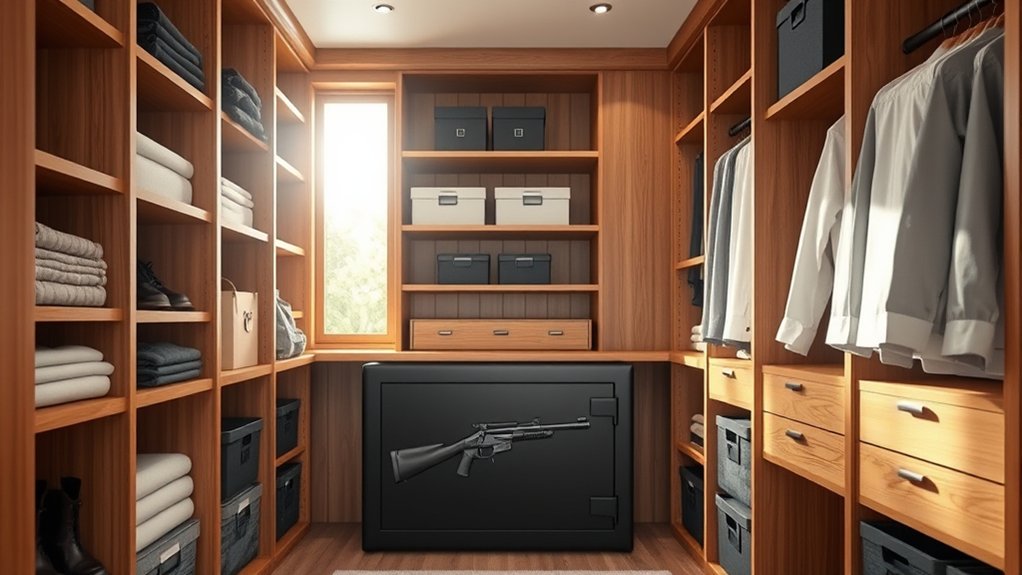
When you’re placing your gun safe in a closet, make sure to lock the closet door. This adds an important layer of security against casual intruders.
Also, check that there’s enough space around the doorframe so you can get to the safe quickly and without any obstacles.
Another thing to keep in mind is the closet floor. It needs to be strong enough to support the weight of the safe, which helps keep everything stable and safe over time.
Taking these steps will make your gun safe both secure and accessible when you need it.
Closet Security Measures
Although closet placement offers convenience, securing your gun safe within this space demands strategic measures to prevent unauthorized access. Start by installing locking closet doors to deter casual observation and unauthorized entry effectively.
Incorporate accessibility planning to balance security with quick retrieval during emergencies. Arrange the closet layout so the safe is reachable without compromising concealment. Position your gun safe behind clothing or in a discreet corner to reduce visibility further.
Regularly inspect the closet’s locking mechanisms and structural integrity to guarantee ongoing reliability. These security measures create a robust defense against theft while maintaining the practical benefits of closet storage.
Space and Accessibility
Since closet gun safes rely heavily on concealment, you must ascertain the surrounding space allows quick and unobstructed access while maintaining privacy.
Adequate space around the closet doorframe is vital to confirm you can reach the safe promptly in emergencies. Positioning the safe in a hidden location within the closet enhances security by reducing visibility and burglary risk.
You should also lock the closet door to deter unauthorized access, increasing the overall protection for your safe. Proper installation and anchoring within this confined space prevent easy removal or tampering.
Balancing space and accessibility means your gun safe remains both secure and readily available.
This approach reinforces the closet as an effective storage choice that prioritizes both concealment and operational efficiency. It’s all about making sure you can get to your safe quickly when you need it, but without anyone else knowing where it is.
Bedroom Gun Safe Placement for Privacy and Access
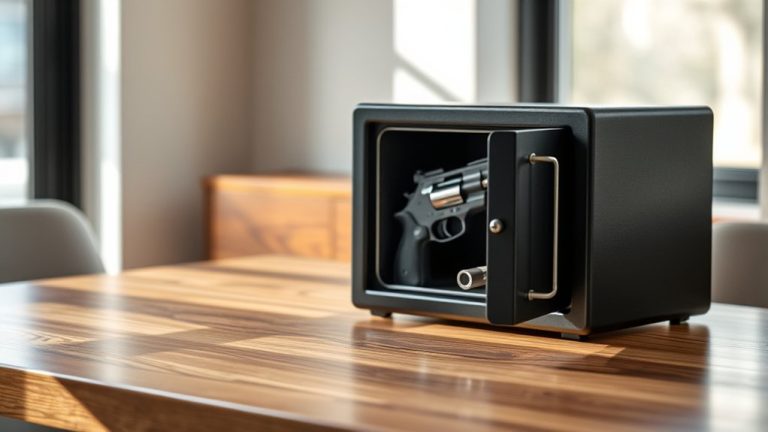
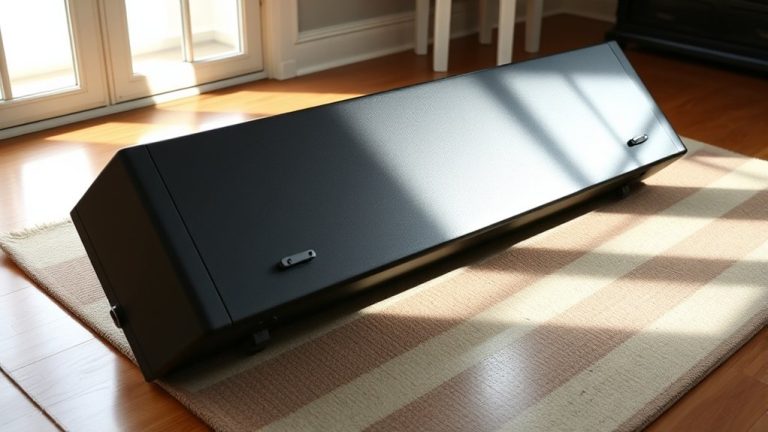
Because immediate access to firearms can be critical during emergencies, placing a gun safe in your bedroom offers significant advantages. You guarantee firearm safety by choosing discreet locations, such as a hidden gun safe under the bed or inside a locked closet. This balances privacy with quick retrieval.
Prioritize advanced locking mechanisms like biometric locks. They provide robust security while enabling rapid access.
Also, consider structural integrity; your bedroom floor must support the safe’s substantial weight, often exceeding 1,500 pounds, to prevent damage or instability.
Since bedrooms are frequent burglary targets, concealment is essential to deter thieves and protect your firearms. By strategically positioning a hidden gun safe in the bedroom, you optimize both privacy and readiness without compromising security or accessibility.
Pros and Cons of Garage Gun Safe Storage
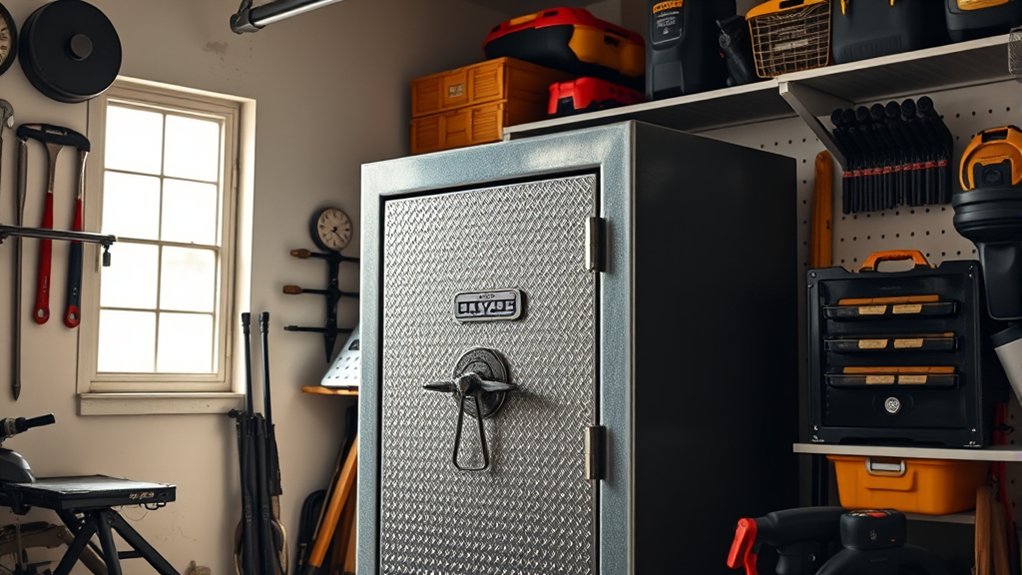
Storing your gun safe in the garage has its perks. For one, it’s super convenient—you get easy access without having to bring firearms into your main living spaces.
Plus, keeping guns out of sight in the garage can help maintain a sense of security inside your home.
That said, there are some downsides to consider. Garages can be more vulnerable to break-ins, so you’ll want to beef up your security measures.
On top of that, temperature swings and humidity in the garage can cause damage to your firearms over time if you’re not careful.
Another thing to keep in mind is how quickly you can get to your safe in an emergency. Depending on your garage setup, it might take a little longer to reach your firearms when you need them most.
Security Risks
One major security risk of keeping a gun safe in the garage is exposure to extreme temperature and humidity changes. These conditions can degrade both firearms and ammunition over time.
So, it’s something you really need to think about before deciding where to store your guns.
When considering gun storage, you also have to evaluate the garage’s typically lower home security level. Garages are often easier targets for thieves who might use vehicles to force entry.
This makes the risk of opportunistic theft higher, especially if the safe is visible or if someone suspects it contains valuables.
While the garage offers a discreet location, it’s important to keep your gun safe out of sight to minimize attention.
At the end of the day, these security risks require careful assessment. You want to make sure your firearms stay protected without compromising your home’s overall security or the integrity of your gun storage.
Accessibility Challenges
While a garage may seem like a convenient spot for your gun safe, you’ll face notable accessibility challenges. Although a large gun safe fits well and offers space for extensive collections, clutter and obstructions can delay your access during emergencies. This delay becomes critical in a home invasion when every second counts.
Moreover, garages often lack robust security features, making rapid access a double-edged sword. It might aid you but also thieves who exploit quick vehicle exits. You must guarantee the safe is bolted down and well-secured to mitigate risks.
Balancing ease of access with security is essential. Garages present inherent accessibility challenges that can compromise both your response time and the safe’s protection during urgent situations.
Environmental Factors
Because garages typically lack climate control, you’ll expose your firearms to temperature and humidity fluctuations that can cause corrosion and damage over time.
When considering garage gun safe storage, weigh these environmental factors carefully:
- Humidity and Moisture: Garages often experience elevated humidity and moisture buildup, accelerating rust and compromising firearm integrity.
- Pest Risks: Garages can harbor pests that may damage gun safe seals or ammunition packaging, so it’s important to stay on top of maintenance.
- Security Concerns: While garages keep your safe out of direct sight, their doors are common burglary targets, which lowers overall security.
You need to balance the convenience of garage storage against these risks.
Without climate control and solid security measures, you increase the chances of firearm damage and theft.
That’s why garages mightn’t be the best spot for your gun safe.
Concealed Rooms and Hidden Wall Panels for Extra Security
When you incorporate concealed rooms or hidden wall panels into your home, you add a powerful layer of security that keeps your gun safe out of plain sight and less vulnerable to theft.
Concealed rooms offer additional security by completely hiding the safe, reducing the risk of detection by intruders.
Concealed rooms provide enhanced protection by fully hiding safes from potential intruders.
Hidden wall panels provide a discreet alternative, integrating the safe within your home’s structure while saving floor space. However, these panels require meticulous construction to avoid signs of tampering, such as fingerprints or worn handles.
Utilizing custom furniture like bookcases can further disguise your safe, blending functionality with concealment.
How to Anchor and Install Your Gun Safe Right
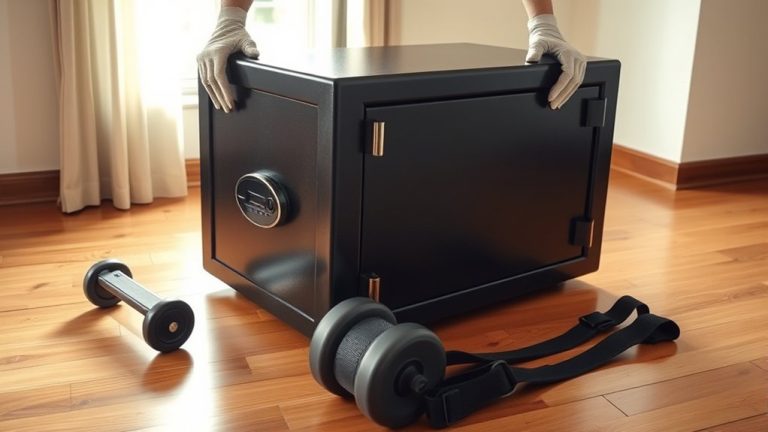
You’ll want to pick the right anchoring materials that suit both your safe’s weight and the surface you’re installing it on.
It’s really important to follow the manufacturer’s step-by-step instructions carefully—this helps ensure a secure fit and keeps your warranty intact.
When you secure your safe properly, you’re not just preventing theft; you’re also protecting it from tipping over and any related operational problems.
Choosing Anchoring Materials
Though selecting the right anchoring materials might seem straightforward, it’s essential for guaranteeing your gun safe remains immovable and secure. The effectiveness of your installation hinges on choosing materials tailored to your floor type and safe model.
To confirm your gun safe is securely fastened, consider these key points:
For concrete floors, use heavy-duty lag bolts or concrete anchors designed to provide maximum stability.
On wooden floors, opt for lag screws long enough to penetrate both the safe base and the floor joists, ensuring firm attachment.
Always use a mounting kit with hardware specified by the manufacturer, following their installation guidelines to avoid damage and maintain safety.
Regular inspection of anchoring materials post-installation guarantees ongoing security and prevents loosening over time.
It’s a simple step that helps keep your safe exactly where it should be. So, don’t skip it!
Installation Step-by-Step
Five critical steps guarantee your gun safe anchors securely and functions efficiently.
First, choose the right location. Opt for a stable, dry area with minimal humidity and temperature shifts to protect your firearms.
Next, verify the structural support can handle the safe’s heavy weight, which often exceeds 1,500 pounds.
Then, follow the manufacturer’s installation instructions carefully to confirm proper setup.
Use heavy-duty anchoring kits to secure your gun safe firmly to the floor or wall. This will enhance stability and keep everything in place.
Finally, regularly inspect the installation to maintain its integrity over time.
This precise, step-by-step approach ensures your gun safe stays securely installed, safe from accidental tipping or damage, and fully functional for the long haul.
Securing Against Theft
Securing your gun safe against theft demands meticulous attention to anchoring and installation methods. To keep your safe secure and hidden from thieves, focus on these critical steps:
- Use manufacturer-approved mounting kits to anchor the safe firmly to the floor or wall. This helps prevent easy removal.
- Select a concealed location to reduce visibility and avoid attracting thieves scouting for obvious targets.
- Regularly inspect anchor points and locking mechanisms. Consider adding alarms or surveillance cameras to boost security.
Following the manufacturer’s instructions precisely guarantees proper installation and maximum function.
By combining physical anchoring with hidden placement and electronic deterrents, you create a robust defense that minimizes theft risk effectively.
Your gun safe’s security depends on this integrated approach, so don’t overlook any element.
Protecting Your Gun Safe From Moisture, Fire, and Pests
Because moisture, fire, and pests pose significant threats to your gun safe’s contents, you need to take deliberate steps to protect it.
Controlling moisture is critical. Use dehumidifiers in humid areas and place your safe on elevated or flood-resistant surfaces to prevent water damage.
Opt for fire-resistant safes with verified protection ratings to shield firearms during fires.
Pest prevention is equally essential. Choose locations free of pests and regularly inspect your safe to avoid infestations that can corrode or damage your firearms.
Furthermore, climate-controlled environments with stable temperatures, such as basements, help maintain ideal conditions inside your safe.
Balancing Gun Safe Access and Security During Emergencies
After protecting your gun safe from environmental threats, you need to think about how quickly and securely you can access it during an emergency. Balancing accessibility with security is critical to effective use. So, keep these key points in mind:
Consider both speed and security when accessing your gun safe in emergencies for effective protection.
- Location: Place the gun safe near primary living areas but out of direct view from windows or doors. This helps optimize both accessibility and security.
- Time: Make sure you can open the safe within 30 seconds because most emergencies unfold quickly.
- Usability: Choose a safe that all responsible adults can manage. It should be securely anchored but not so cumbersome that it slows you down.
Regular drills improve readiness. They make sure everyone knows how to access the gun safe promptly without compromising security.
Just avoid hiding it too well—that might delay access when every second counts.
How to Hide Your Gun Safe Using Furniture and Covers
Furniture and covers offer practical solutions to conceal your gun safe without sacrificing accessibility. You can use concealment furniture like armoires or bookcases with hidden compartments to effectively disguise your gun safes while providing extra storage.
Custom-designed pieces integrate gun safes seamlessly, but avoid unique features that could draw unwanted attention. Decorative covers reduce visibility and protect from dust. Just make sure they don’t block quick access during emergencies.
Wall-mounted gun safes hidden behind artwork or tactical wall panels keep a discreet profile while securing firearms. Disguise tables also serve as practical concealment furniture, balancing accessibility and security.
Frequently Asked Questions
What Type of Gun Safe Lock Is Most Secure?
The most secure gun safe lock combines digital locks with mechanical locks, creating hybrid options that demand two forms of authentication.
Digital locks offer quick, programmable access, while mechanical locks provide reliable, tamper-resistant backup without electronic vulnerabilities.
This dual approach greatly reduces the risks of unauthorized entry.
By choosing hybrid options, you get the best of both worlds—strength and reliability.
Plus, these locks are especially secure and durable when they meet high certification standards like UL ratings.
It’s a smart way to keep your firearms safe and sound.
How Often Should I Service or Inspect My Gun Safe?
You should inspect your gun safe at least twice a year. Following inspection frequency guidelines helps catch common service issues early.
Safe maintenance tips include checking locking mechanisms, hinges, and humidity levels inside.
Annually, test and update electronic lock batteries or change combinations to guarantee security.
Regular inventory checks help confirm all contents remain accounted for.
Sticking to these routines keeps your safe working efficiently and protects your firearms effectively.
Can I Store Ammunition Safely Inside the Gun Safe?
Yes, you can store ammunition safely inside the gun safe if you consider key factors.
Prioritize ammunition storage in a fire-protected safe with adequate ventilation to prevent moisture buildup and corrosion.
Keep ammo separate from firearms, and make sure the safe is securely locked.
Regularly inspect rounds for damage and comply with local laws.
Proper fire protection and ventilation are essential to maintain ammunition integrity and ensure your safe storage practices are effective.
What Is the Best Gun Safe Size for Multiple Firearms?
For effective firearm storage, choose a gun safe sized between 24 to 50 cubic feet, depending on how many guns you own.
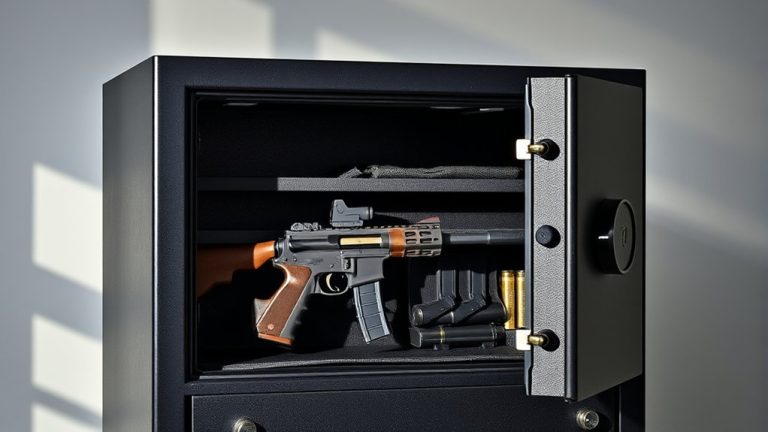
Your safe dimensions should accommodate rifles with scopes and leave room for handguns and accessories.
Prioritize adjustable shelving to enhance gun organization, making your collection accessible and secure.
If you have a larger collection, aim for a safe that fits at least 30 to 40 guns.
This way, you avoid overcrowding and maintain ideal protection.
Are Biometric Gun Safes Reliable for Quick Access?
Yes, biometric gun safes are reliable for quick access thanks to advanced biometric technology that recognizes your fingerprint almost instantly.
You’ll benefit from impressive access speed, often opening in under a second, which is essential during emergencies.
This technology makes things more convenient by eliminating the need for keys or codes. Just place your finger on the sensor, and you’re in.
That said, you do need to maintain the sensor properly and pick a high-quality safe.
This helps ensure consistent performance and avoids any frustrating delays when you need access the most.
Conclusion
Choosing the right spot for your gun safe is like finding the perfect vault. Security and accessibility have to balance perfectly. You want a location that protects against moisture, fire, and pests while offering quick access when needed.
Whether it’s a climate-controlled basement or a cleverly hidden closet, anchoring and proper installation are non-negotiable. By thoughtfully selecting and securing your safe, you guarantee your firearms remain both protected and within reach, no matter the situation.