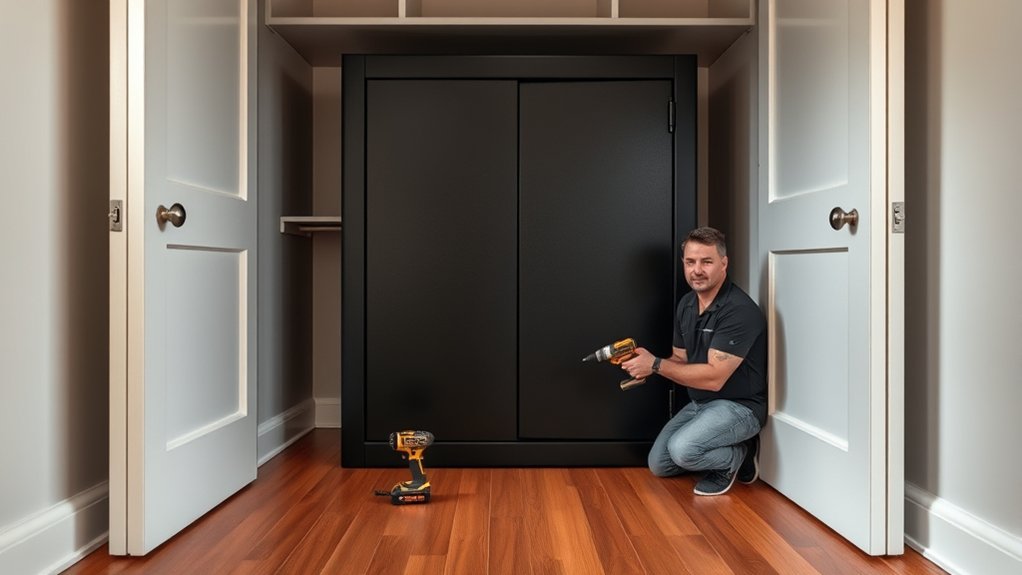
How to Install a Gun Safe in a Closet
To install a gun safe in your closet, start by selecting a model that fits your space and offers strong locking. Measure carefully, making sure the safe’s door opens fully without any obstructions. It’s important to verify the closet floor is stable and can support the safe’s weight, especially if it’s on an upper level.
Then, bolt it securely to keep it from being stolen. Place the safe discreetly so it’s easy to access but out of sight. You’ll also want to plan for ventilation and climate control to protect your firearms.
Keep following to uncover detailed installation and maintenance strategies. There’s a lot to consider, but with the right prep, your gun safe will be both secure and functional.
Choose the Best Closet Gun Safe for Your Space
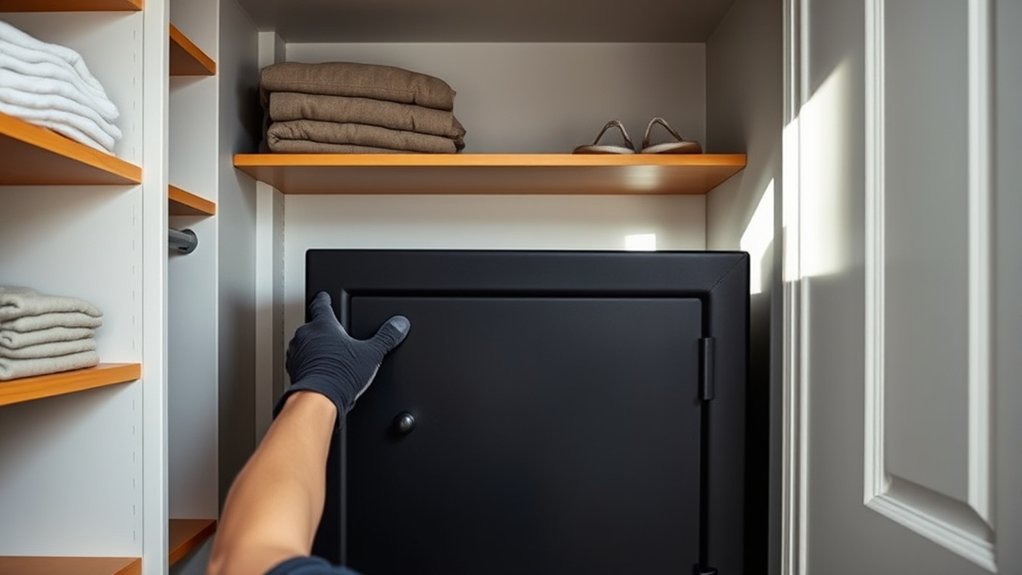
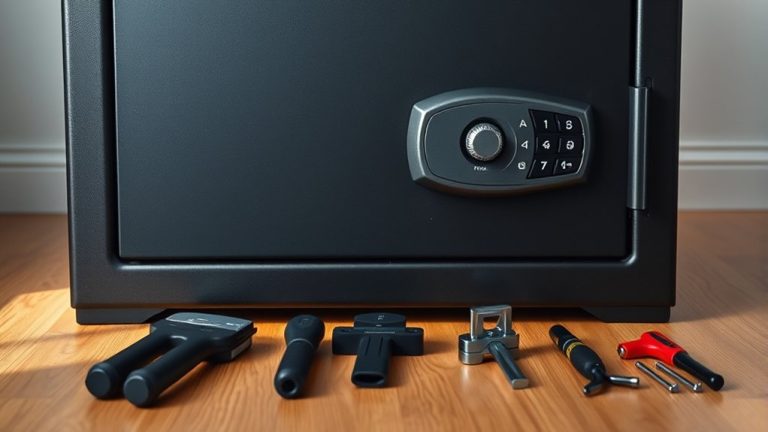
When choosing the best closet gun safe for your space, start by prioritizing models that can be securely bolted to the floor to enhance stability and theft protection.
You want gun safes that offer secure storage through robust locking mechanisms like biometric locks, keypad access, or traditional keys. These options balance quick emergency access with strong deterrence against unauthorized users.
Evaluate the fire protection rating carefully because many closets lack inherent fire resistance.
Choose a safe that fits your closet’s dimensions while maximizing capacity without obstructing access.
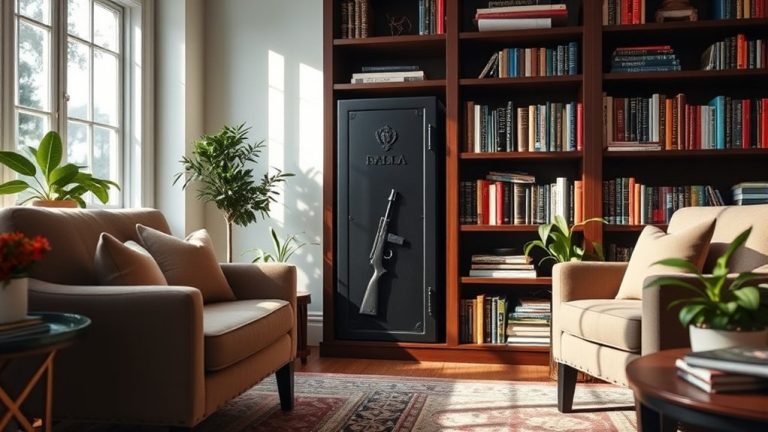
Also, consider concealed safes or those integrated with closet décor to further reduce theft risk.
Your selection should combine physical security, fire resilience, and efficient design. This way, your firearms remain both protected and accessible within your closet’s confines.
Pick the Right Location in Your Closet
Although selecting a secure closet gun safe is essential, placing it correctly within your closet is just as important to maximize protection and accessibility.
Choose a discreet spot for your gun that isn’t visible from outside the closet. Ideally, tuck it in a corner or behind other items to prevent unauthorized access.
Select a hidden spot inside your closet, like a corner or behind items, to keep your gun out of sight.
Avoid positioning the safe near windows or doors to reduce exposure to potential thieves. Make sure the safe rests on stable flooring, like a concrete slab, to support its weight and keep its structure solid.
At the same time, place it so you can get to it quickly and easily during emergencies without giving up concealment.
If your closet tends to be humid, think about adding a dehumidifier to protect your firearms from corrosion.
Thoughtful placement is all about balancing security with function. This way, your safe works as effectively as possible.
Measure and Prepare Your Closet Space
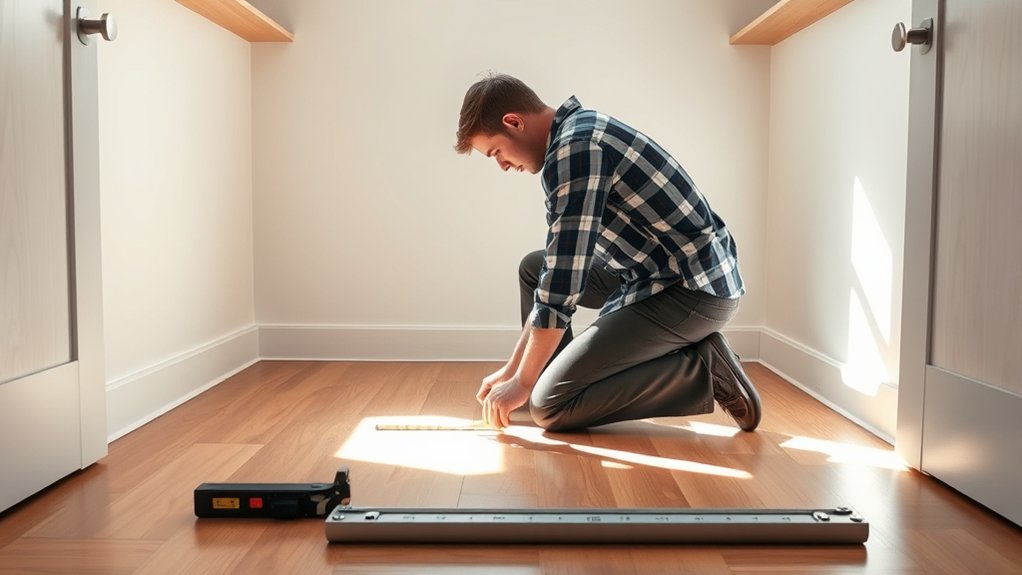
Securing the ideal spot for your gun safe within the closet sets the stage for accurate measurements and proper preparation.
First, measure and prepare by precisely gauging the closet’s height, width, and depth to guarantee the safe fits without crowding other items. Identify any obstructions like shelves, hanging rods, or light fixtures that could interfere with installation.
Evaluate accessibility to confirm the safe’s door opens fully without obstruction. Verify the storage location accommodates electrical outlets for dehumidifiers or lighting and allows adequate ventilation.
By methodically measuring and preparing your closet space, you optimize both safety and functionality, ensuring the gun safe integrates seamlessly into your designated storage location.
This foundational step is critical before moving forward with installation. Taking the time now will save you headaches later and make sure everything fits just right.
Check Floor Strength and Stability Before Installation
Before you install your gun safe, make sure to check that your floor can handle its weight. Compare the safe’s specifications with your floor’s load capacity to be certain.
Also, take a close look for any structural issues like cracks or sagging.
It’s important to confirm that the surface is level, too, so your safe operates smoothly.
Assess Floor Load Capacity
Three critical factors determine whether your floor can safely support a gun safe: the safe’s weight, its footprint, and the floor’s structural integrity.
To accurately assess floor load capacity, start by measuring the safe’s dimensions and weight. Compare these against the standard residential floor load limit, which is typically 40 pounds per square foot, to guarantee compliance with structural requirements.
If the safe exceeds this threshold, consider reinforcing the floor or relocating it to a concrete slab for better load distribution.
It’s also important to inspect the closet floor thoroughly for any weak spots or damage that could undermine stability.
When installing on upper floors, it’s a good idea to consult a structural engineer to verify that the joists and flooring can handle the load.
Taking these steps ensures you avoid structural failure and guarantees a secure, long-lasting installation.
Identify Structural Limitations
Although you may have assessed the general load capacity of your floor, it’s essential to verify the specific structural limitations within the closet where the safe will reside. The closet floor’s structural integrity must be sufficient to support the safe’s considerable weight, which can exceed several hundred pounds.
This is especially critical if the closet is on an upper level, where floors often aren’t designed for heavy loads.
Carefully inspect the closet floor for any signs of weakness, damage, or flexibility under pressure. Also, confirm that no hidden plumbing or electrical lines lie beneath the installation area to avoid costly damage.
Taking these steps ensures you won’t run into unexpected problems.
Making sure the closet floor is strong and stable before installation safeguards both your property and the safe’s functionality. It’s better to be cautious now than deal with issues later on.
Ensure Level Surface Stability
When installing a gun safe, you need to make sure the floor provides a stable, level surface that can support its substantial weight. This step is really important because it guarantees level surface stability and helps prevent any operational issues.
Start by checking the floor’s load capacity, especially if you’re not placing the safe in a garage or on a concrete slab. Wooden floors might need some reinforcement or shims to get everything balanced just right.
Also, avoid post-tension slabs since they can cause structural damage.
Here are a few key points to keep in mind: assess the flooring material and load capacity before installation. Use a level to align the safe precisely. And if you have wooden floors, reinforce or shim them to keep things stable.
Clear the Path and Protect Flooring for Moving the Safe
Before moving your gun safe, you need to clear the entire path of any obstacles and keep bystanders away to guarantee a smooth and safe transport. Clear the path thoroughly, removing furniture, rugs, or any tripping hazards that could get in the way.
Next, protect your flooring by laying down plywood sheets or sturdy cardboard along the route. This will help prevent scratches and dents caused by the safe’s weight and movement.
Protect your floors by placing plywood or sturdy cardboard along the moving path to avoid damage.
Use a heavy-duty dolly or moving straps to keep control and reduce the risk of injury. If the safe is really heavy or bulky, think about hiring professional movers for safety and efficiency.
Make sure to keep communication clear with everyone involved. This way, everyone sticks to safety protocols throughout the process.
Following these steps will help you move your gun safe securely while protecting your home’s flooring.
Level and Secure the Gun Safe to the Closet Floor
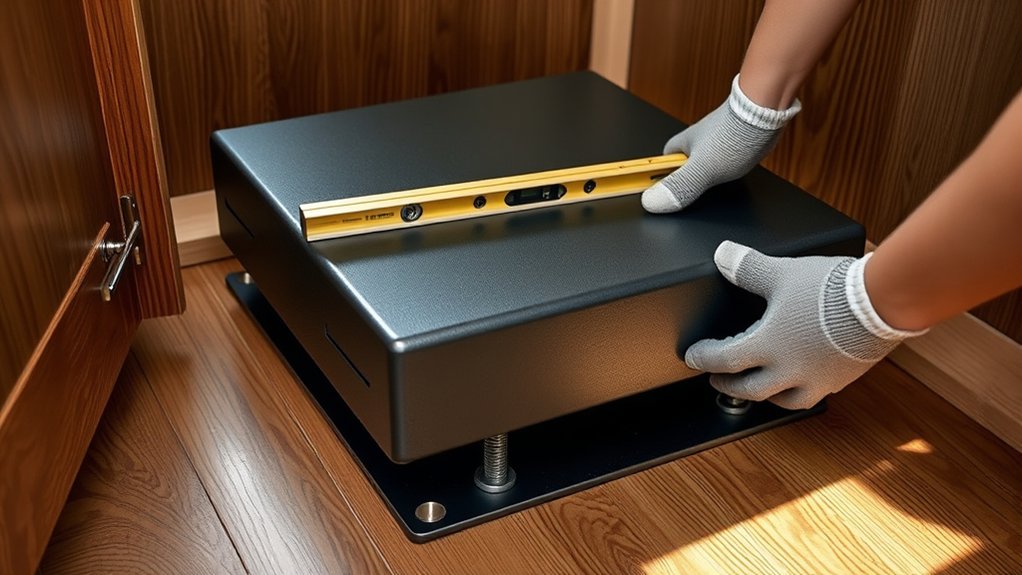
First, you’ll want to check the closet floor’s load capacity before placing the safe there. This helps make sure you don’t accidentally cause any structural damage.
Next, grab a level and place it on the safe to make sure it’s sitting perfectly flat. This step is important because if the safe isn’t level, you might run into lock problems or other operational issues down the line.
Finally, secure the safe using the right kind of anchors. If you have a concrete floor, bolts will do the trick.
For wooden floors, go with wood screws. This will keep the safe stable and add an extra layer of protection against theft.
Assess Floor Load
Two critical steps guarantee your gun safe is both stable and secure: verifying the floor’s load capacity and properly leveling the safe.
First, assess floor load by confirming the closet floor can support the safe’s weight, especially on upper levels. Failure to do so risks structural damage.
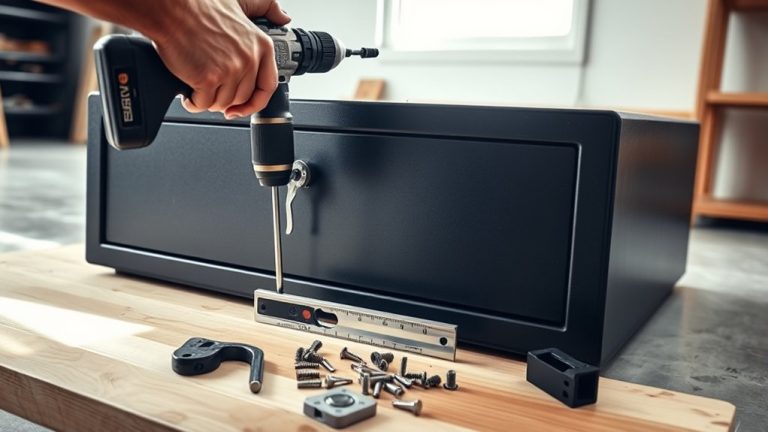
Next, securely anchor the gun safe by bolting all four corners to the floor. This enhances both stability and theft resistance.
Take care to avoid hidden infrastructure like plumbing or electrical lines during installation.
If your closet has a concrete slab, install moisture barriers to prevent water damage while maintaining a secure anchor.
- Assess floor load capacity before installation
- Securely anchor the safe by bolting all corners
- Avoid drilling into hidden infrastructure for safety
Leveling Techniques
When installing your gun safe, ensuring it sits perfectly level on the closet floor is essential to prevent lock malfunctions and maintain safety. Use precise leveling techniques by positioning a level on the safe’s top surface and adjusting as needed.
If the closet floor is uneven, place wood shims under the safe’s corners to achieve stability and proper alignment. This prevents shifting that could impair locking mechanisms.
After leveling, you’ll need to securely anchor the safe to the floor by bolting all four corners. This enhances resistance to theft and movement.
Before drilling, verify the floor’s structural capacity and avoid post-tension slabs to prevent damage. Regularly inspect the leveling and anchoring to maintain ideal security and functionality over time.
Secure Anchoring Methods
How exactly do you guarantee your gun safe remains immovable and fully operational? Employing secure anchoring methods is essential to prevent theft and ensure reliable use. First, verify the closet floor’s load capacity, especially on upper levels, to support the safe’s weight.
Use a level to align the safe perfectly; improper leveling risks lock malfunctions. Finally, bolt all four corners to the floor using appropriate hardware, minimizing tampering risks. Before drilling, use a stud finder to avoid hidden wiring or plumbing.
For concrete floors, place a moisture barrier beneath the safe to prevent corrosion.
Key steps to secure anchoring methods:
- Confirm floor load capacity to support safe weight
- Level the safe precisely to avoid operational issues
- Bolt safe securely on all corners to prevent theft
Bolt Your Closet Gun Safe to Prevent Theft
Securing your closet gun safe by bolting it to the floor or wall greatly lowers the chance of theft. It stops intruders from easily removing the entire safe, which is a huge advantage.
To bolt your closet gun safe effectively, use heavy-duty anchor bolts. Make sure to follow the manufacturer’s installation guidelines carefully to guarantee maximum security and stability. Anchor the safe at all four corners to provide balanced resistance against theft attempts.
Before drilling, use a stud finder to avoid hidden plumbing or electrical lines. This step is important because it keeps you safe and ensures a quality installation.
After installation, regularly check the bolts and safe positioning. This helps maintain the structural integrity over time.
Plan for Power and Climate Control in Your Closet
You’ll want to make sure your closet has electrical outlets in the right spots to power things like dehumidifiers and lighting.
This will help create the ideal conditions inside your safe. Installing a good dehumidifier and picking a climate-controlled space can really make a difference by preventing moisture damage and keeping temperatures steady.
Electrical Outlet Placement
Since maintaining proper climate control is crucial for preserving your firearms, placing electrical outlets strategically in your closet is essential. Proper electrical outlet placement guarantees you can power devices that combat high humidity, reducing moisture damage risks.
Position outlets at least 12 inches above the floor to avoid water exposure and accommodate your gun safe’s height. Use GFCI-protected outlets to enhance safety in potentially damp environments.
If you plan on multiple devices, consider a dedicated circuit to prevent overload. Place outlets within easy reach for dehumidifiers and climate control devices.
Choose GFCI outlets to prevent electrical hazards in high humidity areas. Use surge-protected power strips for added device protection and convenience.
This precise approach optimizes power access while safeguarding your firearms and equipment. It’s all about making sure your setup works smoothly and safely.
Dehumidifier Installation Tips
Proper electrical outlet placement sets the foundation for installing a dehumidifier that maintains ideal humidity levels in your gun safe closet. To optimize performance, select a compact, energy-efficient dehumidifier designed for tight spaces.
Position it on an elevated platform to enhance air circulation. Monitor humidity levels frequently with a hygrometer to prevent rust and corrosion on your firearms. Keep the closet clean and uncluttered to avoid obstructing airflow.
| Tip | Reason | Benefit |
|---|---|---|
| Use compact dehumidifier | Fits small closet spaces | Saves space |
| Place on elevated platform | Improves air circulation | Enhances efficiency |
| Regularly check humidity | Guarantees proper function | Prevents moisture damage |
| Maintain uncluttered closet | Promotes airflow | Extends dehumidifier life |
These dehumidifier installation tips help safeguard your firearms effectively.
Climate Control Options
How do you guarantee your gun safe’s environment remains stable year-round? Effective climate control is essential to protect your firearms from temperature extremes and moisture damage.
Plan your closet setup with power access for devices that manage humidity levels and temperature. Key considerations include installing a dehumidifier near an electrical outlet to maintain ideal humidity levels between 30-50%.
You might also want to use a small air conditioner or heater to regulate temperature fluctuations that could harm your safe’s contents. Incorporating a hygrometer helps you continuously monitor humidity levels and adjust climate control devices accordingly.
Additionally, make sure you have adequate ventilation to prevent heat buildup. Using insulated materials can enhance temperature stability too.
These measures provide a controlled environment that safeguards your investment effectively.
Add Concealment Features to Keep Your Gun Safe Hidden
Although securing your gun safe is crucial, effectively concealing it adds an essential layer of protection by reducing its visibility to intruders. You can incorporate concealment features such as hidden doors, false walls, or swinging mirrors that disguise the safe’s location without drawing attention.
Concealing your gun safe with hidden doors or false walls enhances security by keeping it out of sight.
Bookshelves with sliding panels or furniture like benches designed to store firearms provide discreet storage integrated with your decor.
When selecting concealment options, prioritize designs that don’t compromise quick access. This way, you can retrieve your firearms swiftly in emergencies.
Balancing concealment with accessibility is important because it maintains security while allowing practical use.
Ensure Safe and Easy Access to Your Gun Safe
When you select a closet location for your gun safe, prioritize a balance between discretion and accessibility. This helps guarantee you can reach your firearms quickly without compromising security.
Choosing the best location means finding a discreet yet accessible spot, preferably in a less frequented area.
Make sure the closet door opens fully without any obstruction. This allows for swift access when you need it.
Also, don’t forget to incorporate essential security features, like bolting the safe to the floor to prevent theft.
Some key things to keep in mind include selecting a closet with ample space for the safe’s door to move freely.
Use concealment techniques that don’t get in the way of quick access.
And finally, monitor humidity and temperature to preserve both your firearms and the safe’s operation.
Frequently Asked Questions
What Type of Gun Safe Lock Is Most Secure?
The most secure gun safe lock combines biometric locks with keypad security, giving you dual-layer protection.
Biometric locks guarantee only your fingerprint grants access, while keypad security adds a code barrier, deterring unauthorized entry.
This dual system minimizes risks from hacking or lost keys alone.
By choosing this setup, you maximize security and quick access.
It protects your firearms with advanced technology that’s hard to bypass or compromise.
How Often Should I Service or Maintain My Gun Safe?
Picture your gun safe as a fortress guarding your valuables. For ideal protection, follow safe maintenance tips by performing a regular inspection at least twice a year.
Check locks, hinges, and seals for wear, and replace electronic lock batteries every 6 to 12 months.
Clean the safe interior and exterior to prevent corrosion, and use humidity control to avoid moisture damage.
A professional inspection every 1 to 2 years keeps your safe’s security uncompromised.
It’s all about staying on top of things to keep your valuables safe and sound.
Can I Install a Gun Safe on Carpeted Closet Floors?
You can install a gun safe on carpeted closet floors, but safe positioning is essential.
Carpet can cause uneven weight distribution, which might risk lock malfunctions or tipping. To guarantee stability, place a sturdy plywood board under the safe to distribute weight evenly.
Also, make sure to anchor the safe properly since carpet absorbs some of the anchoring force.
Check the carpet thickness and adjust accordingly to keep the safe level and secure for long-term use.
This way, your safe stays steady and works as it should.
What Are the Legal Requirements for Gun Safe Installation?
You must comply with gun ownership laws that often mandate safe storage to prevent unauthorized access, especially if minors live in your home.
Check your state and local regulations carefully, as requirements vary widely. Some require locking devices or bolting the safe to the floor or wall.
Insurance policies may also dictate installation standards.
Staying informed about legal updates guarantees your gun safe installation meets all safety and legal obligations. This way, you avoid any penalties.
How Do I Protect My Safe From Fire or Water Damage?
You protect your safe from fire or water damage by selecting fireproof materials rated for high heat resistance, like UL 72-certified safes.
Apply waterproof coatings or place moisture barriers beneath the safe to prevent water intrusion.
It’s also a good idea to elevate the safe off the floor to avoid flood damage.
Make sure to maintain seals and gaskets so you have a tight barrier against smoke and moisture.
Using dehumidifiers nearby helps control humidity, which reduces the risk of corrosion inside your safe.
Taking these steps keeps your valuables safer from fire and water damage.
Conclusion
Installing your closet gun safe is like fitting a puzzle piece perfectly. It requires careful measurement, secure bolting, and thoughtful placement.
By choosing the right safe, ensuring floor stability, and adding concealment, you create a secure and accessible space that protects your firearms effectively. Don’t overlook power and climate control because they’re essential for long-term preservation.
Follow these steps precisely to safeguard your investment and maintain peace of mind every time you reach for your gun safe. It’s all about making sure your safe works for you, not the other way around.