How to Get Into a Gun Safe If You Lost the Key
If you lost your gun safe key, start by checking for spare keys with the manufacturer using your safe’s serial number. You can also contact a locksmith for key replacement.
For electronic safes, try replacing the battery or using a factory reset if possible. Avoid forcing the lock because it can cause damage.
As a last resort, carefully drilling the lock or seeking professional non-destructive entry methods can help. Keep your backup keys and combinations secure to prevent future lockouts.
There are more detailed solutions you can try if needed.
Common Reasons for Gun Safe Lockouts
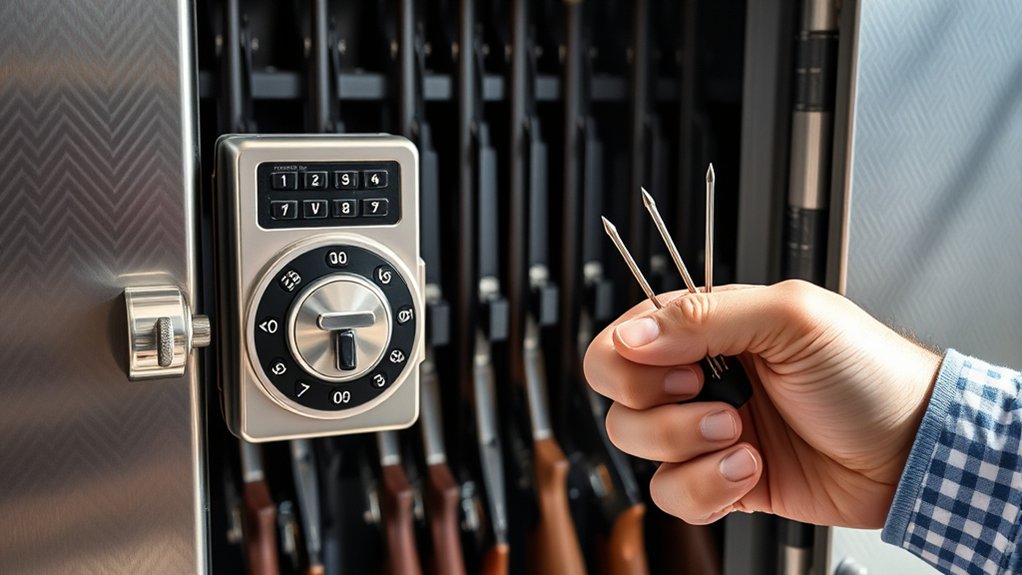
Although gun safes provide secure storage, you can easily get locked out if you lose the key, forget the combination, or face a malfunctioning electronic keypad. Many safe owners experience lockouts when mechanical dial locks become inaccessible due to forgotten combinations, similar to misplaced locker codes.
Digital keypads pose risks when batteries die or codes are forgotten, making regular battery maintenance essential. Misplacing or hiding the key in an overlooked location is another common cause of lockouts for key-locked safes.
Attempting DIY entry can damage your safe’s locking mechanism, so it’s practical to contact a professional locksmith or the manufacturer. These experts have the proper tools and methods to regain safe access efficiently and without causing harm, ensuring your firearms remain secure and undamaged.
How to Find Spare Keys or Get Replacements
Spare keys serve as an essential backup for accessing your gun safe without delay. To find a spare key or get replacement keys, start by checking the safe’s manufacturer. They often provide replacements using the safe’s serial number or key code, which you can find stamped inside or on the back of the safe.
If this isn’t an option, consider these steps:
- Search online for replacement keys specific to your safe model.
- Call a locksmith experienced with your brand who can fabricate a new key.
- Keep a record of your key’s location and store a spare key in a secure but accessible place.
What to Do If You Forget Your Gun Safe Combination
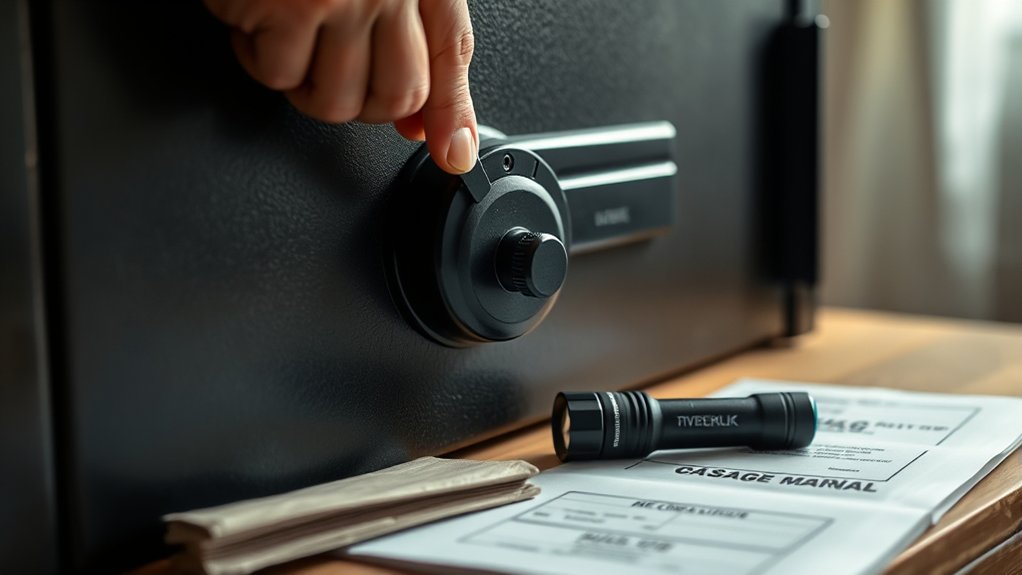
If you forget your gun safe combination, start by checking whether your safe includes a factory reset option. This can restore default settings and allow access.
Make sure to wait at least 30 minutes after failed attempts, as many safes have lockout features that temporarily disable input.
To open the safe, keep a secure record of your combination to prevent future lockouts. If reset options fail, contact the manufacturer for guidance tailored to your model.
Avoid repeated incorrect attempts to prevent extended lockouts.
If your safe is electronic and you’ve exhausted troubleshooting, you may need to buy a new lock or safe as a last resort.
Always make sure to maintain your lock’s functionality by regularly updating codes and storing them securely. It’s better to be safe than sorry!
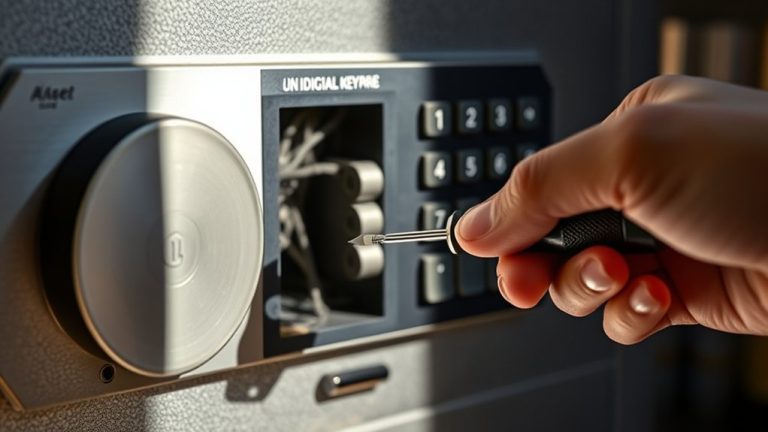
Troubleshooting Electronic Keypad and Battery Issues
When you can’t access your safe despite knowing the correct combination, the electronic keypad and its power source are often the first areas to check.
To open a gun safe with an unresponsive keypad, follow these steps:
First, replace the battery immediately. Dead or weak batteries are the most common cause of keypad failures. Use fresh batteries and consider changing them every six months to prevent lockouts.
Next, check for a secondary input method on your safe, such as a backup key slot, and use a new key if you have one.
Also, after multiple failed attempts, wait 30 minutes before trying again. Many safes enter a lockout mode to protect against unauthorized access.
If you’re still having trouble, consult your safe’s manual for model-specific troubleshooting or factory reset options.
DIY Tools to Pick Basic Gun Safe Locks
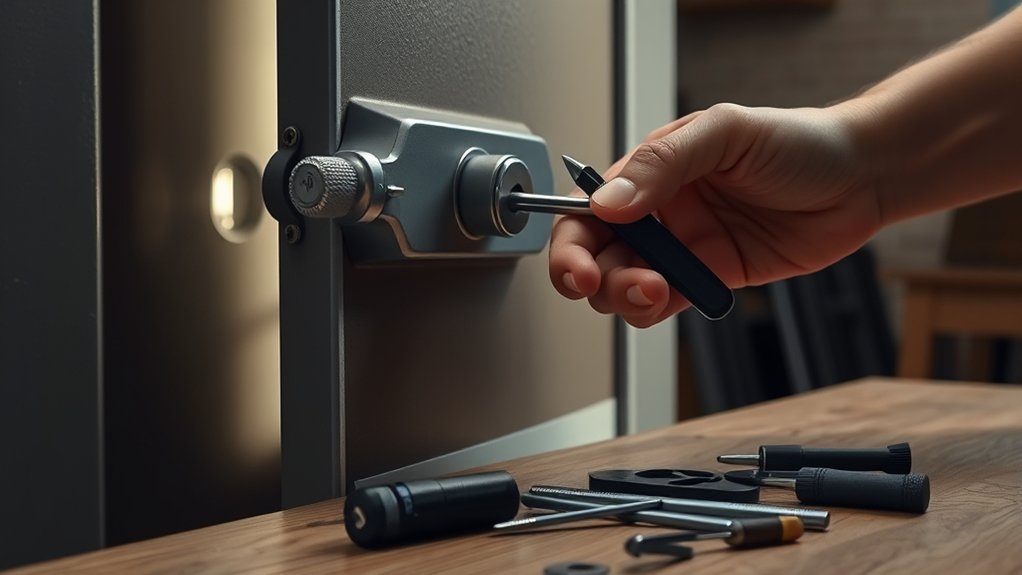
You can use a flattened paperclip to fiddle with the pins inside basic gun safe locks until you hear that satisfying click.
It’s all about feeling those tiny movements as the pins line up.
A nail file works in a similar way. Just stick its sharp tip into the keyhole and wiggle it around while turning clockwise.
It takes some patience, but with steady pressure and careful movements, you can get those pins to release the mechanism.
Basically, both tools need a gentle touch and a bit of practice to get the hang of it.
Keep at it, and you’ll start to feel how the lock responds.
Paperclip Lock Picking
Straighten and flatten a paperclip to fashion a basic lock pick capable of engaging the pins inside a simple gun safe lock. This DIY approach can help you access a home safe without a key.
Use a second paperclip or small screwdriver to apply tension to the lock while manipulating the pick.
Follow these steps:
- Insert the flattened paperclip into the lock and gently lift the pins.
- Apply constant tension with the second tool to keep pins engaged.
- Listen for subtle clicks indicating pins have aligned.
Patience and a delicate touch are essential, as the process relies on feeling and sound cues.
Nail File Techniques
Several basic gun safe locks can be picked using a sturdy nail file as an improvised tool. To maximize nail file effectiveness, insert its sharp tip into the keyhole and wiggle it to manipulate the pins inside the lock.
Once you feel the pins set, rotate the nail file clockwise, mimicking traditional lock picking tools. This technique works primarily on simple safe lock types with pin tumblers.
You’ll need patience and a steady hand, as it may take multiple attempts to align pins and hear the releasing click. Make sure your nail file is robust enough to withstand pressure without bending or breaking.
Keep in mind, this DIY method risks damaging the lock or safe. So, it should only be attempted after other non-destructive options have failed. Just take it slow and be careful!
Using Rare Earth Magnets to Reset Electronic Gun Safe Locks
Although not universally effective, using rare earth magnets offers a practical way to reset the solenoid mechanism in many electronic gun safes without causing damage.
The solenoid mechanism explanation is key here: electronic lock designs use solenoids to control locking bolts. By applying a strong magnetic field, you can trigger the solenoid to retract, bypassing the electronic code input.
To use this method, insert a rare earth magnet into a sock to prevent scratching and maintain controlled movement. Position the magnet at the upper left corner of the safe door, then slowly slide it right to engage the solenoid.
Make sure to observe magnet safety precautions. Keep it away from other electronics and handle carefully due to its strength.
This technique depends on the lock’s specific electronic design and may not work on all models. So, it’s worth checking if your safe is compatible before trying this out.
Safely Drilling Out a Gun Safe Lock as a Last Resort
When all other methods fail, drilling out a gun safe lock becomes the necessary final option. You’ll need to apply precise drilling techniques to avoid damaging the safe materials more than necessary.
Start by selecting a metal-specific drill bit, typically between 1/8 and 1/4 inches in diameter, to penetrate the lock mechanism effectively.
Choose a metal drill bit sized 1/8 to 1/4 inch for effective lock penetration.
Focus on the lock’s center, as this targets the internal components directly, increasing your chances of disengaging it. Always wear protective gear like goggles and gloves to guard against metal shavings and debris.
Keep in mind, drilling compromises the lock and possibly the safe’s surface. So after removal, consult a professional locksmith to replace the lock and restore security.
Use this method only when all other entry options have been exhausted.
Why You Shouldn’t Force Your Gun Safe Open
Don’t try to force your gun safe open. When you do, you risk causing permanent damage to the locking mechanism, which can really mess up how the safe works.
Plus, it can weaken the safe’s overall structure.
This kind of damage often means you’ll end up facing costly repairs or even having to replace the whole safe.
And honestly, that usually costs way more than just calling in a professional from the start.
By keeping your safe in good shape, you’re not only protecting your firearms but also making sure your investment stays secure.
Risk of Permanent Damage
If you try to force your gun safe open, you risk causing permanent damage that can compromise its security and function. The safe’s materials durability and lock mechanism security are specifically engineered to withstand tampering, but aggressive attempts often break these protections.
Consider these risks: damaging tamper resistance features increases vulnerability to future unauthorized access. Using tools like drills or hammers can create structural defects such as holes or dents, reducing the safe’s integrity. Irreversible harm may void your manufacturer warranty, leaving you responsible for costly repairs or replacement.
Instead, rely on professional locksmiths who use precise techniques to maintain your safe’s condition. Forcing entry isn’t just risky; it actually defeats the purpose of the safe’s secure design.
Impact on Safe Integrity
Although forcing your gun safe open might seem like a quick solution, it severely compromises the safe’s structural integrity and can cause permanent damage. This undermines safe durability, weakening the steel and internal framework designed to protect your firearms.
Modern lock technology and security features are engineered for controlled access. Applying force risks damaging critical components, such as locking bolts and electronic mechanisms. Once compromised, these parts may malfunction, reducing the safe’s effectiveness and potentially allowing unauthorized entry.
Furthermore, destructive attempts often void warranties and eliminate manufacturer support, leaving you without professional repair options.
To maintain the safe’s reliability and security, avoid forceful methods. Preserving both its mechanical precision and protective capabilities guarantees your firearms stay secure long term.
Costly Repairs and Replacements
When you force your gun safe open, you risk causing extensive structural damage that can cost hundreds of dollars in repairs or even make the safe unusable.
Gun safes are built with durable materials and sophisticated lock mechanisms designed specifically to resist forced entry.
Trying to pry or drill can damage these components, void your warranty, and end up costing you more.
It’s worth thinking about the cost-benefit here:
- Fixing structural damage usually costs more than hiring a professional locksmith.
- If your warranty is voided, you might’ve to pay for a full replacement.
- Using non-destructive methods keeps your safe intact and saves money overall.
Going with professional help or the manufacturer’s assistance means you avoid pricey repairs and keep your safe working properly and secure.
When and How to Call a Locksmith for Non-Destructive Entry
Before calling a locksmith for non-destructive entry into your gun safe, make sure they’ve specific experience with firearm safes. This kind of expertise really helps minimize the risk of damage.
When you’re looking for emergency locksmith services, focus on those who specialize in safe entry techniques that preserve your safe’s integrity.
It’s a good idea to follow a thorough locksmith verification process. Check their credentials, ask for references, and read customer feedback to ensure they’re skilled with various safe mechanisms.
Also, give the locksmith your safe’s manufacturer and model info—it helps them plan their approach better.
Talk about costs upfront since fees for safe entry can vary a lot. Some locksmiths even offer free consultations, which is nice.
Choosing a skilled locksmith with proven expertise means you’ll get efficient, damage-free access. That way, you avoid costly repairs or replacements and keep your firearms secure and safe.
How to Prevent Future Gun Safe Lockouts With Backup Keys and Codes
To avoid getting locked out in the future, it’s a good idea to create a backup key and keep it somewhere safe yet easy to access.
Along with that, jot down your combination codes and store them in a trusted spot where you can find them when needed.
Don’t forget to regularly maintain your safe, too. That means checking the batteries in the electronic keypad and scheduling professional inspections from time to time.
Taking these simple steps helps ensure you’ll always have reliable access and reduces the chances of a lockout.
Secure Backup Key Storage
Although gun safes provide robust security, you can still get locked out without proper backup key storage. To prevent this, implement secure location strategies that balance accessibility with security.
Use memorable storage solutions to avoid losing track of your backups while ensuring they’re concealed from unauthorized access.
Employ key protection methods to maintain the integrity of your backup keys over time.
Consider these three practical steps:
- Store backup keys in a fireproof, waterproof box placed in a hidden safe or trusted friend’s home.
- Maintain a dedicated log for keys in a secure yet easily retrievable spot, updating it regularly.
- Use a password-protected digital app to record key locations and combination notes securely.
These measures guarantee quick, safe access to backup keys while safeguarding against damage and loss.
Combination Code Management
Three essential practices will help you manage your gun safe’s combination and backup keys effectively, preventing future lockouts. First, apply combination memorization techniques by regularly practicing code recall.
Second, use secure storage options like lockboxes to store written combinations and spare keys away from the safe. Third, implement key management strategies by entrusting backup keys to reliable individuals or locations.
| Practice | Description | Benefit |
|---|---|---|
| Combination Memorization | Regularly rehearse your code | Reinforces memory retention |
| Secure Storage Options | Store codes/keys in lockboxes | Prevents unauthorized access |
| Key Management Strategies | Spare keys with trusted contacts | Guarantees backup accessibility |
| Written Code Documentation | Keep written copy separate from safe | Avoids accidental lockouts |
| Periodic Review | Update and verify codes and keys | Maintains preparedness |
Regular Safe Maintenance
Maintain your gun safe regularly to make sure its locking mechanisms operate smoothly and reduce the risk of lockouts. Implementing sound safe upkeep practices means doing routine inspections and checking lock functionality to catch any issues early.
Follow these steps to prevent future lockouts:
- Schedule maintenance every five years to verify all locking components function correctly.
- Create and store a backup key in a secure, memorable location for emergency access.
- Document your combination code securely or use a password manager. You might also consider digital locks with non-volatile memory so codes aren’t lost during battery changes.
Regular inspections and sticking to these practices will help minimize access problems and keep your firearm security reliable.
It’s a simple way to make sure your safe works when you need it most.
Frequently Asked Questions
Can Moisture Damage Affect My Gun Safe’s Locking Mechanism?
Yes, moisture impact can seriously affect your gun safe’s locking mechanism. Excess humidity promotes rust, which can jam or weaken the lock.
To prevent this, you should prioritize rust prevention by using silica gel packs or a dehumidifier inside the safe.
Regular safe maintenance, including inspecting and cleaning the locking components, guarantees they stay moisture-free and functional.
Investing in moisture-resistant safes also helps extend your lock’s lifespan in humid environments.
Are There Legal Restrictions for Opening a Gun Safe Without a Key?
You might feel urgency, but remember, opening a gun safe without a key involves legal consequences you can’t ignore.
You must weigh ethical considerations, especially regarding ownership and permission. Laws vary by state, so unauthorized access can lead to criminal charges.
Instead, explore alternative access methods like contacting a certified locksmith or providing proof of ownership to authorities.
These options keep you compliant and protect your rights while securing your firearms responsibly.
It’s always better to handle this the right way to avoid trouble down the road.
How Often Should I Service My Gun Safe Lock?
You should service your gun safe lock every five years. But if you use it frequently, aim for every two to three years.
Make sure to follow lock maintenance tips like cleaning the mechanism and checking battery health if you have an electronic lock. It really helps keep things running smoothly.
Also, keep a maintenance log to track service dates. It’s an easy way to stay on top of things.
If you need key replacement options or want to explore alternative safe access methods, it’s best to consult a professional technician. That way, you avoid damaging the lock or safe during entry attempts.
Can Gun Safe Locks Be Upgraded for Better Security?
Imagine your old lock is a fading shield ready for reinforcement. Yes, gun safe locks can be upgraded to modern lock types like electronic keypads or biometric scanners.
These security features offer quicker access, higher resistance to tampering, and audit trails.
The upgrade benefits include enhanced protection, compliance with safety regulations, and peace of mind.
Retrofit kits often make this process practical without replacing your entire safe. This way, you can ensure your firearms stay secure against evolving threats.
What Materials Are Gun Safe Locks Typically Made From?
Gun safe lock materials typically include hardened steel and brass for durability and corrosion resistance.
You’ll find stainless steel in high-security locks to prevent tampering.
Electronic locks combine plastic housings with robust metal internals, ensuring security features remain intact.
When considering key replacement, understanding these lock materials helps you choose compatible options and maintain your safe’s integrity without compromising security.
Always prioritize lock materials that enhance strength and longevity.
It really makes a difference in keeping your valuables secure over time.
Conclusion
Losing your gun safe key is like misplacing the map to a fortress. It’s frustrating, but not something you can’t handle.
Try checking for spare keys first or see if you can recall the combination. There are also non-destructive locksmith methods that can help you get back in without any damage.
Avoid forcing your way in. It’s a risky move that could hurt your safe’s integrity. Think of your gun safe like a vault you trust. Having backups can save you from future lockouts and keep your protection solid.