Where to Put a Gun Safe: 10 Smart Tips
Choose a discreet, low-traffic spot like a basement or interior closet to conceal your gun safe effectively. Balance security with quick emergency access by anchoring it securely to concrete or floor joists. Avoid humid, flood-prone, or temperature-extreme areas.
Also, consider raising the safe off the ground to prevent water damage. Keep it out of windows’ view and supplement with lockable storage if possible. For a thorough approach to secure and accessible placement, explore further strategies tailored to your needs.
Pick a Discreet Location for Your Gun Safe
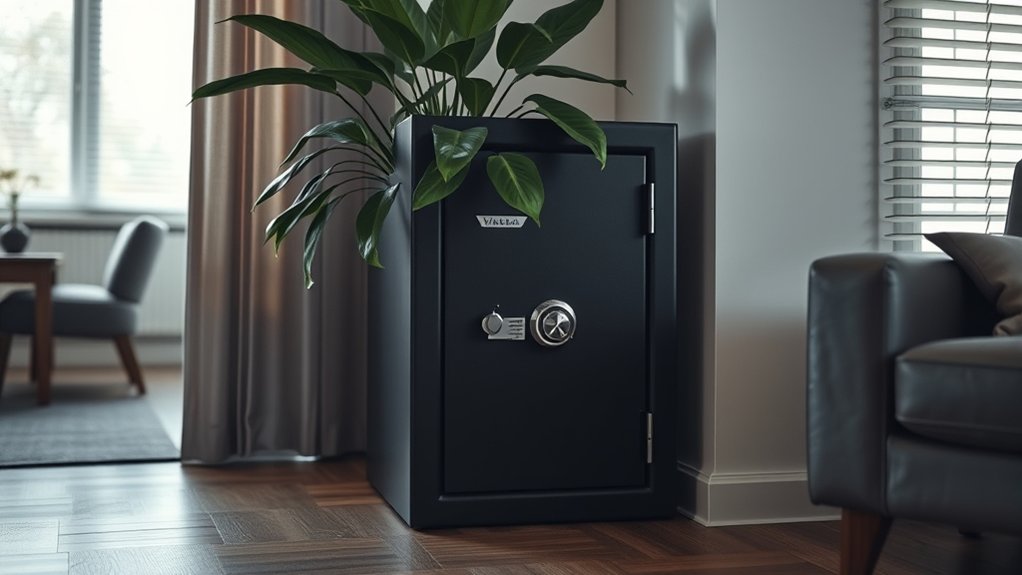
When choosing a location for your gun safe, prioritize discreet areas like basements or utility rooms to reduce the risk of detection by intruders.
These low-traffic areas naturally enhance concealment and meet critical security needs. Avoid obvious spots such as master bedrooms or hall closets, which burglars commonly target.
Low-traffic areas improve concealment and security, while common spots like bedrooms and closets are prime targets for burglars.
To further secure your safe, integrate concealment methods like custom cabinetry or false walls.
This makes the safe less noticeable while still allowing you to access it when needed. Remember, the best discreet location balances concealment with practicality.
You want to be able to reach your firearms quickly without compromising security.
It’s also a good idea to regularly reassess your safe’s placement as your home layout or security needs change.
This way, you maintain the best protection and discretion at all times.
Balance Accessibility and Security for Emergency Access
Although securing your gun safe in a discreet location is essential, you must confirm it remains easily accessible during emergencies. Achieving the right balance between accessibility and security hinges on smart safe placement.
Follow these key steps:
- Choose a low-traffic location like a basement or closet that keeps the safe out of sight from windows and entry points but remains within quick reach.
- Opt for lockable closets or in-wall storage that offer immediate access without sacrificing concealment.
- Confirm the safe is anchored securely to prevent tipping, which can obstruct accessibility during urgent situations.
It’s all about finding that sweet spot where your safe is hidden yet easy to get to when it counts.
Anchor Your Gun Safe Properly to Prevent Theft
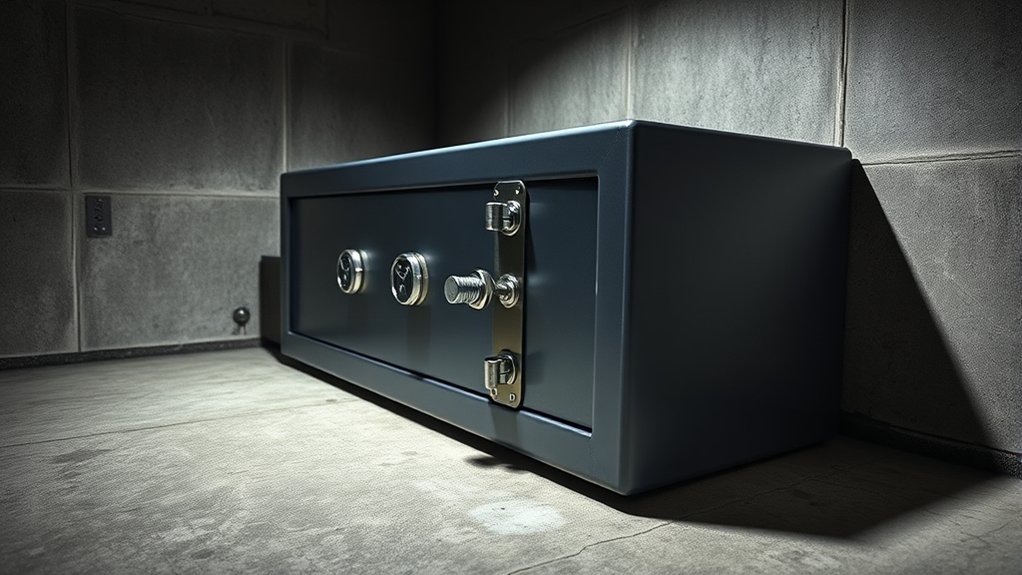
Balancing accessibility with security means more than just choosing the right spot for your gun safe. You also need to confirm it’s firmly anchored to prevent theft.
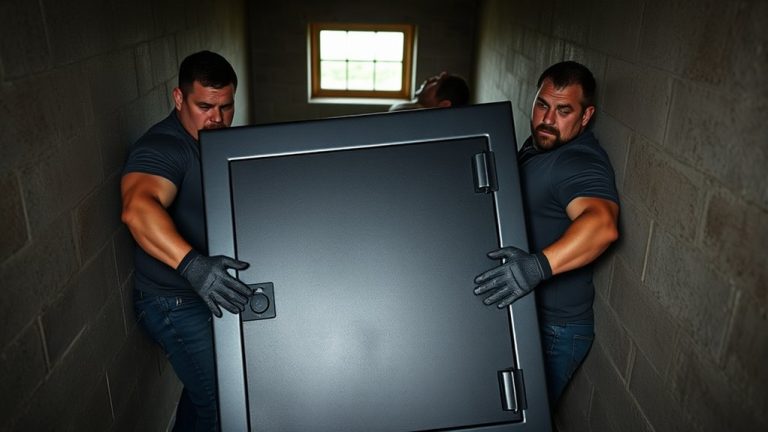
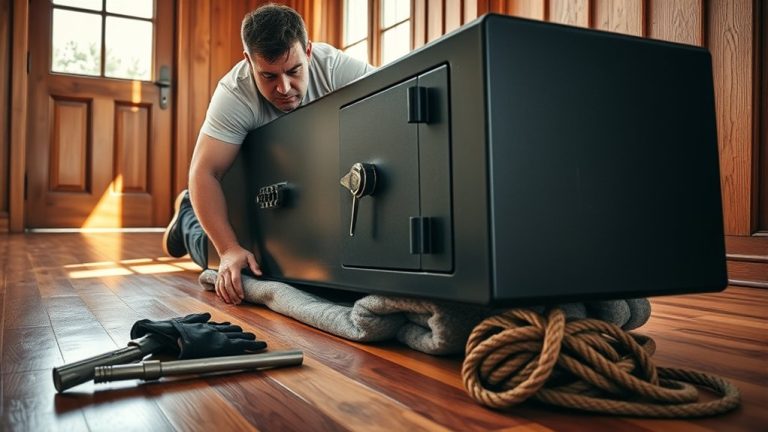
To anchor your gun safe properly, use wedge or sleeve anchors for concrete floors and lag bolts for wooden floors. Make sure you fasten into floor joists for maximum structural support.
Use wedge or sleeve anchors on concrete, lag bolts on wood, and always fasten into floor joists for security.
Place the safe in less visible spots. A securely anchored safe out of sight is a great way to deter burglars.
Regularly inspect and tighten anchor points to keep everything secure and prevent loosening that could compromise security.
Before anchoring, weigh your safe and verify the floor can handle its weight. This step confirms the anchoring system remains effective.
Proper anchoring not only stops theft but also improves your safe’s overall security and longevity. It’s definitely worth the effort.
Avoid Humid or Extreme Temperature Spots
You’ll want to put your gun safe in a spot where the humidity stays between 30% and 50%. This helps keep moisture from damaging your firearms and the locking mechanisms.
Try to avoid places that flood easily or where the temperature swings wildly. Also, stay away from heat sources since they can warp wood or mess up the electronics inside your safe.
If you can, use a dehumidifier to keep things stable. It really helps protect what’s inside your safe over the long haul.
Prevent Moisture Damage
When placing your gun safe, choose a climate-controlled area to maintain stable temperatures and humidity levels that prevent moisture damage. Moisture can cause rust and corrosion, which can compromise your firearms and accessories.
To effectively prevent moisture damage, follow these steps:
First, avoid environmental hazards like basements prone to flooding or rooms with high humidity. Instead, pick upper floors or interior spaces—they’re usually safer spots.
Next, keep the ideal humidity level between 30% and 50%. You can use dehumidifiers if necessary to help with this.
Finally, elevate your safe off the ground. This reduces the risk of water damage during heavy rains or floods.
Maintain Stable Temperatures
Because temperature fluctuations and high humidity can damage your firearms and ammunition, it’s essential to store your gun safe in a stable environment. Aim for a temperature between 50°F and 70°F to protect sensitive components.
Keep humidity levels below 50% to prevent rust and corrosion by using moisture absorbers or a dehumidifier inside the safe.
Avoid placing the safe near windows, exterior walls, or HVAC vents, as these spots cause environmental conditions to vary widely.
Basements can be viable if you guarantee proper ventilation and control moisture effectively. Also, keep the safe away from heat sources like radiators or appliances that raise temperature.
By choosing a location that helps you avoid fluctuations in temperature and humidity, you’ll extend the lifespan and reliability of your firearms and ammunition.
It really makes a difference in keeping your gear in top shape over time.
Raise Your Gun Safe to Prevent Flood Damage
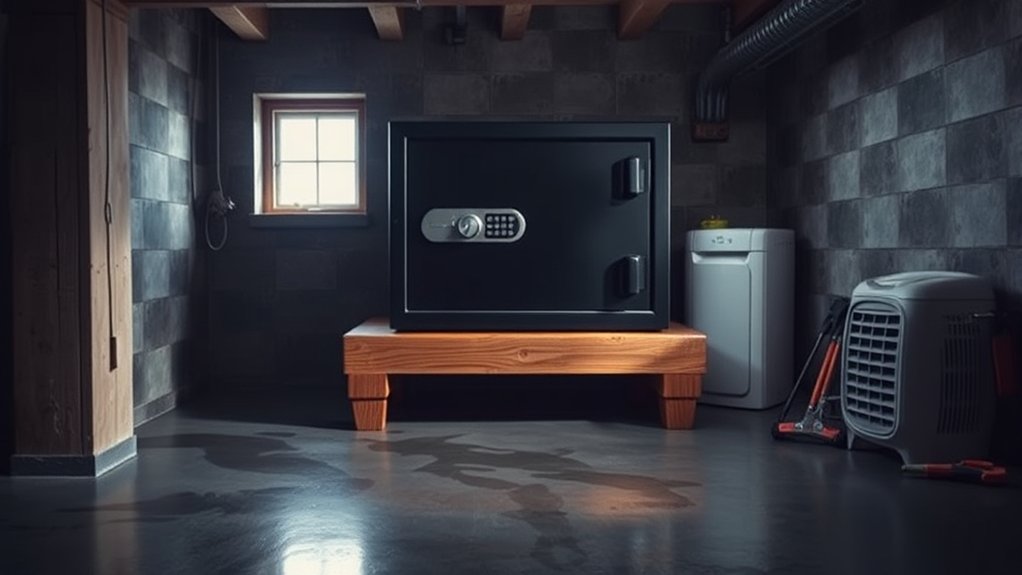
Although gun safes are designed to protect your firearms, placing them directly on the ground in flood-prone areas increases the risk of water damage.
To effectively raise your gun safe and prevent flood damage, follow these key steps:
First, elevate the safe at least 6 inches using a concrete or steel base. This creates a sturdy, waterproof foundation that keeps your safe off the ground.
Next, place moisture-absorbing materials, like silica gel packs, inside the safe. These help combat humidity and reduce the risk of corrosion.
Finally, make it a habit to regularly assess your home’s flood risk.
Adjust the safe’s height and location as needed to keep your firearms protected. It’s all about staying ahead of potential water damage.
Choose Basements or Interior Closets for Best Security
You’ll find that basements offer superior security because they’ve limited access and solid concrete floors, which make for stable anchoring.
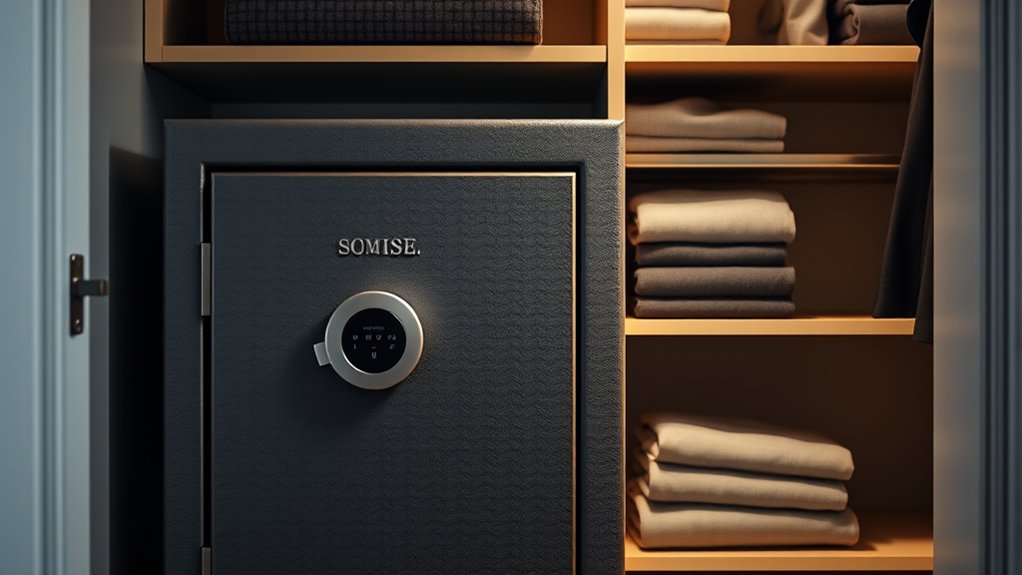
On the other hand, interior closets provide discreet concealment, keeping your safe out of sight and less tempting to intruders.
When deciding between the two, think about how easy it will be for you to access the safe.
Also, consider the extra protection you get from environmental risks by avoiding exterior walls.
Basement Advantages
When securing your firearms, choosing a basement or interior closet offers distinct advantages that enhance protection. The basement, in particular, provides superior security benefits due to its discreet location and physical properties. Here’s why a basement stands out:
First, concrete basement floors deliver exceptional stability. They can support heavy safes without any risk of damage or shifting. That kind of structural support is hard to beat.
Basements also maintain lower and more consistent humidity levels. This helps reduce corrosion risks and preserves your safe’s integrity over time.
And even though basements are less visible to intruders, they still offer reasonable accessibility for you during emergencies.
Closet Security Benefits
Basements provide excellent security for gun safes, but interior closets offer equally strong protection by keeping firearms out of plain sight and away from exterior walls.
When placing your safe in an interior closet, you leverage closet security benefits such as reduced exposure to temperature changes and less visibility to potential intruders.
Selecting this ideal location is crucial because it helps prevent unauthorized access by increasing the time thieves need to locate your safe.
A gun safe is essential for secure firearm storage, and positioning it in a discreet closet enhances overall safety. Anchoring your safe firmly within this space further minimizes theft risks.
By choosing basements or interior closets, you guarantee your firearms remain both secure and concealed.
This really reinforces the importance of strategic placement when it comes to keeping your guns safe.
Accessibility Considerations
How can you guarantee quick yet discreet access to your gun safe in an emergency? Prioritize accessibility without compromising home security by choosing strategic locations like basements or interior closets. These spots reduce the risk of detection while allowing you to protect your firearms effectively.
Consider the following:
- Select a location with minimal foot traffic to decrease chances of intruder discovery.
- Ascertain the surface is stable and level for secure anchoring, preventing tipping hazards.
- Confirm that the placement enables quick access during emergencies, balancing concealment and readiness.
Use Hidden Rooms or In-Wall Storage for Extra Protection
Although many gun owners prioritize accessibility, placing your safe in a hidden room or within in-wall storage offers a superior level of security by keeping it out of plain sight and difficult for burglars to discover. These secure options not only enhance security but also provide ideal storage tailored to your firearm dimensions.
Hidden rooms and custom in-wall safes blend seamlessly with your home, increasing the time it takes for unauthorized users to locate your firearms. Plus, in-wall storage can protect against environmental hazards when installed properly.
| Feature | Benefit |
|---|---|
| Hidden Rooms | Concealed, slows intruders |
| In-Wall Storage | Custom fit, blends with decor |
| Secure Option | Enhances security, protects |
Keep Your Gun Safe Out of Sight From Windows and Doors
You should never place your gun safe where it’s visible from windows or doors. Doing so makes it an easy target for burglars.
It’s best to keep it away from common entry points like front doors and garages to lower the chances of someone spotting it.
Also, think about positioning the safe in more hidden spots around your home.
Reinforcing your window coverings can help too, as it blocks outside views and adds an extra layer of security.
Taking these steps can really make a difference in keeping your gun safe out of sight and protected.
Avoid Visible Placement
Since 85% of burglars target homes that look easy to access, keeping your gun safe out of sight from windows and doors is essential.
To secure your firearms effectively, you must avoid visible placement and select a discreet location that conceals the safe completely.
Think about placing the safe in less obvious areas like basements or closets, where it’s harder for intruders to find. You can also hide the safe behind furniture or within custom cabinetry, so it’s not spotted by anyone outside.
Try to stay away from high-traffic and common hiding spots such as master bedrooms. This reduces the chance of detection during a quick search and keeps your firearms safer overall.
Consider Entry Point Proximity
Keeping your gun safe out of sight is only part of effective security. Its distance from windows and doors greatly impacts visibility to intruders. To minimize visibility, position your gun safes at least 10 feet away from these entry points.
This strategic placement reduces the chance that burglars can spot them from outside. Choose rooms less frequently accessed, like basements or utility spaces, to keep your safe concealed.
Use furniture or storage solutions to obscure it further without hindering quick access in emergencies.
Make sure to regularly reassess the safe’s proximity to entry points, especially after home renovations or security upgrades. By maintaining this careful balance, you guarantee your gun safe remains both secure and discreet.
This cuts down on potential exposure and deters unauthorized access effectively.
Enhance Window Security
Although securing entry points is essential, enhancing window security plays an equally important role in safeguarding your gun safe. To protect your gun and guarantee it remains out of sight, place your safe strategically away from windows and doors.
Here’s how to enhance window security effectively:
- Install your gun safe in interior rooms or concealed spaces, reducing visibility from outside and minimizing detection risks.
- Use curtains or blinds on windows near the safe to obscure its location and deter potential burglars from scouting.
- Integrate your safe within reinforced walls or custom cabinetry to blend with home decor, making sure it stays discreet.
Regularly reassess exterior sightlines and adjust placement or security measures to maintain peak protection.
These steps guarantee your gun safe remains secure and hidden.
Supplement Your Gun Safe With Lockable Cabinets or Smart Safes
When you supplement your primary gun safe with lockable cabinets or smart safes, you boost both security and accessibility. Lockable cabinets offer affordable, sturdy storage for smaller firearms and accessories. They also help keep things organized and let you place your gear wherever it’s most convenient.
Smart safes feature biometric or electronic locks, so you get quick access plus enhanced security. Many come with alarms and remote monitoring, which adds an extra layer of protection. Spreading your firearms across multiple secure locations makes theft much harder and improves your overall home security plan.
| Feature | Benefit |
|---|---|
| Lockable Cabinets | Affordable, versatile placement |
| Smart Safe | Quick access, advanced security |
| Organized Storage | Minimizes clutter, easy access |
| Secure Locations | Distributes firearms safely |
| Enhanced Security | Combines tech and physical locks |
Maintain Proper Temperature and Humidity Around Your Gun Safe
Since temperature and humidity directly affect the condition of your firearms and ammunition, you need to maintain a stable environment around your gun safe. To protect your investment, follow these key steps:
- Maintain a temperature range of 60-75°F to avoid damage from extreme heat or cold.
- Keep humidity levels below 50% to prevent rust and corrosion that compromise your firearms.
- Use a dehumidifier or silica gel packets, especially in moisture-prone areas, and regularly monitor conditions with a hygrometer and thermometer.
Also, avoid placing the safe in direct sunlight or near heat sources. Fluctuating temperature and humidity cause condensation, which can damage your safe and its contents.
By controlling these factors, you protect both the safe and its contents, ensuring longevity and reliability.
It’s really about creating the right environment so your firearms stay in great shape for years to come.
Frequently Asked Questions
What Size Gun Safe Is Best for a Growing Firearm Collection?
You should choose safe dimensions that exceed your current collection by at least 30% to accommodate collection growth and future-proof your storage.
Opt for a safe around 60 inches tall to fit long guns comfortably, with adjustable shelves for accessories.
Don’t overlook weight considerations. A heavier safe offers better security.
Also, factor in accessibility needs, making sure you can quickly reach firearms without compromising safety or organization as your collection expands.
How Often Should I Inspect and Maintain My Gun Safe?
You should inspect and maintain your gun safe at least every six months to guarantee its security and function.
Stick to a maintenance schedule that includes checking the safe location for stability, verifying locking mechanisms, and performing humidity control to prevent corrosion.
Use an inspection checklist to track wear, rust, and battery life in electronic locks.
Regular security upgrades will keep your safe effective and compliant with regulations.
This way, you’ll always know your firearms are stored safely and securely.
Can I Store Ammunition Separately Inside the Gun Safe?
Yes, you can store ammunition separately inside your gun safe. Studies show that 60% of accidental discharges happen because of improper ammo storage. So, keeping your ammo apart really helps improve safety.
Try using dedicated compartments or labeled containers to keep things organized. It also helps to prioritize humidity control to prevent corrosion.
Plus, maintaining fire protection standards is important too. Just be mindful of accessibility. Store your ammo where you can reach it quickly but still keep it secure.
This way, you ensure both safety and readiness when you need it.
Are Biometric Locks More Secure Than Traditional Key Locks?
Yes, biometric lock advantages often outweigh traditional lock drawbacks, especially in security technology trends.
You’ll benefit from faster, fingerprint-based access, which helps reduce user accessibility issues like lost keys or forgotten combinations.
Although biometric locks cost more upfront compared to traditional locks, their enhanced security and tamper alerts justify the investment.
Keep in mind, sensor quality affects reliability.
But overall, biometrics provide a more secure and convenient alternative to older key-based systems.
What Insurance Considerations Apply When Owning a Gun Safe?
When owning a gun safe, you need to make sure your insurance coverage lines up with what your policy requires.
Proper placement of the safe is really important because many insurers want the safe to be anchored or placed in certain areas to help prevent theft.
If you don’t meet these conditions, it could affect your coverage and even increase your liability.
Conclusion
Choosing where to put your gun safe is like hiding a treasure chest in a pirate’s secret cove. It demands careful thought. You’ll want a discreet, secure spot that balances quick access with protection.
Anchor it well. Avoid damp or extreme climates, and keep it out of sight from prying windows. Using hidden rooms or smart safes adds extra security.
By following these tips precisely, you’ll guarantee your firearms stay safe, secure, and ready when you need them.