Why Is My Gun Rusting in My Safe?
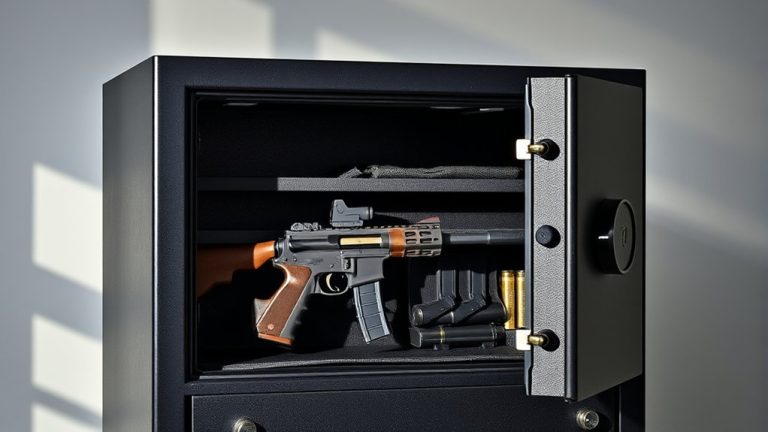
Your gun is rusting in your safe because trapped moisture, high humidity, and temperature fluctuations create condensation on metal surfaces. This speeds up corrosion and causes rust to form.
Fingerprints and handling residues leave salts and oils behind, which make rust worse, especially in damp environments. Corrosive ammunition can also leave salt deposits that attract moisture and promote rust if you don’t clean your gun soon after use.
Some gun safe materials can trap moisture and create a corrosive atmosphere inside. To keep your firearms in good shape, it helps to understand how to control humidity and follow proper maintenance routines.
Why Does Rust Form Inside Gun Safes?
Why does rust often develop inside gun safes despite their protective purpose? Rust forms primarily because moisture and humid air get trapped inside the closed safe, creating an environment conducive to corrosion.
High humidity levels, common in basements or unheated garages, lead to condensation on cold metal surfaces, accelerating rust formation.
Residue from handling firearms, such as fingerprints containing salts, further promotes corrosion if not cleaned regularly. Effective rust prevention requires controlling these factors by minimizing moisture exposure and maintaining stable humidity levels inside the safe.
Moreover, materials used in safe construction can affect rust risk. Some, like drywall, may release caustic compounds that react with moisture, worsening corrosion.
Understanding these elements helps you implement targeted rust prevention strategies to protect your firearms effectively.
How Humidity and Temperature Changes Cause Gun Safe Rust
When humidity levels rise above 50%, moisture condenses on the cold metal surfaces inside your gun safe. This speeds up rust formation, which is definitely something you want to avoid.
Temperature changes also play a big role. As the air inside your safe expands and contracts, it pulls in humid air that then settles on your firearms.
Plus, every time you open the safe, humid air rushes in. If the temperature inside drops after that, condensation forms right on the metal parts, making corrosion even more likely.
If your safe is in a damp environment, leftover moisture only makes things worse by keeping humidity levels high.
So, it’s really important to keep an eye on the humidity inside your safe and control it consistently.
Using dehumidifiers or desiccants can make a big difference. They help keep the conditions just right and reduce condensation.
Knowing how humidity and temperature work together inside your safe is key to preventing rust and keeping your firearms in great shape over time.
How Fingerprints and Residues Speed Up Gun Rust
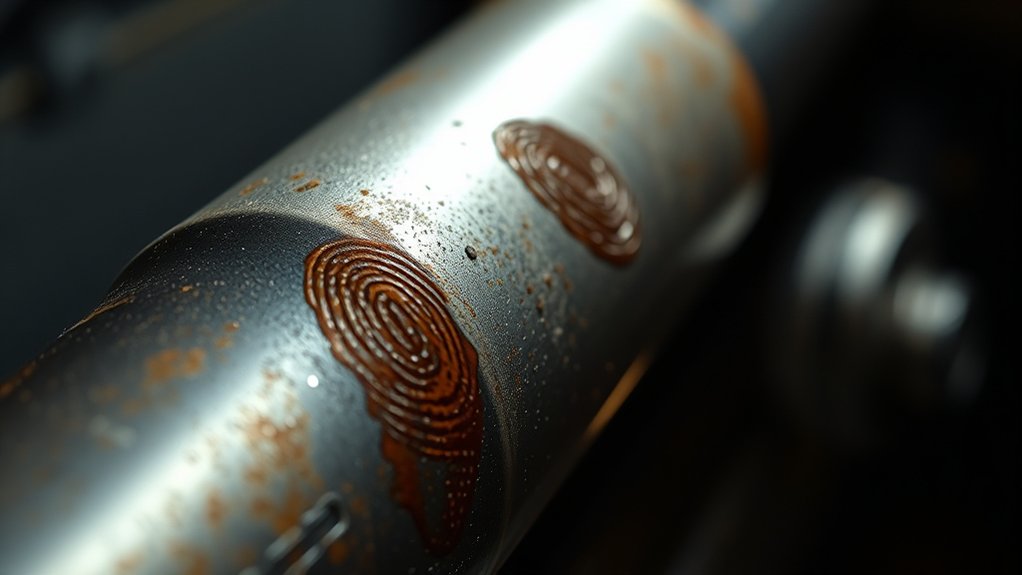
You’ve probably noticed that fingerprints leave behind oils which can speed up corrosion on your firearm’s metal surfaces.
Plus, residues from sweat and dirt tend to trap moisture, creating tiny spots where rust can form really quickly.
So, to keep your gun in good shape, it’s important to clean it thoroughly after handling.
That way, you remove those contaminants and stop rust from building up.
Fingerprint Oils Accelerate Corrosion
How exactly do fingerprints speed up the rusting process on your firearm? Fingerprint oils contain natural oils and salts that create a corrosive environment on metal surfaces. When combined with moisture from sweat, they accelerate oxidation, leading to rust formation.
These contaminants disrupt the protective barrier on your gun’s metal, making it more susceptible to corrosion. To prevent rust effectively, you must remove fingerprint oils promptly through thorough cleaning after handling. Neglecting this allows micro-environments where moisture lingers, further speeding deterioration.
Proper maintenance routines that eliminate these residues are crucial to preserve your firearm’s integrity. Fundamentally, managing fingerprint oils is a critical step to prevent rust and guarantee your gun remains in peak condition while stored.
Residue Traps Moisture
Although fingerprints may seem harmless, the oils and residues they leave behind actively trap moisture on your firearm’s metal surfaces. This residue traps moisture by creating a microenvironment where sweat, skin oils, and dirt cling to the metal, accelerating oxidation.
Even trace salts from sweat amplify corrosion, causing rapid rust development under humid conditions. When residue traps moisture, it promotes localized corrosion, leading to pitting that compromises both the firearm’s function and finish.
To prevent moisture from initiating rust, you must minimize residue buildup immediately after handling your gun. Maintaining a residue-free surface is essential to control moisture exposure within your safe, directly reducing rust risk.
Understanding how residue traps moisture empowers you to take targeted steps to protect your firearm’s integrity over time.
Cleaning Prevents Rust Buildup
Residue buildup from fingerprints and environmental contaminants creates the ideal conditions for rust to form on your firearm. Fingerprint oils and salts establish a corrosive microenvironment, which speeds up oxidation, especially in humid settings.
Dust, moisture, and residues from handling trap humidity against metal surfaces, promoting rust if not cleaned off quickly.
Corrosive ammunition leaves harmful salts behind that make this risk even worse. That’s why cleaning your firearm right after shooting is super important.
To prevent rust buildup, you need to clean your firearm thoroughly after every use. Getting rid of contaminants that speed up corrosion is key.
Regular maintenance, like applying protective oils, creates a barrier that helps block the effects of residues and fingerprints.
If you stay consistent with cleaning and lubrication, you’ll effectively keep rust from forming. This way, your firearm stays reliable and in great shape over time.
How Corrosive Ammunition Accelerates Rust in Firearms
When you fire corrosive ammunition, the potassium chlorate-based primers break down into salts that aggressively attract moisture. This creates a perfect environment for rust to form on your firearm’s metal surfaces.
Corrosive ammo primers leave moisture-attracting salts that set the stage for rust on your firearm’s metal parts.
These corrosive salts stick around in the bore and chamber, speeding up pitting and corrosion if you don’t clean them out right away.
If you skip thorough cleaning after using corrosive ammo, those moisture-loving residues stay put. They especially pull in moisture in humid gun safes, which makes rust problems even worse.
Using a gun safe dehumidifier can help control the moisture in the air, but it won’t get rid of the corrosive salts already embedded in your firearm.
So, to slow down rust, you’ve got to clean your firearm quickly with the right solvents like Windex or Simple Green. These help neutralize the corrosive residues.
Keeping up with regular maintenance after firing corrosive ammo is key to protecting your metal parts and making sure your firearm works reliably.
Which Gun Safe Materials Promote Rust and Corrosion
If you want to protect your firearm from rust, you need to understand how the materials used in gun safe construction affect corrosion. Certain materials in gun storage environments create a corrosive atmosphere, which speeds up rust formation.
For example, drywall and gypsum contain elemental sulfur and pyrite. These react with humidity to form sulfuric acids. That’s not good for your guns.
Adhesives that have formaldehyde also make the interior environment caustic and corrosive. On top of that, thin-walled safes tend to trap moisture. This increases humidity inside and promotes even more corrosion.
| Material | Corrosive Agent | Impact on Gun Storage |
|---|---|---|
| Drywall/Gypsum | Elemental sulfur, pyrite | Produces sulfuric acids, causes rust |
| Adhesives | Formaldehyde | Creates caustic, corrosive environment |
| Thin-walled metal | Moisture retention | Traps humidity, accelerates rust |
Why Some Gun Safes Are More Prone to Moisture Problems
Because gun safes often sit in environments with varying temperatures and humidity levels, they can trap moisture that speeds up rust formation.
If your gun safe uses drywall or low-quality materials, it can hold onto moisture, creating a corrosive environment inside the safe.
Also, safes placed in basements or unheated garages face higher humidity, which increases moisture levels.
Safes in basements or unheated garages encounter higher humidity, leading to increased moisture inside.
Frequent temperature changes cause condensation on cold metal surfaces, making rust more likely.
Without proper ventilation, moisture builds up unchecked, raising corrosion risks even more.
When you open your safe, humid air gets inside and can condense, making the problem worse.
Knowing these factors helps you understand why certain gun safes are more prone to moisture issues.
That way, you can take steps to reduce rust risks and keep your firearms protected.
How to Monitor and Control Humidity to Prevent Gun Safe Rust
You’ll want to keep a close eye on the humidity inside your gun safe by using a reliable hygrometer.
Ideally, try to keep the levels between 50% and 55%.
To actively control moisture and avoid any condensation on your firearms, it’s a good idea to use a quality dehumidifier.
Also, make sure your safe has proper ventilation.
This helps maintain consistent airflow and keeps humidity from getting trapped inside.
Humidity Level Monitoring
How do you maintain the ideal humidity inside your gun safe to prevent rust? Start by using a reliable hygrometer to monitor humidity levels closely. Keep them between 50% and 55%, which is the best range to inhibit corrosion.
Avoid placing your safe in damp environments like basements or garages, where moisture tends to spike.
Inside the safe, use rechargeable desiccant packs to actively absorb excess moisture. Make sure to replace them regularly so they stay effective.
Also, open the safe periodically to promote air circulation. This helps prevent stagnant, moisture-laden air from building up.
Dehumidifier Usage Tips
Maintaining the right humidity inside your gun safe goes beyond just monitoring levels and using desiccant packs. You need to pick a reliable dehumidifier made specifically for gun safes. This way, it efficiently pulls moisture out without overheating or making things too dry.
It’s a good idea to use a calibrated hygrometer for continuous humidity monitoring. Aim to keep the relative humidity between 50% and 55%. Checking your dehumidifier’s performance regularly helps too.
And don’t forget to replace or recharge desiccant packs when needed to keep moisture under control.
Opening the safe now and then can help prevent moisture buildup, but don’t rely on that alone. When you combine precise humidity monitoring with effective dehumidifier use, you’ll greatly reduce the risk of rust on your firearms. This helps keep them in great shape for a long time.
Safe Ventilation Methods
Where should you place your gun safe to minimize humidity-related risks? Position your safe in a stable, climate-controlled area, avoiding damp locations like basements or garages. Proper placement reduces ambient humidity that accelerates rust formation.
To monitor and control humidity effectively, follow these safe ventilation methods:
- Install a hygrometer inside the safe to continuously track humidity levels, maintaining them between 50% and 55%.
- Use rechargeable desiccant packs to absorb excess moisture, replacing them as they saturate.
- Open your safe periodically to allow fresh air circulation, preventing trapped humidity buildup.
These steps guarantee your safe maintains an ideal environment, minimizing rust risks and preserving your firearms’ integrity.
Consistent humidity control is critical for long-term gun protection. So, keeping an eye on humidity and ventilating your safe regularly really makes a difference.
Best Products to Protect Your Guns From Rust in Storage
Protecting your firearms from rust during storage requires the right combination of products designed to control moisture and shield metal surfaces. VCI Gun Storage Bags are essential; they create a controlled micro-climate that blocks moisture and contaminants, greatly reducing rust risk.
Complement these bags with silica gel packs inside your safe to absorb excess moisture and maintain ideal humidity levels. For enhanced protection, consider using rechargeable dehumidifiers to keep humidity between 50% and 55%, which is critical for rust prevention.
Moreover, applying a thin layer of quality gun oils after cleaning forms a protective barrier against corrosion. While cosmoline offers long-term rust prevention, it requires thorough removal before use, making it less practical for regular storage.
Combining these products guarantees your firearms remain rust-free and ready for use. It’s all about creating the right environment and using the best tools to keep your guns in top shape.
How Regular Cleaning and Oiling Keep Rust at Bay
You want to clean your firearm soon after each use to get rid of moisture and any corrosive residues that can lead to rust.
Then, applying a light, even layer of oil helps create a protective barrier that keeps metal surfaces safe from humidity and other contaminants.
By sticking to regular maintenance—checking and lubricating your gun after every use—you’re not just preserving how well it works, but also keeping corrosion at bay.
It really makes a big difference in the long run.
Importance Of Routine Cleaning
Although rust can develop quickly on firearms, regular cleaning and oiling effectively prevent corrosion by removing contaminants and sealing metal surfaces.
Routine cleaning is essential to maintain a protective layer that guards against moisture and corrosive elements.
You should focus on removing dust, salt, and moisture promptly after use to eliminate rust precursors.
Also, clean firearms exposed to corrosive ammunition within days to prevent salt-induced corrosion.
Don’t forget to conduct routine inspections to detect early rust signs and address them before damage occurs.
Keeping up with these steps really helps your firearms last longer and perform better.
Effective Oiling Techniques
Since moisture is the primary catalyst for rust, applying a high-quality oil like CLP or Remoil immediately after cleaning forms a vital protective barrier on your firearm’s metal surfaces. This oil layer prevents rust by blocking oxygen and moisture, safeguarding all components, including hidden internal parts.
| Step | Purpose |
|---|---|
| Clean thoroughly | Remove contaminants and residue |
| Apply a light oil | Lubricate and prevent rust |
| Cover all surfaces | Avoid hidden corrosion |
Make oiling a routine part of your maintenance, especially after exposure to moisture or corrosive ammunition. Use a light coat to guarantee long-lasting protection without attracting dirt. By consistently oiling your firearm, you effectively prevent rust formation and maintain peak functionality over time.
Post-Use Maintenance Practices
When firearms undergo regular cleaning and oiling immediately after use, especially following exposure to moisture or corrosive ammunition, you greatly reduce the risk of rust formation.
To maintain your gun effectively, you must:
- Clean thoroughly using appropriate solvents like Windex or Simple Green to remove corrosive salts from primers. This helps prevent rust right at its source.
- Dry the gun completely before storage. Moisture trapped on metal surfaces speeds up corrosion, so make sure everything is dry.
- Apply a light, even coating of oil such as CLP or Remoil. This creates a protective barrier against environmental humidity and keeps your firearm in good shape.
Proven Best Practices for Long-Term Gun Storage Without Rust
To prevent rust during long-term gun storage, you need to control environmental factors inside your safe carefully. Keep humidity between 50% and 55%, and try to maintain the temperature around 70°F. This helps slow down rust formation over time.
Use moisture-resistant cases or VCI gun storage bags to store your guns. These provide a good barrier against moisture and other contaminants.
Also, adding silica gel packs or dehumidifiers inside your safe can help soak up any extra moisture.
After each use, make sure to clean and oil your firearms thoroughly. This is especially important if they’ve been exposed to moisture or corrosive ammo. A good oil layer protects your guns from oxidation.
Don’t forget to check your safe and firearms regularly. Early inspections can catch rust or corrosion before it becomes a big problem.
Following these steps will keep your guns rust-free during long storage periods.
Frequently Asked Questions
Can Rust Damage My Gun’s Accuracy or Performance?
Yes, rust causes significant damage to your gun’s accuracy and performance. It pits the barrel, altering its internal geometry and reducing precision.
Rust also impedes internal component movement, increasing friction and causing malfunctions or slower cycling.
To prevent this, follow maintenance tips like regular cleaning, proper lubrication, and storing your firearm in a dry environment.
Address rust immediately to preserve your gun’s reliability and operational integrity over time.
Taking care of your gun now means it’ll perform better when you need it most.
Does the Type of Gun Oil Affect Rust Prevention?
When it comes to rust prevention, the type of gun oil you choose is the whole nine yards. Oil viscosity plays a critical role. Thicker oils like cosmoline offer superior protection in humid conditions, while lighter oils with rust inhibitors work better for regular use.
You have to consider environmental factors such as moisture and temperature. It’s important to select an oil that’s compatible with your firearm’s materials.
Applying the right oil consistently creates an effective barrier against corrosion.
How Often Should I Check for Rust Inside My Safe?
You should check for rust inside your safe at least once every three months as part of routine safe maintenance.
Regular inspections help you detect corrosion early before it damages your firearms.
Make sure to consistently monitor humidity control to keep levels between 50% and 55%.
This really helps minimize the risk of rust.
When you’re inspecting, look for any discoloration or rust spots.
Also, keep your firearms clean and dry to prevent corrosion effectively.
Are Silica Gel Packs Safe to Use With Firearms?
Think of silica gel packs as tiny moisture guardians standing watch over your firearm storage. Yes, silica gel packs are completely safe with firearms. They don’t emit harmful chemicals and effectively absorb humidity that causes rust.
By maintaining controlled moisture levels, they protect both metal and wood components.
Just remember to monitor their saturation. Replace or reactivate them to guarantee your firearms remain pristine and corrosion-free in your safe.
Can Rust Be Completely Removed Once It Forms on Guns?
You can often remove rust using effective rust removal techniques like fine steel wool, brass brushes, or specialized chemical rust removers.
However, deep corrosion may require professional refinishing, and some cosmetic damage might remain.
To guarantee long-term preservation, you must clean thoroughly, apply rust inhibitors or oil afterward, and maintain your firearm regularly.
These steps are essential for preventing future rust and preserving the gun’s function and appearance.
Conclusion
If you want to keep your guns rust-free, you can’t ignore humidity, fingerprints, or corrosive ammo. They’re the silent rust monsters hiding in your safe.
You need to regularly monitor and control moisture levels. Clean and oil your firearms meticulously, and choose the right safe materials.
Ignoring these steps is like inviting rust to throw a wild party on your guns. Stay vigilant, and your collection will remain pristine, reliable, and ready for action, no matter how long you store them.