How to Move a Big Gun Safe in 10 Steps
To move a big gun safe in 10 steps, first measure its dimensions and weight to plan properly. Empty and securely lock the safe. Gather equipment like a heavy-duty dolly, ratchet straps, and gloves.
Map your route and protect floors and walls from damage. Tilt and secure the safe on the dolly, then move slowly through tight spaces with help. Load it upright onto a vehicle and fasten it securely.
Follow these steps carefully, and you’ll handle the move efficiently and safely. Keep going to master each phase.
Measure Your Gun Safe’s Size and Weight
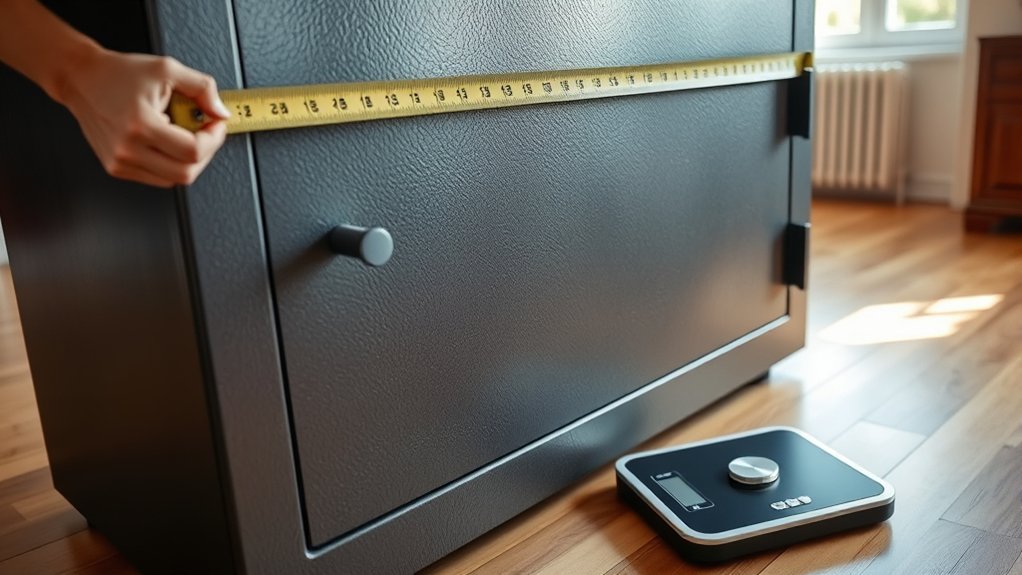
Before moving your gun safe, start by measuring its height, width, and depth to guarantee it fits through all doorways and hallways.
Accurately document these dimensions to avoid surprises during the move.
Next, determine the safe’s weight using a reliable scale or by consulting the manufacturer’s specifications.
Gun safes often weigh between 200 and 1,500 pounds, so knowing the exact weight is essential.
Keep in mind the safe’s center of gravity, which is typically high and affects balance when transporting.
Also, note the weight distribution inside, as contents can shift the balance and make moving harder.
Recording all measurements and weight helps you plan the right equipment and decide if you need professional movers.
Preparing with precise details makes the moving process safer and more efficient.
Empty and Lock Your Gun Safe Before Moving
Before you move your gun safe, start by taking everything out. This makes it lighter and helps avoid any damage while it’s being transported.
Once it’s empty, make sure to lock it up tight. This keeps the door shut and protects the locking mechanism during the move.
Following these simple steps will make the whole moving process safer and easier for both you and your safe.
Remove All Contents
Start by completely emptying your gun safe to make moving it safer and more manageable. Removing all contents considerably reduces the weight, enhancing safety and making the move smoother.
You’ll also minimize risk by ensuring firearms and ammunition are transported separately, complying with legal regulations. This step helps secure its contents and prevents damage from impacts during transit.
Focus on these essentials when emptying the gun safe:
- Remove firearms and ammunition first
- Take out all valuables and accessories
- Clear shelves and compartments thoroughly
- Pack contents securely in appropriate containers
- Inspect the safe for any loose parts
Secure And Lock Safe
Securing and locking your gun safe once it’s empty is essential for a safe move. First, remove all firearms and ammunition to comply with legal requirements and guarantee safety.
Then, use heavy-duty equipment to transport the empty safe, reducing weight and preventing damage.
Before moving companies arrive, lock the safe firmly to prevent accidental openings that could cause injury or damage. After locking, double-check to secure the safe thoroughly.
This helps confirm stability during transit and avoids tipping or shifting.
Properly securing and locking your safe not only protects its contents but also streamlines the moving process, making it safer and more efficient for everyone involved.
Always prioritize these steps to safeguard your investment and maintain control during transport.
Gather Essential Equipment: Dollies, Straps, and Gloves
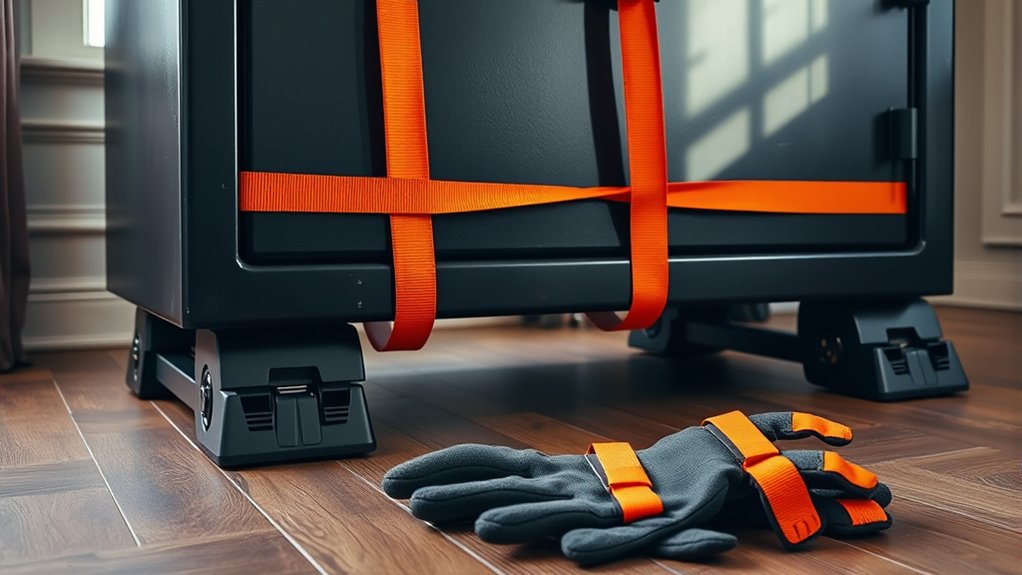
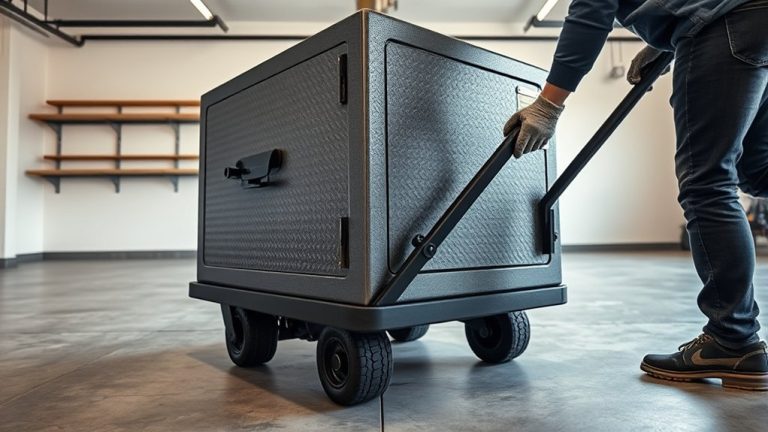
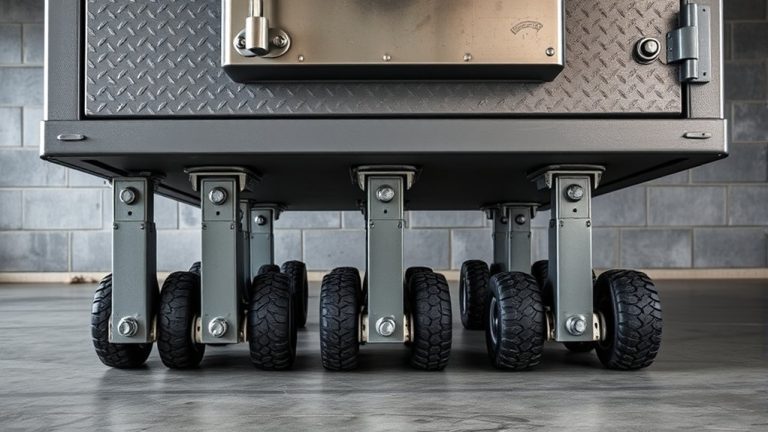
You’ll want a heavy-duty dolly that can handle the weight and bulk of your gun safe to make moving it safer and easier.
Make sure to secure the safe tightly with ratchet straps so it doesn’t shift while you’re moving it.
And don’t forget to wear thick gloves—they’ll protect your hands and help you get a better grip throughout the whole process.
Heavy-Duty Dolly Selection
Choosing the right heavy-duty dolly is essential when moving a gun safe. It guarantees safety and makes the whole process easier. You’ll want a dolly that can handle at least 1,500 lbs to securely move those heavy safes.
Make sure the dolly has sturdy wheels and a wide base. This helps with stability and smooth maneuvering, especially when you’re working in tight spaces.
Don’t forget to wear thick, rubberized gloves—they protect your hands and give you a better grip.
Also, industrial-grade ratchet straps are a must to firmly secure the safe on the dolly. You might want to consider extra tools like lifting straps and moving sliders as well. These can help reduce strain and give you more control while moving.
Heavy-duty dolly with high weight capacity
Sturdy wheels for smooth navigation
Thick gloves for grip and protection
Industrial ratchet straps for security
Lifting straps and moving sliders for extra leverage
Secure Strapping Techniques
After selecting a heavy-duty dolly with the proper weight capacity and stability, focus on firmly strapping the safe to make certain it stays put throughout the move.
Use heavy-duty ratchet straps to securely attach the safe to the dolly, wrapping the straps multiple times around the safe to guarantee even weight distribution. Buckle them tightly to prevent tipping and shifting during transport.
Industrial-grade straps rated for the safe’s weight are essential to avoid breakage or slippage.
As you tighten, enhance grip by handling the straps carefully and regularly check strap tightness throughout the move, especially on uneven terrain.
This methodical approach allows you to maintain secure positioning of the safe, ensuring a smooth, safe transport without unexpected movement or hazards.
Protective Gloves Importance
Thick protective gloves play a critical role when moving a heavy gun safe. They enhance your grip and shield your hands from sharp edges and rough surfaces. Using the right gloves not only improves safety but also helps prevent injuries during lifting and maneuvering.
Choose gloves crafted from durable materials like leather or heavy-duty synthetics to withstand the weight and stress involved. They also provide comfort by absorbing shocks, making the task less taxing.
Remember, protective gloves are essential heavy-duty equipment for this job.
- Boost your grip to maintain control
- Shield hands from cuts and abrasions
- Absorb shock for comfort during lifts
- Withstand rough surfaces and edges
- Enhance overall safety and prevent injuries
Don’t underestimate the importance of quality gloves when handling your gun safe. They really make a difference!
Plan Your Moving Route and Spot Obstacles Ahead
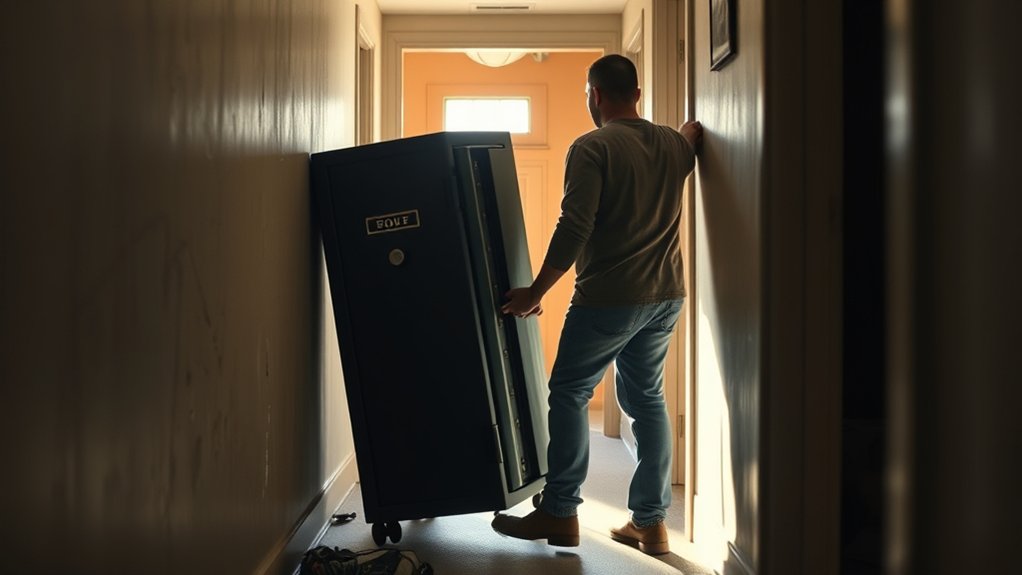
Before you start moving your gun safe, measure its dimensions along with all doorways, hallways, and stairways to confirm the path is clear and wide enough.
Next, plan your route carefully, noting any obstacles like furniture, tight corners, or uneven surfaces that could complicate the move. Identify spots where proper equipment, such as dollies or straps, will be essential.
Carefully map your path, spotting obstacles and where equipment like dollies or straps will be needed.
Make sure to communicate this plan clearly with your moving team to coordinate efforts, especially when maneuvering tricky areas.
Also, verify the moving truck access is straightforward, minimizing the distance and obstacles between the safe and the vehicle.
By anticipating challenges and preparing in advance, you’ll protect both your safe and your surroundings.
This way, the move will be smoother and safer for everyone involved.
Protect Floors and Walls Before Moving
Once you’ve mapped out your route and identified obstacles, focus on protecting your floors and walls. Moving a heavy gun safe can easily damage surfaces if you’re not careful.
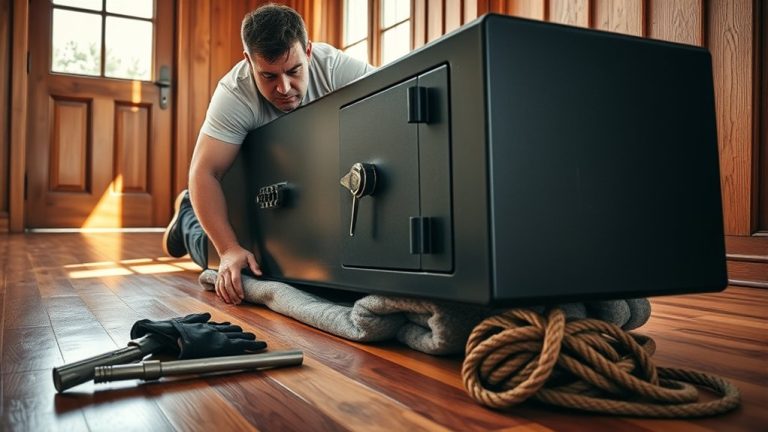
To protect floors and walls effectively, lay down moving blankets or Masonite boards to distribute the safe’s weight on hardwood or tile floors. Use rubber mats or floor runners to prevent scratches while sliding the safe.
Place plywood sheets in high-traffic zones for a smooth, stable surface. Cover walls and door frames with moving blankets or cardboard to avoid dents and scrapes.
Use Teflon sliders on carpeted areas to reduce compression and ease movement.
Taking these steps guarantees your floors and walls stay intact. Plus, your safe moves without unnecessary damage.
Enlist Strong, Experienced Helpers to Move Your Gun Safe
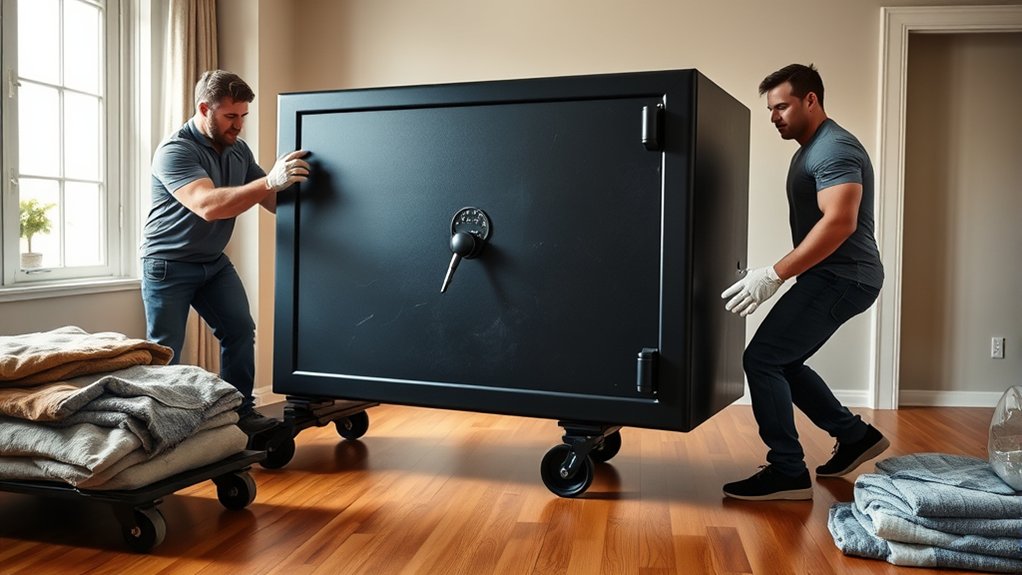
Recruit at least three to four strong, experienced helpers to move your gun safe safely and efficiently. Proper weight distribution and lifting techniques are essential to prevent injuries and damage. Experienced helpers bring valuable knowledge to the moving process, guaranteeing safety and speed.
Communication is key. Coordinate every step to maintain balance and avoid accidents. Here’s a quick reference to guide your team:
| Key Aspect | Importance |
|---|---|
| Helpers | Provide strength and balance |
| Experienced | Know proper lifting techniques |
| Weight Distribution | Prevents strain and damage |
| Communication | Guarantees coordinated, safe moves |
With the right team, you’ll handle your gun safe confidently, minimizing risks and streamlining the moving process.
Position the Dolly and Secure Your Gun Safe
Tilt your gun safe slightly to slide a heavy-duty dolly underneath, making sure it fits securely and evenly. Positioning the dolly properly is key for balance and safe movement.
Next, use heavy-duty ratchet straps to secure the gun safe firmly to the dolly. This will prevent any shifting during transport. Center the weight to avoid tipping.
Always have at least one person help you maintain stability and control the dolly. Clear communication with your team makes coordination much smoother.
Feel confident with the dolly’s secure fit. Trust the heavy-duty straps to hold tight. Rely on balanced weight for safe handling.
Appreciate the steady assist from your helper. Move forward knowing everyone’s coordinated.
Move Your Gun Safe Slowly Through Hallways and Doors
Maneuvering your gun safe through hallways and doorways requires steady, deliberate movements to maintain control and protect your surroundings.
To move the safe slowly and safely, keep it tilted slightly backward to guarantee ground clearance and stability. Angle the dolly carefully when making tight turns to prevent tipping.
Be sure to communicate clearly with your helpers. Coordinate every shift in weight and movement to avoid surprises. Use padding on door frames and walls to protect surfaces during transport.
Always have at least two people handling the gun safe. This guarantees you maintain control and can adjust quickly if needed.
Moving slowly through doorways reduces the risk of damage and keeps everyone safe while you transport your gun safe efficiently.
Safely Load Your Gun Safe Onto the Vehicle
Load your gun safe onto the vehicle using a liftgate truck or a sturdy loading ramp, keeping the safe upright at all times. Use heavy-duty equipment like a stair-climbing dolly if stairs are involved. Coordinate closely with your helpers to move the safe smoothly and avoid mishaps.
Here’s how to guarantee a secure loading process:
- Choose a strong loading ramp or liftgate truck for stability
- Keep the safe upright to protect its contents and structure
- Communicate clearly with helpers for synchronized movement
- Use a stair-climbing dolly when maneuvering stairs to maintain control
- Double-check the safe’s position before transport begins
Following these steps lets you load your safe efficiently and safely. That way, you’ll be ready for secure transport without any worries.
Secure Your Gun Safe in the Vehicle for Transport
To secure your gun safe for transport, position it upright against the vehicle’s front wall to prevent tipping and guarantee stability.
Use heavy-duty ratchet straps to securely fasten the safe to the vehicle’s anchor points, minimizing any movement during transit.
Secure the safe firmly with heavy-duty ratchet straps to prevent shifting during transport.
Before loading, consider using a loading ramp or a liftgate truck to handle the gun safe safely and reduce injury risk.
Keep open communication with anyone helping you to coordinate every step, confirming smooth and safe handling.
Once the safe is secured inside the vehicle, periodically check the straps and its position throughout the journey.
This methodical approach confirms your gun safe stays stable and protected, making the transport process safer for both you and your equipment.
Frequently Asked Questions
Can a Big Gun Safe Be Moved Without Professional Help?
Yes, you can move a big gun safe without professional help if you follow safe moving techniques.
Use equipment like a heavy-duty dolly and ratchet straps, and apply weight distribution strategies to avoid strain. Enlist at least two helpers, follow safe lifting tips, and clear your path thoroughly.
Make sure to stick to safety precautions and think carefully about DIY moving solutions. This is especially important with safes under 500 lbs.
How Do I Protect My Gun Safe From Rust During Transit?
To protect your gun safe from rust during transit, focus on rust prevention by applying protective coatings like gun oil to all metal surfaces.
Use moisture-resistant safe materials such as waterproof moving blankets to shield it.
Control humidity with desiccants inside the safe and transport it in a climate-controlled vehicle when possible.
Regular maintenance checks during transit help spot early rust.
These transit tips and storage solutions guarantee your safe stays rust-free and secure.
Just a little extra care goes a long way!
What Is the Best Way to Clean a Gun Safe After Moving?
For effective safe interior cleaning after moving, start by emptying it out and vacuuming the corners to get rid of dust.
Use a mild soap and a soft cloth from your cleaning supplies checklist, and try to avoid any harsh chemicals.
It’s a good idea to apply moisture control methods, like silica packs, to help prevent rust.
Also, lightly oil the metal surfaces to keep rust at bay.
Organize your gun storage thoughtfully once the safe is clean.
Don’t forget to perform a post-move inspection to check the seals and locks.
Setting up a regular safe maintenance schedule will help keep it in top shape.
Are There Legal Considerations When Transporting a Gun Safe?
Think of transporting your gun safe like traversing a legal minefield. You have to meet state regulations and local laws, making sure your ownership is clear and your firearms are secured.
It’s important to check if transportation permits apply and to understand any liability issues that might come up.
Don’t overlook insurance coverage while your safe is in transit. Taking the time to follow all these legal requirements carefully will protect you from fines or legal trouble.
This way, your move will be smooth and compliant every step of the way.
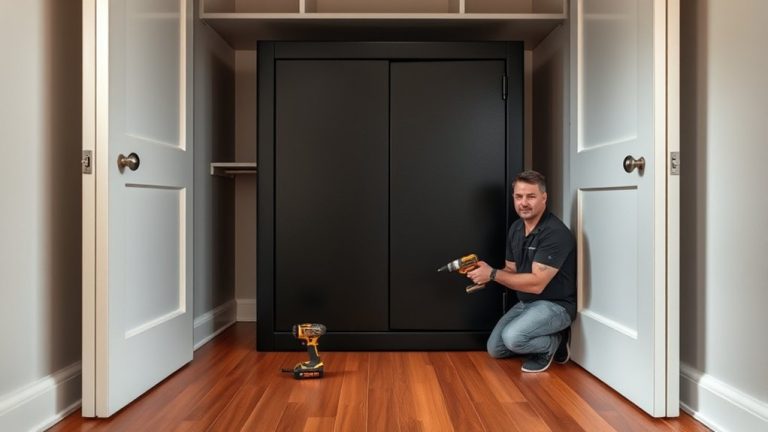
How Do I Re-Anchor My Gun Safe After Moving It?
To re-anchor your gun safe, start by evaluating floor type considerations. Concrete and wood floors require different anchors, so it’s important to know what you’re working with.
Use tools like heavy-duty bolts and a drill for the anchoring process. Make sure to apply weight distribution strategies to guarantee even support.
Then, secure heavy equipment with anti-tip measures to keep things safe. It’s a good idea to follow the manufacturer’s safe reinstallation tips to avoid any warranty issues.
Finally, perform regular gun safe maintenance by inspecting anchors and tightening bolts. This will help keep your safe stable and secure over time.
Taking these steps ensures your gun safe stays anchored properly after moving it.
Conclusion
Moving a big gun safe isn’t just about muscle, it’s about smart planning and careful steps. You’ve measured, emptied, protected, and secured every inch. That turns a formidable task into a manageable mission.
Remember, patience is your strongest ally here. Rushing only invites damage or injury.
By following these steps, you’re not just moving a safe, you’re safeguarding your peace of mind. Step by step, you’ve got this.