How Does a Gun Safe Dehumidifier Rod Work?
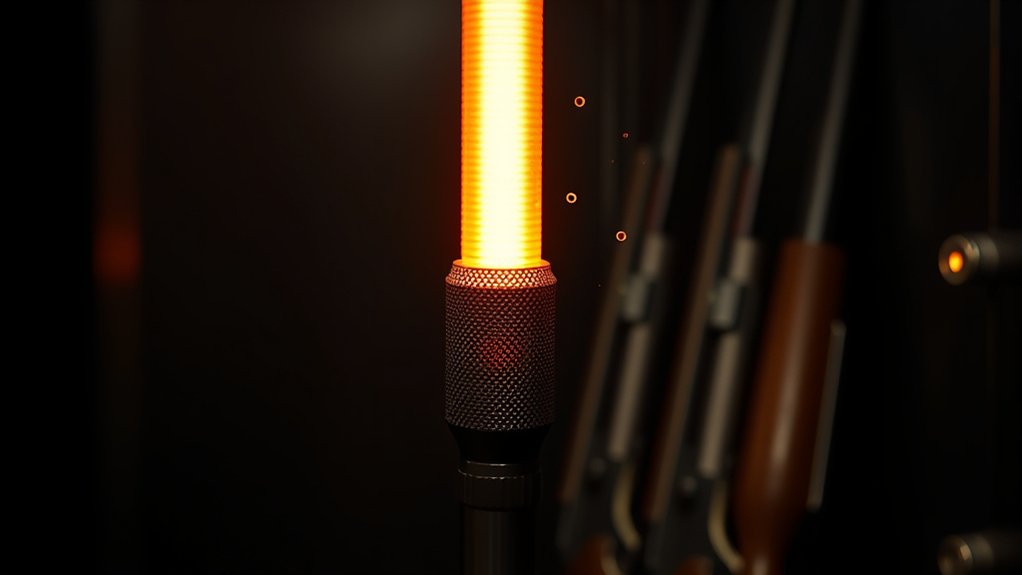
A gun safe dehumidifier rod works by generating gentle heat, usually between 100°F to 120°F, to maintain humidity levels around 30% to 50%. This helps prevent rust, corrosion, and mold inside your safe.
It uses a built-in thermostat to regulate temperature and avoid overheating while promoting moisture evaporation and dry air circulation. You position it horizontally at the base for even heating and airflow.
Understanding how this process works can help you better protect your firearms and valuables from moisture damage. It’s a simple yet effective way to keep your safe dry and secure.
Why You Need to Control Humidity in Your Gun Safe
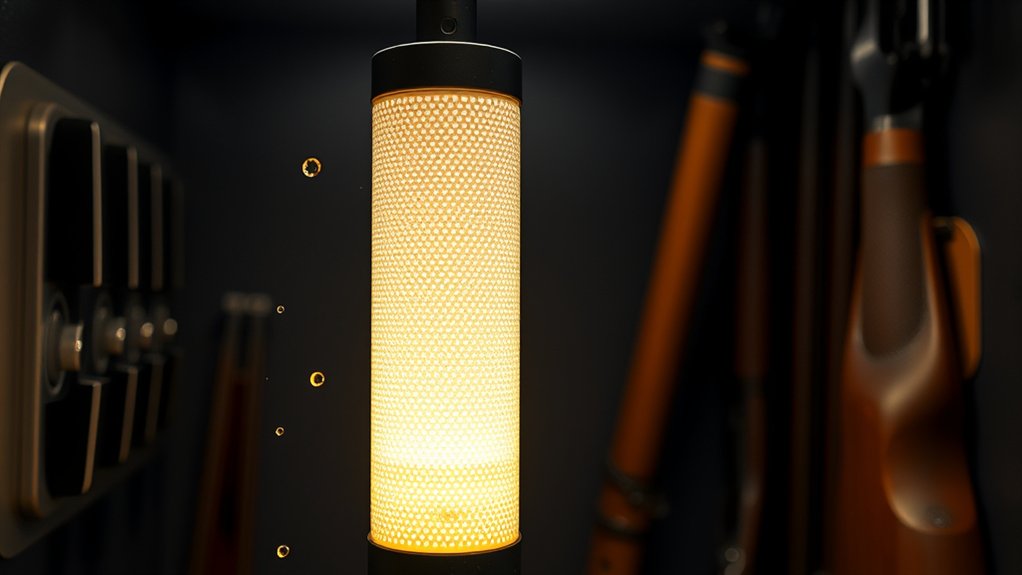
Although you mightn’t notice it immediately, controlling humidity inside your gun safe is essential to preserving your firearms and accessories. Maintaining proper humidity levels between 30% to 50% helps prevent rust and corrosion on metal surfaces and stops mold growth on wood stocks and leather.
Controlling humidity in your gun safe is crucial to prevent rust, corrosion, and mold growth on your firearms and accessories.
Fluctuating moisture can also damage electronics and documents stored in the safe.
You need a reliable method for moisture control, and that’s where a dehumidifier rod comes in. This device generates gentle heat to evaporate excess humidity, keeping the environment stable.
Using a hygrometer alongside the rod lets you monitor humidity levels precisely, ensuring you catch any changes early.
Signs Your Gun Safe Needs a Dehumidifier Rod
If you start seeing rust and corrosion on your firearms or any metal parts, that’s a pretty clear sign your safe’s humidity levels are too high.
It’s not just about the rust, though—if you catch a musty smell or even spot some mold growing inside the safe, that means there’s way too much moisture hanging around.
When you notice these warning signs, it’s definitely time to get a dehumidifier rod to keep your collection safe and in good shape.
Rust And Corrosion
When you notice orange or brown spots forming on your firearms or metal components, it’s a clear sign that the humidity inside your gun safe is too high and a dehumidifier rod is necessary.
Excess humidity causes metal parts to rust or corrode, compromising both appearance and function. This corrosion can degrade internal mechanisms, risking reliability and safety.
By installing a dehumidifier rod, you actively control moisture levels, maintaining the ideal range between 30-50%. This prevents rust formation and protects your guns from irreversible damage.
Regularly inspecting for rust or corrosion guarantees you catch problems early and keep your firearms in prime condition.
A dehumidifier rod is a precise, effective solution designed specifically to combat excess humidity and safeguard your valuable collection.
Musty Odors Detected
Since musty odors often signal excessive moisture inside your gun safe, you should treat these smells as an early warning of high humidity levels.
Detecting musty odors means moisture has accumulated, increasing the risk of rust, corrosion, and mold growth.
To address this, consider these steps:
- Inspect your safe regularly for musty odors to catch humidity issues early.
- Use a Gun Safe Dehumidifier rod to remove excess moisture by generating gentle heat, evaporating trapped water vapor.
- Maintain an ideal humidity level between 30-50% to prevent musty smells and protect your firearms.
Visible Mold Growth
Detecting musty odors in your gun safe often signals moisture levels have already risen to a point that encourages mold growth.
Visible mold inside means humidity has exceeded the safe 30-50% range. This promotes fungal growth that can threaten your firearms’ integrity.
You’ll likely see fuzzy patches or rust spots on metal surfaces. These are clear signs that moisture inside is unregulated.
Using a humidity gauge helps you keep an eye on these critical levels before mold shows up.
When mold is present, it’s an urgent sign you need a desiccant dehumidifier rod to absorb excess moisture and stop further damage.
Ignoring mold risks permanent damage to your firearms and accessories. It can also pose health hazards.
Gun Safe Dehumidifier Rods: What They Are and How They Work
You’ll find that gun safe dehumidifier rods use electrical coils to generate gentle heat. This heat helps control moisture and keeps rust at bay.
It’s best to place the rod at the bottom of your safe because that spot allows for good air circulation and keeps humidity levels steady.
To make sure it keeps working well, you’ll want to check on it regularly, keep it plugged in, and use a hygrometer to monitor the humidity inside your safe.
That way, your guns stay protected and in great condition.
Rod Functionality Explained
A gun safe dehumidifier rod uses gentle heat to control moisture levels inside your safe, effectively preventing condensation and rust.
This dehumidifier is a device that removes excess ambient humidity by maintaining the ideal humidity range of 30% to 50%. It operates at a controlled temperature of 100°F to 120°F, regulated by a built-in thermostat to avoid overheating.
To guarantee peak rod functionality, follow these steps:
- Install the rod at the bottom of your safe for even heat distribution and efficient moisture removal.
- Monitor humidity levels regularly to confirm the rod maintains the ideal range.
- Perform regular maintenance by inspecting the rod for wear and checking electrical safety to prevent hazards.
Heat and Moisture Control
When you rely on a gun safe dehumidifier rod, it actively controls heat and moisture to protect your firearms from damage.
These dehumidifier rods generate gentle heat to maintain ideal humidity levels between 30% and 50%, which prevents rust and corrosion. Equipped with thermostats, they regulate temperature precisely, ensuring consistent moisture control and avoiding condensation that causes mold or mildew.
Installed discreetly at the bottom of your safe, the rods distribute heat evenly, maximizing effectiveness without overheating.
This careful balance of heat and moisture control creates an environment that preserves your firearms long-term.
By managing the internal climate, dehumidifier rods eliminate excess moisture efficiently, maintaining gun integrity and reliability.
You’ll benefit from their focused design that safeguards your investment with minimal effort.
Placement and Maintenance
Although gun safe dehumidifier rods are designed to operate with minimal intervention, proper placement and regular maintenance are essential to confirm consistent performance. For the best humidity control, position the dehumidifier rod at the bottom of the safe. This helps guarantee even heat distribution and prevent condensation.
To keep things running smoothly, follow these key steps: Regularly inspect the power supply and make sure the rod’s thermostat is working right to maintain perfect temperatures.
Also, clean dust and debris from the rod’s surface so it doesn’t block the heat.
If you have a large safe, think about using multiple rods placed strategically. This way, you can maintain uniform humidity control throughout the entire safe. It’s a simple step that can make a big difference!
How Electric Dehumidifier Rods Evaporate Moisture
Since moisture thrives in enclosed spaces, electric dehumidifier rods combat humidity by generating gentle heat that evaporates water inside your gun safe.
These electric dehumidifiers operate between 100°F and 140°F, producing warm air that prevents moisture buildup.
As the rods gently heat the interior, they absorb moisture from the air, converting it to vapor that circulates as dry air. This process effectively lowers humidity levels inside the safe.
Mounted typically at the bottom of the safe, they promote even heat distribution, maintaining an environment hostile to rust and corrosion.
It’s a good idea to regularly check the rod’s function and position to ensure consistent performance.
By actively removing humidity from the air, these rods protect your firearms, keeping them dry and in prime condition.
It’s a simple yet effective way to guard your investment.
How Thermostats Help Gun Safe Dehumidifier Rods Control Humidity
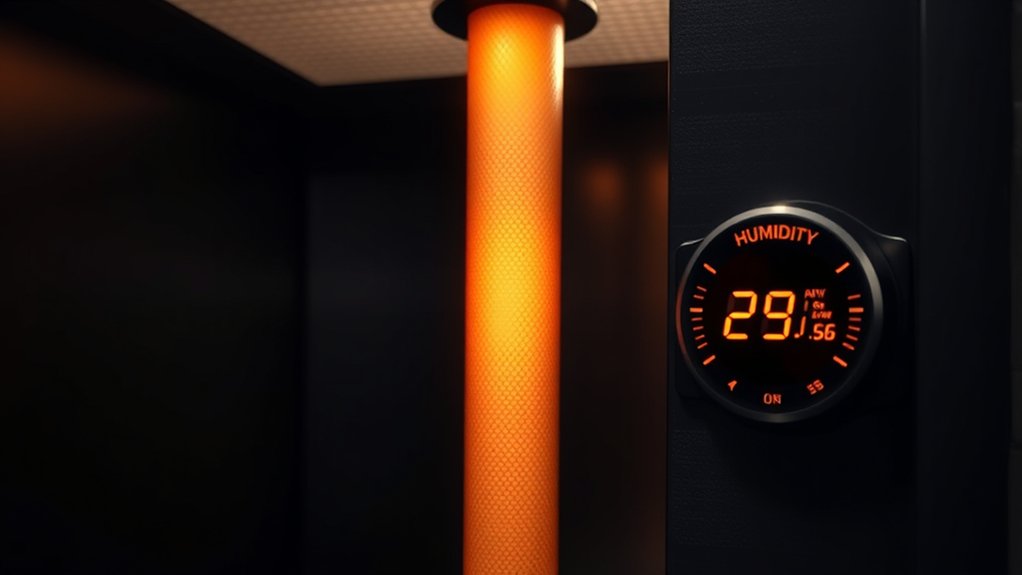
Because maintaining the right temperature is essential for protecting your firearms, thermostats in gun safe dehumidifier rods play a big role in controlling humidity. These thermostats regulate the temperature to keep the environment stable, which helps prevent damage from too much heat or moisture.
Specifically, thermostats help by activating the dehumidifier rod when the temperature falls below a set point. This promotes moisture evaporation and keeps humidity at ideal levels. They also maintain a consistent temperature around 70°F, which stops mold growth and rust from forming on your firearms.
Plus, thermostats boost energy efficiency by making sure the dehumidifier rod only runs when it needs to. Adjustable thermostats let you customize the settings based on your storage needs. This gives you precise control over both humidity and temperature inside your gun safe.
Installing and Maintaining Your Gun Safe Dehumidifier Rod
Controlling humidity with a thermostat is only part of keeping your firearms safe. Proper installation and maintenance of your gun safe dehumidifier rod guarantee it works effectively over time.
To install, place the dehumidifier rod horizontally along the safe’s bottom. Make sure there’s adequate airflow around it for efficient moisture evaporation.
Maintaining the rod means regularly checking that it’s plugged in and operational. Also, remove any dust or debris that might block airflow.
Keep an eye on humidity levels with a hygrometer to see if the rod is doing its job in controlling moisture. The rod generates gentle heat to maintain humidity between 30% and 50%.
For the best performance, replace the dehumidifier rod every few years since wear can reduce its efficiency. That way, your firearms stay protected for the long haul.
Optimal Placement of Gun Safe Dehumidifier Rods
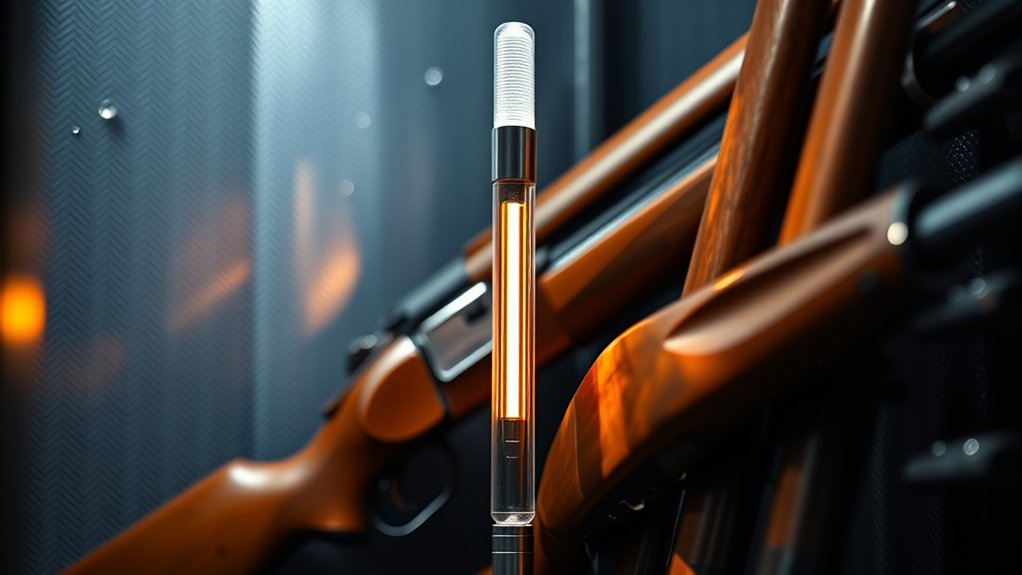
You should place your dehumidifier rod at the bottom of the safe to ensure even heat distribution, which effectively evaporates moisture.
Placing it near the center helps maximize air circulation and boosts moisture removal throughout the safe.
If you have a larger safe, it’s a good idea to use multiple rods.
This way, you can cover all areas and prevent humidity from building up in the corners.
Bottom Placement Benefits
When you place a gun safe dehumidifier rod at the bottom, it guarantees even heat distribution that actively prevents moisture buildup throughout the safe. This positioning directly targets moisture accumulation in the lowest areas, where humidity tends to settle. It protects your firearms and valuables from rust and corrosion.
The benefits include:
- Heat rises naturally, creating an upward convection current that enhances air circulation without additional energy.
- Moisture pooling at the base is neutralized promptly, reducing dampness-related damage risks.
- By avoiding contact with safe walls, the rod maximizes its efficiency, making sure dry air permeates all corners.
Bottom placement guarantees peak rod performance. It maintains a controlled environment that safeguards your collection effectively against moisture threats.
Air Circulation Importance
Although placing a gun safe dehumidifier rod at the bottom helps with heat distribution, improving air circulation means you need to think about where you put it inside the safe. To get the best moisture removal and keep humidity in check, try positioning the rods near the corners and close to the door. That’s usually where air tends to get stuck.
You’ll want to avoid placing rods directly against the safe’s walls because that limits airflow and makes them less effective. Good air circulation means moist air keeps flowing over the rods, so humidity is controlled evenly throughout the safe.
Many electric dehumidifier rods come with thermostatic control, which keeps temperatures ideal for better moisture removal.
Multiple Rod Distribution
Effective moisture control in larger gun safes relies on the strategic distribution of multiple dehumidifier rods. Proper placement guarantees even heat dispersion and prevents moisture buildup, maintaining ideal humidity levels.
To optimize performance, follow these guidelines:
- Position rods at the bottom of the safe, leveraging warm air rising to enhance moisture evaporation.
- Place rods near corners and doors to maximize exposure to humid air pockets.
- Avoid direct contact with safe walls, allowing adequate airflow around each rod.
Regularly monitor each rod’s function to keep humidity levels between 30-50%.
Comparing Gun Safe Dehumidifier Rods and Desiccant Packs
Because controlling humidity is vital for preserving your firearms, understanding the differences between gun safe dehumidifier rods and desiccant packs is essential.
Dehumidifier rods work by generating gentle heat that evaporates moisture, maintaining a consistent temperature to prevent rust and corrosion across larger safes.
In contrast, desiccant packs use moisture-absorbing materials like silica gel beads to passively absorb humidity without electricity. This makes them ideal for smaller safes or locations without power.
However, desiccant packs require regular monitoring and recharging once they become saturated.
Both options effectively maintain the ideal 30-50% humidity range.
But dehumidifier rods offer continuous control through heating, while desiccant packs rely on their moisture absorption capacity.
Choosing between them really depends on your safe’s size, power availability, and how much maintenance you want to do.
Troubleshooting Dehumidifier Rod Issues
When your gun safe dehumidifier rod stops heating, you need to methodically check its fuse, thermostat, and power connections to identify the issue. Dehumidifier rods rely on gentle heat to maintain proper humidity levels, so addressing faults promptly is critical.
Follow these steps:
- Inspect the fuse and thermostat for failure. Both are common causes of heating loss. Replace faulty components immediately.
- Verify power supply and connections. Make sure the rod is securely plugged in and the outlet is functional.
- Use a hygrometer to monitor humidity levels continuously. If the rod overheats or shows damage, replace it to avoid safety risks.
Regular troubleshooting safeguards your gun safe’s environment and prolongs the rod’s effective operation without risking overheating or moisture buildup.
It’s a simple way to keep your valuables safe and dry.
Key Benefits of Using a Gun Safe Dehumidifier Rod
Although gun safes provide secure storage, maintaining the right humidity level is crucial to protect your firearms from damage.
Using a dehumidifier for your gun effectively keeps your firearms safe by gently heating the safe’s interior to evaporate absorbed moisture. This process maintains humidity within the ideal range of 30-50%, preventing condensation that leads to rust, corrosion, and mold.
The rod’s built-in thermostat guarantees consistent temperature control without excessive energy use, safeguarding your collection efficiently.
Its compact design allows easy installation without sacrificing storage space. By managing moisture precisely, the dehumidifier rod preserves your firearms’ integrity and extends their lifespan.
It’s truly an essential component for any gun safe.
Frequently Asked Questions
Can a Dehumidifier Rod Damage My Gun Safe’s Interior Finish?
Yes, a dehumidifier rod can damage your gun safe’s interior finish if not used properly. For effective interior protection and finish preservation, you need to position the rod carefully to avoid localized overheating.
Make sure to prioritize humidity control with high-quality, UL-listed rods and keep an eye on your safe regularly.
Proper maintenance ensures the rod operates at safe temperatures, preventing damage while controlling moisture effectively.
This way, you can keep your safe’s interior in top condition without any worries.
Are Dehumidifier Rods Safe to Leave on Continuously?
Think of a dehumidifier rod as a gentle lighthouse, steadily guiding moisture away. You can safely leave it on continuously because its controlled heat output guarantees effective moisture control without overheating.
These rods are designed with dehumidifier safety in mind, often featuring thermostats and UL listings. Continuous usage protects your gun safe’s interior and valuables from humidity-related damage.
How Much Electricity Does a Gun Safe Dehumidifier Rod Use?
A gun safe dehumidifier rod typically uses between 10 to 25 watts of energy consumption, making it highly efficient.
You’ll plug it into a standard power source, and thanks to its heating efficiency and built-in thermostat, it maintains ideal humidity without wasting power.
When you compare the cost, running one usually adds only about $1 to $3 monthly to your electricity bill.
That’s pretty minimal for effective moisture control.
Can I Use a Dehumidifier Rod in a Non-Metal Gun Safe?
You might be surprised to learn that yes, you can use a dehumidifier rod in a non-metal gun safe. Among dehumidifier rod types, gentle heat generation helps maintain safe humidity levels between 30% and 50%.
For ideal results, follow installation tips like placing the rod where air circulates freely.
If you want alternatives, consider silica gel packs or electric dehumidifiers. Always monitor humidity to protect your firearms effectively.
It’s all about keeping your guns in the best condition possible.
Do Dehumidifier Rods Work in Extremely Cold Environments?
Dehumidifier rods lose moisture absorption efficiency in cold temperature effects, as condensation can replace evaporation. To maximize performance, you should consider placement carefully.
Keep the rod away from direct cold drafts and guarantee the safe is well insulated.
Since extreme cold reduces effectiveness, you might need alternative solutions available. For example, combining rods with electric dehumidifiers or silica gel packs can help maintain proper humidity control in frigid environments.
It’s all about finding the right balance to keep things dry.
Conclusion
Just like a lighthouse guiding ships through a storm, a gun safe dehumidifier rod steers you clear of rust and corrosion. By actively controlling moisture, it safeguards your firearms with precision and reliability. You’ll avoid costly damage and maintain your collection’s value effortlessly.
Investing in one isn’t just smart. It’s essential for any gun owner serious about preservation and protection in any climate or condition.