How to Open a Gun Safe When the Battery Dies
When your gun safe battery dies, start by using the override key to manually open the safe. Locate the key, insert it into the front lock, and turn gently. Once open, find the battery compartment, usually behind the keypad, and replace the old batteries with high-quality alkalines.
Test the keypad to confirm power restoration. Regular battery checks prevent lockouts, but if problems persist, professional locksmith help may be necessary. Understanding these steps guarantees reliable safe access every time.
How to Use the Override Key to Open Your Safe
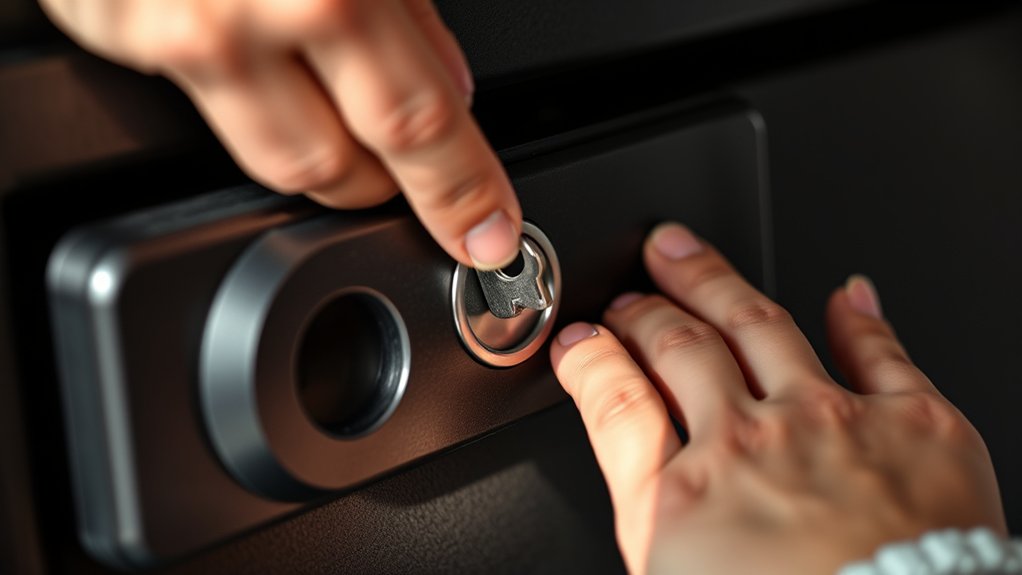
If your gun safe’s battery fails, you have one reliable way to regain access: the override key.
First, locate the override key, usually included in the safe’s packaging or attached to a keychain. Insert the override key into the lock, typically found on the front of the safe, and make sure it fits smoothly.
Turn the key gently to disengage the locking mechanism. You’ll often hear a click confirming it’s released.
Then, open the safe door carefully and check inside for the battery compartment, which is commonly located on the door’s interior.
Open the safe door gently and locate the battery compartment inside the door for easy replacement.
Replace the dead battery promptly to restore electronic access.
Finally, store the override key securely but within reach to avoid future lockouts caused by a dead battery. This method guarantees uninterrupted access without damaging your safe.
How to Confirm Your Gun Safe Battery Is Dead
When your gun safe starts showing faint lock lights, emitting longer beeps, or producing clicking sounds without opening, these signs indicate the battery might be failing. To confirm your gun safe battery is dead, check for these symptoms methodically.
Keep in mind, higher-end safes may display low battery warnings, but lower-cost models usually won’t. Also, think about the battery age. If it’s been over two years, the battery is likely dead.
| Symptom | Safe Type | Battery Status Indication |
|---|---|---|
| Faint lock lights | All | Battery weakening |
| Longer beeps | Higher-end models | Low battery warning |
| Clicking without releasing | All | Battery dead or failing |
It’s best to use high-quality alkaline batteries to avoid frequent failure. That way, you won’t have to deal with this problem too often.
What Type of Digital Lock Does Your Safe Have?
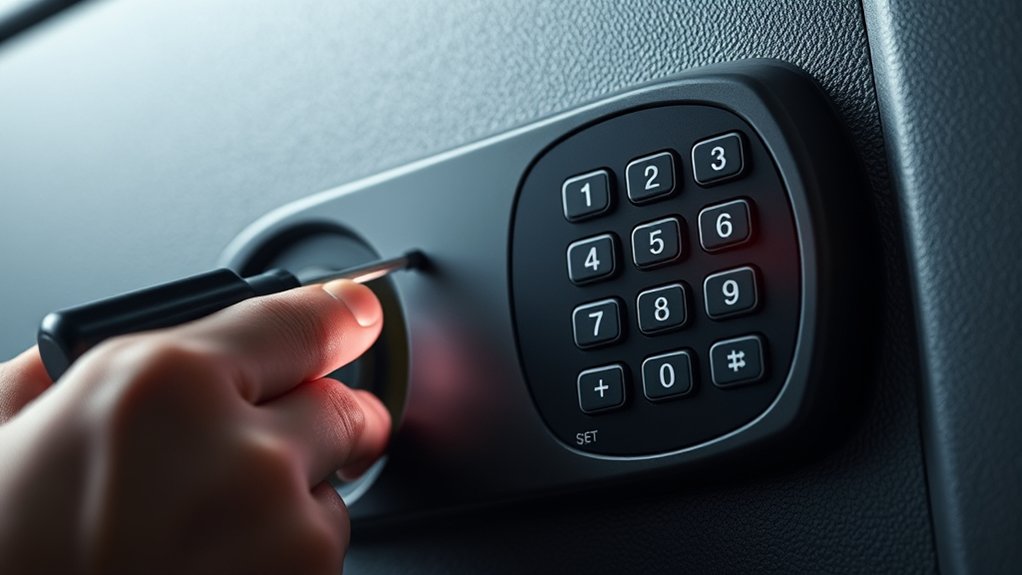
After confirming your gun safe’s battery is dead, the next step is to identify what type of digital lock your safe uses. There are three main types of electronic lock you might encounter.
Lower-cost models often feature a digital lock with an override key, allowing manual access when batteries fail.
Mid-range safes typically have batteries located behind the keypad, accessible by removing the battery casing.
Higher-end safes may include an emergency power supply connection, letting you connect a 9V battery externally to power the keypad temporarily.
Recognizing the type of safe you have is crucial because each electronic lock requires a specific method to regain entry during battery failure.
Knowing this guarantees you apply the correct procedure efficiently and avoid unnecessary damage or delay. It’s all about making the process smoother and hassle-free.
Replace Batteries Behind the Keypad
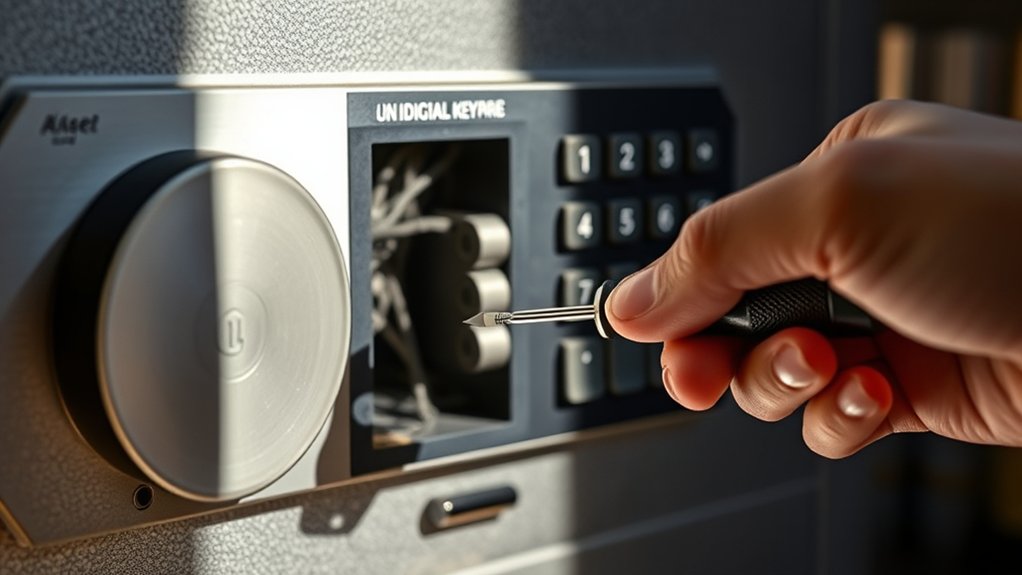
Although replacing the batteries behind the keypad might seem straightforward, you need to locate the catch that releases the battery compartment carefully. To replace the battery and open your safe efficiently, follow these steps:
- Find and press the catch on the keypad to access the battery compartment.
- Remove the old 9V battery and insert a new high-quality alkaline battery, such as Duracell or Energizer.
- Close the compartment securely, confirming the keypad is intact.
Use high-quality batteries to avoid operational issues and replace them every 6 to 12 months to prevent corrosion and unexpected lockouts.
After replacing the battery, your combination code will remain unchanged, so you can open your safe without resetting anything.
Keeping up with this little maintenance step will make sure your safe always works when you need it. It’s a simple way to avoid surprises later on.
How to Use an Emergency Power Supply to Unlock Your Safe
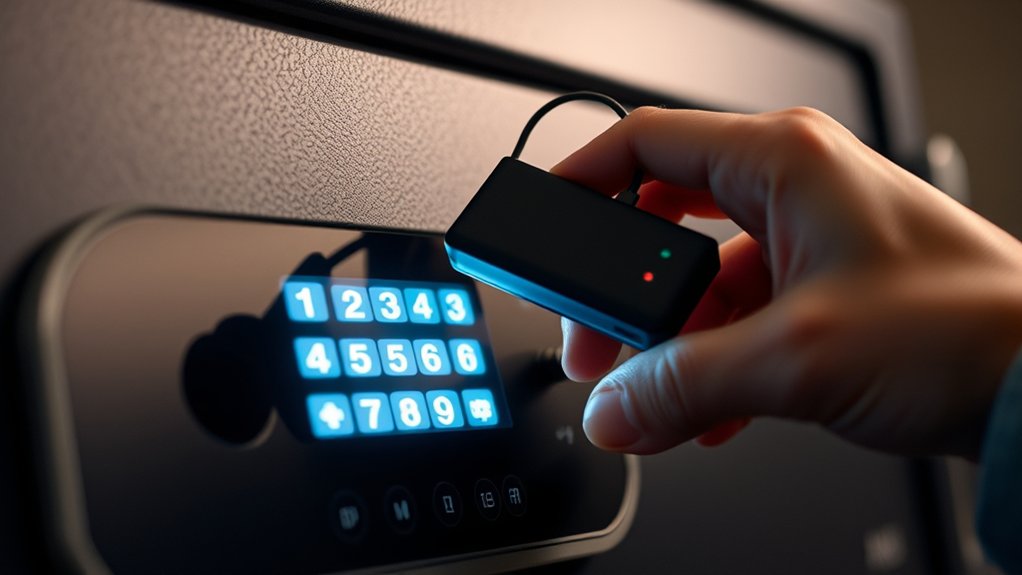
If your safe’s internal batteries die unexpectedly, you can use an emergency power supply to regain access without causing damage.
First, locate the emergency power supply connection points, usually near the keypad or lock mechanism. Take a fresh 9V battery and firmly hold it against these terminals, making sure you have a secure connection.
While keeping the battery in place, enter your access code to open the safe’s electronic lock. This temporary power source activates the system, letting you access the safe even when the internal batteries are dead.
Once it’s open, be sure to change the battery inside the safe right away to restore full functionality and avoid future lockouts.
Using an emergency power supply is a reliable way to get into your safe without forcing it or damaging the lock.
Why Battery Quality Matters for Your Gun Safe Lock
You want to make sure you’re using high-quality alkaline batteries, like Duracell or Energizer, to keep your gun safe lock working reliably.
Cheap carbon batteries often don’t provide consistent power, which can cause the lock to malfunction.
Keeping a steady power supply is really important so you don’t get locked out unexpectedly and can always access your safe when you need to.
Importance Of Alkaline Batteries
Reliable power sources play an essential role in keeping your gun safe’s electronic lock functioning smoothly. Understanding the importance of alkaline batteries guarantees your electronic safe remains accessible and secure. High-quality alkaline batteries like Duracell or Energizer provide consistent power, preventing unexpected lockouts and operational failures.
To maintain ideal function: use only high-grade alkaline batteries to assure steady voltage output. Replace batteries every 6 to 12 months to avoid power depletion during critical moments.
Also, monitor battery life, as a nine-volt alkaline battery supports 8,000 to 10,000 openings before needing replacement.
Selecting proper batteries not only enhances lock reliability but also extends the lifespan of your electronic safe’s locking mechanism. This way, you’re guaranteeing uninterrupted security without any hassle.
Risks Of Low Quality
Choosing high-quality alkaline batteries like Duracell or Energizer directly impacts your gun safe’s lock performance. Low quality batteries often deliver weak power output, increasing the risk of operational failures such as failure to turn the handle or intermittent lock functionality.
These issues can cause frustrating lockouts when you need access the most. Inferior batteries also tend to drain faster, requiring frequent replacements and raising the chance of unexpected power loss.
By using reliable batteries, you guarantee the electronic lock maintains its non-volatile memory, preserving your combination code through battery changes.
Regularly replacing batteries every 6 to 12 months prevents degraded performance. Avoiding low quality batteries minimizes operational failures and enhances the safe’s reliability, ultimately protecting your firearms and peace of mind.
Consistent Power Supply
Although some batteries may seem adequate at first glance, only high-quality alkaline batteries like Duracell or Energizer deliver the consistent power your gun safe lock demands.
Using inferior batteries increases the risk that your batteries are dead when you need access most.
To maintain a consistent power supply and avoid lockouts, follow these guidelines:
- Replace batteries every 6 to 12 months to guarantee reliable functionality.
- Use nine-volt alkaline batteries, which typically last for 8,000 to 10,000 openings.
- Avoid carbon batteries, as their inconsistent power delivery can cause operational issues.
Sticking to these tips will help ensure your lock works smoothly whenever you need it.
It’s worth the little extra effort to keep your safe secure and accessible.
How to Prevent Lockouts With Regular Battery Maintenance
Because an electronic safe relies heavily on its battery, maintaining it regularly is crucial to prevent lockouts. You should replace the battery every 6 to 12 months, use high-quality alkaline batteries, and conduct routine checks for signs like dim lock lights.
Keeping a spare battery on hand is a smart precaution. Familiarize yourself with your safe’s specific battery type and access method to streamline maintenance.
| Task | Frequency | Notes |
|---|---|---|
| Battery Replacement | Every 6-12 months | Use Duracell or Energizer |
| Battery Condition Check | Monthly | Look for dim lights or failure |
| Spare Battery Ready | Always | Store in a safe, accessible place |
| Know Battery Type | Once | Check safe manual |
| Test Lock Function | Monthly | Guarantee smooth operation |
Consistent battery maintenance keeps electronic safes reliable and prevents lockouts. It’s definitely worth the little effort to save yourself from a big hassle later.
What to Do If the Safe Still Won’t Open After Battery Replacement
If your safe still won’t open after replacing the battery, first double-check that the new battery is properly installed and fully charged. Sometimes, poor contact can prevent power from reaching the keypad.
Next, you should inspect the battery terminals for corrosion and clean them if necessary to guarantee a solid connection.
Then, test the electronic keypad for signs of power, like beeps or lights, to make sure it’s working.
Listen for disengagement sounds when entering the code. If the handle won’t turn, the locking mechanism might be jammed.
These steps help you figure out if the problem is with power delivery, keypad operation, or a mechanical issue.
If none of these fixes work, you’ll probably need a specialist to open the safe without causing any damage.
When to Call a Professional Locksmith
If you’ve tried all the usual troubleshooting steps and your safe still won’t open, it’s probably time to call a professional locksmith.
Sometimes, the issue might involve complex electronic locks or persistent malfunctions that really need expert tools and know-how.
When that happens, it’s best to choose a trusted locksmith who’s proven experience.
That way, you can avoid any damage and get quick, reliable access without the hassle.
Signs You Need Help
When should you call a professional locksmith for your gun safe? If you notice persistent issues despite replacing the batteries, it’s time to seek professional assistance. Problems with the locking mechanism can indicate deeper faults beyond simple battery failure.
Here are clear signs you need help:
- The safe doesn’t respond to code entry or keeps beeping despite fresh batteries.
- The override keyhole is blocked or the key is inaccessible.
- Complex electronic locking systems malfunction, especially in high-end safes.
If you’ve exhausted basic troubleshooting or suspect internal faults, a locksmith’s expertise guarantees safe, damage-free access.
Don’t risk worsening the problem. Professional assistance is the reliable solution to maintain your safe’s integrity and security.
Choosing A Trusted Locksmith
Recognizing the limits of your troubleshooting signals the right moment to involve a professional locksmith. When your gun safe’s battery dies and your attempts fail, choosing a trusted locksmith guarantees quick, damage-free access.
Focus on locksmiths with proven experience in opening digital gun safes, as they understand different locking mechanisms and emergency protocols.
Prioritize local services offering rapid response times, minimizing your wait. Verify credentials and reviews, emphasizing expertise with safes to avoid unqualified providers. Community recommendations provide additional assurance by highlighting locksmiths who’ve successfully handled similar issues.
Safety Tips for Maintaining Your Gun Safe’s Battery and Lock
Although maintaining your gun safe’s battery and lock might seem routine, neglecting these tasks can lead to frustrating lockouts or compromised security.
To guarantee reliable access and peak performance, follow these safety tips:
First, regularly check the battery status every 6 to 12 months. Replace it with high-quality alkaline batteries like Duracell or Energizer. This helps avoid inconsistent power.
Next, inspect the battery compartment for corrosion during replacements. If you see any buildup, remove it promptly to maintain proper contact.
Also, always keep the override key accessible. Make sure you know how to use it for manual entry if the battery fails.
Frequently Asked Questions
Can Extreme Temperatures Affect My Gun Safe’s Battery Life?
Yes, extreme temperatures greatly affect your gun safe’s battery life.
Heat can cause batteries to swell and leak, while cold reduces their power output.
To counter these temperature effects, follow battery maintenance tips like storing your safe in a climate-controlled area and replacing batteries every 6 to 12 months.
Regular checks guarantee reliable access and prevent corrosion from humidity combined with temperature extremes.
Are There Specific Battery Brands Recommended for Gun Safes?
You should use high-quality alkaline batteries like Duracell or Energizer for ideal battery maintenance and lock functionality.
These brands provide consistent power, reducing the risk of lock malfunctions. Avoid carbon batteries since they offer unreliable performance.
Regularly replace batteries every 6 to 12 months to maintain reliable lock operation.
Choosing durable brands guarantees your gun safe’s electronic lock works smoothly. This helps prevent unexpected lockouts when you need quick access the most.
How Often Should I Test My Gun Safe’s Backup Key Functionality?
You should test your gun safe’s backup key functionality every 6 to 12 months. This regular key maintenance guarantees it operates smoothly when your battery replacement fails or the battery dies.
Neglecting this can lead to corrosion or jamming, making emergency access difficult.
By methodically testing and documenting each check, you maintain reliable access and prolong your safe’s lifespan.
It also gives you peace of mind that your backup system will perform when you need it most.
Can a Dead Battery Cause Permanent Damage to the Locking Mechanism?
No, a dead battery can’t cause permanent damage to your locking mechanism. The mechanical parts stay intact no matter what the battery status is.
Keeping up with battery maintenance, like swapping out batteries every 6 to 12 months with good-quality ones, really helps keep things running smoothly. This prevents temporary lock issues that can be frustrating.
If your safe won’t open, it’s probably a power problem, not a mechanical failure.
Regular maintenance is key to avoiding complications and making sure your locking mechanism stays reliable over time.
Is It Safe to Store Guns in a Safe With a Malfunctioning Lock?
You shouldn’t store guns in a safe with a malfunctioning lock. Studies show nearly 40% of unauthorized gun access happens because of faulty locks.
Safe storage really depends on reliable lock maintenance to keep accidents and theft at bay.
If your lock malfunctions, replace the batteries promptly. It’s also a good idea to consider professional help to fix it.
Keeping your lock in top shape guarantees secure and responsible firearm storage.
This way, you protect everyone around you. It’s all about making sure your guns are stored safely and securely.
Don’t take chances when it comes to gun safety.
Conclusion
When your gun safe’s battery dies, don’t panic. Power, patience, and precision are your allies. Use the override key or emergency power supply to regain access swiftly.
Remember, regular battery checks prevent lockouts before they start. If stubborn locks resist, calling a professional locksmith isn’t a setback but a smart step.
Stay proactive, stay prepared, and keep your safe secure. Because when it comes to your safety, every second counts and every action matters.