How to Lower Humidity in a Gun Safe in 3 Steps
To lower humidity in your gun safe, start by monitoring moisture levels using a reliable hygrometer. Aim to keep humidity between 30% and 50%. This range helps protect your firearms effectively.
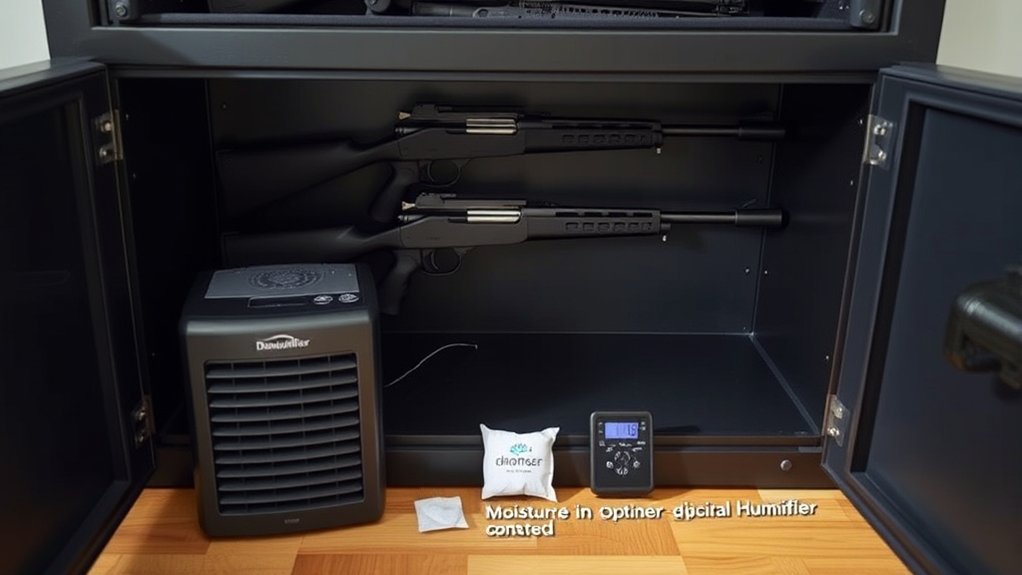
Next, choose the right dehumidifier. Electric models work well for high humidity, while desiccant packs offer maintenance-free moisture control. Pick what fits your needs best.
Finally, boost air circulation with small fans or dehumidifier rods. Make sure the door seals are tight too. These steps help prevent rust and mold.
If you want, you can explore more options for seasonal adjustments and long-term preservation. It’s all about keeping your guns safe and in great shape.
Why Monitoring Gun Safe Humidity Matters
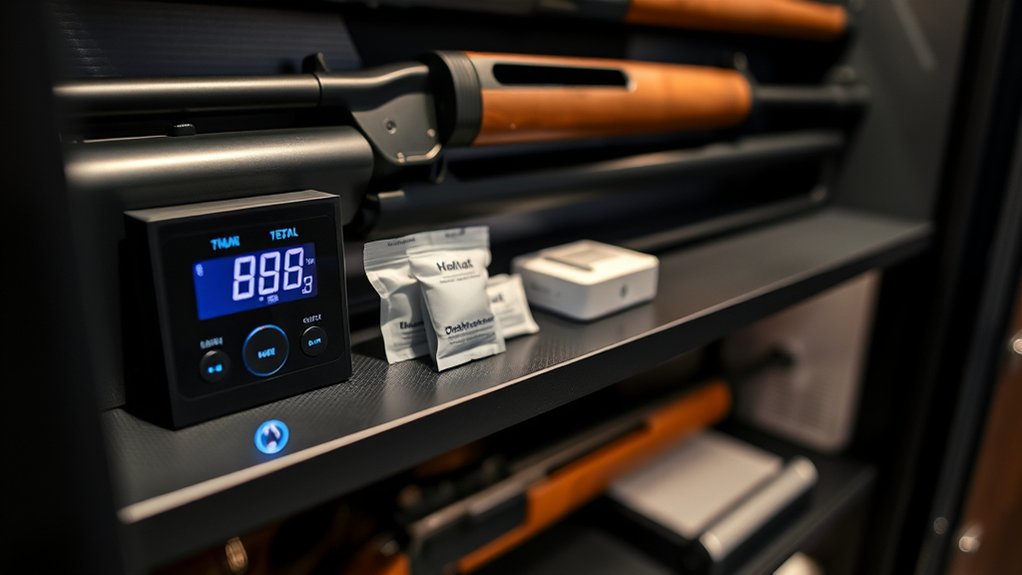
Because even a few days of high humidity can cause irreversible damage, you need to monitor your gun safe’s humidity levels regularly. Rust and corrosion can start within four days if temperatures exceed 86°F and humidity surpasses 70%. Use a hygrometer to track these levels accurately.
Maintaining humidity between 30% and 50% safeguards your firearms, wooden stocks, ammunition, and valuable documents from moisture buildup and mold growth.
Keep humidity between 30% and 50% to protect firearms, wood, ammo, and documents from moisture damage.
Temperature fluctuations and frequent safe access can trigger humidity spikes, so stay vigilant.
Employing a desiccant or other humidity control methods depends on this monitoring. By consistently checking your safe’s environment, you prevent degradation and guarantee your firearms and collectibles remain reliable and preserved over time.
Pick the Best Dehumidifier for Your Gun Safe
When selecting a dehumidifier for your gun safe, consider the environment and size of your safe to guarantee effective moisture control.
Electric dehumidifiers, like Golden Rod models, generate heat to evaporate moisture and suit high humidity areas.
For smaller safes or as supplements, desiccant dehumidifiers such as silica gel packets offer maintenance-free, cost-effective moisture absorbers.
Rechargeable dehumidifiers provide long-term convenience without the need for power outlets.
Place your gun safe dehumidifier where proper air circulation guarantees ideal moisture absorption.
Use a hygrometer to monitor humidity levels, aiming for 30% to 50%.
Recharge or replace moisture absorbers as needed.
Choosing the right dehumidifier helps prevent rust and corrosion, protecting your firearms and preserving their condition.
Boost Air Flow and Adjust for Seasonal Changes in Your Gun Safe
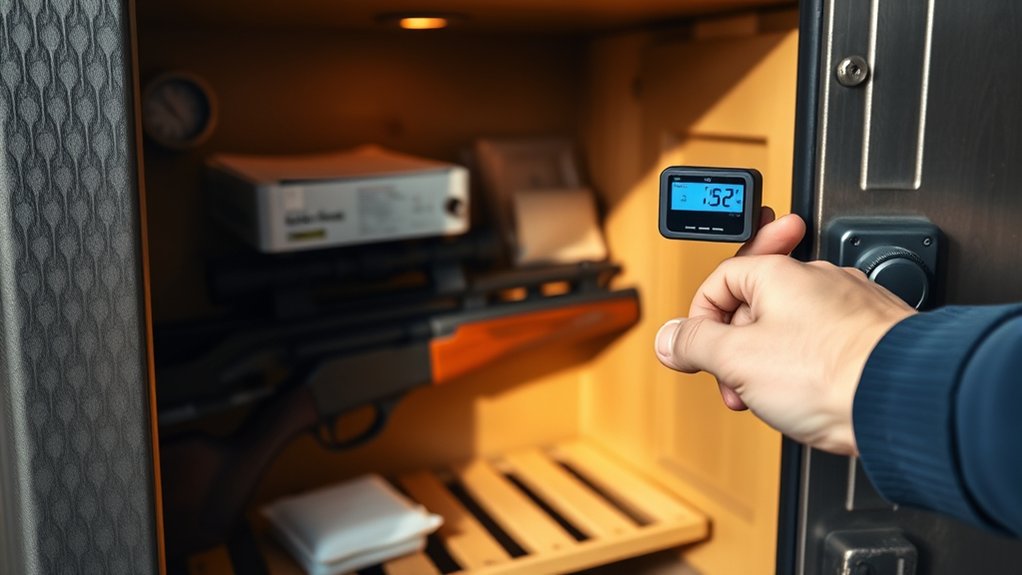
Three key actions can dramatically improve humidity control inside your gun safe: boosting airflow, adjusting for seasonal changes, and maintaining proper sealing.
To boost airflow, make sure there’s good air circulation by positioning a small fan or using dehumidifier rods that allow air movement.
Seasonal changes mean you’ll need to check humidity more often. Use a hygrometer placed away from walls and corners to get accurate readings.
Don’t forget about door seals. They keep humid air out and stop moisture buildup inside your safe.
- Use desiccant packs or dehumidifier rods designed for airflow
- Inspect and maintain door seals regularly
- Adjust your humidity control strategy based on seasonal changes
Following these steps helps keep moisture levels stable and protects your firearms effectively.
It’s a simple way to make sure your safe does its job well.
Frequently Asked Questions
Can Silica Gel Packs Be Reused After Drying?
Yes, you can reuse silica gel packs after completing the drying process. This reusable material effectively manages moisture control and helps maintain ideal humidity levels inside your gun safe, ensuring firearm protection.
By regularly drying saturated packs, you enhance dehumidifier efficiency and promote safe maintenance. Keep an eye on environmental factors to determine when drying is needed.
Using silica gel as part of your storage solutions provides a sustainable, cost-effective method for long-term humidity management.
It’s a smart choice that saves money and helps protect your valuables over time.
How Often Should Gun Safe Humidity Be Checked?
A stitch in time saves nine, so you should check your gun safe’s humidity at least once a month to maintain ideal humidity levels.
Try to increase how often you monitor humidity during seasonal changes or right after opening the safe.
Reliable moisture detection tools and different types of dehumidifiers help you manage humidity-related risks more effectively.
Keeping up with regular gun safe maintenance and humidity control methods guarantees a safe environment.
This way, you protect your firearms from damage by using smart humidity management tips.
Are Charcoal Dehumidifiers Effective for Gun Safes?
Yes, charcoal dehumidifiers can be effective for moisture control in gun safes, especially certain charcoal types with high porosity. They help maintain proper humidity levels, protecting firearms from rust and corrosion.
However, their charcoal effectiveness is limited compared to electric dehumidifier alternatives. You should pair them with humidity indicators and guarantee good air circulation for safe maintenance.
Regular replacement is key to preserving safe organization and firearm protection. It’s a good idea to keep an eye on how well they’re working and swap them out when needed.
Can Placing a Moisture Absorber Damage Firearms?
Moisture absorbers are your first line of defense, not a hidden threat, in moisture control and firearm preservation. They won’t damage your firearms if you choose safe materials and monitor humidity indicators regularly.
Keep your safe organized with proper air circulation and temperature regulation. Also, consider dehumidifier options for extra protection.
Just avoid absorbers that leak or get saturated, because humidity effects can lead to rust. Staying vigilant about rust prevention is key to keeping your firearms in top shape.
What Temperature Is Ideal Inside a Gun Safe?
The ideal temperature inside your gun safe is between 60°F and 70°F. Maintaining this range helps minimize humidity levels and prevents moisture buildup that can damage safe materials and firearms.
Avoid temperature fluctuations by using insulation techniques and guarantee proper air circulation.
Electronic dehumidifiers enhance moisture control, especially during seasonal adjustments.
Keeping these factors steady protects your firearm storage from corrosion and deterioration. This way, you preserve your collection effectively.
Conclusion
If you don’t control humidity in your gun safe, rust will throw a party on your firearms, and you won’t be invited. By choosing the perfect dehumidifier, boosting airflow, and adjusting for seasonal changes, you’ll keep your guns pristine and ready for action.
Don’t let moisture win. Take charge now and protect your investment like a pro. Your guns deserve nothing less than airtight defense against humidity’s havoc.