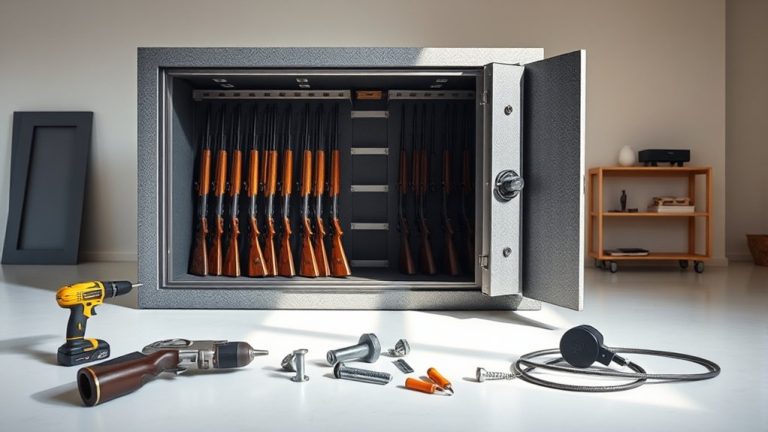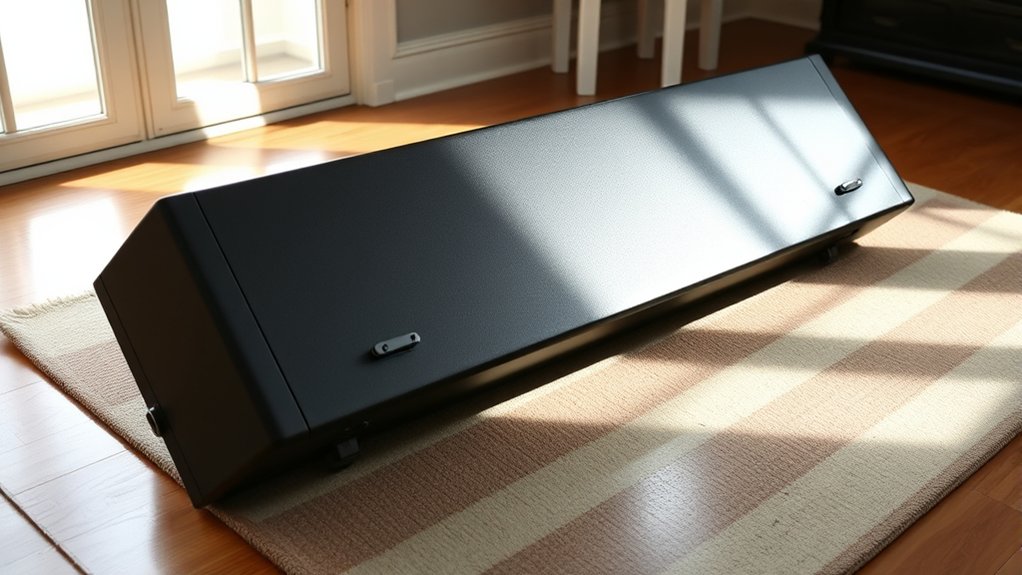
Can You Lay a Gun Safe on Its Back?
You shouldn’t lay your gun safe on its back because it can compromise structural integrity and cause misalignment of the door and lock mechanism. Internal parts may shift, risking damage and warranty issues.
If you must, empty the safe and check the manufacturer’s guidelines carefully. Use padding and move it cautiously to protect its function.
Understanding the risks and proper preparation will help you maintain your safe’s security and longevity. There’s more to contemplate when handling your safe safely.
Should You Ever Lay a Gun Safe on Its Back?
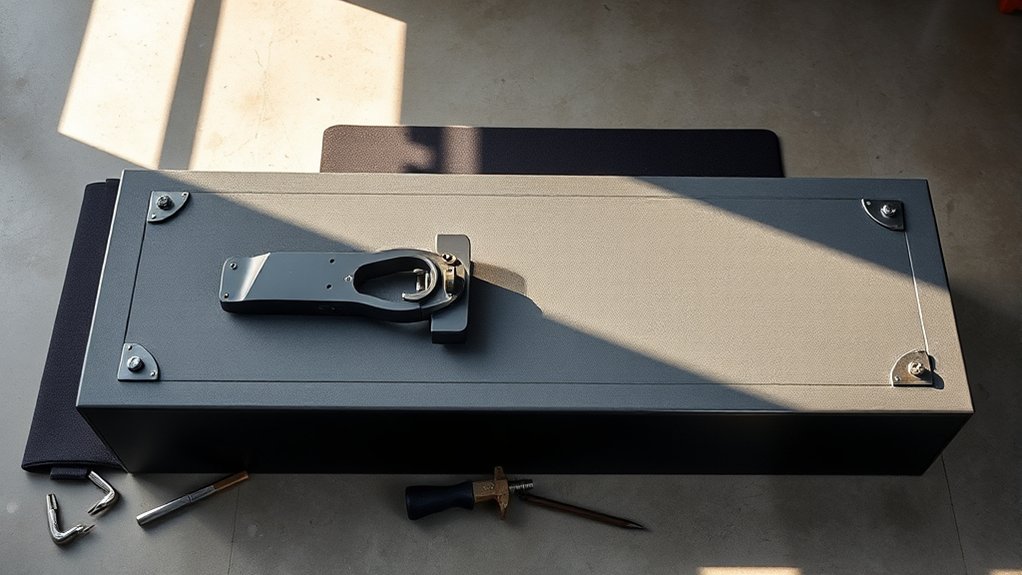
When transporting a gun safe, should you lay it on its back? Generally, you shouldn’t. Laying a gun safe flat can compromise its structural integrity and cause misalignment of the door and lock mechanism.
Avoid laying your gun safe flat during transport to prevent structural damage and lock misalignment.
You want to keep the safe in an upright position, especially if it contains valuable or delicate items. This helps avoid damage during transport.
While empty safes might tolerate being laid on their side, it’s best to follow the manufacturer’s guidelines explicitly. These guidelines are designed to preserve the safe’s security features and prevent warranty issues.
Always check them before moving your gun safe. By keeping the safe upright and sticking to recommended practices, you ensure it stays durable and works properly after transport.
How Laying a Gun Safe Flat Can Cause Damage
Keeping your gun safe upright during transport isn’t just a recommendation. It actually helps protect the safe from damage that can happen when it’s laid flat. Laying a safe flat can mess with its structural integrity, which might cause the door and locking mechanism to become misaligned.
Also, the internal components can shift around, risking damage and reducing how well everything works. Manufacturers emphasize keeping safes upright to help maintain their longevity and keep your warranty valid.
| Risk Factor | Effect on Safe | Recommendation |
|---|---|---|
| Structural Integrity | Misalignment, warping | Avoid laying flat |
| Internal Components | Shift, damage | Keep upright |
| Contents | Increased damage risk | Secure inside |
| Warranty | May be voided | Follow manufacturer guidelines |
To protect your investment, always follow these precautions carefully. It really makes a difference in keeping your safe in top shape.
When Is It Safe to Lay a Gun Safe on Its Side or Back?
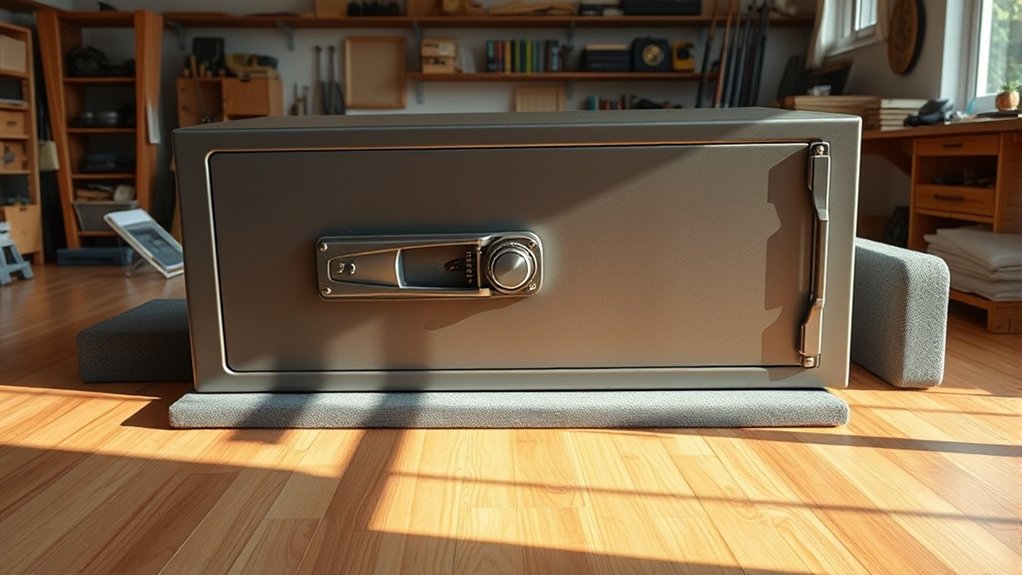
Although laying a gun safe on its back is generally discouraged because it can damage the structure and locking mechanism, you can safely place an empty safe on its side if you take proper care.
When laying a safe on its side, make sure it’s empty to avoid shifting contents that might cause internal damage.
If your safe has firearms or delicate items inside, it’s best to keep it upright to maintain stability and protect what’s inside.
Always check the manufacturer’s guidelines before transport since some models have specific orientation requirements to keep the warranty and structural integrity intact.
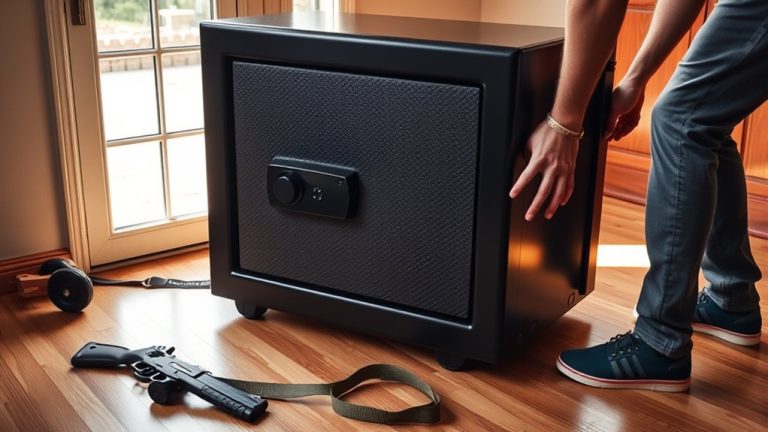
Using a dolly or hand truck during transport helps you manage the safe more safely, no matter how it’s positioned.
In the end, just prioritize the safe’s condition and contents by sticking closely to the recommended handling practices.
How to Prepare Your Gun Safe Before Moving It Flat
Three essential steps help you prepare your gun safe before moving it flat to guarantee safety and prevent damage. First, empty the safe completely to avoid shifting contents. Next, assess weight distribution to determine if laying it flat is advisable.
Third, use proper wrapping, such as padded blankets, to protect the exterior. Always check manufacturer guidelines before proceeding. Finally, utilize sliders to ease the movement and reduce floor friction.
| Step | Action |
|---|---|
| Empty the Safe | Remove all contents to prevent damage |
| Assess Weight Distribution | Verify if the safe can be laid flat |
| Use Proper Wrapping | Wrap with padded blankets securely |
| Check Manufacturer Guidelines | Confirm safe’s tolerance for flat position |
| Utilize Sliders | Employ sliders or PVC pipes for moving |
Protecting Your Gun Safe’s Structure During Transport
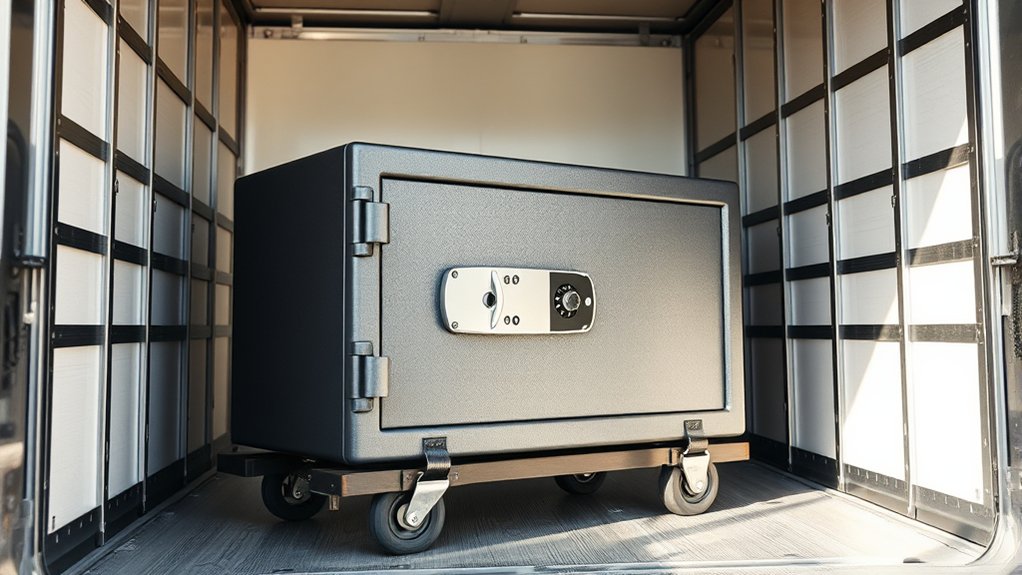
When you’re moving your gun safe, it’s really important to keep its structure intact to prevent any warping or damage to the frame.
For example, laying it on its back isn’t a good idea because it can cause the internal parts to shift around. This might lead to the door not lining up properly or even problems with the lock.
Structural Integrity Risks
Because gun safes are engineered to stay upright, laying one on its back can jeopardize its structural integrity by causing misalignment in the door and lock mechanisms.
The safe’s weight distribution is optimized for the upright position, ensuring that stress on the frame and seams remains balanced. When you lay the safe flat, you risk uneven pressure that can weaken its protective features.
Even if the safe is empty, internal components can shift, increasing damage risk during transport. Manufacturer guidelines consistently emphasize keeping safes upright to preserve their durability and security.
To protect your investment and maintain the safe’s intended function, always follow these recommendations. Ignoring them compromises the safe’s structure, potentially leading to costly repairs or diminished protection.
Door Alignment Concerns
Misaligning the door and lock mechanism is one of the biggest risks when you lay a gun safe on its back. The safe’s structural integrity depends on proper weight distribution and positioning, which manufacturers design for upright use.
When you transport the safe on its back, internal components can shift, causing door alignment issues that affect locking functionality. Misalignment can lead to difficulty opening or securing the door, compromising both security and the safe’s lifespan.
Plus, many manufacturers say that improper transport methods void warranty compliance, leaving you unprotected against defects or damage.
To protect your investment, always keep the safe upright during transport. If you must lay it down, make sure it’s empty and supported carefully to avoid damaging internal components or disturbing door alignment.
Best Ways to Wrap and Pad a Laid-Down Gun Safe
Anyone moving a gun safe on its back should first confirm the safe is completely empty to prevent internal damage.
Next, wrap the gun safe securely using multiple furniture pads or thick blankets to provide cushioning on all sides. This padding offers essential protection against scratches and impacts during transport.
Make sure to secure the wrap tightly with movers wrap or heavy-duty tape, especially at the top, middle, and bottom, to prevent shifting.
Creating a non-slick surface this way guarantees better grip while moving. Always check the manufacturer’s guidelines beforehand to avoid compromising the safe’s structural integrity or locking mechanisms.
Following these careful wrapping and padding steps will help keep your gun safe safe and intact during the move.
It’s really about taking the time to do it right so you don’t end up with any damage later on.
Moving Your Gun Safe Upright vs. On Its Back: Pros and Cons
How should you move your gun safe to guarantee its longevity and functionality? Moving your gun safe upright is generally the safest method. The weight of your safe is distributed to keep its structure stable, reducing the risk of tipping or internal misalignment.
Using proper equipment like dollies and straps designed for heavy loads helps prevent damage during transport. Laying it on its back can compromise the safe’s door and lock mechanism, risking costly repairs.
While empty safes might tolerate side transport, valuable contents need upright movement to avoid disturbance. Manufacturers often recommend specialized equipment for upright moves to maintain warranty coverage and functionality.
Balancing these pros and cons, moving your gun safe upright with the right gear is the cautious choice to guarantee its integrity and performance. It’s really the best way to go if you want to keep everything working smoothly.
How to Secure Your Gun Safe When Transported on Its Back
Make certain your gun safe is completely empty before laying it on its back to avoid damaging the locking mechanism or contents inside.
Next, use high-quality moving equipment like furniture sliders to reduce friction and ease maneuvering across surfaces.
Once positioned, secure the gun safe firmly with ratchet straps to prevent any shifting during transport.
Wrapping it in padded blankets or Movers Wrap offers additional protection against scratches and dents.
Always consult the manufacturer’s guidelines before transport, as some models have specific instructions about orientation to avoid structural damage.
Taking these cautious steps guarantees your gun safe remains stable and intact throughout the move, safeguarding both its contents and exterior.
Proper securing is essential for a safe, damage-free relocation.
What to Do If You Must Move Your Gun Safe on Its Side or Back
While securing your gun safe upright is the safest approach, there are times when moving it on its side or back becomes unavoidable. If you must move a gun safe in this way, follow these careful steps to minimize risk.
First, empty the safe completely to avoid any internal damage or shifting of contents.
Start by emptying the safe fully to prevent damage or shifting inside during the move.
Then, wrap the safe in blankets or padding to protect its exterior from dents and scratches. Use strong straps to secure the safe in place during transport, so it doesn’t move around.
Always check the manufacturer’s guidelines before moving your safe on its side, since some models might’ve unique restrictions.
Following these precautions really helps preserve your gun safe’s structural integrity and locking mechanism when you have to move it in less-than-ideal positions.
Spotting Damage After Moving Your Gun Safe Flat: And How to Fix It
Since laying your gun safe flat can affect its internal components, you need to carefully inspect it once it’s in place.
Begin by checking for visible damage, such as dents, scratches, or misalignments around the door and hinges.
Pay special attention to the locking mechanism. Operate it multiple times to ensure it functions smoothly and hasn’t been compromised during moving.
Internal components may have shifted or sustained damage. If you suspect issues, consult the manufacturer’s guidelines or contact a professional safe technician for assessment.
Also, examine the safe for signs of water damage or rust, especially if it wasn’t adequately protected while laying flat.
Promptly addressing any damage helps maintain your safe’s security and longevity after moving.
Frequently Asked Questions
What Tools Are Needed to Move a Gun Safe Safely?
To move a gun safe safely, you’ll need the right tools for effective weight distribution and protection. Use a heavy-duty appliance dolly to support the safe’s weight, and secure it with moving straps to prevent tipping.
Furniture sliders help reduce friction during transport, while protective equipment like blankets shields the safe from damage.
Consider wooden planks to create ramps for uneven surfaces.
Choosing proper dolly options and transport methods guarantees a smooth, secure safe moving process. It might take a bit of planning, but having the right gear makes all the difference.
How Heavy Is an Average Gun Safe?
An average gun safe weighs like a small car, typically between 200 to 600 pounds.
Safe weights vary widely depending on safe materials, safe sizes, and safe features. For example, steel-heavy safe brands often produce sturdier models, increasing weight.
You need to take into account these factors when planning a move because heavier safes demand special tools and care.
Knowing the exact weight helps you avoid damage or injury during transportation. It really pays to be prepared!
Can Humidity Affect the Interior of a Gun Safe?
Yes, humidity can greatly impact your gun safe’s interior protection. You’ll want to prioritize humidity control and climate monitoring to prevent moisture buildup that causes rust and mold.
Proper safe organization helps airflow, reducing damp spots. Use desiccants or a dehumidifier for effective moisture prevention.
Regularly check the interior to maintain ideal conditions. This way, your firearms stay in excellent shape and your safe’s longevity isn’t compromised by excess humidity.
Are There Insurance Requirements for Moving Gun Safes?
Yes, insurance policies often have specific requirements when moving gun safes. You should notify your insurance provider before relocating to guarantee your coverage remains valid.
When hiring moving companies, verify they’ve liability coverage that includes safe transport and installation.
Also, make sure the movers comply with transport regulations to avoid any coverage gaps. It’s a good idea to document the safe’s condition before the move to support any damage claims.
Always check with your insurer for any extra protection you might need during the move.
How Often Should a Gun Safe Be Serviced?
Think of your gun safe as a trusted guardian that needs regular check-ups to stay sharp. You should schedule servicing at least once a year to follow safe maintenance tips like lubrication techniques and regular inspections. This keeps your gun safe longevity intact and guarantees safety precautions are met.
Don’t forget to check for rust, battery health, and secure bolting. Staying proactive protects your investment and your peace of mind.
It’s really about making sure your safe works perfectly every time you need it. So, a little yearly care goes a long way!
Conclusion
You might think laying your gun safe on its back is harmless, but imagine the heavy locking bolts shifting or internal components twisting under pressure. While it’s sometimes necessary, you should always prepare and secure your safe carefully to avoid damage. Treat your safe like a delicate machine.
Its structure and locking system aren’t designed for horizontal rest. When in doubt, keep it upright to protect your investment and guarantee long-term reliability.