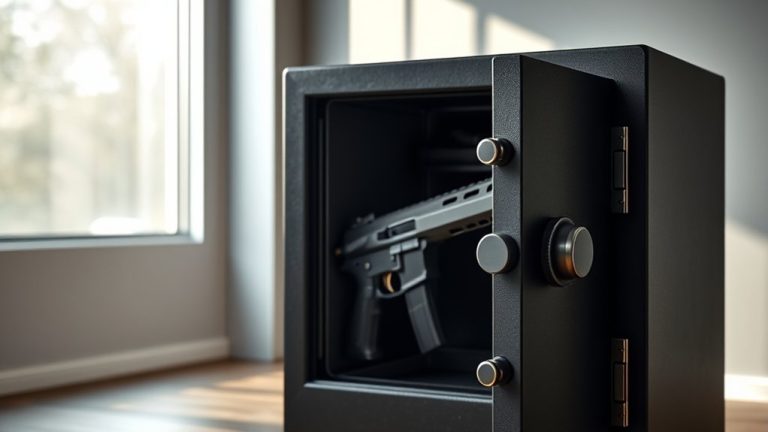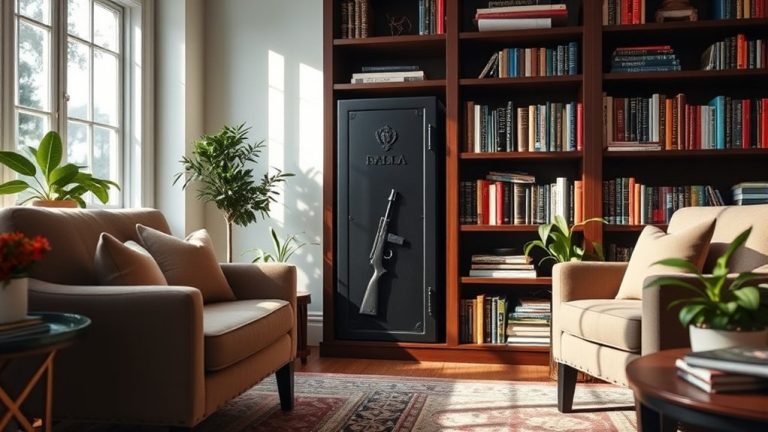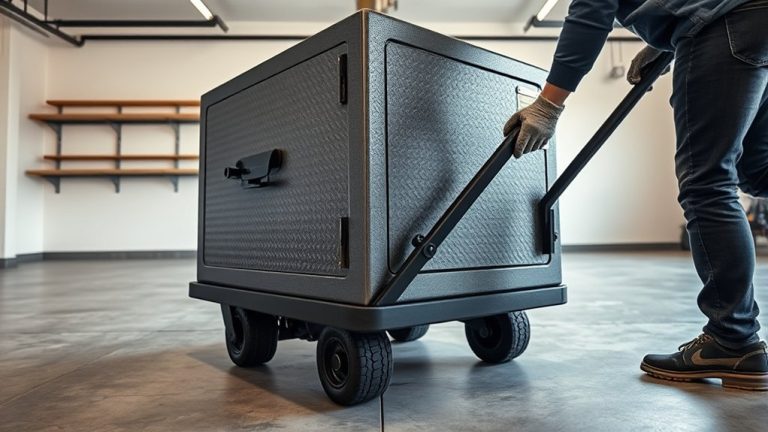
How to Move a Gun Safe Without a Dolly in 10 Steps
To move a gun safe without a dolly, first estimate its weight and clear pathways. Make sure to measure doorways for clearance so the safe can pass through easily.
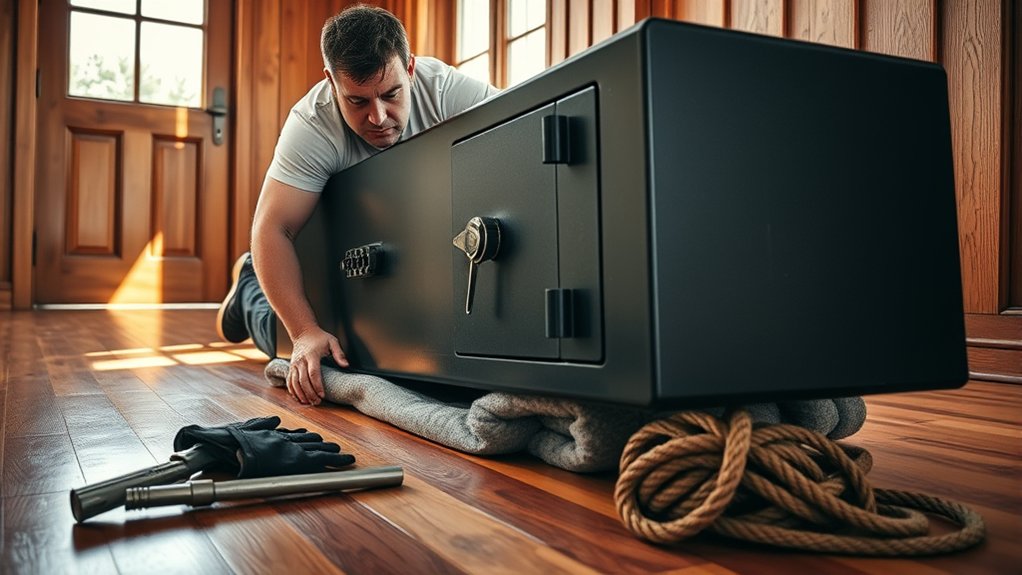
Empty the safe to reduce the weight, then gather a strong team and assign roles. Wrapping the safe in blankets helps prevent any damage during the move.
Use planks and blocks to carefully tilt and lift the safe. Slide it on sliders to make the movement smoother.
Take your time navigating corners and stairs, and keep communication clear with your team. Once the safe is in place, secure it properly.
Following these steps will keep the move safe and efficient. And don’t worry—there are plenty more tips to help guide you along the way!
How to Estimate Your Gun Safe’s Weight and Size
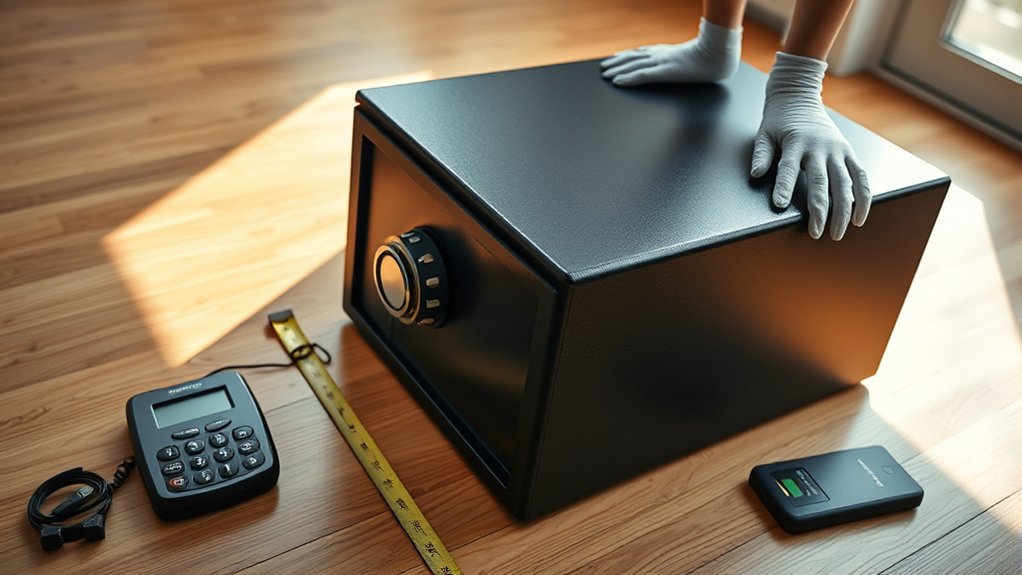
Estimating your gun safe’s weight and size starts with checking the manufacturer’s specifications, which usually list both the weight and dimensions.
To estimate your gun safe’s weight accurately, note that typical models range from 600 to 800 pounds, but can vary widely, from 100 to over 2,000 pounds depending on size and materials.
Measure the safe’s dimensions carefully. Average safes are about 33 inches wide, 24 inches deep, and 5 feet tall.
These figures help you understand the space it occupies and plan for moving.
Also, consider the construction. Thicker steel and fireproofing add substantial weight.
Don’t forget to include shelves or internal components as they increase the total mass.
This methodical approach guarantees a precise estimate of your gun safe’s dimensions and weight.
Clear and Measure Doorways and Pathways for Safe Passage
Before moving your gun safe, you’ll need to measure all doorways and pathways to make sure the safe can pass through without any issues. Use a tape measure to check door frames, hallways, and any tight spots.
Compare their width against the safe’s dimensions, which are generally around 33″ wide and 24″ deep. Make sure to allow at least a few inches of clearance for a smooth passage.
Next, clear the route by removing furniture and obstacles that could block or narrow the path. Don’t forget to measure staircases and think about turns, as these can complicate the move if not properly checked.
By thoroughly measuring and clearing your path, you’ll avoid unexpected snags. This way, you’ll guarantee a safer, more efficient move for your gun safe.
It’s all about planning ahead to keep things running smoothly.
Empty the Safe to Reduce Weight and Risk
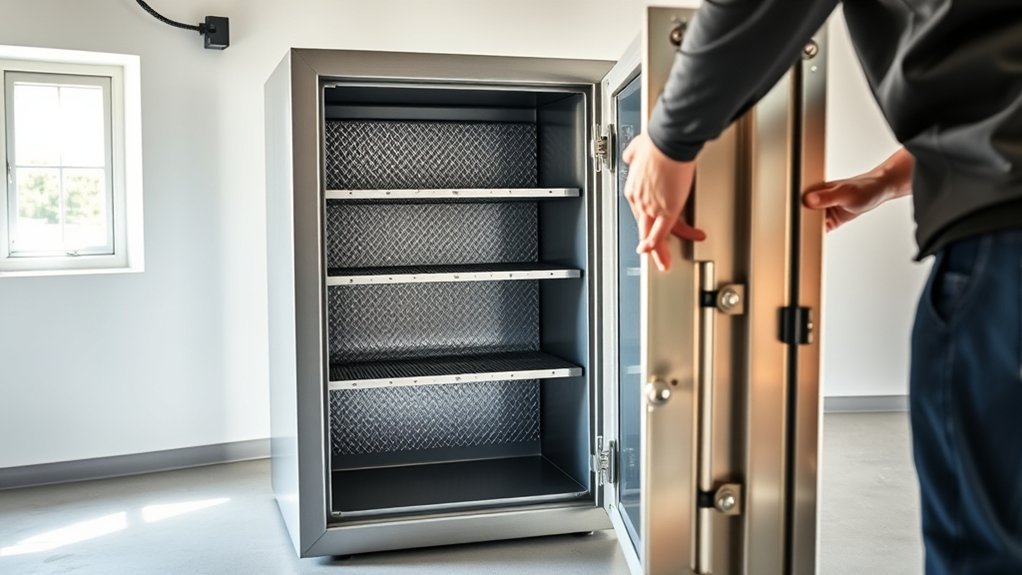
Before you move your gun safe, it’s a good idea to take out all the valuables. This makes the safe lighter and helps lower the chance of getting hurt.
You’ll want to transport your guns, jewelry, and important documents separately. That way, you can keep them safe from damage or loss.
Doing this not only makes handling the safe easier but also gives you better control during the move.
Remove All Valuables
One essential step in moving a gun safe is to empty it completely by removing all valuables like firearms, jewelry, and important documents. This helps reduce the safe’s weight considerably, making it easier and safer to handle.
When you remove all valuables, you also minimize the risk of damage or loss during transport.
After emptying the safe, secure the safe by locking it to prevent accidental openings or tampering. Store the valuables separately in a secure location to protect them from theft or damage while you move the safe.
Remember, a full safe can weigh over 1,000 pounds, so lightening the load is vital.
Removing all valuables is a practical, necessary step before relocating your gun safe. It just makes the whole process smoother and safer for everyone involved.
Securely Transport Contents
Emptying your gun safe of all contents, including firearms, documents, and valuables, makes transporting them separately safer and easier to manage.
Once it’s empty, organize and securely transport each item to avoid loss or damage.
Use sturdy containers or lockable cases for firearms and sensitive documents. Label everything clearly to make unloading and reassembly at the new place smoother.
It’s best to transport valuables in your vehicle rather than with the safe to reduce risk. Keeping items separate also lets you check the new site’s floor strength without extra weight.
By emptying the safe and handling the contents carefully, you lower the chance of injury, damage, or complications during the move.
This way, the whole relocation process goes safer and more efficiently.
Minimize Safe Weight
To make moving your gun safe more manageable, start by removing all contents, including firearms, ammunition, and valuables. This step helps minimize safe weight, making it easier to move a safe without straining yourself or risking injury.
Transport valuables separately to keep them secure and reduce the overall load. Removing items also lowers the risk of the safe becoming unstable or top-heavy during transit.
After emptying the safe, assess its dimensions and weight to determine the manpower and tools you’ll need. Store the contents safely in a separate, secure location throughout the move to avoid loss or damage.
Gather a Team and Assign Lifting Roles Before Moving
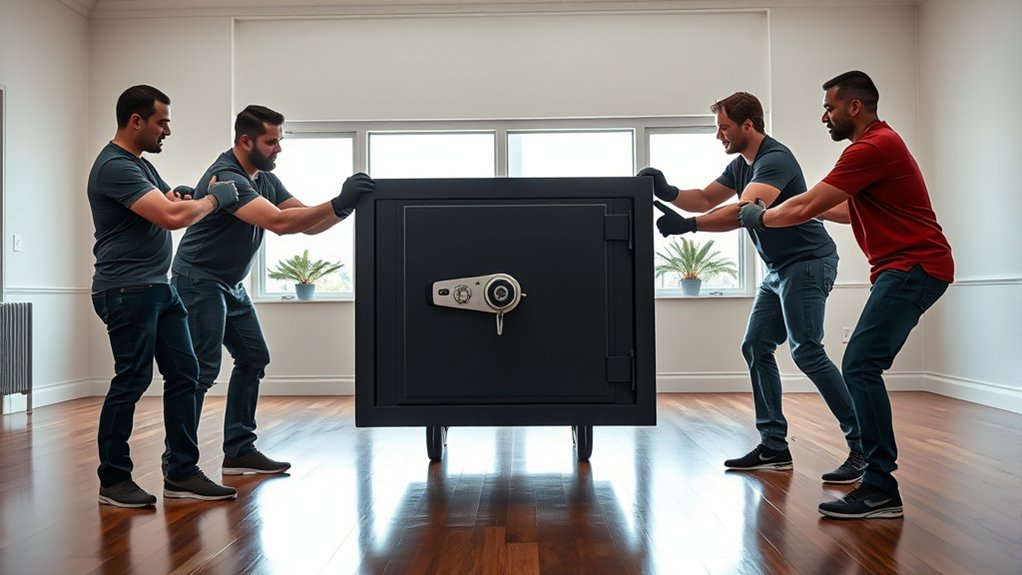
You’ll want at least three to four strong people to lift a gun safe safely, especially if it weighs over 300 pounds.
It’s a team effort, really.
Go ahead and assign specific roles like front, back, and sides. That way, everyone knows exactly what they’re doing and you can keep the safe balanced.
Before you start moving, make sure everyone understands their responsibility.
It’ll make the whole process a lot smoother and safer.
Team Size Essentials
At least four strong individuals should come together to move a gun safe weighing 600 to 800 pounds safely. Managing heavy items like this demands the right team size for effective control and injury prevention.
Before lifting, gather your team and make sure everyone understands the importance of coordination.
Keep these essentials in mind:
- Confirm your team size matches the safe’s weight to distribute effort evenly.
- Equip everyone with safety gear like gloves and steel-toe shoes for protection.
- Discuss the moving route and potential obstacles to avoid surprises during the lift.
Role Assignment Strategy
Four or more strong individuals should have clearly defined roles before lifting a gun safe.
Start by assembling your team, then assign roles based on each person’s strength and experience. Typically, position two people at the front to lift and guide, and two at the back to support and stabilize.
Designate a leader to coordinate movements and give clear commands, ensuring teamwork and avoiding confusion. Conduct a pre-move briefing to review the safe’s weight distribution and confirm everyone understands their responsibilities.
Emphasize proper lifting techniques. Bend at the knees, keep your back straight to prevent injuries.
Effective role assignment and teamwork are critical to safely maneuvering the 600-800 pound safe without a dolly.
Clear communication and coordination make the process smoother and safer for everyone involved.
Wrap the Safe With Blankets to Prevent Damage
Wrapping your gun safe in several thick moving blankets creates a protective barrier that absorbs shocks and prevents scratches during transport.
To move a gun safe safely, you need to wrap it carefully, ensuring all sides are covered with multiple layers of blankets. This shields the surface from dents and chips, especially around corners and edges.
It’s really about giving your safe the best protection possible.
Follow these steps to wrap your safe effectively:
- Use several thick blankets to provide ample cushioning against impacts.
- Secure blankets tightly with straps or tape to avoid shifting during the move.
- Add extra padding on vulnerable corners to prevent chipping or denting.
Doing this will help keep your safe in great shape throughout the move. It’s worth taking the time to wrap it up right!
Slide the Safe Using Furniture Sliders or Blankets
Using furniture sliders or thick moving blankets under your gun safe makes sliding it across floors much easier and safer. Place at least three sliders or blankets evenly beneath the safe to reduce friction and protect your flooring.
Before you slide the safe, clear the path of any obstacles or tripping hazards. With the help of three strong people, push or pull the safe slowly and steadily. Distribute the weight evenly to prevent injury.
Clear the path and carefully move the safe with three strong people, distributing weight evenly to avoid injury.
You can slightly tilt the safe for added stability as you move it, which helps minimize the risk of tipping.
To protect walls and corners along the route, cover them with cardboard or corner guards.
This careful preparation guarantees the safe slides smoothly without damage to your floors or surroundings. It’s all about taking your time and being cautious, so everything goes well.
Tilt and Lift the Safe Without a Dolly
Once you’ve prepared the floor and cleared a path, you can tilt and lift the safe without a dolly by working with at least three strong people to maintain control and balance.
Start by positioning 2×12 planks underneath the safe to create a sliding base, then carefully tilt the safe onto the planks.
Use 4×4 wooden blocks to elevate the safe incrementally, easing the lifting process. Throughout, keep communication clear to coordinate movements smoothly.
Work with three or more people to guarantee even lifting and balance. Use planks and blocks to assist in tilting and lifting safely.
Protect floors with rugs or cardboard to prevent damage during movement. This way, you’ll keep everything safe and sound while moving the safe.
Navigate Corners and Doorways With Care
Before you move the safe, take some time to measure the doorways and hallways. You want to make sure the safe will fit through without causing any damage.
It’s a good idea to protect walls and corners with some padding, too—this helps prevent scratches or dents while you’re navigating.
Also, plan your turning radius carefully. This way, you can guarantee smooth and controlled movement around those tight spaces.
Taking these steps will make the whole process much easier and safer.
Measure Doorways Precisely
Although moving a gun safe might seem straightforward, accurately measuring doorways and hallways is essential to avoid costly mistakes. Before you start, measure the safe’s width, height, and diagonal, including any protruding handles.
Equally important is measuring the doorways and hallways where the safe will pass through. This guarantees the safe fits without damage.
Focus on these key steps:
- Measure doorways and door frames precisely, noting width and height.
- Calculate the safe’s diagonal to understand how it will angle through tight spots.
- Account for the turning radius required, especially for 90-degree corners.
If the safe won’t fit, consider temporarily removing door frames or disassembling parts for easier passage.
It might sound like extra work, but it can save a lot of hassle later on.
Protect Walls And Corners
Maneuvering corners and doorways carefully protects your walls, furniture, and safe from damage. To protect walls, cover them with thick moving blankets and attach corner guards on sharp edges to prevent scratches and dents.
Before moving, plan your route by identifying tight spaces and measuring doorways to verify the safe fits without forcing it.
Use furniture sliders under the safe to reduce friction and shield floors as you navigate narrow areas. Have at least three strong helpers balance and guide the safe. Move slowly and communicate clearly to control weight and direction.
Avoid sudden movements that risk collisions with walls or door frames. Taking these steps helps you move the safe safely while preserving your home’s surfaces and the safe itself.
It’s all about being careful and planning ahead to keep everything intact.
Plan Turning Radii
Since gun safes are bulky and heavy, you’ll need to carefully plan turning radii to navigate corners and doorways without getting stuck or causing damage. Before moving safes, measure the safe’s width and depth to confirm it fits through all passageways.
Clear the path by removing obstacles, ensuring at least 3 feet of maneuvering space. When approaching corners or doorways, tilt the safe slightly to pivot smoothly without tipping. Use clear communication if you have help.
To plan turning radii effectively, remember to:
- Measure doorways and pathways for clearance.
- Remove furniture or obstacles along the route.
- Tilt the safe gently to pivot around tight corners.
This methodical approach keeps your move safe and efficient.
How to Move the Safe Up or Down Stairs Safely
When moving a gun safe up or down stairs, you need at least three strong helpers to manage its weight and avoid accidents.
As a safe mover, start by removing the door to reduce weight if possible. Use 2×12 planks to build a sturdy ramp alongside the stairs, allowing you to slide the safe gradually.
Position 4×4 wood blocks to lift the safe step by step, providing leverage and control. Communicate clearly with your team throughout the process to coordinate movements and prevent slips or injuries.
Always move slowly and steadily, ensuring the safe remains balanced and supported. This methodical approach minimizes strain and maximizes safety when maneuvering stairs without a dolly.
Just take your time, keep talking with your helpers, and make sure everyone’s on the same page. That way, you’ll get the job done safely and smoothly.
Bolt Down and Secure the Safe in Its New Location
Secure your gun safe firmly in its new spot by bolting it down according to the manufacturer’s guidelines. This step is essential to safeguard the safe against theft or tipping.
Begin by selecting appropriate anchor bolts. Use concrete anchors for concrete floors or lag bolts for wood.
Choose the right anchor bolts: concrete anchors for concrete floors and lag bolts for wood surfaces.
Using the right tools, bolt down the safe to guarantee stability. It’s really important to follow the manufacturer’s instructions to keep your warranty and ensure safety.
Also, check that the safe is level after installation so it operates smoothly.
Don’t forget to regularly inspect the bolts and positioning, especially after any environmental changes. This way, you’ll keep your safe secure for the long haul.
Frequently Asked Questions
What Tools Can Help if I Don’T Have Furniture Sliders?
If you don’t have furniture sliders, use PVC pipes or wooden planks as safe moving techniques to reduce friction.
Lay down carpeting to protect floors and aid sliding. Employ 4×4 blocks to lift and distribute weight evenly, making the move smoother.
Rope or strong straps add grip and control.
Focus on weight distribution tips by elevating the safe slightly and rolling it carefully to avoid damage or injury.
It’s all about moving smart and keeping things safe for both you and your floors.
How Do I Protect My Floors During the Move?
To protect your floors during the move, lay down moving blankets first to cushion and prevent scratches.
Then, add sturdy cardboard or hardboard over the blankets for extra floor protection and a smooth sliding surface.
Make sure to clear your pathway and use corner guards to avoid wall damage.
Move the safe slowly and steadily, keeping the floor covering in place.
This method helps keep your floors safe and minimizes damage during the heavy move.
It’s a simple way to make sure everything goes smoothly without any unexpected scratches or dents.
Can I Move a Gun Safe Alone Safely?
You shouldn’t move a gun safe alone because they’re really heavy—usually between 600 and 800 pounds.
Trying to do it by yourself can easily lead to injury or damage.
It’s way better to get some help or hire professionals who know what they’re doing.
Those experts understand the safe’s weight limits and have the right techniques to move it safely.
At the end of the day, it’s all about prioritizing safety over convenience.
That way, you avoid accidents and keep your property protected during the move.
What Should I Do if the Safe Gets Stuck?
If the safe gets stuck, first clear any obstacles around you to guarantee safe movement.
Use safe movement techniques like sliding the safe over 2×12 planks acting as ramps.
Try alternative lifting methods such as leverage with 4×4 posts or a winch system if you’re on stairs.
Make sure to communicate clearly with your team to coordinate each move.
This will help minimize risk and make it easier to dislodge the safe safely and efficiently.
Just take it step by step, and you’ll get it free in no time.
How Do I Prevent Injury While Lifting the Safe?
Nearly 80% of back injuries happen during improper lifting. To prevent injury while lifting the safe, use proper lifting techniques. Bend your knees, keep your back straight, and lift with your legs.
Always wear safety gear like heavy-duty gloves and steel-toe shoes to protect your hands and feet.
Make sure to coordinate clearly with your team to guarantee smooth, balanced lifts.
Also, take breaks to avoid fatigue. When you’re tired, your form can slip, and that increases the risk of injury.
Conclusion
Moving a gun safe without a dolly might seem challenging, yet with careful planning and teamwork, it becomes manageable rather than impossible. While the safe’s weight demands respect, your methodical approach turns potential chaos into controlled precision.
Remember, the effort to protect your valuables mirrors the care you take moving them. In balancing strength with strategy, you transform a heavy burden into a calculated, successful task.