Do I Need a Gun Safe?
You need a gun safe to meet legal requirements in many states and prevent unauthorized access, especially by children. Safes reduce your liability by demonstrating responsible ownership and protect firearms from theft, fire, and humidity damage. They often qualify you for lower insurance premiums and provide quick access during emergencies through advanced locking systems.
Choosing the right safe depends on your legal obligations, safety priorities, and convenience needs. These are essential points to evaluate for secure firearm management.
What Are the Legal Requirements for Gun Safes in Your State?
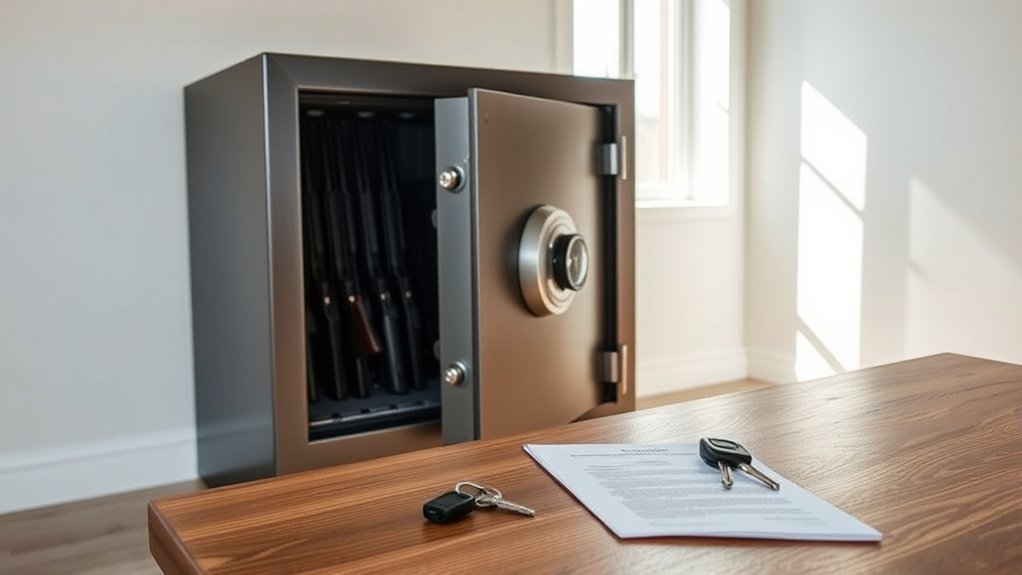
What legal requirements apply to gun safes in your state? While there’s no federal mandate requiring gun safes, federal law does require secure storage devices for handgun sales.
However, states like Massachusetts, Oregon, Colorado, Connecticut, and New York enforce safe storage laws. These laws specify how firearms must be stored to prevent unauthorized access.
Massachusetts, Oregon, Colorado, Connecticut, and New York require secure firearm storage to prevent unauthorized access.
California goes further by demanding that handguns be locked in safes or disabled with trigger locks when not in use. Plus, cities such as San Francisco and New York City have even stricter local regulations. These often come with hefty fines for violations.
These legal requirements focus on preventing unauthorized access, especially by minors. So, it’s really important to understand your state and local safe storage laws to stay compliant and avoid serious penalties tied to unsafe firearm storage.
How Do Gun Safes Prevent Child Access and Accidental Injuries?
Because children are naturally curious, securing firearms in a gun safe is essential to prevent unauthorized access and accidental injuries.
Gun safes offer reliable secure storage, aligning with Child Access Prevention laws in 25 states and D.C., reinforcing firearm safety and legal compliance.
You reduce risks dramatically by using these safes, which incorporate advanced locking mechanisms like biometric or keypad systems.
Key ways gun safes prevent child access include:
- Restricting unauthorized entry to firearms, minimizing accidental discharges.
- Complying with legal mandates, avoiding penalties while protecting children.
- Demonstrating responsible firearm safety, reducing thousands of childhood injuries annually.
How Do Gun Safes Protect Against Theft and Burglary?
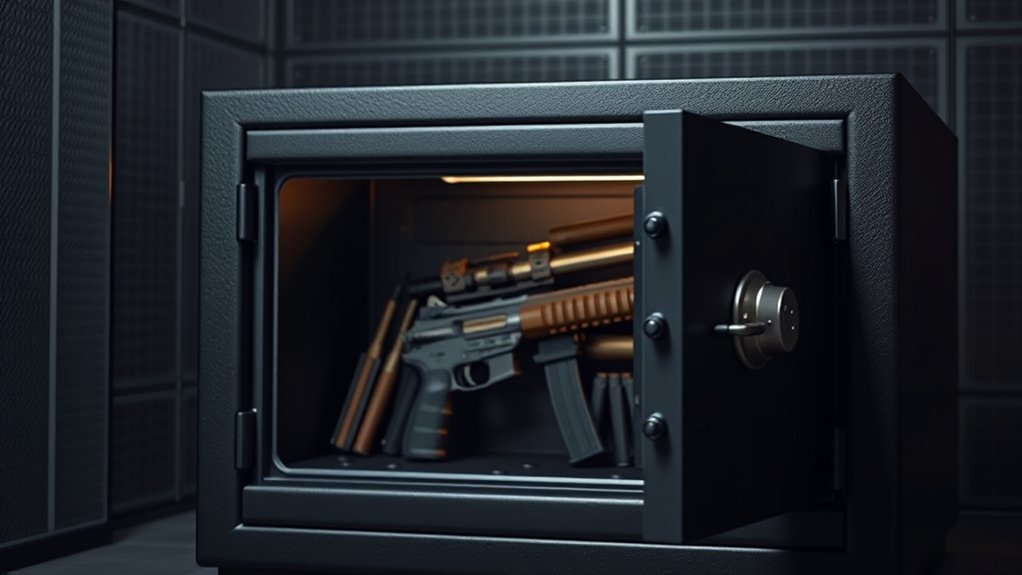
You need a gun safe that combines strong construction with features designed to deter theft. A high-quality safe can resist break-in attempts, making it much harder for burglars to get to your firearms.
Plus, just having a visible safe can discourage would-be thieves from targeting your home in the first place.
On top of that, using a gun safe might help lower your insurance premiums.
And if a theft does happen, it can make supporting your claim easier, protecting your financial interests.
Theft Deterrence Features
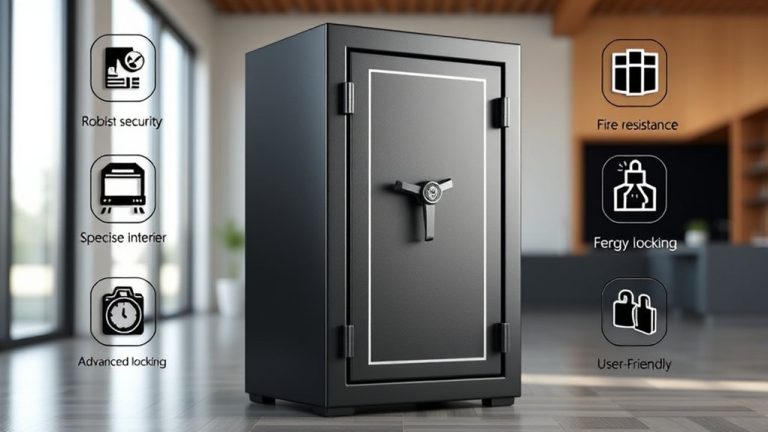
Gun safes use a combination of heavy-duty materials and advanced locking mechanisms to protect your firearms from theft and burglary. As a firearms safety device, a gun safe’s theft deterrence features provide secure storage that discourages unauthorized access.
Consider these key aspects:
- Advanced Locks: Biometric and electronic locking systems enhance security. They make forced entry difficult and time-consuming.
- Visible Deterrence: The look of the gun safe signals to potential thieves that valuables are well-protected. This reduces the appeal of a break-in.
- Fire Protection: Many safes include fire ratings. This safeguards contents during emergencies and prevents opportunistic theft.
Safe Construction Strength
The strength of a safe’s construction plays an essential role in protecting your firearms from theft and burglary. A quality gun safe typically features thick steel walls, often 10 to 12 gauge, providing substantial resistance against break-in attempts.
Pry-resistant doors and robust locking mechanisms further enhance security by withstanding forced entry.
Plus, the considerable weight of these safes, ranging from 400 to 1,000 pounds, makes theft harder because removing them without specialized tools is tough.
Advanced locking systems, like biometric or electronic locks, add extra layers of protection while still allowing quick, authorized access.
If you want to securely store firearms and valuables, consider a fire-rated safe. It protects your items not only from theft but also from fire damage.
Insurance Benefits
Several insurance companies offer lower premiums when firearms are securely stored in a certified safe. They recognize that this reduces the risk of theft and burglary.
By using gun safes as a reliable storage container, you show responsible gun ownership. Insurance providers really appreciate that. This not only lowers your premiums but also helps with smoother claims processing.
Here’s how gun safes benefit you regarding insurance:
- They act as physical barriers, greatly decreasing the likelihood of theft. This allows insurers to reduce your premiums.
- Many insurers require proof of secure firearm storage to provide full coverage or additional riders.
- Proper documentation of your gun safe use speeds up claims and helps avoid potential legal liabilities if firearms are misused.
Investing in a quality gun safe boosts your insurance standing and protects the value of your firearms. It’s a smart move all around.
How Gun Safes Protect Firearms From Fire and Humidity Damage
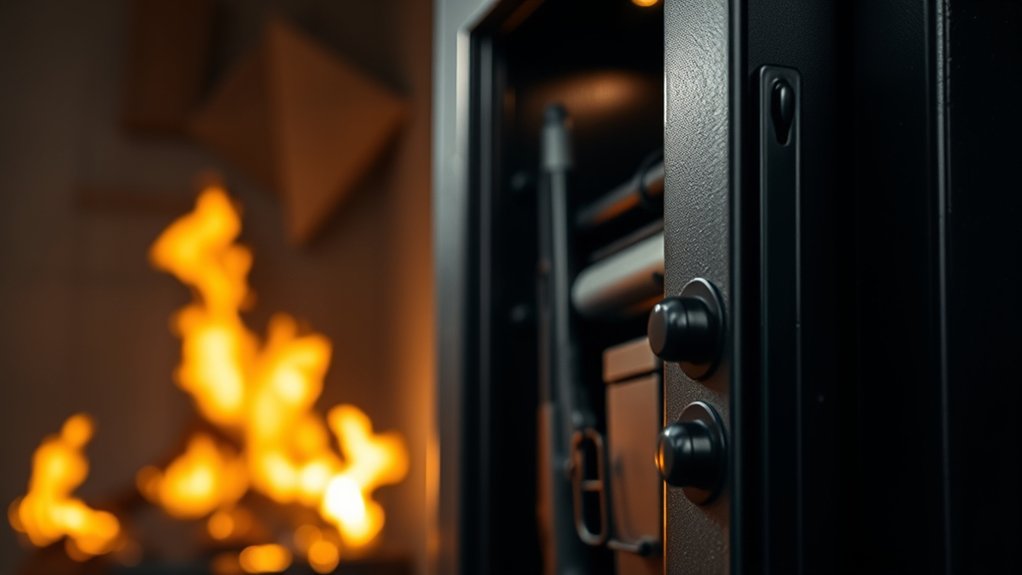
If you want to keep your firearms safe during a fire, you’ll need a gun safe that offers reliable fire resistance. This means it can protect your guns from extreme heat and smoke damage when things get intense.
But that’s not all. Humidity control is just as important. Look for features like tight seals and optional dehumidifiers—they help prevent rust and corrosion over time.
Together, these features make sure your firearms stay functional and protected for the long haul.
Fire Resistance Benefits
Investing in a quality gun safe means protecting your firearms from more than just theft. It also shields them from fire and humidity damage. Fire-resistant materials in fire-rated safes are designed to withstand extreme heat, so your firearms stay safe during a fire.
These safes go through rigorous testing to keep internal temperatures below critical levels.
When you’re picking out a gun safe, keep a few things in mind. First, check for certification like UL ratings or similar proof of fire resistance.
Next, look for strong construction—robust materials act as effective barriers against intense heat.
And don’t forget humidity control. It works hand-in-hand with fire resistance by preventing corrosion inside the safe.
Humidity Prevention Features
Although fire resistance is essential, controlling humidity inside your gun safe plays an equally important role in preserving your firearms.
Gun safes with advanced humidity control prevent moisture buildup, greatly reducing the risk of rust and corrosion. Maintaining humidity levels between 30% and 50% is critical for effective firearm storage, preserving both metal and ammunition integrity.
Many quality gun safes incorporate built-in dehumidifiers or utilize silica gel packs to manage moisture actively.
This targeted humidity prevention not only guards your firearms but also protects important documents and valuables from mold and deterioration.
By choosing a gun safe equipped with these features, you provide thorough protection against both fire and moisture damage.
It’s a smart way to extend the lifespan and reliability of your firearm collection.
Long-Term Firearm Protection
When safeguarding your firearms for the long term, a gun safe’s fire resistance and humidity control work together to prevent damage from extreme conditions.
Gun safes provide essential long-term protection by shielding your firearms from heat, smoke, and moisture. All of these can degrade firearm functionality and safety over time.
For optimal firearm safety, consider these key features:
- Fire resistance: Quality safes endure high temperatures, protecting firearms from severe fire damage.
- Humidity control: Maintaining 30%-50% humidity inside the safe prevents rust and corrosion.
- Dehumidifiers: Integrated or added dehumidifiers enhance moisture control, preserving firearm integrity and ammunition reliability.
Investing in a gun safe guarantees your firearms remain secure and functional.
It also provides peace of mind through thorough long-term protection.
How Gun Safes Benefit Your Insurance Coverage
Because many homeowners insurance policies impose low coverage limits on firearms, you’ll often need to meet specific safe standards or add riders to protect your collection adequately. Gun safes provide secure storage that insurers require to validate claims after theft or damage. Without compliant storage, your insurance coverage may be denied, resulting in financial loss.
Proper documentation combined with evidence of a quality gun safe expedites claim processing and strengthens your position. Plus, investing in high-quality gun safes can lower premiums by showcasing responsible firearm ownership.
| Concern | Impact of Gun Safes |
|---|---|
| Theft Risk | Markedly reduced |
| Claim Approval | More likely with proof |
| Insurance Premiums | Potentially lowered |
| Financial Security | Enhanced through coverage |
How Gun Safes Help You Avoid Legal Liability
Securing your firearms in a gun safe greatly reduces your legal liability by proving responsible ownership and compliance with laws designed to prevent unauthorized access.
Gun safes show that you take gun ownership seriously, especially with Child Access Prevention (CAP) laws that penalize negligent storage.
By securely storing firearms, you lower the risks of theft, accidental injuries, and unauthorized use. It’s a simple step that can make a big difference.
Secure firearm storage significantly reduces risks of theft, accidents, and unauthorized access, making a meaningful safety impact.
Here are some key points to consider:
- Compliance with CAP laws minimizes legal penalties and supports your defense in negligence claims.
- Gun safes provide evidence that firearms were inaccessible to children or unauthorized individuals, which reduces civil liability.
- Proper storage helps protect you from liability if a stolen gun is involved in a crime because it shows you exercised due diligence.
Using gun safes is an easy and effective way to limit your legal liability while showing you’re a responsible gun owner.
How Gun Safes Provide Quick Access for Home Defense
Beyond reducing legal risks, gun safes also play an important role in home defense by offering rapid access to your firearms during emergencies.
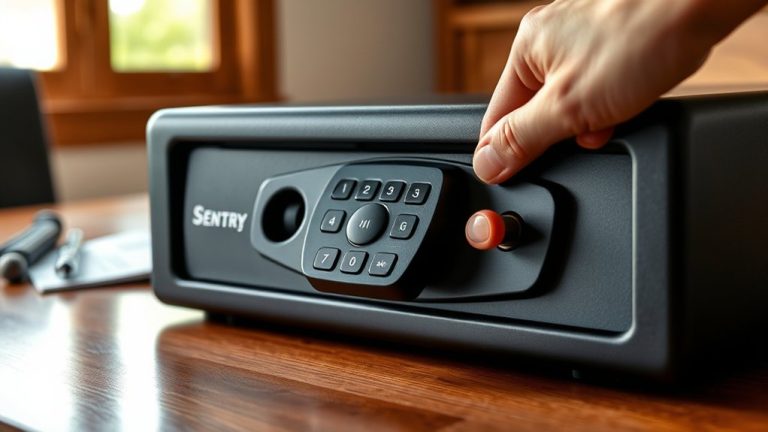
Gun safes designed for quick access incorporate rapid-opening locks, biometric scanners, or keypad entry systems. These features enable you to retrieve your firearm swiftly without fumbling for keys.
Strategically placing these safes near entry points guarantees your firearm is within immediate reach while still secure. It’s vital to balance quick access with the ability to prevent unauthorized use. That way, you maintain safety without compromising readiness.
Regular training with your safe’s mechanism reduces retrieval time, which enhances your preparedness in crisis situations.
What Are Gun Safe Costs and How to Maintain Them?
While gun safes vary widely in cost, from basic models around $200 to premium fire-rated units exceeding $3,000, understanding these price differences helps you choose the right safe for your needs and budget.
Gun safes with fire ratings offer enhanced protection for your storage, which justifies the higher prices.
To maintain your investment and protect your guns effectively, make sure to prioritize regular upkeep.
Key maintenance steps include inspecting locks and hinges routinely to guarantee security and smooth operation.
Also, clean the exterior and keep the interior dry to prevent rust and corrosion.
Using a dehumidifier helps maintain ideal humidity levels inside the safe, typically between 30% and 50%.
Consistent maintenance not only safeguards your firearms but also supports insurance claims by documenting your safe’s condition.
It’s a simple way to keep your guns safe and your peace of mind intact.
How to Organize Firearms and Decorate With Gun Safes
Although gun safes primarily serve to protect your firearms, organizing the contents thoughtfully can greatly enhance both safety and accessibility. To keep your guns orderly, categorize them by type or use, which helps prevent clutter and confusion.
Organizing your gun safe by type or use improves safety and makes access quick and easy.
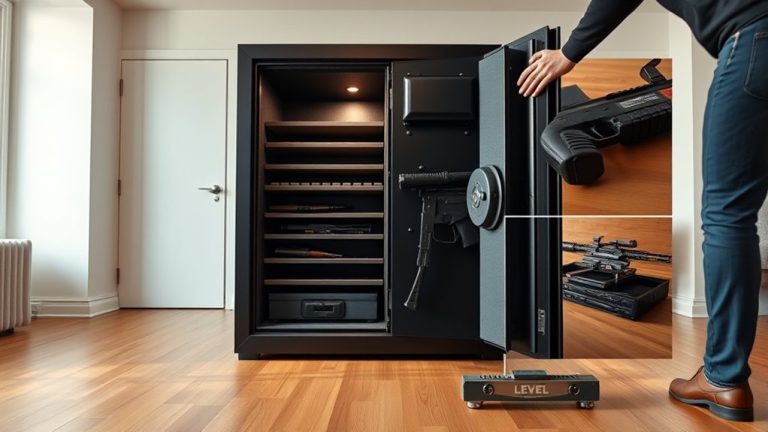
Use built-in shelving and compartments to store accessories and ammunition securely, so everything is within reach when needed.
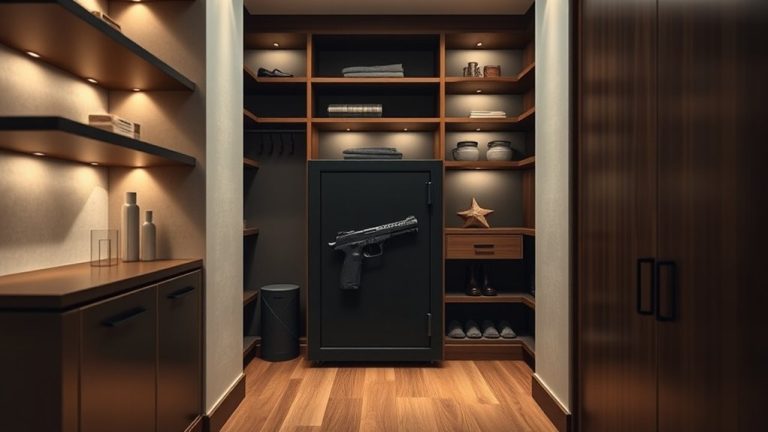
Many gun safes come with stylish finishes that blend seamlessly into your home. This allows you to create decorative displays around them. You can even add related memorabilia or artwork to reflect your passion while keeping safety in mind.
Regular maintenance is key to preserving both the look and the functionality of your safe.
Is a Gun Safe Right for You?
You’ll want to start by thinking about your security risks and how a gun safe can help keep your firearms away from unauthorized access.
It’s also really important to know your state’s legal storage requirements so you don’t run into any trouble and stay compliant.
On top of that, consider how easy you need access to your guns versus how much convenience you’re willing to trade for safety.
Finding that balance is key.
Assessing Your Security Needs
How secure is your current firearm storage? Evaluating your security needs is vital before deciding if gun safes are right for you. You need to determine how well your current setup prevents unauthorized access and theft while complying with firearm security standards.
Consider these factors:
- Are your firearms protected against unauthorized access, especially in homes with children? Secure storage is essential to prevent accidents and align with Child Access Prevention laws.
- Does your storage effectively deter theft? High-quality gun safes reduce burglary risk and can lower insurance premiums.
- Can your storage withstand environmental hazards like fire? Fire-rated safes protect firearms and valuables during emergencies.
Answering these questions helps you figure out if investing in a gun safe meets your security and legal requirements.
It’s all about keeping your firearms safe and giving yourself peace of mind.
Evaluating Legal Requirements
Because firearm storage laws vary widely across states and municipalities, understanding your specific legal obligations is essential before choosing a gun safe.
While federal law doesn’t mandate gun safes, states like Massachusetts, Oregon, Colorado, Connecticut, and New York require secure storage to prevent unauthorized access to your firearms.
Local ordinances may impose stricter rules, as in San Francisco, where handguns must be locked or disabled when not in use.
Failure to comply can result in severe penalties, including fines up to $10,000 or legal action if crimes involve improperly stored guns.
To be a responsible gun owner, you must evaluate these laws carefully.
Investing in gun safes tailored to your jurisdiction safeguards your firearms and protects you from potential liability.
Considering Accessibility and Convenience
Understanding your legal duties for firearm storage sets the foundation, but balancing security with accessibility shapes whether a gun safe fits your lifestyle.
Gun safes must provide secure storage without compromising rapid access, especially in emergencies. You’ll want to think about how convenience factors into your choice.
- Rapid-opening locks on quality gun safes guarantee swift access while maintaining security.
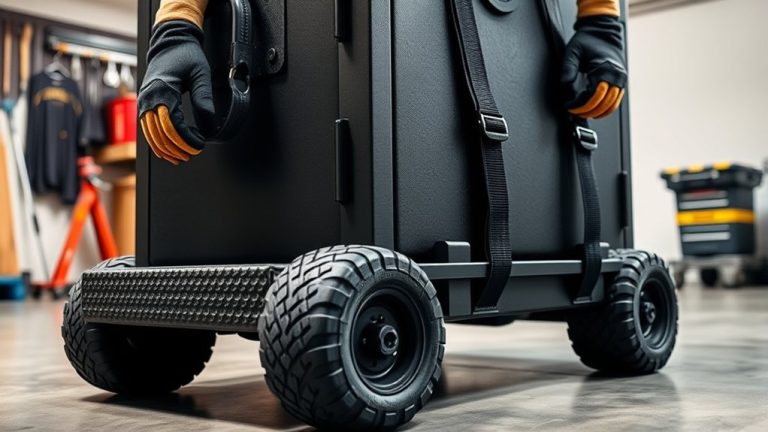
- Portable gun safes offer discreet, secure transport, complying with concealed carry laws.
- Organized storage within a safe enhances convenience, simplifying inventory management and reducing clutter.
Frequently Asked Questions
What Types of Gun Safes Are Best for Different Firearm Sizes?
For different firearm sizes, you’ll want to choose safes with appropriate size options and safe materials.
Rifle safes suit long guns, offering vertical storage and strong locking mechanisms.
Pistol safes provide compact firearm storage with quick-access locks.
Modular safes give you flexibility for mixed firearm sizes, while biometric safes guarantee fast, secure access regardless of size.
Portable gun safes are best for small firearms during travel, balancing safety and convenience.
It’s all about matching the safe to what you need for your specific firearms.
Can Gun Safes Be Bolted Down or Hidden for Extra Security?
Yes, gun safes can be bolted down, which is a great way to enhance security by anchoring them to floors or walls. This helps prevent thieves from easily carrying them away.
You should also think about hidden placements, like behind false walls or inside furniture. These spots can further deter theft because the safe isn’t immediately visible.
When choosing a safe, prioritize features like reinforced steel and tamper-proof locks.
For installation, always use the manufacturer’s pre-drilled holes and the right hardware. This ensures a secure, stable setup that meets local regulations and insurance requirements.
How Do Electronic Locks on Gun Safes Work During a Power Outage?
Think of your electronic lock as a well-prepared fortress. During a power outage, its reliability shines through backup batteries and power backup solutions like dual power supplies.
Safe design considerations include manual access methods, often a backup key, so you’re never locked out.
To keep this seamless access, you need to regularly check your batteries. It’s also important to understand your lock’s fail-safes.
That way, your gun safe stays secure and accessible, no matter the power situation.
Are There Any Smart Gun Safes With Biometric Technology?
Yes, smart gun safes with biometric technology offer exceptional fingerprint security, ensuring quick and reliable access.
You’ll appreciate their biometric accuracy, which minimizes false reads and enhances user accessibility by storing multiple fingerprints for authorized users.
These safes prioritize technology reliability by incorporating backup methods like keypads or physical keys for emergencies.
With advanced features, they provide a secure, convenient solution that balances cutting-edge access control with dependable safety.
What Maintenance Tips Extend the Lifespan of a Gun Safe?
To extend your gun safe’s lifespan, prioritize proper firearm storage by regularly cleaning and lubricating locks and hinges with silicone-based products.
Control humidity inside the safe between 30% and 50% to prevent rust and corrosion.
Choose safe placement carefully. Keep it in a dry, cool area away from direct sunlight and extreme temperatures.
Regularly inspect and tighten locking mechanisms to maintain security and prevent wear.
This helps ensure reliable long-term protection for your valuables.
Conclusion
You might think a gun safe is just an expensive box, but it’s actually your best defense against theft, accidents, and legal trouble. While it demands an upfront investment and ongoing care, it safeguards your firearms from fire, humidity, and unauthorized access. Especially from children.
Balancing quick access with secure storage isn’t just smart; it’s essential. Ultimately, deciding on a gun safe means choosing responsibility and protection over risk and regret.