Can You Put a Gun Safe in a Garage?
You can put a gun safe in your garage, but you’ll need to manage moisture, temperature, and security carefully. Garages are convenient and space-saving, yet they often lack climate control, which can risk rust and damage.
To protect your firearms, make sure there’s good ventilation. Use dehumidifiers or desiccants, bolt the safe securely, and check humidity regularly. These steps really help keep your guns safe and working well.
Taking time to understand proper installation and maintenance can make your setup even better. It’s all about keeping things safe and functional over the long haul.
Should You Store a Gun Safe in Your Garage?
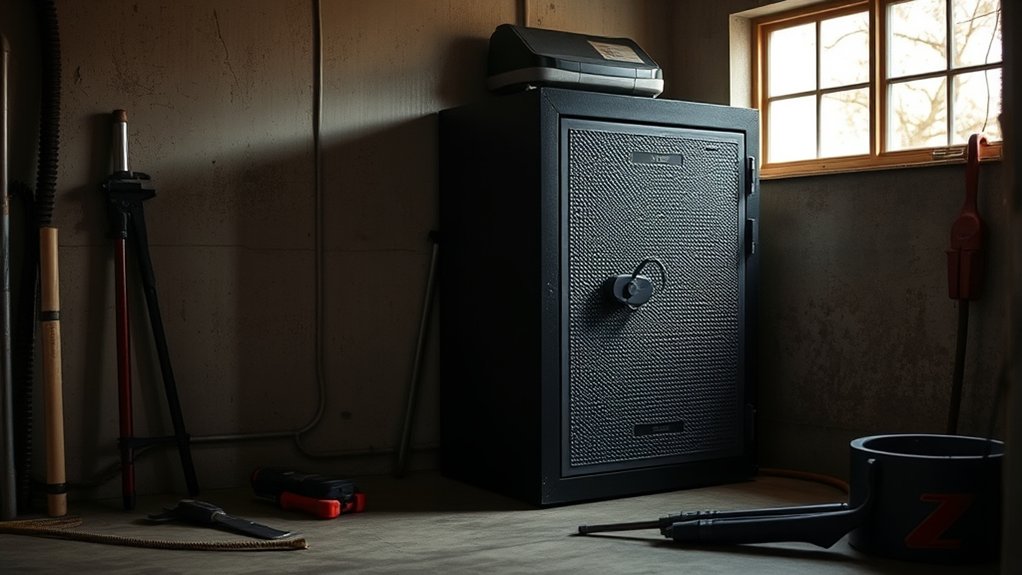
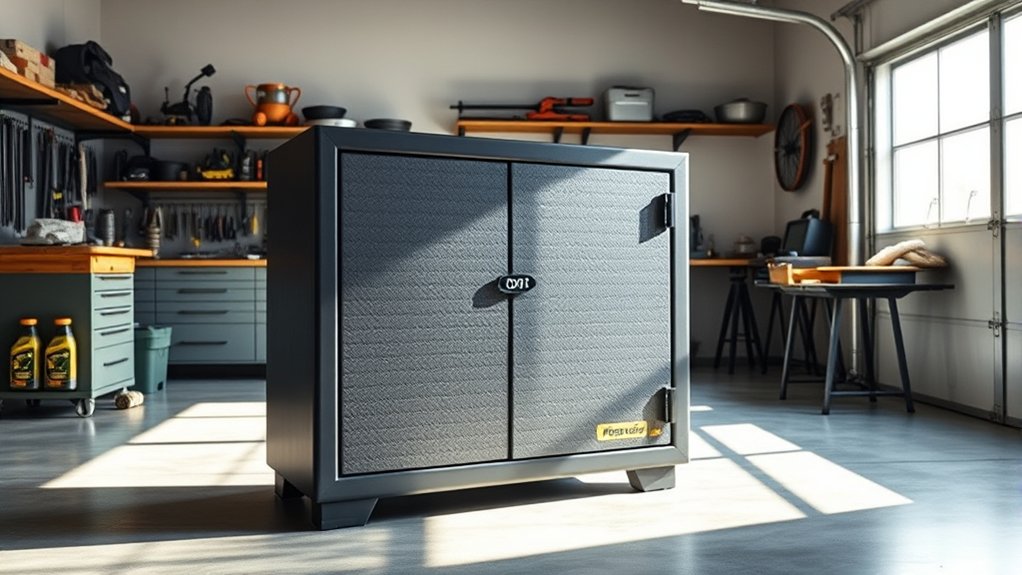
Why consider storing your gun safe in the garage? Gun safes in the garage offer practical advantages, especially when space inside your home is limited. You gain convenient access to hunting gear and tools, keeping everything organized in one spot.
However, garages often lack climate control, exposing your firearms to moisture and humidity that can lead to rust and malfunctions. To protect your investment, elevate the safe on a platform and use dehumidifiers to control moisture.
Security is another critical factor: garages can be vulnerable to break-ins, so choose gun safes with robust locking mechanisms and consider additional security measures.
Regular maintenance and using airtight containers for ammunition inside the safe further guarantee the safety and functionality of your firearms.
What Are the Risks of Keeping a Gun Safe in a Garage?
While storing a gun safe in your garage offers convenience and space-saving benefits, it also introduces several risks that demand careful consideration.
Garages typically lack climate control, exposing your gun safe to temperature fluctuations and high humidity. This can cause firearms and ammunition to rust within 24-48 hours.
Moisture also threatens documents and valuables stored inside, promoting mold growth.
Plus, garages are often more vulnerable to break-ins, increasing the security risks for your gun safe unless it’s bolted down properly.
Flooding is another significant hazard that can damage or compromise the safe’s contents if flood protection measures aren’t in place.
Understanding these risks is essential before deciding to place your gun safe in a garage.
If you don’t take steps to mitigate them, it can severely impact firearm performance, longevity, and security.
How to Prepare Your Garage for a Gun Safe
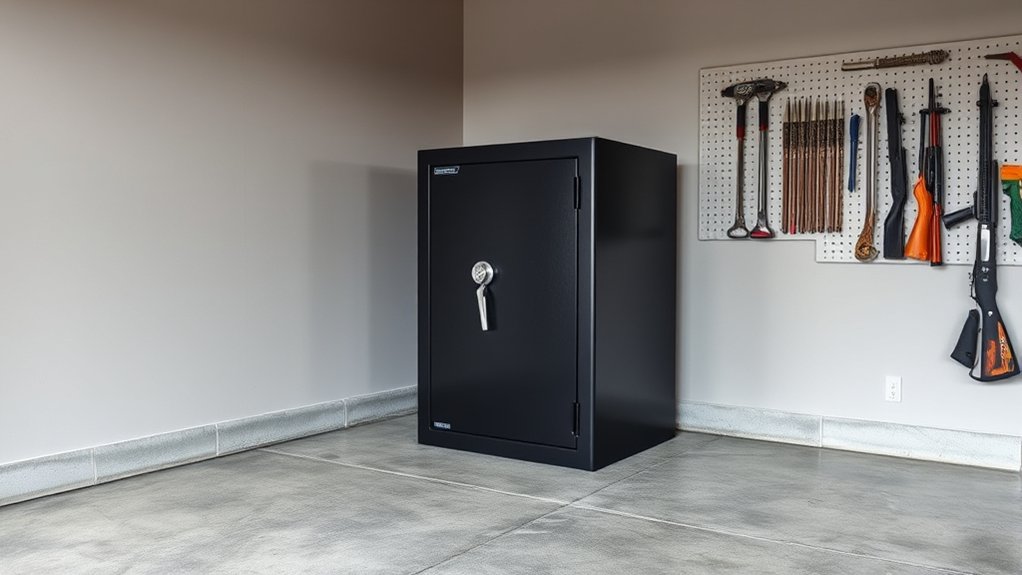
Before installing your gun safe in the garage, you need to prepare the space to protect your firearms from environmental damage and security threats.
First, clear clutter to create an accessible pathway and reduce humidity risks linked to disorganization. Next, verify sufficient ventilation to prevent moisture buildup, which causes rust and corrosion.
To further prepare your garage for a gun safe, insulate the area or place rigid foam boards under the safe to minimize temperature fluctuations and moisture from concrete floors.
Use dehumidifiers and moisture-absorbing desiccants inside the safe to maintain ideal humidity levels.
Finally, enhance security by bolting the safe to the floor and installing surveillance cameras.
These steps collectively create a secure, moisture-controlled environment for your firearms. It’s all about making sure your guns stay safe and in great condition.
What’s the Best Way to Install a Gun Safe in Your Garage?
You’ll want to place your gun safe somewhere that’s easy for delivery and where air can flow freely to help keep moisture at bay.
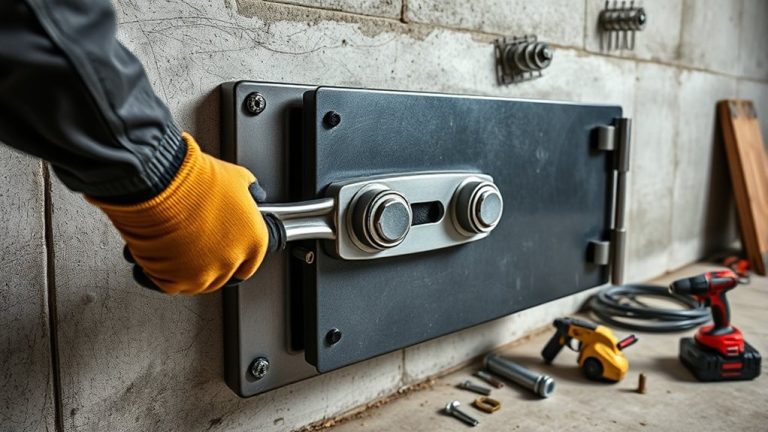
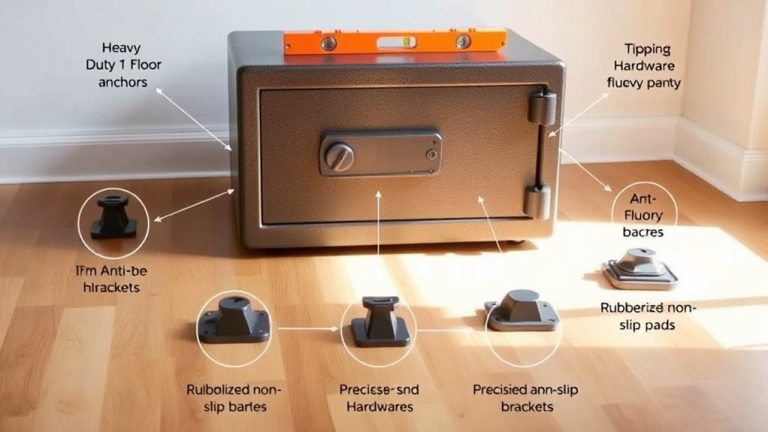
It’s a good idea to elevate the safe on shims and then bolt it securely to the floor using a Roto-Hammer—that way, it stays stable and is much harder to steal.
Plus, keeping an eye on humidity with dehumidifiers and regular checks will go a long way in protecting your firearms over time.
Safe Placement Tips
Since a garage often experiences fluctuating temperatures and humidity, placing your gun safe requires careful preparation to guarantee long-term protection. Start by ensuring the garage floor is level and dry. Elevate the safe on wooden or composite shims to promote airflow and reduce humidity risks.
Clear clutter for easy delivery and allow ventilation around the safe. Bolting the safe to a concrete floor is critical. It secures the safe against theft and stabilizes it, especially when using the Roto-Hammer method.
Commit to regular maintenance by inspecting dehumidifiers, ensuring proper insulation, and monitoring humidity levels to protect your weapons from rust and mildew. Staying on top of these things really helps keep your guns safe and in good shape.
| Concern | Solution |
|---|---|
| Humidity | Elevate safe, ventilate space |
| Security | Bolt safe to concrete floor |
| Stability | Use Roto-Hammer installation |
| Maintenance | Inspect dehumidifiers regularly |
Moisture Prevention Methods
Although garages often expose gun safes to moisture risks, you can effectively reduce these hazards by using targeted moisture prevention methods during installation. Elevate your safe with wooden or composite shims to improve airflow and keep it from touching cold concrete directly. This helps lower the chance of rust forming.
You can also apply an epoxy coating or place a rubber mat beneath the safe to act as a moisture barrier against damp floors.
Using a dehumidifier, ideally two units, helps maintain the right humidity levels in the garage. Installing a heating element, like a golden rod, circulates warm air inside the safe and stops condensation from forming.
Plus, make sure to regularly check and replace desiccants or other humidity control accessories. This keeps moisture absorption consistent.
Together, these moisture prevention methods really help protect your gun safe’s condition in a garage setting.
Secure Installation Techniques
Three critical steps guarantee your gun safe is securely installed in your garage: preparing a clear delivery path, leveling the safe to promote airflow, and firmly anchoring it to the floor.
To achieve this, follow these secure installation techniques:
- Clear obstacles to guarantee safe, unhindered delivery and installation.
- Level the safe using wood or composite shims to enhance airflow and prevent moisture buildup.
- Securely bolt the safe to the garage floor using the Roto-Hammer method, providing robust security against theft while allowing future relocation.
- Elevate the safe on a stable base, like a rubber mat or epoxy coating, to protect against concrete moisture.
By following these steps, you’ll make sure your gun safe stays secure, dry, and functional in your garage environment.
It’s really about setting it up right from the start so you don’t have to worry later.
How Can You Control Moisture and Humidity in a Garage Gun Safe?
When you place a gun safe in a garage, controlling moisture and humidity becomes essential to preserving your firearms and valuables. You can manage humidity inside by using desiccant dehumidifiers, elevating the safe off concrete floors, and installing heating elements like golden rods to circulate warm air.
Regularly check humidity levels with a hygrometer so you can act before damage occurs. Adding moisture barriers such as epoxy flooring or rubber mats further reduces risk.
| Solution | Benefit | Emotion Evoked |
|---|---|---|
| Desiccant Dehumidifier | No electricity needed | Relief |
| Elevated Base | Prevents dampness from floor | Confidence |
| Golden Rod Heating | Prevents rust and mildew | Security |
| Hygrometer | Early moisture detection | Control |
| Moisture Barriers | Additional protection | Assurance |
How Can You Secure Your Gun Safe in the Garage?
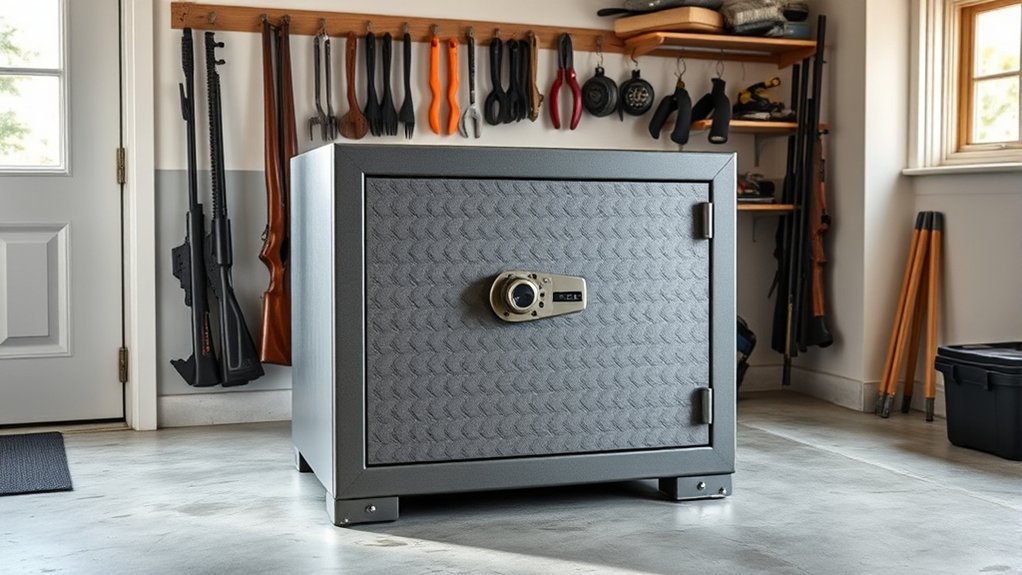
Controlling moisture preserves your firearms, but keeping your gun safe secure in the garage demands equal attention. To protect your investment and guarantee safety, implement these key measures:
First, bolt your gun safe to the concrete floor using heavy-duty anchors or bolts. This prevents easy removal during break-ins. It’s a simple step that makes a big difference.
Secure your gun safe firmly to the concrete floor with heavy-duty bolts to prevent theft.
Next, install surveillance cameras around the garage. They help deter theft and provide essential evidence if needed. It’s like having an extra set of eyes watching over your stuff.
Use high-quality locks with advanced mechanisms for quick yet secure access. This minimizes the risk of unauthorized entry while still letting you get to your firearms when you need to.
Also, conceal your safe with furniture or camouflage techniques. Reducing its visibility lowers the chances of it being targeted for theft.
Don’t forget to regularly inspect your safe’s security features, including locks and bolts. Keeping everything in top shape ensures peak protection.
These steps work together to create a strong defense against potential threats in your garage environment.
How Does Temperature Affect Gun Safes in Garages?
Although garages offer convenient storage, fluctuating temperatures can seriously impact the condition of your gun safe and its contents. Temperature swings cause condensation inside the safe, increasing the risk of rust and corrosion on your firearms.
High temperatures also degrade ammunition, which can lead to misfires or unsafe firing conditions.
To protect your investment, maintaining a consistent temperature between 60-70°F is crucial. Insulating the garage helps stabilize temperature fluctuations, while a dehumidifier controls moisture levels, preventing condensation buildup.
By actively managing temperature and humidity, you guarantee the long-term integrity of both firearms and ammunition stored in your garage gun safe. This reduces the risk of damage and preserves operational reliability.
It’s all about keeping things stable and dry so your gear stays in top shape. Taking these steps makes a big difference over time.
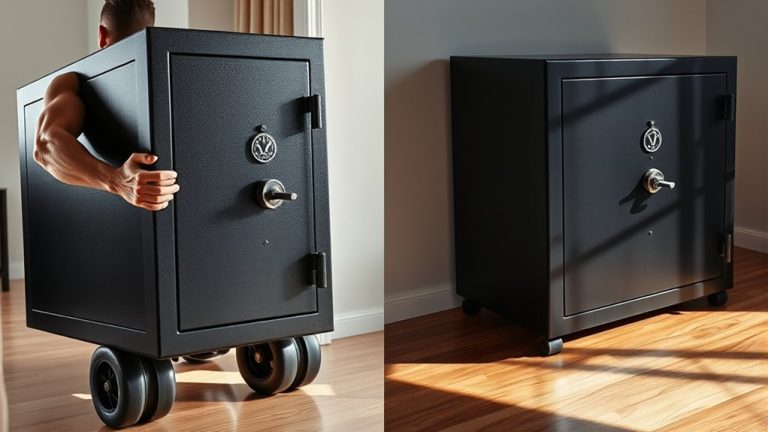
Can You Move or Relocate a Gun Safe After Installing It?
How easily can you move or relocate a gun safe after it’s been installed? You can move a gun safe, even if it’s bolted down. Bolting secures the safe against theft but doesn’t permanently prevent relocation.
To move your safe effectively, consider these steps:
- Unbolt the safe carefully from the floor.
- Assess the new location for environmental safety and stability.
- Use professional relocation services to handle the heavy lifting and secure transport.
- Position the safe on a level surface to maintain ideal protection for your firearms.
Relocating your gun safe offers flexibility in your storage setup.
Just make sure you plan the move methodically to preserve the safe’s integrity and keep your firearms secure.
What Are Some Alternatives to Storing a Gun Safe in the Garage?
You might want to think about storing your gun in a bedroom closet. It’s a great spot because it keeps your firearms discreet while still allowing quick access when you need them.
Plus, it’s usually more secure than the garage.
Another option is setting up a dedicated gun room. This kind of space can be customized with special climate control and security features designed specifically for safe firearm storage.
It’s a bit more of an investment but definitely worth it if you want extra protection.
If you’re looking for something that blends in, hidden wall safes are a clever choice. They keep your guns out of sight, which lowers the chances of theft and keeps things looking neat.
It’s all about finding a spot that balances security and convenience for you.
Bedroom Closet Storage
One effective alternative to storing a gun safe in the garage is placing it in a bedroom closet, which offers enhanced security and discretion. A bedroom closet reduces break-in risk and provides a climate-controlled environment that protects firearms from moisture and rust.
You can also conceal the safe more effectively, integrating it with other household items. Plus, storing your firearm in a bedroom closet allows quicker access for home defense. It’s a practical choice that balances safety with convenience.
Consider these advantages when opting for bedroom closet storage:
- Improved security and privacy compared to garage storage
- Stable temperature and humidity control to prevent damage
- Discreet concealment using shelving and storage solutions
- Convenient access and organization with wall racks and ammo storage
This approach balances safety, accessibility, and firearm preservation. It’s definitely worth considering if you want to keep your firearms secure and easy to reach.
Dedicated Gun Room
Where can you store firearms to maximize protection and accessibility beyond the garage? A dedicated gun room offers an ideal solution.
Unlike garages, this controlled environment maintains stable temperature and humidity levels, minimizing moisture-related damage to firearms and ammunition.
You can use basements, spare rooms, or secure closets equipped with proper ventilation and humidity control systems to keep everything in good shape.
Installing reinforced cabinetry or custom-built storage solutions within this dedicated gun room adds an extra layer of security, making your firearms less accessible to intruders.
This approach not only safeguards your collection but also keeps it organized.
By choosing a dedicated gun room over the garage, you ensure better protection and longer life for your firearms.
It’s all about combining easy access with enhanced security in a climate-controlled space.
Hidden Wall Safes
How can you secure firearms discreetly without sacrificing accessibility? Hidden wall safes offer an effective alternative to storing a gun safe in the garage. Installed between wall studs, these safes keep firearms out of sight while remaining easily accessible.
Their secure locking mechanisms provide enhanced protection against unauthorized access. Plus, hidden wall safes can be customized to fit various firearm types and sizes, optimizing space in bedrooms or closets. Some models even offer fire and water resistance, protecting your firearms from damage.
Consider these advantages of hidden wall safes:
- Discreet installation that deters intruders
- Customized sizing for efficient space use
- Advanced locking systems for improved security
- Fire and water resistance for added protection
Hidden wall safes combine security and discretion effectively. They’re a smart choice if you want to keep your firearms safe and out of sight without making it hard to get to them when needed.
How to Organize and Maintain Your Garage Gun Safe for Longevity
Although a garage may expose your gun safe to harsh environmental conditions, you can greatly extend its lifespan by organizing and maintaining it properly.
First, keep your safe in the garage clean by regularly removing dust and moisture. These can cause rust and corrosion on firearms.
Use gun racks and organizers inside the safe to sort firearms by type. This helps maximize space and provides quick access when you need it.
Incorporate dehumidifiers or desiccants to control humidity, especially in damp garages. It really makes a difference in preventing moisture buildup.
Elevate the safe on a sturdy platform to improve airflow and minimize moisture from concrete floors. This simple step can protect your safe from long-term damage.
Finally, conduct routine maintenance checks on firearms and locking mechanisms. Doing this ensures long-term functionality and security.
These steps will safeguard your investment and keep your firearms in peak condition over time. Taking a little time now saves a lot of hassle later.
Frequently Asked Questions
What Types of Gun Safes Are Best Suited for Garage Environments?
You’ll want gun safes with climate control features for garage environments, ensuring protection against humidity and temperature swings.
Opt for fire-resistant, heavy-duty steel safes with moisture-resistant coatings to combat dampness. Bolting capability is essential for security and stability.
Also, choose compact designs to fit limited space without sacrificing accessibility.
Prioritizing these features guarantees your firearms stay safe and dry, even in unpredictable garage conditions.
It’s all about keeping your guns secure and in good shape no matter what the garage throws at them.
Can a Garage Gun Safe Affect Firearm Warranties?
Worried about warranty impact? Yes, storing your firearm in a garage gun safe can affect your warranty if conditions aren’t ideal.
Manufacturers often require climate-controlled environments to prevent moisture damage and rust, which garages commonly lack.
Ignoring these guidelines risks voiding your warranty if malfunctions occur.
How Often Should I Inspect My Garage Gun Safe?
You should set your inspection frequency for your garage gun safe at least once a month. This regular inspection helps you identify moisture damage, test locking mechanisms, and check seals to maintain peak security.
Also, perform a thorough review of firearms and ammunition every six months to spot rust or deterioration. Staying consistent with inspection frequency guarantees your safe remains secure and your firearms stay in prime condition despite the garage environment.
Keeping an eye on these details might seem like a hassle, but it really pays off in the long run. Your guns and ammo will thank you for the extra care!
Are There Specific Insurance Considerations for Garage Gun Safes?
Insurance coverage for garage gun safes is like a lock on a vault. It’s essential and specific. You must inform your insurer about your garage safe to guarantee proper coverage.
Many policies demand safes meet certain standards to qualify. This can affect claims if theft occurs. So, it’s important to check those details carefully.
Regularly review your policy to confirm your firearms’ value aligns with coverage.
Also, make certain the safe complies with insurance requirements. This helps avoid denied claims down the road.
What Tools Do I Need for Routine Garage Gun Safe Maintenance?
You’ll need a basic tool kit with screwdrivers, pliers, and a socket set for routine safety checks, tightening screws, and adjusting locks.
A level guarantees your safe sits properly, preventing moisture buildup.
Use a flashlight or inspection mirror to examine internal components and locking mechanisms thoroughly.
To control humidity, a portable dehumidifier is essential.
Finally, keep cleaning supplies handy to maintain firearms inside, guaranteeing ideal condition and secure storage at all times.
It’s all about keeping everything in top shape and ready when you need it.
Conclusion
Think of your garage as a fortress’s outer wall. Storing a gun safe there offers both protection and exposure. You can shield your arsenal effectively, but only by controlling moisture, temperature, and security risks.
Preparing your space thoughtfully turns that wall into a reliable barrier. Remember, a gun safe isn’t just storage; it’s your safeguard. Treat it with care, and it’ll stand firm, guarding your peace of mind wherever you place it.