Gun Safe Safety Rating 101: How to Choose the Right Safe
You’ll want a gun safe with verified fire ratings of at least 30-60 minutes for urban areas or 90-120 minutes in rural settings to protect valuables from extreme heat. Make sure it has a UL Residential Security Container (RSC) or higher burglary rating, thick steel panels, and robust locking bolts.
Choose a size larger than your current firearm collection, and pick a lock type that fits your access needs, like biometric or keypad. Exploring trusted certifications and interior features can help secure your investment further.
What Fire Ratings Mean for Gun Safes
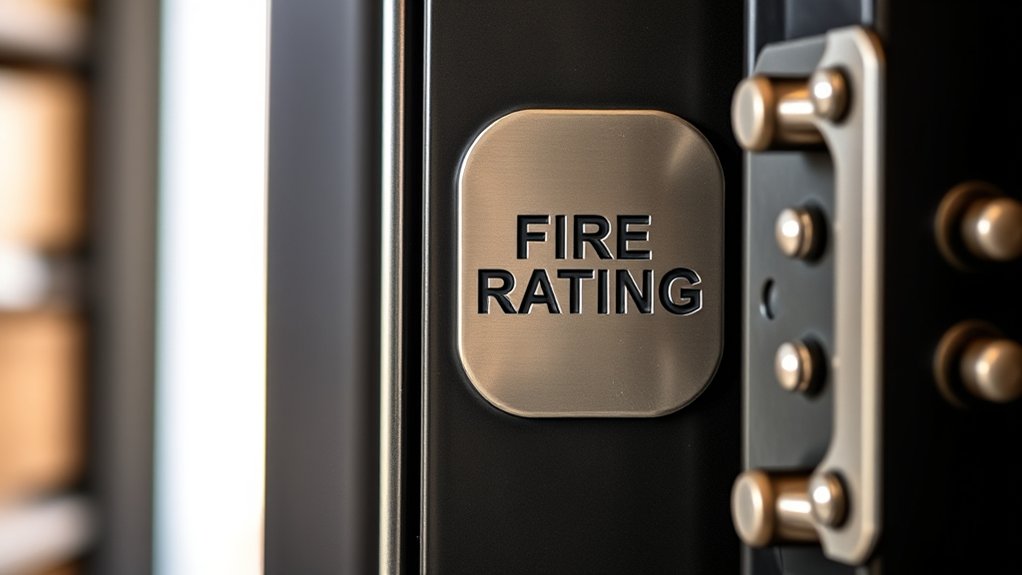
How long can your gun safe protect its contents from fire? Fire ratings give you a clear answer by showing how long a safe can withstand extreme heat, usually between 30 and 120 minutes. These ratings measure fire resistance at specific temperatures, often around 1,200°F.
You should look for safes with independently tested certifications, like those from Underwriters Laboratories. These certifications reliably verify fire protection claims.
Also, pay attention to the RSC rating, which is an industry standard for burglary resistance, because combined fire and theft protection really matters.
While higher fire ratings often mean added cost, they usually reflect better insulation and construction quality.
Balancing the value of your firearms and documents against fire ratings helps you pick a safe that meets your protection needs without overspending.
How Location Affects Gun Safe Fire Protection Needs
Where you put your gun safe really affects the kind of fire protection it should have. For example, if you’re in a city, the fire department usually gets there faster, so a safe rated for shorter fire durations might do the job.
But out in rural areas, where help can take longer to arrive, you’ll want a safe that can withstand fire for a longer period.
On top of that, you’ve got to think about other environmental risks too. Things like heat, humidity, and even flooding can impact your safe’s effectiveness.
Urban Vs. Rural Risks
Although both urban and rural areas demand reliable gun safe fire protection, the specific risks you face vary considerably based on your location.
In urban areas, fire rating requirements typically range from 30 to 60 minutes due to denser structures and quicker emergency response. But higher ambient temperatures from surrounding buildings mean you need safes with superior insulation.
Environmental risks like building fires and limited immediate firefighting access make robust fire protection essential.
On the other hand, rural locations often require longer fire ratings, usually 90 to 120 minutes, because emergency response times are slower.
Plus, rural settings come with increased flood risks, so you should consider water-resistant safes to protect your firearms.
Knowing these differences helps you pick a gun safe that’s really suited to your environment.
It’s all about balancing fire rating with local risks to get the best protection possible.
Fire Duration Requirements
Why does fire duration matter so much when choosing a gun safe? Fire duration directly impacts the level of fire protection your safe must provide.
In urban areas, firefighters typically respond quickly, so a fire rating of 30-60 minutes often suffices.
However, if you’re in a rural location with slower response times, you’ll need quality safes rated for 90-120 minutes to guarantee your firearms survive prolonged exposure to extreme heat, often around 1,200°F. This fire rating indicates how long the safe maintains integrity under such conditions.
Keep in mind, proper placement in dry areas further preserves your safe’s fire protection effectiveness.
Investing in a safe with the right fire duration rating tailored to your location isn’t just smart. It’s essential for protecting your valuables against fire damage.
Environmental Hazard Considerations
Fire duration ratings help you choose the right level of protection based on emergency response times. But your safe’s effectiveness also depends heavily on environmental hazards unique to your location. Urban areas generally require safes rated for 30-60 minutes of fire protection, while rural settings demand 90-120 minutes due to delayed emergency response.
Humidity poses a silent threat. Using dehumidifiers inside the safe prevents rust and preserves firearms. In flood-prone or basement locations, waterproof safes are essential to prevent water damage.
| Location Type | Recommended Safe Features |
|---|---|
| Urban | 30-60 min fire rating |
| Rural | 90-120 min fire rating |
| Humid/Flood-prone | Waterproof, humidity control |
Selecting a safe tailored to your environmental risks guarantees peak fire, humidity, and water protection.
How to Evaluate Gun Safe Burglary and Security Ratings
When evaluating gun safe burglary and security ratings, you should focus on certifications like the Underwriters Laboratories (UL) Residential Security Container (RSC) rating. This rating measures resistance to basic unauthorized entry attempts. It guarantees a minimum level of security.
If you want stronger protection, consider higher ratings like UL TL-15 or TL-30. These are designed to resist more sophisticated attacks.
It’s worth checking the safe’s construction too. Thick steel panels (at least ¼ inch) and robust locking mechanisms with large bolts improve defense against forced entry.
Features such as relocking mechanisms and anti-pry bars also enhance security. Always verify the manufacturer’s claims by consulting independent testing results.
Fire protection is important, but don’t compromise burglary resistance. Choose a safe that balances fire and security ratings to protect your firearms effectively.
Choosing the Right Safe Size for Your Firearms
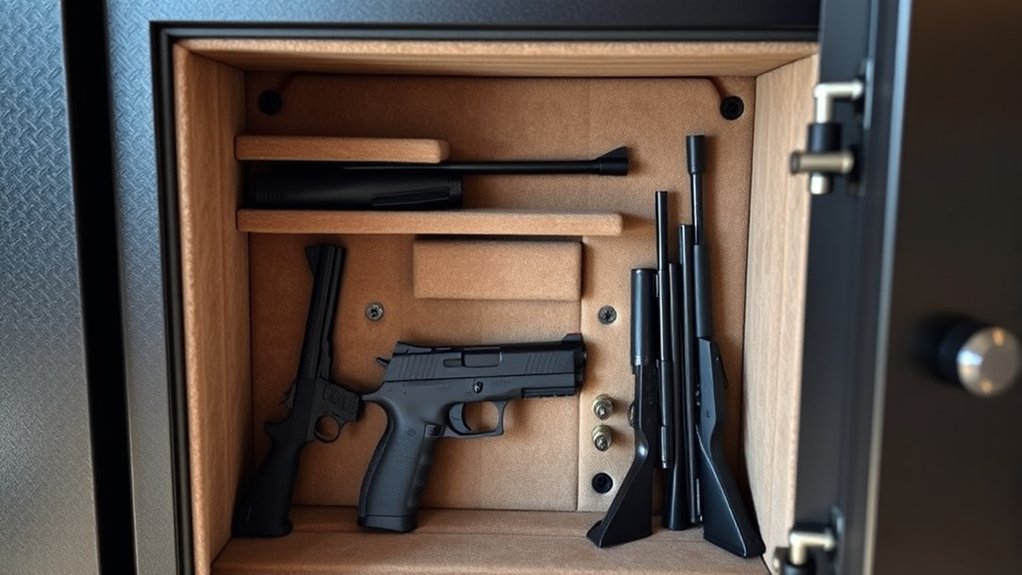
Beyond evaluating a safe’s security features, you need to carefully consider its size to fit your firearms collection properly. Choose a safe size that’s at least 1.5 times your current capacity to accommodate future firearms and accessories.
Remember, manufacturers often overestimate capacity, so factor in space for ammunition and gear. Opt for gun safes with adjustable shelving and door organizers to enhance storage flexibility and protect your firearms from scratches.
| Consideration | Recommendation |
|---|---|
| Capacity Planning | 1.5× current collection size |
| Storage Flexibility | Adjustable shelves & organizers |
| Structural Support | Reinforced floor for large safes |
This analytical approach helps guarantee your firearm collection remains secure, accessible, and well-organized.
Comparing Lock Types: Which One Fits Your Needs?
You’ll want to think about the strengths of mechanical dial locks first. They offer dependable security without needing batteries, but keep in mind, they can be a bit slower to open.
On the other hand, electronic keypad locks give you quick access and make changing codes super easy, though they do depend on battery power.
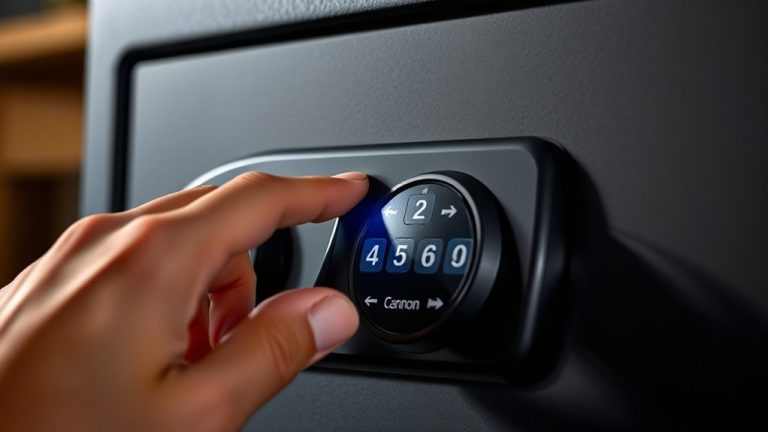
Then there are biometric locks, which let you in fast using fingerprint recognition. Just be aware—they mightn’t work as well if your fingers are dirty or wet.
Mechanical Dial Benefits
A mechanical dial lock provides a dependable and straightforward security option that doesn’t rely on batteries. This means it functions reliably even during power outages.
Mechanical dial locks offer precise control and a tactile feel. Many users find this reassuring compared to digital alternatives. While accessing them may take a little longer, their resistance to electronic failures and hacking makes them a strong security choice.
Plus, these locks are easy to reset without complex programming, which simplifies maintenance.
| Feature | Mechanical Dial Locks |
|---|---|
| Power Dependency | None, no batteries required |
| Security Reliability | High, resistant to electronic failures |
| User Control | Precise tactile feedback and easy reset |
Choosing mechanical dial locks means prioritizing reliable security with straightforward functionality.
Electronic Keypad Features
While mechanical dial locks offer reliable, battery-free security with precise tactile control, electronic keypad locks cater to users who prioritize speed and convenience.
Electronic locks provide quick access, allowing you to open your safe within seconds, which is crucial during emergencies. You’ll appreciate the easy reprogramming feature, letting you change access codes regularly and enhance security effortlessly.
Many models include backlit keypads and incorrect code alarms, adding convenience and an extra layer of security. However, these locks depend on batteries, so you need to perform periodic maintenance to avoid lockouts.
Compared to mechanical dials, electronic keypads generally deliver a more user-friendly experience. That said, they might be less reliable under extreme conditions or moisture exposure.
If you value swift entry and adaptable security, electronic keypad locks fit your needs well.
Biometric Lock Pros
Many biometric locks deliver unmatched speed and security by granting access through fingerprint recognition within seconds. This is a crucial advantage during emergencies.
These locks provide quick access while maintaining robust security features, such as tamper alerts and automatic lockouts after multiple failed attempts.
Biometric locks can store multiple fingerprints, allowing several authorized users seamless entry without compromising safety. However, they rely on battery power, so regular maintenance is essential to avoid lockouts.
While biometric locks typically come with a higher price tag compared to mechanical alternatives, the cost often balances out due to enhanced convenience and rapid accessibility.
If you prioritize swift, secure entry and are willing to invest in advanced features, biometric locks present a compelling choice for your gun safe security needs.
What Steel Thickness Means for Your Safe’s Security
Three key factors define the security level of your gun safe, with steel thickness being the most important. Steel gauge indicates thickness, and lower numbers mean thicker steel. For example, 10-gauge steel is much stronger than 14-gauge, providing better resistance to pry attacks and break-ins.
Safes with at least 1/4-inch thick steel offer enhanced protection, especially when combined with multiple locking bolts and reinforced door frames. Thicker steel also boosts fire resistance, allowing the safe to withstand higher temperatures for longer periods.
That said, thickness alone isn’t enough. You should also check security certifications like UL ratings to make sure the steel meets industry standards for burglary resistance.
Identifying Trusted Gun Safe Certifications and Tests
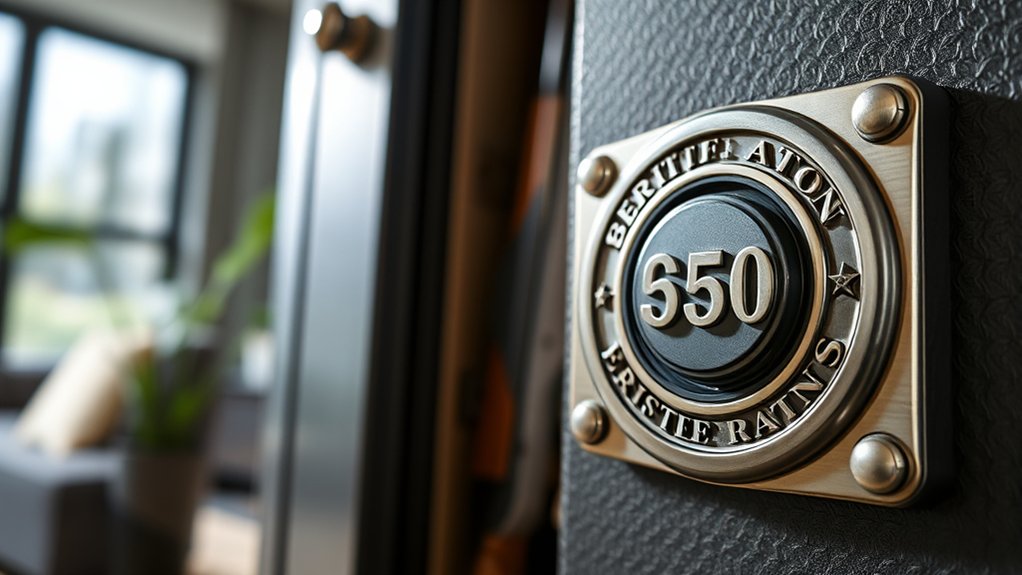
When choosing a gun safe, you’ll want to look for recognized certifications like UL’s RSC or TL ratings. These show that the safe has been tested and proven to resist forced entry.
It’s a solid way to know you’re getting real security.
You should also check for fire resistance ratings based on ASTM standards. These ratings specify the temperature and duration the safe can withstand, so you can be confident your valuables will be protected in case of a fire.
And lastly, it’s a good idea to trust safes that have independent third-party evaluations. This way, you can be sure the manufacturer’s claims are accurate and reliable, giving you extra peace of mind.
Recognized Security Certifications
Although selecting a gun safe can feel overwhelming, focusing on recognized security certifications helps you make an informed choice. Look for safes with UL Ratings, especially the RSC (Residential Security Container) rating. This rating guarantees independent testing against unauthorized entry.
Third-party certifications from ETL and Intertek further validate claims of fire resistance and durability. Higher UL ratings like TL-15 and TL-30 indicate safes designed to resist professional burglary attempts.
Beware of manufacturers overstating capacity; certified safes provide verified storage data.
| Certification | Focus Area | Key Feature |
|---|---|---|
| UL Residential Security Container (RSC) | Burglary resistance | Independent entry resistance test |
| UL TL-15/TL-30 | High-security burglary | 15- or 30-minute tool attack resistance |
| ASTM | Fire resistance | Temperature endurance standards |
| ETL | Fire & water resistance | Third-party performance validation |
| Intertek | Fire & water resistance | Safety and durability testing |
Fire Resistance Testing Standards
When selecting a gun safe, understanding fire resistance testing standards is essential to guarantee your valuables withstand extreme heat. Trusted ratings, such as UL 72, assess safes by time and temperature. They typically require endurance at 1,200°F for 30 to 120 minutes.
Urban users may find 30-minute fire ratings sufficient, while rural owners should opt for longer durations. Look for safes labeled UL RSC (Residential Security Container), which combine burglary and fire resistance standards.
Since there’s no universal fire-proof rating system, you must scrutinize claims and prioritize independent certifications to verify performance.
Furthermore, consider safes offering water resistance to protect against fire suppression damage.
Independent Third-Party Evaluations
Since gun safes vary widely in quality and protection levels, relying on independent third-party evaluations is essential to confirm you choose a safe that meets rigorous security and fire resistance standards. Trusted organizations like Underwriters Laboratories (UL) conduct these evaluations, providing objective assessments of a safe’s security capabilities and fire ratings.
The UL Residential Security Container (RSC) rating ensures the safe withstands at least five minutes of forced entry attempts, establishing a baseline security level. For higher protection, look for UL TL-15 or TL-30 ratings, which indicate resistance for 15 and 30 minutes, respectively.
Moreover, fire ratings from independent labs verify a safe’s ability to endure extreme temperatures for specified durations.
Always verify manufacturer claims through these certifications to confirm your safe truly meets the required standards.
Evaluating Interior Features for Safety and Convenience
As you assess a gun safe’s interior features, focus on elements that enhance both safety and convenience without compromising storage efficiency.
Adjustable shelving and door organizers allow you to customize storage, accommodating firearms of varying sizes and future additions.
Padded interiors are essential because they prevent scratches and preserve your firearms’ condition.
Consider safes with built-in lighting kits to improve visibility. This helps you quickly locate items even in low-light situations.
Door-mounted pistol pockets offer immediate access while optimizing space.
Dedicated compartments for valuables like jewelry or documents add organized security beyond firearms.
Prioritize these interior features to guarantee your safe not only protects your guns but also facilitates efficient, damage-free storage tailored to your needs.
Where to Place Your Gun Safe for Maximum Security
Although choosing the right gun safe is essential, placing it strategically within your home is just as important for maximum security. To properly place and secure your gun safe, follow these key steps:
First, pick a discreet spot like a bedroom or closet. This helps keep the safe out of plain sight and can deter thieves from even trying.
When it comes to securing your safe on wood floors, anchor it to floor joists and wall studs. For concrete floors, use expanding bolts to ensure a solid hold without damaging the structure.
Try to avoid areas prone to moisture since that can cause rust and corrosion. Basements can be tricky—they require waterproof safes and careful weight distribution to keep the safe from tipping over.
You might also want to consider using dehumidifiers in enclosed spaces. They help keep the environment controlled and protect your safe and its contents.
Balancing Budget and Long-Term Value When Picking a Safe
Once you’ve identified the ideal spot for your gun safe, it’s time to figure out how much to invest without compromising security.
Balancing your budget with long-term value means you need to carefully assess features and durability.
Entry-level safes might seem tempting, but a quality safe around $1,500 usually offers better fire ratings, thicker steel, and advanced locking mechanisms.
These features not only boost protection but also help reduce replacement costs over time.
Think about the future too. Choose a safe that can hold at least 1.5 times your current number of firearms.
And don’t forget a reliable warranty—it protects your investment against defects and potential loss.
In the end, focusing on long-term value instead of just initial savings will keep your firearms secure for years to come.
Frequently Asked Questions
How Often Should I Service or Maintain My Gun Safe?
You should perform regular inspections every six months to check for wear or corrosion. Pay close attention to the lock mechanism types.
Replace electronic lock batteries annually to avoid failures.
Use safe cleaning techniques like keeping it dry with desiccant packs to prevent rust.
Also, consider where you place your safe because humidity and temperature can affect its durability.
For the best results, get professional servicing every few years. This will help maintain internal components and security features.
It’s a good way to keep your safe working smoothly over time.
Can a Gun Safe Protect Against Floods or Water Damage?
A gun safe can protect against floods or water damage if it has waterproof features and proven flood resistance. You should look for safes with advanced sealing mechanisms designed to keep water out.
Safe placement is critical. Elevate it above flood levels to reduce risk.
Don’t assume fire-resistant safes offer flood protection. Always verify water resistance ratings.
Adding internal waterproof containers can also enhance protection against water damage. It’s all about layering your defenses to keep your valuables safe.
Are Biometric Locks More Secure Than Traditional Key Locks?
Biometric locks generally offer stronger biometric security features than traditional key locks, reducing key lock vulnerabilities like lost or duplicated keys.
You’ll appreciate the faster access speed, especially in emergencies, and the convenience of multiple authorized users.
However, biometric locks depend on battery power and can be affected by environmental factors.
How Do Humidity and Temperature Inside the Safe Affect Firearms?
Humidity inside your safe can cause rust and corrosion, which damages your firearms. It’s important to keep an eye on moisture levels to protect your guns.
You also need to maintain proper temperature control to prevent material degradation and lubricant breakdown. This is especially true when temperatures rise above 120°F.
Choosing safe materials that resist moisture and temperature changes really helps with firearm preservation.
Using dehumidifiers and monitoring devices makes it easier to keep ideal conditions. That way, your guns stay in peak condition without suffering from environmental damage.
What Insurance Benefits Come With Owning a Certified Gun Safe?
When it comes to insurance, owning a certified gun safe is worth its weight in gold.
You’ll access insurance discounts of 5% to 20% because insurers value theft protection and fire protection.
Plus, your liability coverage improves, showing you take responsible firearm storage seriously. This not only lowers risk but also smooths out claims if something happens.
Investing in a certified safe pays off by safeguarding both your guns and your wallet.
Conclusion
Choosing the right gun safe is like building a fortress around your valuables. Each rating, lock, and feature acts as a brick in your defense. You’ll want to balance fire protection with burglary resistance.
Match the safe size to your collection and pick a location that maximizes security. By understanding certifications and weighing your budget against long-term value, you’ll craft a reliable sanctuary. This safe will guard your firearms with precision and peace of mind.