How to Keep a Gun Safe but Accessible in 7 Steps
To keep your gun safe secure yet accessible, choose a discreet location with quick emergency access, like your bedroom, and bolt the safe firmly. Unload firearms and store ammo separately while organizing guns to avoid damage. Use quick-access locks such as biometric or keypad models for speed and reliability.
Make sure to maintain proper humidity and perform regular inspections. Also, control who can access the safe. It’s important to educate household members on safe handling.
Following these steps will help you balance security with readiness efficiently. This way, you’re prepared without compromising safety.
Choose a Secure Yet Accessible Storage Location
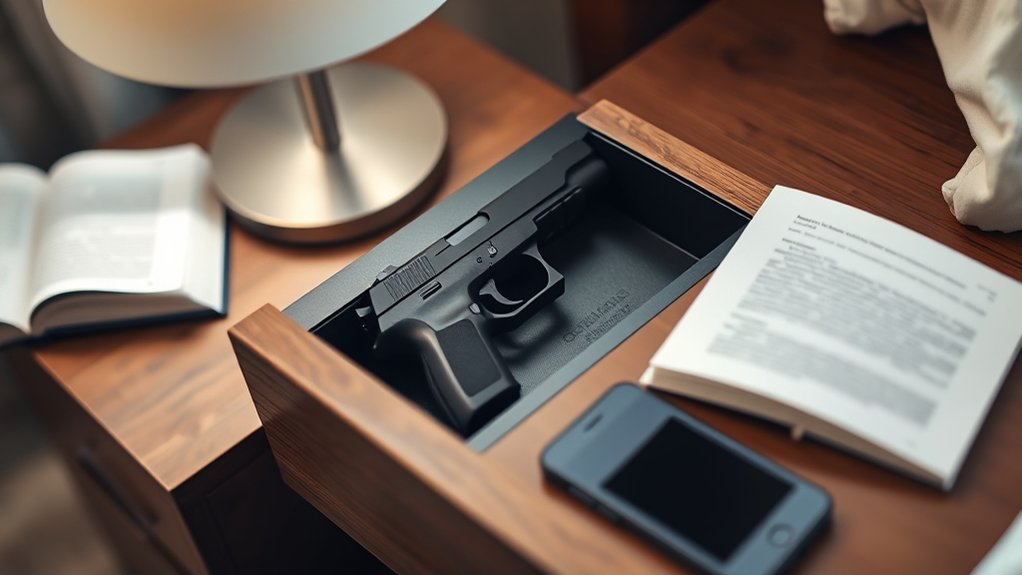
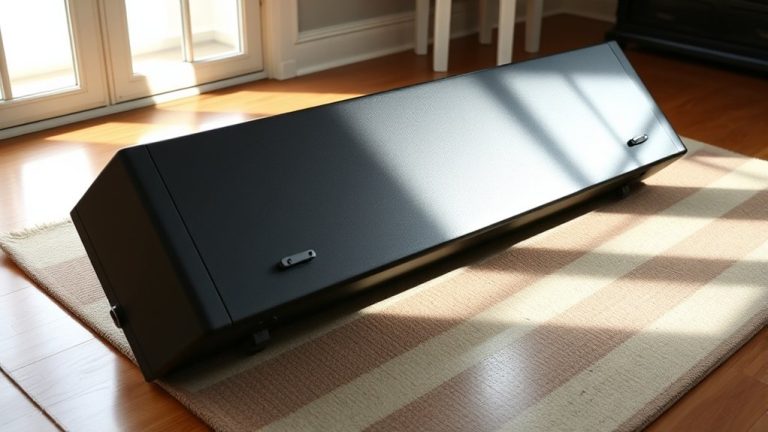
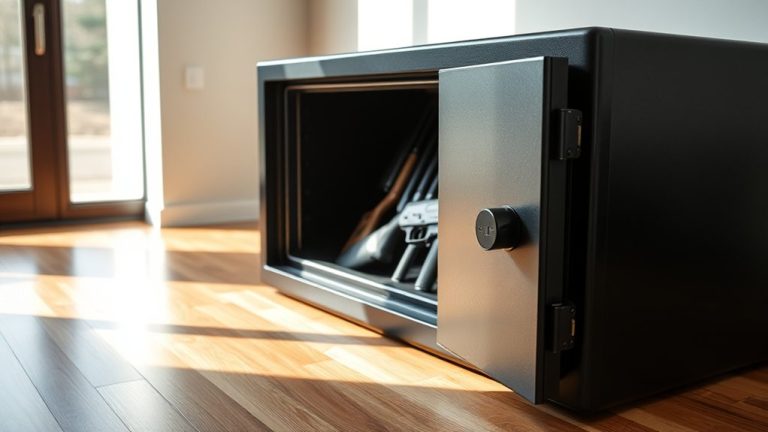
When choosing a storage location for your gun safe, you’ll want a spot that’s both secure and easily accessible. Opt for a discreet area like a hidden corner in your bedroom or basement. This provides secure storage that deters intruders while ensuring you can get to your firearm in emergencies.
Your chosen location should allow you to retrieve your firearm within five seconds. Avoid places prone to moisture or extreme temperatures, as these can damage your firearms and ammunition.
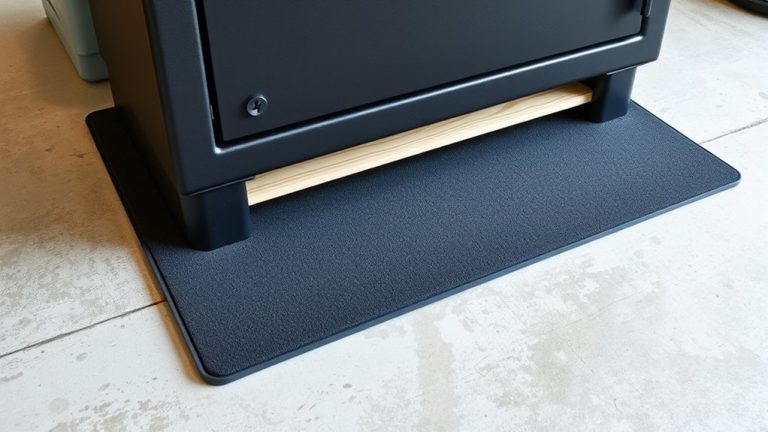
Make sure to securely bolt the safe to the floor or wall to prevent theft and keep it stable when you access it.
It’s a good idea to regularly reassess your storage location as household dynamics or local crime rates change.
Prioritizing secure and accessible storage minimizes risk without compromising your readiness. It’s all about keeping things safe but still within reach when you need them.
Unload and Separate Ammunition Before Storage
Unload every firearm before placing it in your safe to eliminate the risk of accidental discharge during handling or retrieval. Always unload and store firearms separately from ammunition to enhance safety and prevent unauthorized access.
Keep ammunition in a locked container away from your firearms. This adds an extra layer of security and helps keep your ammo safe from intruders or children. Regularly inspect both your firearms and ammunition for moisture or corrosion to maintain peak condition.
It’s also important to familiarize yourself with your firearm’s unloading procedure. Knowing this well guarantees safe, confident handling every time.
| Task | Importance | Safety Benefit |
|---|---|---|
| Unload firearms | Critical | Prevents accidental discharge |
| Store ammo separately | Essential | Reduces unauthorized access |
| Use locked ammo container | Highly recommended | Secures ammunition from intruders and children |
| Inspect regularly | Necessary | Maintains condition, prevents malfunction |
| Know unloading procedure | Crucial | Guarantees safe, confident handling |
Select Quick-Access Locking Mechanisms for Safety and Speed
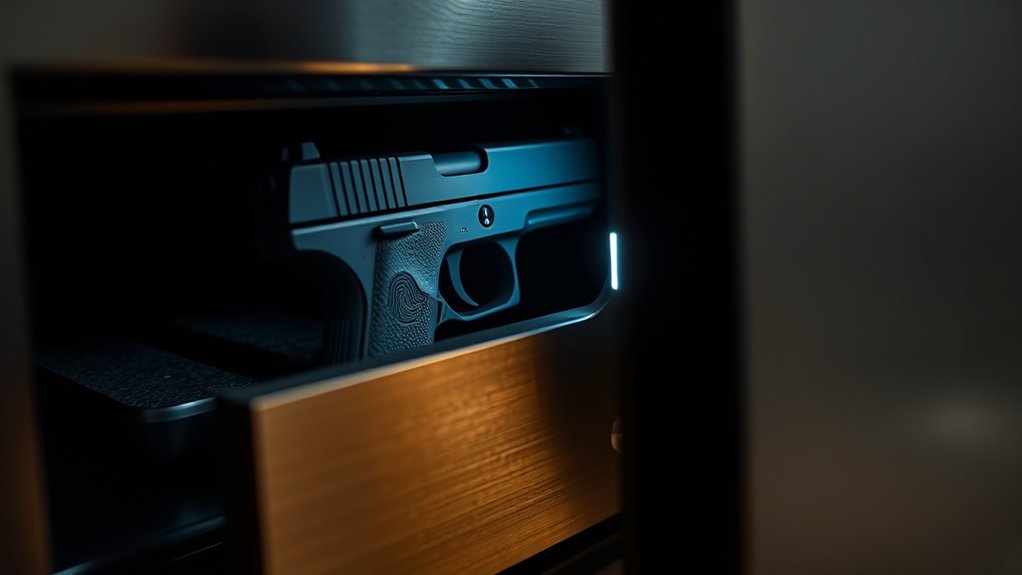
How quickly you can access your firearm in an emergency can make all the difference. When selecting quick-access locking mechanisms for your gun safe, prioritize both speed and reliability.
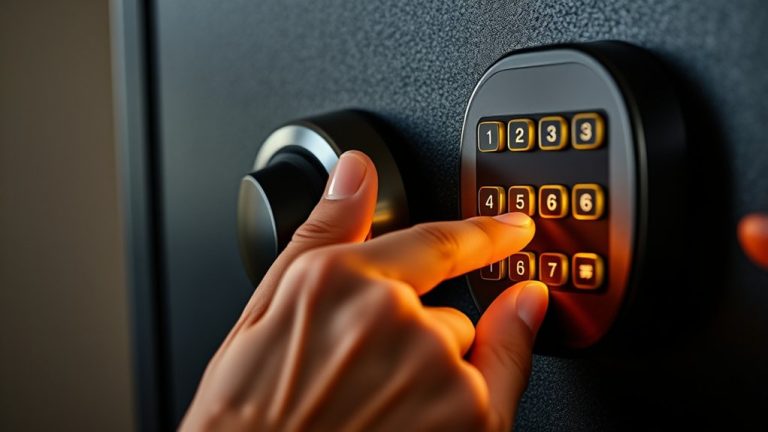
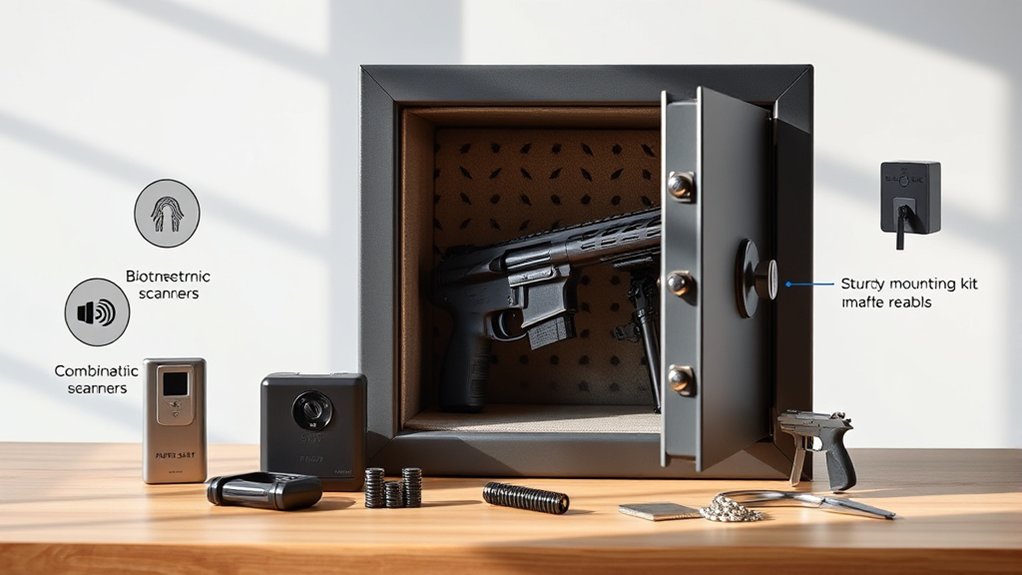
Biometric safes offer access within 1-3 seconds using fingerprint recognition. They require power and can be costly, though.
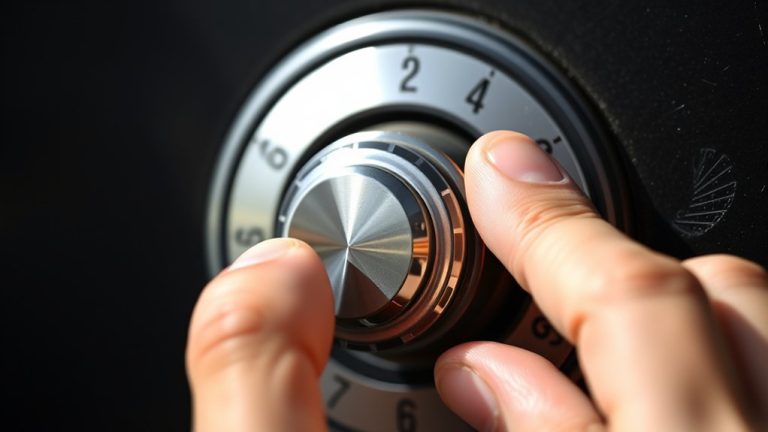
Mechanical lockboxes provide dependable access in 3-5 seconds without batteries, using a simple combination or key. They’re ideal for situations where power failure is possible.
Keypad lockboxes combine speed with electronic convenience. They often include backup keys to guarantee access during outages.
For discretion, consider wall safes with quick-access features that blend into your environment. This reduces detection risk.
Avoid traditional safes lacking quick-access options, as they may delay retrieval.
Choose wisely to balance rapid access and security effectively.
Keep Your Safe Dry and Your Firearm Maintained
You want to keep the humidity inside your safe at or below 50% so your firearms don’t develop rust or corrosion.
It’s a good idea to clean and lubricate your guns regularly before storing them. This helps get rid of any residues that could attract moisture.
Using dehumidifiers or silica gel packets can really make a difference in keeping the environment dry.
That way, you’re protecting your investment and ensuring your firearms stay in great condition.
Control Humidity Levels
Although it might seem straightforward, controlling humidity inside your gun safe is crucial to preventing rust and corrosion on your firearms. Maintaining humidity levels around 50% or lower year-round protects your safe storage environment. Using dehumidifiers and moisture absorbers like Liberty Safe Hydrosorbent Silica Gel helps manage moisture effectively, especially in humid climates.
Avoid non-breathable cases to guarantee proper air circulation around your firearms. Regularly inspect your guns for condensation or rust, particularly during seasonal changes, to catch issues early.
| Method | Recommended Level | Notes |
|---|---|---|
| Indoor Humidity | ≤ 50% | Ideal for rust prevention |
| Dehumidifier | Continuous operation | Best in high-humidity areas |
| Moisture Absorbers | Replace regularly | Silica gel recommended |
| Air Circulation | Guarantee unrestricted | Avoid airtight cases |
| Inspection Frequency | Monthly | Check for rust or condensation |
Regular Gun Cleaning
Maintain your firearms regularly to prevent moisture buildup and rust that can compromise both performance and safety.
Regular gun cleaning is essential for stored firearms, especially after exposure to moisture or dirt. You should remove any residues that attract moisture and clean the bore thoroughly to eliminate debris that could cause rust and affect accuracy.
After cleaning, apply a light layer of lubricant on all metal surfaces to shield against corrosion.
For firearms with wood stocks, treat them with wax to prevent swelling or cracking, preserving structural integrity.
It’s a good idea to establish a consistent cleaning schedule, inspecting your stored firearms at least every few months.
By keeping up with this routine, you make sure your firearms stay reliable, safe, and ready to use when you need them.
Regular care really pays off in the long run.
Prevent Rust Formation
When you keep your gun safe dry and control indoor humidity at 50% or lower, you greatly reduce the risk of rust and corrosion on your firearms. Proper gun storage demands regular inspection and maintenance. Wipe down firearms with an ammonia-free cleaner and apply a light lubrication layer to metal surfaces to repel moisture.
Use moisture-absorbing products like silica gel or Hydrosorbent inside the safe to prevent condensation. Clean guns thoroughly before storage, paying special attention to the bore.
| Maintenance Step | Purpose |
|---|---|
| Control Humidity ≤ 50% | Prevent rust and corrosion |
| Apply Lubrication | Create moisture barrier |
| Use Desiccants | Absorb moisture in the safe |
Strictly following these steps guarantees your safe and firearms remain rust-free and functional. It’s all about staying on top of these habits so your guns stay in great shape.
Organize Your Safe to Prevent Damage
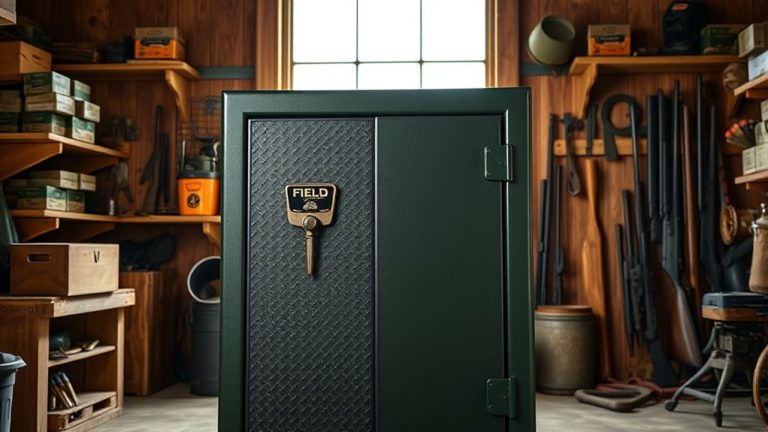
Arrange your firearms by size and type within the safe to prevent nicks and dings during retrieval. Proper organization in gun safes enhances both protection and accessibility.
Avoid overcrowding; maintain adequate spacing to allow quick identification and removal without risking damage.
Use dividers or foam padding as reliable storage options to secure guns firmly and minimize movement that causes scratches.
Implement a clear labeling system for compartments or shelves to streamline access, saving time when selecting specific firearms.
Regularly assess and reorganize your safe as your collection evolves, ensuring ideal storage conditions.
Educate Household Members About Safe Storage Practices
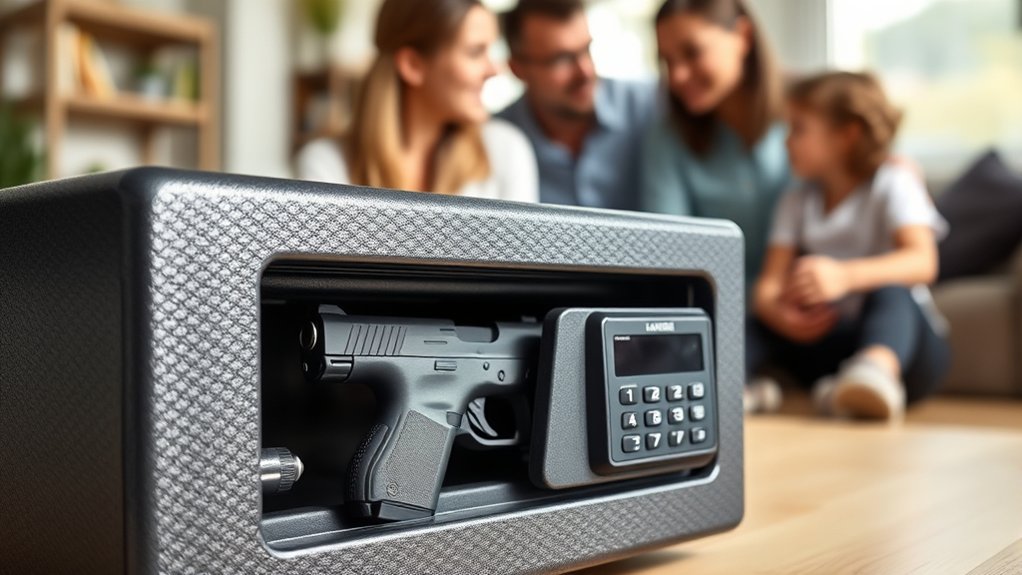
Although secure storage is crucial, educating everyone in your household about firearm safety is just as important. You need to emphasize that all firearms should always be treated as if they’re loaded.
Try to hold regular family discussions to make sure every member knows where firearms are stored and understands the safety measures you have in place. It helps to demonstrate proper handling techniques, especially keeping fingers off the trigger until ready to shoot.
Encourage open communication so that everyone feels comfortable addressing any safety concerns. This creates a culture of responsibility in your home.
Explain how childproof locks and secure storage prevent unauthorized access. This protects both the firearms and everyone in your household.
Regularly Review Storage Security, Access, and Condition
You should regularly check your safe’s lock to make sure it’s still secure and working properly.
It’s important to confirm that only authorized people have access, so don’t forget to update permissions whenever necessary.
Also, keep an eye on the environment inside the safe to protect your firearms from any potential damage.
Inspect Lock Integrity
Regularly inspecting the lock integrity of your gun safe is essential to maintaining its security and functionality. Check the locking mechanism, bolts, and hinges frequently to guarantee they engage properly and remain damage-free. Test electronic locks monthly and replace batteries to avoid lockouts.
Also, examine the safe’s interior and exterior for signs of tampering or wear that could compromise security. It’s a good idea to maintain a log of inspections and repairs to monitor reliability over time. Remember, proper lock maintenance complements trigger locks in safeguarding your firearms effectively.
| Inspection Area | What to Check |
|---|---|
| Locking Mechanism | Proper engagement, no wear |
| Bolts & Hinges | Secure, functioning correctly |
| Electronic Locks | Operational, battery status |
| Safe Structure | Signs of tampering or damage |
Verify Access Authorization
Because unauthorized access can lead to serious safety risks, you must verify who can open your gun safe and guarantee only trusted individuals have entry.
Regularly review storage security by maintaining a detailed log of authorized users, noting dates and reasons for access. This verifies accountability and helps you confirm access authorization effectively.
Conduct routine inspections of the safe’s condition and locking mechanisms, addressing any damage immediately to uphold security.
Check stored firearms and ammunition to confirm they remain secure and functional.
Educate all authorized users on safe handling and the critical importance of responsible gun ownership.
By consistently verifying access authorization and reinforcing safety protocols, you minimize risks, prevent unauthorized use, and uphold the highest standards of firearm security in your home.
It’s all about keeping things safe and making sure everyone understands their responsibility.
Assess Environmental Conditions
Although maintaining strict access control is essential, you must also assess the environmental conditions surrounding your gun safe to guarantee ongoing security and firearm integrity.
Regularly inspect the safe for signs of rust, wear, or damage that could compromise its function.
Monitor humidity levels carefully, keeping them at 50% or lower to prevent moisture-related issues that damage firearms.
Evaluate the safe’s location to confirm it remains secure from unauthorized access yet accessible for emergencies.
Periodically update your access codes to prevent security lapses.
Furthermore, maintain organized storage inside the safe, avoiding overcrowding to protect firearms and ammunition and allow swift retrieval when needed.
Consistently reviewing these factors ensures your gun safe remains both secure and ready for use.
It’s all about staying proactive so your firearms are safe and good to go whenever you need them.
Frequently Asked Questions
Can I Store a Gun Safely Without a Traditional Gun Safe?
Yes, you can store a gun safely without a traditional gun safe by using alternative storage options like biometric or mechanical lockboxes.
These security solutions balance quick accessibility with protection. Trigger and cable locks offer additional storage methods to prevent unauthorized use.
Always keep firearms unloaded and separate from ammunition.
Limit access to keys or combinations to responsible adults only. This way, you ensure your chosen accessibility options maintain safety without compromising security.
How Do I Quickly Access My Firearm in Low Light Conditions?
You’ll need lightning-fast flashlight techniques to gain access to your firearm in low light without ruining your night vision. Use a dim, focused light to avoid blinding yourself, and keep it near your safe.
Biometric safes opening in under three seconds help you avoid fumbling.
Practice operating your lock in the dark until muscle memory kicks in. This cautious approach guarantees you retrieve your firearm swiftly and safely, even under stress.
It’s all about being prepared and staying calm when it counts.
What Are Legal Requirements for Gun Storage in My Area?
You need to review your local gun storage regulations carefully, as they vary widely by state and often mandate safe storage practices to prevent unauthorized access.
Many states require firearms to be locked in a safe or secured container, especially to protect children. Failing to follow these regulations can lead to legal penalties.
Laws can change, so it’s a good idea to stay updated regularly.
Make sure your storage methods meet or exceed your area’s legal requirements. That way, you’re keeping things safe and maintaining responsible ownership.
How Can I Discreetly Carry a Firearm at Home?
Think of your firearm as a silent guardian, always within reach yet hidden in plain sight.
For discreet carry at home, use concealed carry options like under-clothing holsters or waist packs. These allow quick access during home defense.
Choose compact firearms that fit comfortably and don’t draw attention.
Keep your routine consistent, storing your gun where only you know.
Always follow local laws to guarantee your home defense methods remain legal and responsible.
It’s all about staying safe and smart without making it obvious.
Are Biometric Locks Reliable for Gun Safes?
Yes, biometric locks can be reliable for gun safes because advanced biometric technology offers quick access and can store multiple fingerprints. This means you can get to your firearms faster when you need them.
That said, you should think about the lock’s durability and what happens if the power fails. It’s a good idea to keep backup keys or mechanical overrides handy just in case.
Also, regular maintenance of the sensor is important to avoid problems caused by dirt or injuries.
While biometric locks are super convenient, it’s smart to combine them with other security measures. This way, you make sure your firearm stays both secure and accessible whenever you need it.
Conclusion
Keeping your gun both safe and accessible is like walking a tightrope. Balance is essential. By choosing a secure location, unloading ammo, using quick-access locks, and maintaining your firearm, you protect your loved ones without sacrificing readiness.
Organize thoughtfully, educate your household, and review your setup regularly. Taking these steps guarantees your firearm is a tool you control, not a risk you carry. Stay vigilant, responsible, and always prioritize safety.