Can You Put a Gun Safe Upstairs?
Yes, you can put a gun safe upstairs, but you need to verify your floor can support the heavy weight, often exceeding 1,000 pounds. Choose a location against exterior walls or corners for better load distribution, and carefully assess your staircase’s width and condition for safe moving.
Use professional movers with specialized equipment like stair-climbing dollies for transport. Proper anchoring and clear access are essential. Understanding these factors helps you make a safe, informed decision.
Can You Safely Put a Gun Safe Upstairs?
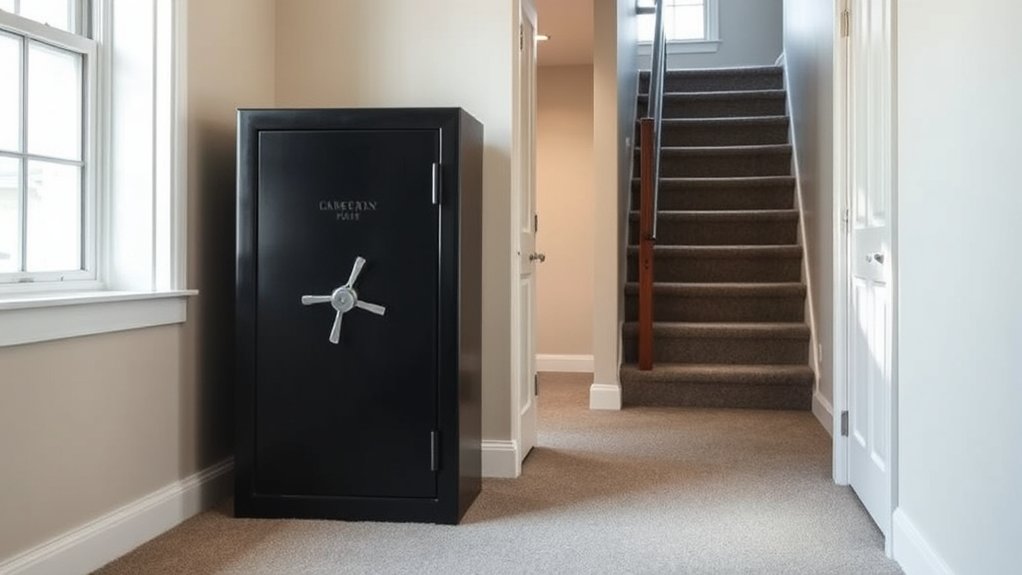
Although placing a gun safe upstairs is possible, you must carefully evaluate the floor’s load-bearing capacity. Safes can weigh anywhere from 100 to 1,200 pounds, which far exceeds the typical residential support of 40 pounds per square foot.
When installing a gun safe, consider its weight and size. It’s a good idea to choose a location against exterior walls or corners to distribute the load more effectively.
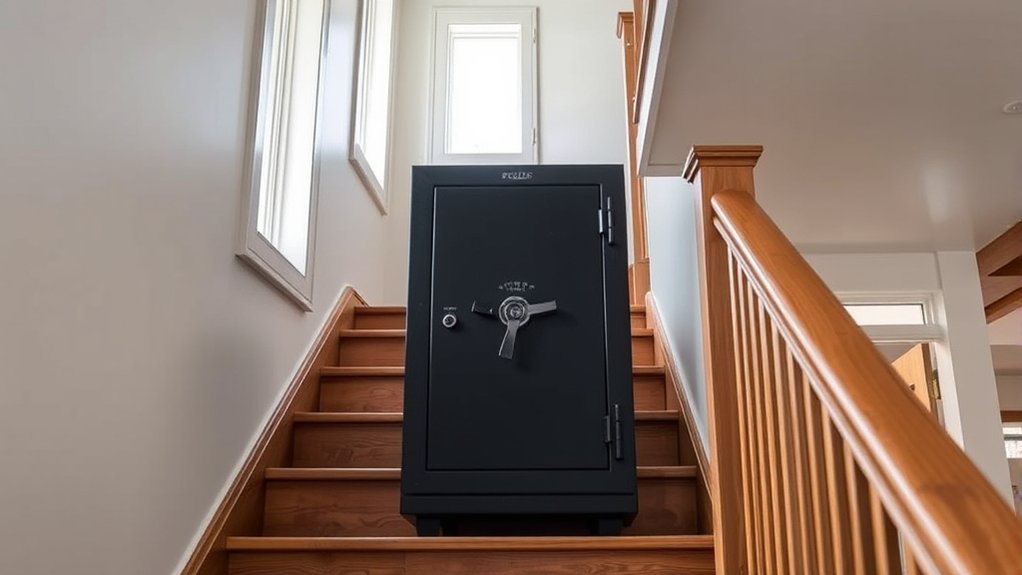
You should also assess the staircase design and condition since narrow or steep stairs can make moving heavy safes difficult.
Employing professional movers with stair-climbing dollies and straps helps reduce the risk of injury and property damage.
Once the safe is installed, make sure to secure it properly by bolting it to the floor. This ensures stability and safety.
With some thoughtful planning around weight, size, and placement, you can guarantee a secure and safe installation upstairs.
Can Your Floor Support the Weight of a Gun Safe?
Before installing a gun safe upstairs, you need to check if your floor can handle its heavy weight. Loaded safes often weigh between 100 and over 1,200 pounds. Most residential floors support about 40 lbs per square foot, but your safe might exceed that. This could cause structural strain.
Check your floor’s weight capacity before installing a heavy gun safe upstairs to prevent structural damage.
To help with the weight, try placing the safe near exterior walls or corners. These areas have stronger load distribution. If your safe is over 1,000 lbs, reinforcing the floor is really important to avoid sagging or damage.
Remember to consider the total weight of the safe plus its contents, not just the safe itself.
It’s always a smart idea to consult a structural engineer or local authority. They can make sure your floor will safely support the safe over time.
Where Should You Place a Gun Safe on the Second Floor?
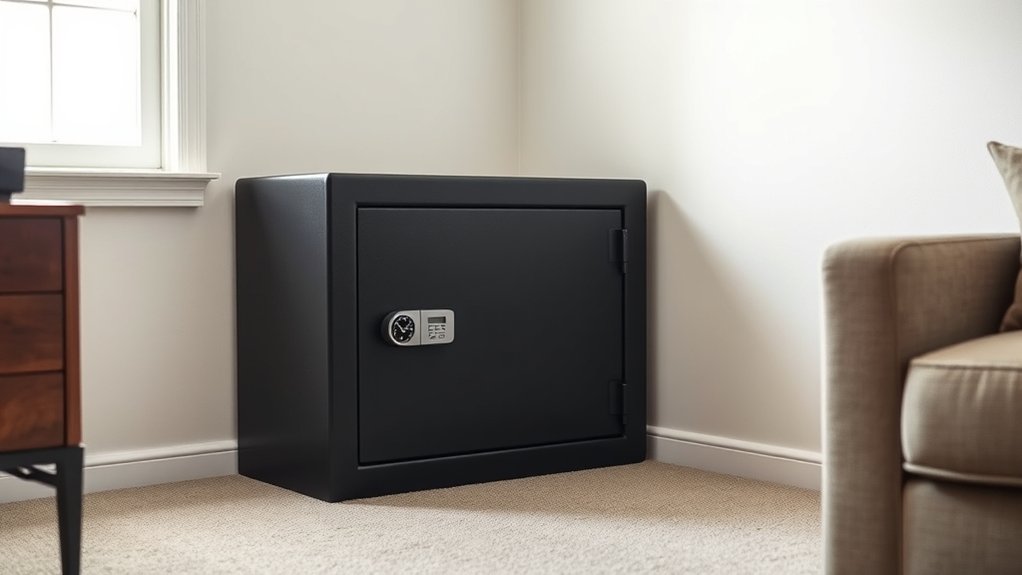
Choosing the right spot for your gun safe on the second floor is essential for both safety and accessibility. Position your safe on the second floor against two load-bearing walls, ideally in a corner, to enhance structural integrity and evenly distribute the weight.
Avoid placing the safe near windows to reduce theft risk and exposure to humidity, which can damage your firearms.
Make sure the staircase can support the safe’s weight during installation, especially if it’s narrow or steep. This helps prevent accidents.
Keep the safe’s location accessible with clear pathways to facilitate quick access during emergencies.
It’s a good idea to regularly reassess the placement to maintain both safety and convenience.
Prioritizing these factors ensures your safe on the second floor remains secure, stable, and practical without compromising your home’s structural integrity.
When Should You Consider Putting Your Gun Safe on the Ground Floor?
If you want to maximize safety and ease of access, placing your gun safe on the ground floor is often the best choice.
The ground floor can support the significant weight of a heavy safe without risking structural damage, as upper floors typically aren’t designed for such loads. You’ll also benefit from quicker emergency access, without the delay or hazards of maneuvering stairs.
The ground floor safely supports heavy safes and ensures faster, safer emergency access without stairs.
Moving a heavy safe is safer and less likely to cause injury or property damage when kept on the ground floor. Plus, ground floors usually offer better humidity control, which helps protect your firearms from corrosion.
Anchoring your safe to a concrete floor on the ground level guarantees maximum security, reducing the chance of theft or tipping.
How to Assess Your Staircase for Moving a Gun Safe Upstairs
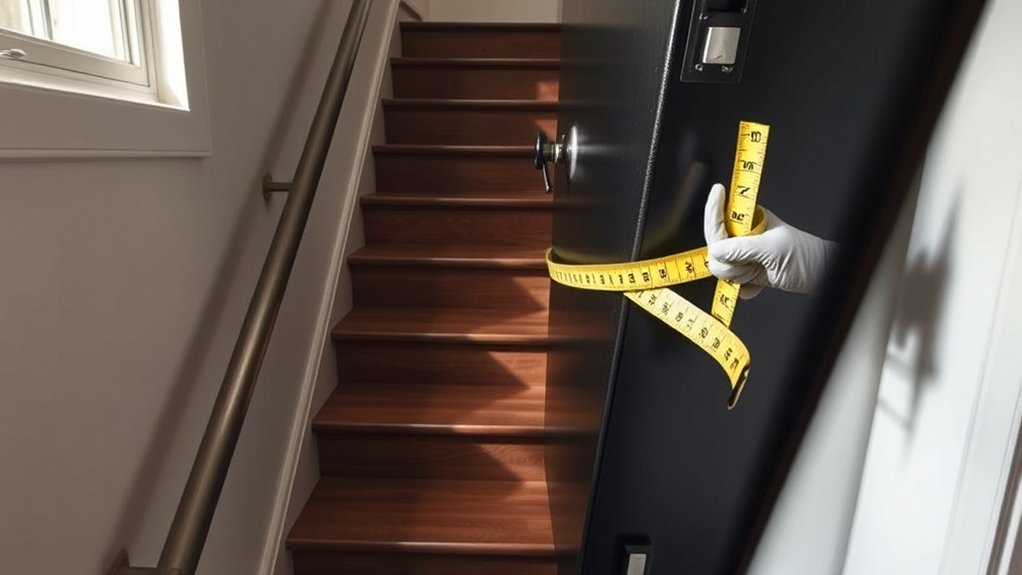
Three key factors determine whether your staircase is suitable for moving a gun safe upstairs: its width and sturdiness, load-bearing capacity, and overall condition.
First, analyze the staircase design to guarantee it’s wide and sturdy enough for the safe and movers. Narrow or steep stairs complicate the process.
Second, verify the load-bearing capacity. The stairs must support the combined weight of the safe and people carrying it.
Third, inspect for any wear or damage that may compromise stability.
Finally, plan protective measures to prevent damage during the move.
- Measure staircase width and evaluate design suitability
- Confirm load-bearing capacity matches weight requirements
- Inspect for structural integrity and surface condition
- Prepare protective coverings to safeguard staircase surfaces
How to Move a Gun Safe Upstairs Safely
Before you move your gun safe upstairs, make sure the staircase and floor can handle the combined weight of the safe and the people carrying it.
It’s important to check this first to avoid any accidents or damage.
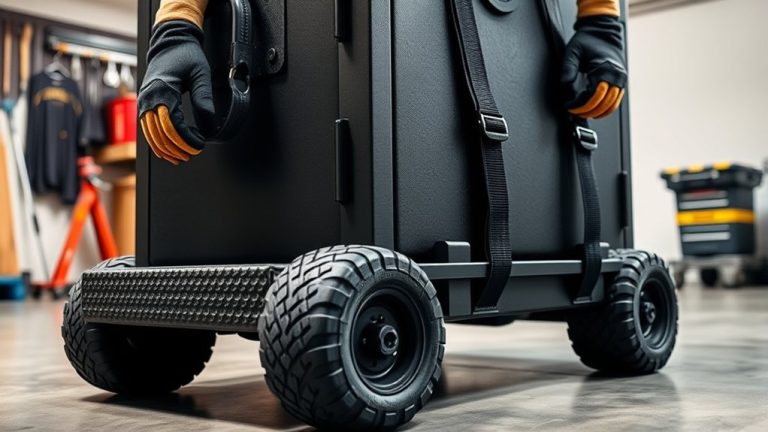
You’ll want to use specialized equipment like stair-climbing dollies and heavy-duty straps.
These tools help keep the safe secure and make the whole process much safer and easier.
With a bit of careful planning and the right gear, you can move your gun safe upstairs smoothly and without any hassle.
Just take your time and stay safe!
Assess Staircase And Floor
When planning to move a gun safe upstairs, start by thoroughly evaluating the staircase and floor to verify they can handle the safe’s weight and size. Focus on staircase design and floor load-bearing capacity to avoid costly damage or safety hazards.
First, inspect the staircase design for width, steepness, and structural integrity to confirm it supports the safe’s dimensions and weight. Measure the floor’s load-bearing capacity; typical residential floors hold about 40 lbs per square foot, so reinforce if the safe exceeds this.
Also, check for any damage or weaknesses in stairs and flooring that might get worse under heavy load. If you’re unsure about the floor’s ability to sustain the safe’s weight, consulting a structural engineer is a smart move.
This assessment lays the groundwork for a secure and damage-free move upstairs. Taking these steps will help you avoid surprises and keep everything safe during the move.
Use Proper Moving Equipment
Moving a gun safe upstairs demands specialized equipment to ensure safety and prevent damage. Use a stair-climbing dolly designed for heavy safes. It provides essential support and stability, making safe moving on stairs manageable.
Secure the safe firmly with heavy-duty straps to prevent shifting, which can cause accidents or damage. Before starting, check out your staircase’s design. Narrow or steep steps need extra caution and maybe some extra tools.
Also, make sure the floor can handle the weight. If your safe weighs between 900 and 1,200 pounds, you might need to reinforce it to avoid structural issues.
If you’re unsure, it’s a smart idea to hire professional movers who’ve experience with moving safes. They use specialized gear and techniques to get through stairs and tight spaces safely, protecting both your safe and your home.
Why Hire Professional Gun Safe Movers?
You definitely want to hire professional gun safe movers because they come equipped with the right tools, like heavy-duty dollies and strong straps, to keep everyone safe and avoid any damage to your property.
Moving a gun safe isn’t as easy as it looks!
Plus, these experts know exactly how to handle tricky staircases and tight spaces without putting you or your belongings at risk.
They’ve done it plenty of times before, so they know all the best techniques to make the move smooth and worry-free.
At the end of the day, trusting professionals means you can relax knowing both your safety and the security of your gun safe are in good hands.
It’s just one less thing to stress about during the move!
Safety And Injury Prevention
Because gun safes often weigh over 1,000 pounds and require careful handling, hiring professional movers is essential for safety and injury prevention.
Attempting to move a gun safe without expertise dramatically increases the risk of injury and property damage.
Professionals reduce these risks by using specialized equipment designed for heavy loads, which helps minimize strain and accidents.
They also know how to maneuver tight spaces and staircases with skill, preventing falls or collisions.
On top of that, they evaluate floor strength to avoid structural damage or sagging.
Plus, they ensure the safe is securely anchored to maintain stability and security upstairs.
It really pays off to let the pros handle it!
Specialized Equipment Use
Handling a gun safe requires more than just strength. It demands specialized equipment designed to manage its immense weight and awkward shape.
Professional gun safe movers use heavy-duty dollies with stair-climbing capabilities to transport these heavy objects up stairs safely. This reduces the risk of injury and property damage.
They also use straps and protective coverings to secure the safe and shield walls and staircases from harm. Experts are trained to navigate narrow staircases and tight corners, which can be a real challenge for untrained individuals.
Plus, professionals assess your home’s structural integrity to make sure the move complies with load-bearing limits.
By hiring experts with the right equipment, you save time and minimize stress. You also guarantee the safe’s secure relocation upstairs without compromising your home’s safety or your well-being.
It just makes the whole process a lot smoother and safer for everyone involved.
Equipment for Moving and Installing Your Gun Safe
Several key pieces of equipment play an essential role in moving and installing your gun safe safely and efficiently.
When handling a heavy gun safe, using the right equipment for moving is critical to avoid injury and property damage. Here’s what you’ll need:
- Stair-climbing dolly. It provides stability and makes it easier to transport your safe up or down stairs.
- Heavy-duty straps or ropes. These help secure the safe firmly, preventing any shifts or falls during transit.
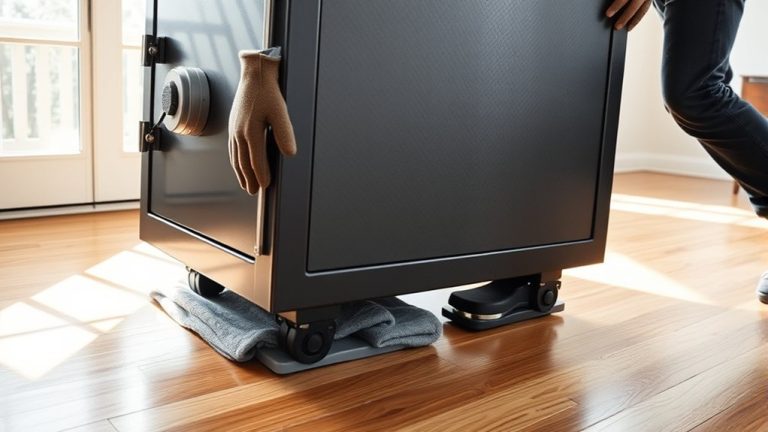
- Protective coverings. Use these to shield walls and staircases from scratches and dents while you maneuver the safe.
- Drill with appropriate bits. You’ll need this to bolt the safe securely to the floor or wall once it’s positioned.
Using this equipment, along with multiple helpers, will make the move and installation safer and more efficient.
It’s always better to have extra hands when dealing with heavy gear like a gun safe.
How to Properly Anchor and Install a Gun Safe Upstairs
When it comes to anchoring your gun safe upstairs, the first thing you want to do is pick the right spot. Ideally, go for concrete or reinforced flooring because that gives you the best stability.
Next, make sure you choose fasteners that suit your floor type and can support the weight of your safe without damaging the structure. It’s really important to get this part right.
Finally, when you’re ready to install, drill your anchor holes carefully and apply the correct torque. This will keep your gun safe firmly in place and give you peace of mind knowing it’s secure.
Choosing Anchoring Location
When anchoring a gun safe upstairs, selecting a location that can support its considerable weight is essential to maintain structural integrity and safety.
The anchoring location must guarantee reliable weight support to prevent floor damage or sagging.
Follow these key steps:
- Choose a concrete or reinforced wooden floor that can handle the safe’s heavy load.
- Position the safe against load-bearing walls to distribute weight evenly and reduce structural stress.
- Measure and mark anchor points precisely before drilling to avoid floor or wall damage.
- Consult the manufacturer’s instructions for specific anchoring location recommendations and compliance with safety standards.
Selecting Proper Fasteners
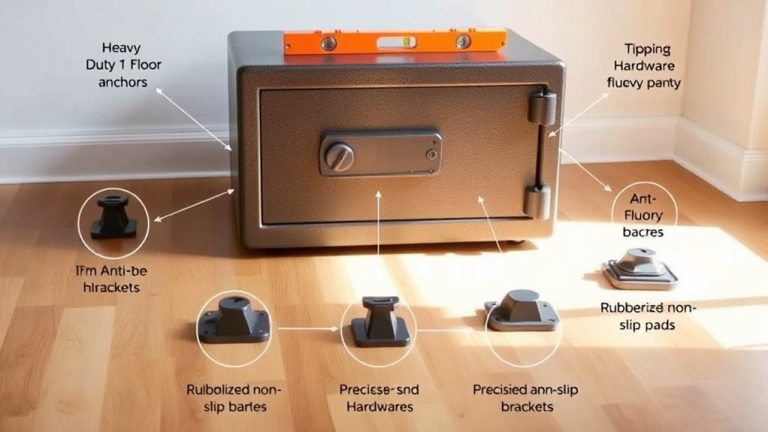
After choosing a structurally sound anchoring location upstairs, selecting the correct fasteners guarantees the gun safe remains securely in place. When anchoring a gun safe, use heavy-duty bolts suitable for your flooring type. Concrete floors require concrete anchors, while wooden floors need lag or toggle bolts, ensuring weight is evenly distributed.
Drill pilot holes to prevent wood splitting and position fasteners accurately. Remember, a safe weighing 1200 pounds exerts significant pressure, so multiple anchor points are essential. Always follow the manufacturer’s fastener recommendations for safe, compliant installation.
| Flooring Type | Recommended Fasteners |
|---|---|
| Concrete | Concrete anchors |
| Wood | Lag bolts |
| Wood (hollow) | Toggle bolts |
| Pilot Holes | Required for wood |
| Weight Load | Multiple anchor points |
Ensuring Secure Installation
Although installing a gun safe upstairs presents unique challenges, securing it properly is essential to prevent unauthorized movement and guarantee stability. When installing, you must bolt the safe to the floor to make certain it remains immobile. This is especially important on wooden floors that may need reinforcement.
Follow these steps for a secure installation:
- Assess the floor’s structural integrity to confirm it can support the safe’s weight.
- Measure and mark drill locations precisely to avoid misalignment.
- Use manufacturer-recommended anchors and bolts suitable for your floor type.
- Employ a level during installation to position the safe correctly and tighten all fasteners securely.
Taking these steps will help ensure your safe stays put and does its job properly. It’s worth the extra effort to make sure everything is solid and secure.
Planning for Safe and Easy Access to Your Gun Safe Upstairs
Because a gun safe can weigh over 1,000 pounds when fully loaded, you need to verify that your staircase and upper floor can structurally support this load before installation.
Make certain your stairs and flooring can handle the weight to prevent damage or injury.
Plan the route to place the safe upstairs carefully. Avoid tight corners and obstacles that complicate moving it, especially if you’re using equipment like a stair-climbing dolly.
Position the safe against exterior walls or in corners to evenly distribute weight and maintain stability on floors typically rated for 40 lbs per square foot.
Keep pathways clear for quick, unobstructed access in emergencies.
Regularly inspect the safe’s placement and accessibility.
Also, consult professionals to guarantee proper anchoring and secure installation for safe upstairs storage.
Frequently Asked Questions
What Types of Gun Safes Are Best Suited for Upstairs Installation?
For upstairs installation, you’ll want gun safes that prioritize fire safety and efficient weight distribution.
Choose lighter models under 600 pounds to reduce floor strain, with compact designs for easy placement.
Opt for safes featuring high fire ratings and advanced locking systems that evenly spread weight across floor joists. This helps protect your floors and keeps your firearms secure.
Also, look for humidity control features to protect your firearms from upstairs temperature fluctuations. This ensures both security and preservation of your guns over time.
How Does Humidity Upstairs Affect Gun Safe Contents?
Humidity upstairs can seriously affect your gun safe contents by causing rust and corrosion on metal parts.
Temperature fluctuations often lead to condensation inside the safe, which can damage firearms and ammunition.
You’ll need effective humidity control, like built-in dehumidifiers or desiccants, to keep moisture in check.
Regularly monitoring humidity levels with a hygrometer helps you adjust conditions promptly.
This way, you can make sure your guns stay protected from moisture-related damage in an upstairs environment.
Are There Insurance Implications for Placing a Gun Safe Upstairs?
Yes, placing a gun safe upstairs can affect your insurance coverage. Insurers often require safes to be bolted down securely, and upstairs placement may demand extra structural support to meet these terms.
You should inform your insurance provider about the location to guarantee compliance and avoid coverage gaps.
Proper installation upstairs can enhance theft prevention, which might even qualify you for discounts.
On the other hand, neglecting these factors could increase liability risks or lead to claim denials.
Can Placing a Gun Safe Upstairs Impact Home Resale Value?
Yes, placing a gun safe upstairs can positively impact your home resale value by enhancing home security, which many buyers prioritize.
You’ll appeal to families and enthusiasts who value thoughtful design and safety features.
However, you must address resale considerations like proper installation and weight distribution to avoid structural damage.
Ensuring the safe is well secured and protected from potential water damage further boosts buyer confidence and overall market appeal.
What Maintenance Is Required for a Gun Safe Located Upstairs?
You’ll love lugging that heavy safe upstairs just to check humidity levels and seals, right? For easy access, make sure to regularly inspect the seals to keep moisture out.
Also, keep an eye on humidity levels between 30-50% to prevent rust.
Since the safe is heavy, you need to ensure the floor can support it properly. It’s important to keep the safe anchored securely so it doesn’t shift or move.
Don’t skip professional maintenance every few years. Locks, hinges, and the overall structure need an expert’s attention to keep your safe working perfectly.
Conclusion
Putting a gun safe upstairs can be safe and practical if you carefully assess your floor’s weight capacity and staircase dimensions. Don’t underestimate the importance of professional movers and proper anchoring to prevent accidents or damage.
Have you thought about how easy and secure access to your safe will be on the second floor? It’s something worth considering before you make a decision. By planning thoroughly and using the right equipment, you’ll guarantee your gun safe is both secure and convenient, no matter where you place it.