Where to Put a Gun Safe?
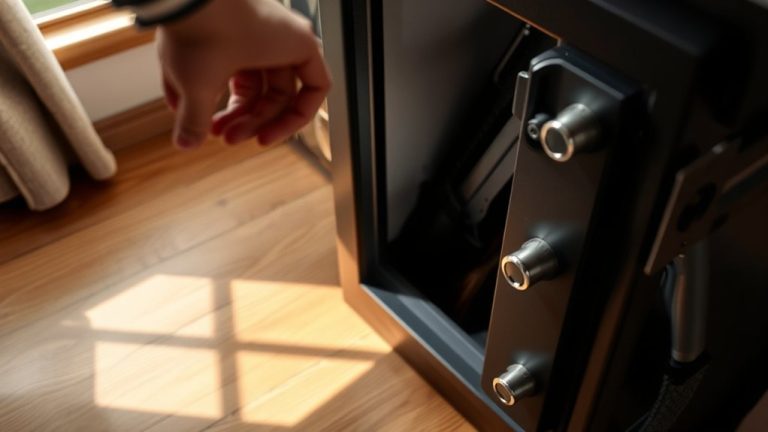
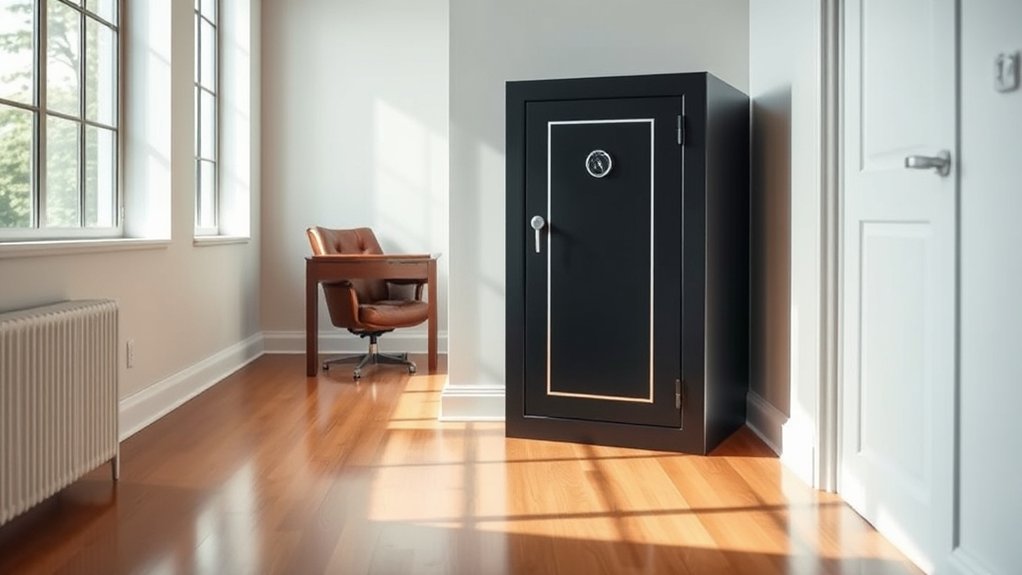
You should place your gun safe in a secure, low-traffic, climate-controlled spot. A good example is a basement corner away from moisture or a closet near a load-bearing wall. Make sure to anchor it properly to support its heavy weight and guarantee quick yet childproof access. Biometric locks can really help with that.
Also, be sure to follow local legal requirements. Linking your safe to your home security system adds an extra layer of protection.
Balancing safety, accessibility, and legal compliance is super important. Taking the time to explore best practices will definitely enhance your setup.
Why Security Is Crucial When Placing Your Gun Safe
When you place your gun safe, prioritizing security is essential to prevent unauthorized access and protect your firearms from both theft and environmental damage.
Effective gun safe placement means choosing a discreet, low-traffic area to minimize visibility and deter intruders. This helps keep your safe out of sight and adds a layer of protection against unauthorized access.
Place your gun safe in a discreet, low-traffic spot to reduce visibility and prevent unauthorized access.
It’s also important to position your safe away from moisture-prone zones. Doing so protects your firearms from humidity-related damage and helps preserve their condition over time.
Plus, following local legal requirements for safe placement isn’t just about rules—it strengthens your legal compliance and offers extra peace of mind.
At the same time, think about emergency accessibility. Your safe should allow quick access when you need it without compromising security.
Balancing security with convenience is key. When you plan your gun safe placement thoughtfully, you ensure your firearms stay both safe and protected no matter what.
Balancing Accessibility and Safety in Your Home
When you’re deciding where to put your gun safe, it’s important to find the right balance between quick access in an emergency and keeping it safe from kids.
Think about how visible and convenient the spot is. You want it to be secure, but also easy to get to when every second counts.
Try to pick a place that lowers the risk of accidents without making it hard for you to grab your firearms quickly.
It’s all about being smart with both safety and accessibility.
Emergency Access Planning
Although securing your firearms is paramount, you also need to make sure you can quickly access them during emergencies. One way to do this is by placing your gun safe near primary escape routes. Effective emergency access planning means balancing security with accessibility.
Choose a spot that’s discreet but easy to reach, like under a bed or in a closet. Make sure nothing blocks you from grabbing it fast. Using advanced locking mechanisms like biometric or keypad locks can keep it secure while allowing quick access.
It’s a good idea to practice emergency scenarios with everyone in your household. This helps familiarize them with where the safe is and how to open it.
Also, take a close look at your surroundings—furniture or clutter might slow you down when seconds count.
Child Safety Measures
To balance accessibility with child safety, you must place your gun safe where children can’t reach it, such as high shelves or locked closets. At the same time, make sure adults can still get to it quickly. Implementing child safety measures is critical to protect your firearms and prevent unauthorized access.
Using biometric locks or keypads is a smart move because it guarantees that only authorized adults can access your firearms quickly. It’s also important to educate children regularly about firearm safety to help them understand responsibility.
| Safety Aspect | Strategy | Benefit |
|---|---|---|
| Safe Placement | High shelves, locked closets | Limits child reach |
| Lock Type | Biometric, keypad | Quick, secure adult access |
| Additional Security | Cable & trigger locks | Extra layer to prevent access |
These measures work together to keep your home safe while still allowing easy firearm access for adults.
Visibility Versus Convenience
Since you need to balance quick access with security, placing your gun safe requires careful consideration of visibility versus convenience. You want a discreet location that keeps the safe hidden from unauthorized eyes, minimizing theft risk, yet still allows rapid retrieval in emergencies.
Avoid high-traffic or obvious spots that sacrifice security for convenience. Using biometric locks on bedside safes can enhance quick access without compromising safety from children or intruders.
Remember, a concealed safe improves security but may reduce convenience during urgent situations.
Regularly reassess your safe’s placement to guarantee it maintains this balance as household dynamics change.
Ultimately, prioritizing both visibility control and accessibility guarantees your gun safe protects your family while remaining practical when you need it most.
Best Rooms and Spots to Place Your Gun Safe
Choosing the right room or spot to place your gun safe greatly impacts both security and accessibility. Basements offer discreet storage and enhance the security of your firearms but demand moisture control to prevent damage.
Selecting the ideal location for your gun safe is key to balancing security and ease of access.
Closets in low-traffic areas provide hidden yet easy access, suitable for various safe sizes. Under-bed placement grants quick access to handguns but risks discovery by children, so you’ll want to be cautious.
Wall safes, installed behind decor, provide secretive storage ideal for handguns. However, proper installation is critical to maintain security.
Garages accommodate larger safes and collections, balancing accessibility during emergencies with theft prevention if properly secured.
Following best practices in the placement of your gun safe guarantees peak security of your firearms while maintaining easy access when needed. It’s all about finding that perfect balance between safety and convenience.
How to Anchor and Install Your Gun Safe Securely
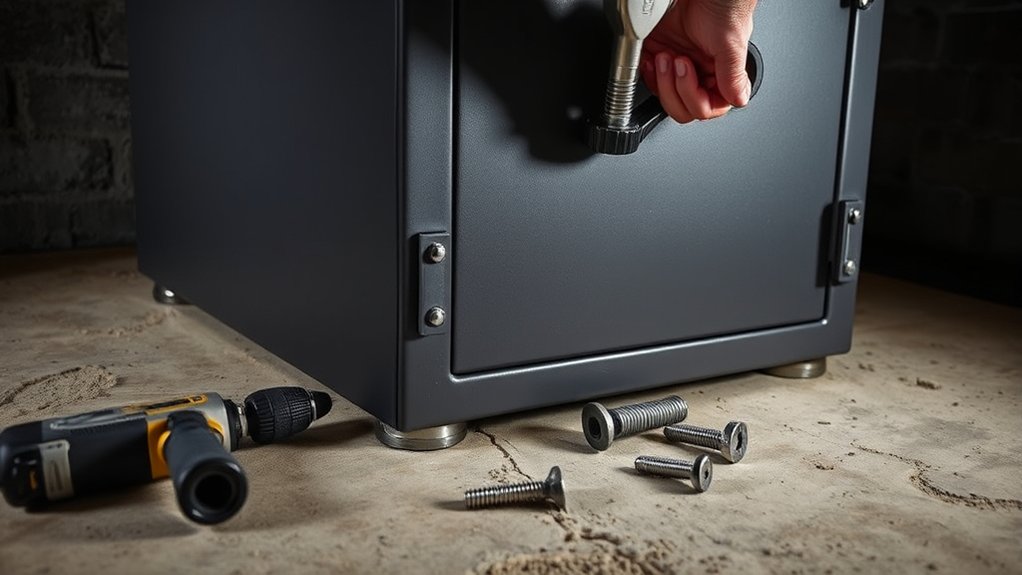
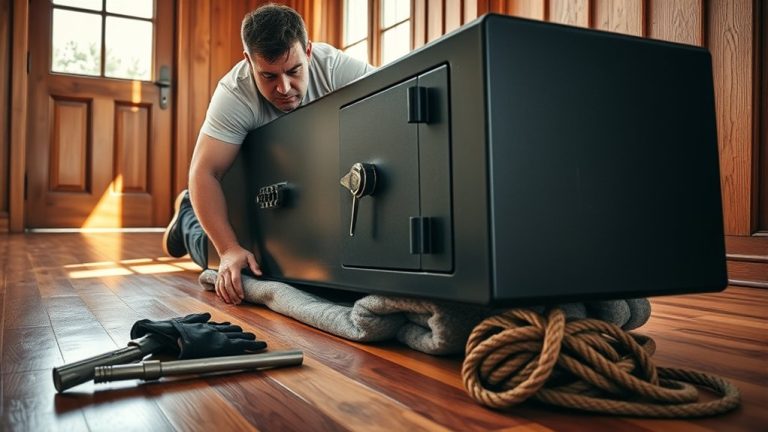
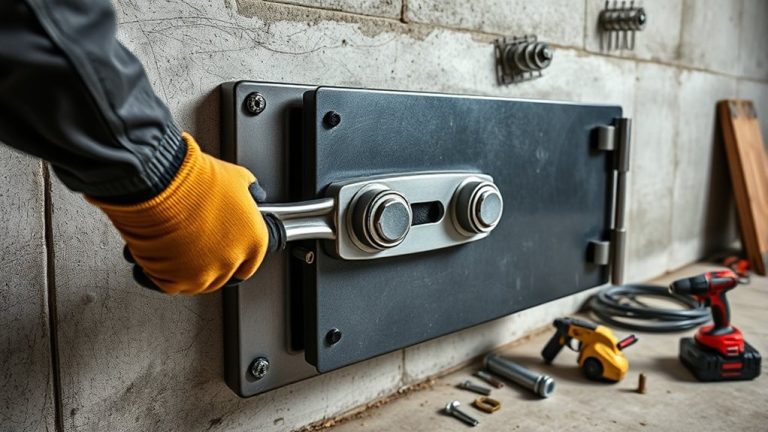
Although your gun safe’s location plays a crucial role in security, its effectiveness depends heavily on how well you anchor and install it. Use the manufacturer’s mounting kits designed to securely anchor your safe to the floor or wall, preventing tipping or theft.
Make sure to select anchor hardware suited to your safe’s weight and flooring type—concrete anchors for solid floors or lag bolts for wood. Drill precise pilot holes to maintain the safe’s structural integrity during installation.
After securing your safe, regularly inspect anchor points to verify they remain secure, especially if the safe is accessed often.
If you’re uncertain about placement or installation, particularly on upper floors or unusual spots, it’s a good idea to consult a professional. This approach guarantees your gun safe’s stability and security over time.
Ensuring Your Floor Supports Your Gun Safe
You’ll want to make sure you accurately assess your floor’s load-bearing capacity before placing a gun safe, especially since these safes can be really heavy.
It’s important to think about how the weight will be distributed so you don’t accidentally overload weaker spots, particularly if you’re putting it on an upper floor.
If you’re not sure how strong your floor is, it’s a good idea to check with a structural engineer—they can help you figure it out and keep everything safe.
Floor Strength Assessment
Before placing a gun safe, assess whether your floor can support its weight. Most residential floors handle between 40 to 60 pounds per square foot depending on construction and age.
Conduct a thorough floor strength assessment by evaluating the load-bearing capacity of the underlying structure. Try to position the safe near load-bearing walls or support columns to minimize risks of structural damage.
Consider the type of flooring. Concrete and hardwood floors offer better support compared to carpeted or tiled surfaces, which may not be strong enough.
If your safe is heavy and you’re installing it on an upper floor, it’s a good idea to consult a structural engineer. They can verify that the floor can safely bear the load.
Proper floor strength assessment helps prevent costly damage and ensures your gun safe stays stable and secure.
Weight Distribution Planning
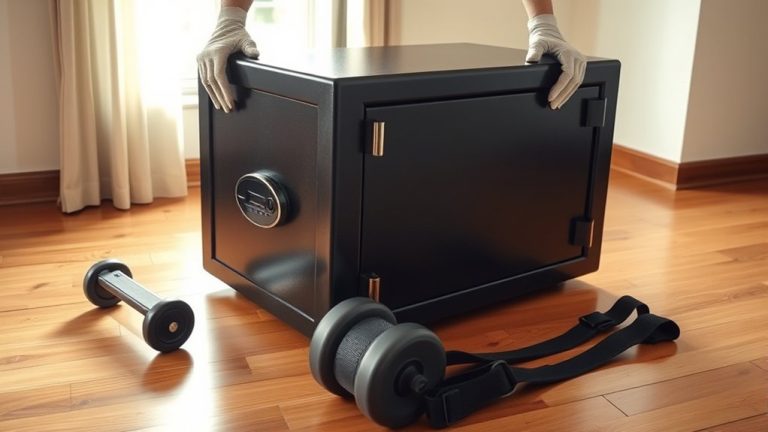
When placing a gun safe, guaranteeing proper weight distribution is essential to protect your floor from damage and maintain structural integrity. Start by evaluating your floor’s weight capacity since gun safes weigh between 500 to 1,000+ pounds.
Position the safe near load-bearing walls to evenly distribute weight and prevent floor damage. You can also use floor protection mats to further reduce stress. It’s a good idea to consult a professional to verify structural integrity, especially on upper floors or in older homes.
Regular inspections for sagging or cracks help detect early signs of floor damage. Keeping an eye on your floor’s condition will give you peace of mind and help avoid costly repairs down the line.
| Factor | Recommendation | Reason |
|---|---|---|
| Weight of Safe | 500 – 1,000+ lbs | Critical for load calculation |
| Placement | Near load-bearing walls | Guarantees proper weight distribution |
| Floor Protection | Use mats under safe | Prevents direct floor damage |
| Structural Integrity | Professional evaluation | Avoids risk of collapse |
| Maintenance | Regular floor inspections | Detects floor damage early |
Protecting Your Gun Safe From Moisture, Humidity, and Floods
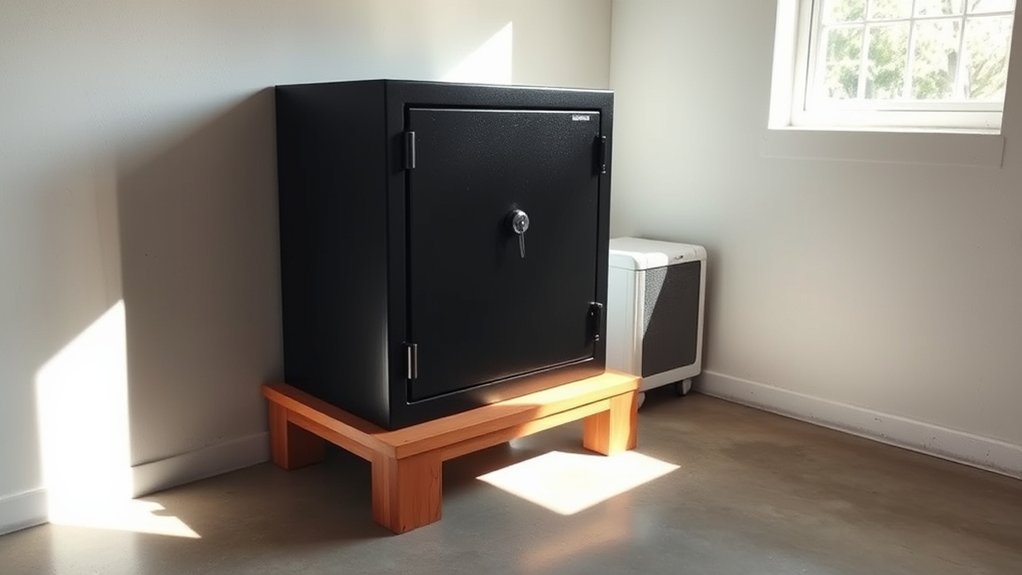
Since moisture and humidity can severely damage firearms, protecting your gun safe from these elements is crucial for long-term preservation.
Avoid placing your gun safe in basements or bathrooms, where high humidity and moisture prevail. Instead, position it in a climate-controlled environment to maintain stable environmental conditions.
Use dehumidifiers to regulate humidity inside the safe and prevent corrosion. Elevate the safe above potential flood levels to reduce flood risks.
Regularly inspect the interior for moisture buildup and use silica gel packs to absorb any excess humidity.
By actively managing these factors, you help ensure your firearms stay in prime condition. This way, you’re safeguarding your investment against damage caused by moisture, humidity, and floods.
Taking these steps also improves the durability and security of your gun safe over time.
Key Legal Rules for Gun Safe Placement
You need to make sure your gun safe placement complies with local laws. These laws often require specific security measures and location standards.
So, it’s important to double-check what those rules are in your area.
Also, don’t forget to review your insurance policy. Some insurers have placement requirements to keep your coverage valid in case of theft or damage.
Local Laws Compliance
Although gun safe placement requirements differ widely across states, you need to thoroughly research your local laws to ensure full compliance. Understanding specific regulations about safe location and locking mechanisms is critical. Non-compliance can result in fines or criminal charges.
Plus, insurance coverage might depend on meeting these legal standards. So, staying updated on any changes is key to maintaining ongoing compliance.
| State | Locking Mechanism Required | Safe Location Rule | Penalties for Non-Compliance | Insurance Impact |
|---|---|---|---|---|
| California | Biometric or Combination | Must be in locked room | Fines, possible charges | Full coverage if compliant |
| Texas | Key or Combination | No specific room requirement | Fines | Conditional coverage |
| New York | Combination lock | Must be secured to floor | Criminal charges possible | Full coverage if compliant |
| Florida | Any secure lock | No specific requirement | Fines | Dependent on compliance |
| Illinois | Biometric preferred | Must be inaccessible to minors | Fines, criminal charges | Full coverage if compliant |
Insurance Placement Requirements
When securing your firearms, insurance policies often require that gun safes meet specific placement criteria, such as being bolted to the floor, to guarantee full coverage.
To maintain insurance compliance, you must align your gun safe placement with both local regulations and your insurer’s standards. These rules affect your coverage options and may influence premium costs, as some providers offer discounts for approved safes.
Proper documentation is essential; you should keep detailed records of your safe’s location and security measures to support claims in case of theft or damage.
Regularly reviewing local laws and your insurance policy guarantees you stay compliant with evolving requirements. This helps safeguard your firearms and preserve your coverage.
Meeting these key legal rules is critical for effective protection and insurance validity.
Integrating Your Gun Safe With Home Security Systems
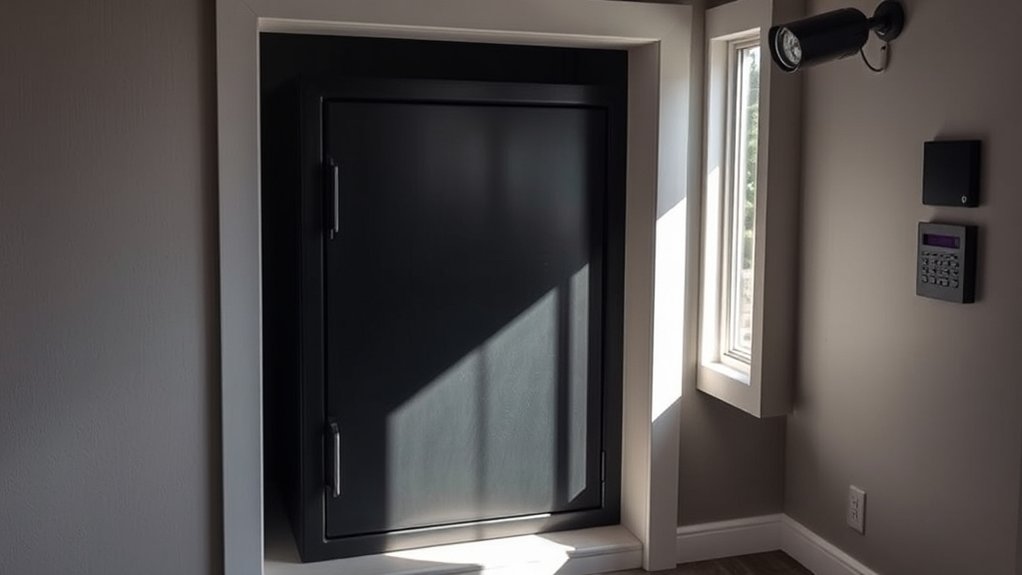
Position your safe within the view of security cameras to deter intruders and facilitate prompt review if a breach occurs.
Place your safe where security cameras can monitor it to discourage intruders and enable quick incident review.
Connect the safe to your home alarm system to trigger alarms instantly during unauthorized attempts.
Placing the safe near motion sensors adds another security layer by detecting suspicious movement nearby.
Opt for a fire-resistant safe to shield firearms from heat and flames, especially when integrated with fire suppression systems.
Documenting your safe’s location and its security features guarantees efficient insurance processing and strengthens liability protection.
Balancing Quick Access and Security for Your Gun Safe
Securing your gun safe demands striking a careful balance between rapid accessibility and robust protection. When placing your safe, prioritize an ideal location that guarantees quick access during emergencies. Bedrooms or near entry points work well but can compromise security if too exposed.
Discreet placements, such as closets or hidden rooms, enhance security but may delay access. Choose low-traffic areas to reduce discovery risk while still keeping the safe accessible.
Bolting down the safe adds security without hindering quick access, especially in strategic spots. Complement this with a well-designed home security system to alert you promptly and deter unauthorized entry.
Maintaining Your Gun Safe for Long-Term Protection
Although placing your gun safe correctly is crucial, maintaining it regularly guarantees its long-term protection and reliability.
You should regularly inspect the safe in an area with stable humidity levels to prevent corrosion. Use silica gel packs or dehumidifiers to control moisture inside.
Check lock mechanisms and hinges frequently to make sure they operate securely. This helps deter unauthorized access.
Periodic cleaning and lubrication of firearms prevent dust accumulation and mechanical wear.
Rotate firearm positions within the safe to avoid prolonged surface contact, preserving their condition.
Also, document the contents meticulously, including serial numbers and photographs. This can really help streamline insurance claims and recovery if theft occurs.
Consistent attention to these maintenance tasks guarantees your gun safe remains a secure, dependable storage solution for years.
Taking a little time now will save you headaches later!
Frequently Asked Questions
What Size Gun Safe Should I Buy for My Collection?
You should buy a gun safe with storage capacity that exceeds your current collection by at least 30%, considering safe dimensions to fit your longest firearm.
Factor in weight considerations for installation and guarantee the fire rating meets your protection needs.
Balance these features with your budget constraints, selecting adjustable interiors for organization.
Prioritize a safe that combines adequate size, durability, and affordability to secure and grow your collection efficiently.
Can I Use a Biometric Lock on My Gun Safe?
Can a biometric lock on your gun safe be a game changer? Absolutely. The biometric lock benefits include rapid access, often under a second, thanks to fingerprint scanner accuracy that rivals traditional keys.
You’ll find safe lock alternatives like backup keys helpful if batteries die. Compared to mechanical locks, the access speed is unmatched.
Just remember a few installation considerations. Keep sensors clean and batteries fresh to maintain reliability and security without compromise.
How Often Should I Change the Lock Combination?
You should change your lock combination every 6 to 12 months to keep your security in top shape.
Regular lock maintenance is important too. Check for any wear and make sure it operates smoothly, because worn locks might need an immediate combination change.
It’s also a good idea to think about upgrading your security. Look into options like biometric locks, especially after comparing different lock types for ease and safety.
Don’t forget to follow strict safe access protocols. Update your combinations after any major life changes to stop unauthorized access.
This way, you make sure your firearm security stays strong and reliable.
Are There Specific Brands Known for Reliable Gun Safes?
Over 70% of gun owners prioritize fire rating importance when choosing a safe. Brands like Liberty Safe and Cannon Safe excel in fire rating and offer durable safe material options.
Fort Knox stands out for heavy steel and customization, while Stack-On provides budget-friendly choices without sacrificing security.
When selecting, consider safe weight considerations and installation tips to optimize protection. You’ll find the right balance between cost, durability, and security with these trusted brands.
It’s all about matching what you need with what each brand offers.
What Additional Accessories Can Enhance Gun Safe Security?
You can enhance your gun safe security by adding safe lighting for better visibility and easy access in low light.
Incorporate fire protection features to safeguard your firearms from heat and flames. Moisture control, like dehumidifiers, prevents rust and damage.
Opt for customizable shelving options to organize your collection efficiently.
Finally, install security alarms to detect unauthorized access promptly, ensuring your safe remains both secure and functional at all times.
These little additions really make a difference in keeping your firearms safe and in good condition.
It’s all about making your gun safe work better for you.
Conclusion
When deciding where to put your gun safe, remember that striking the right balance between security and accessibility is key. You don’t want to lock yourself out of your own protection, but neither should it be an easy target.
Anchor it properly, choose a strong floor, and comply with legal guidelines to keep everything above board. By doing so, you’ll guarantee your investment remains safe and ready. It just goes to show that a stitch in time truly saves nine.