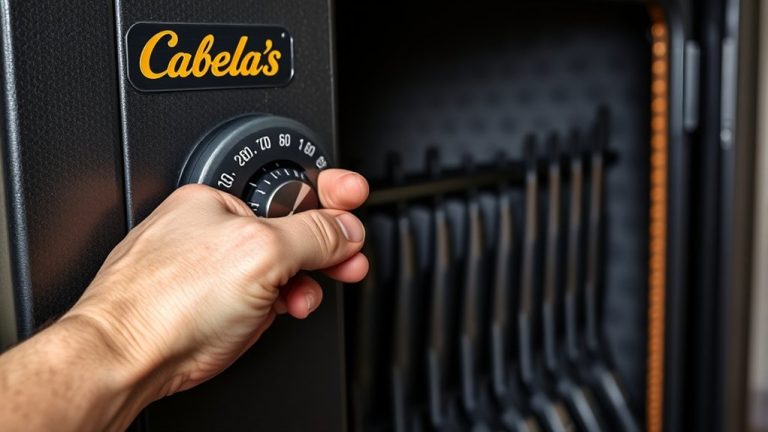
How Heavy Is a Gun Safe?
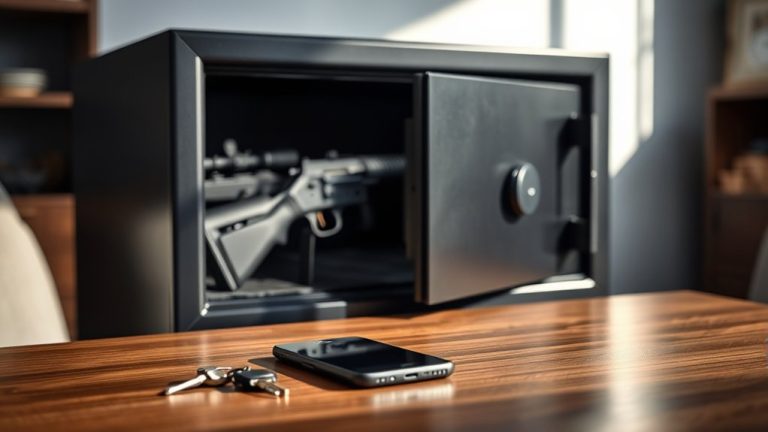
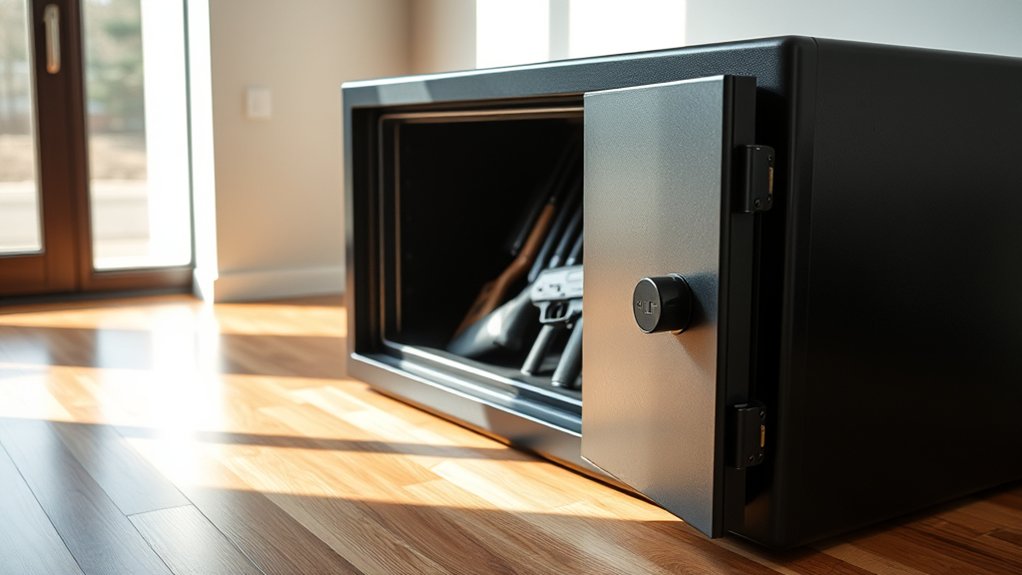
Gun safes typically weigh between 100 and 5,000 pounds, depending on their size, steel thickness, and fireproofing materials. Smaller models usually range from 100 to 300 pounds. On the other hand, larger, high-security safes can exceed 1,600 pounds or more.
Heavier safes often use thicker 12-gauge steel and multiple fireboard layers. This enhances protection but also means you’ll need reinforced flooring and specialized installation.
If you want to understand how these factors impact security and setup, keep exploring the details. There’s a lot to consider when choosing the right safe for your needs.
Key Factors That Influence Gun Safe Weight
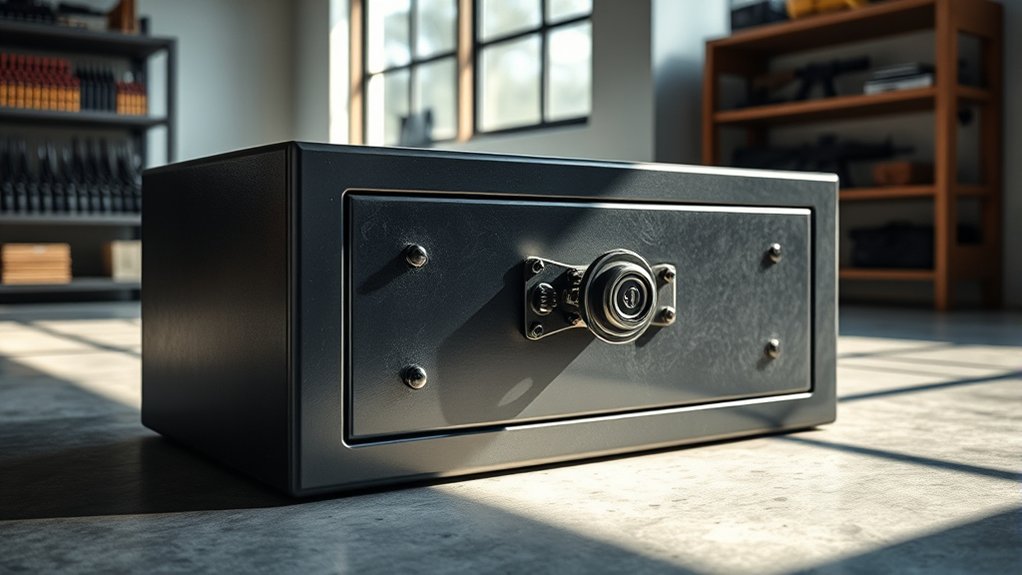
Several critical factors determine the weight of a gun safe, and understanding these can help you choose the right model for your needs. The weight of a gun safe largely depends on its size, but more importantly, gun safes come with varying thickness of steel, measured by gauge. A lower gauge steel, like 12-gauge, substantially increases weight and security compared to thinner 14-gauge steel.
Furthermore, multiple layers of fireboard insulation add weight while enhancing fire protection. Some safes incorporate concrete or composite liners, further increasing weight and reinforcing security.
These elements combined dictate not only the safe’s durability but also its installation requirements.
Impact of Gun Safe Size on Weight
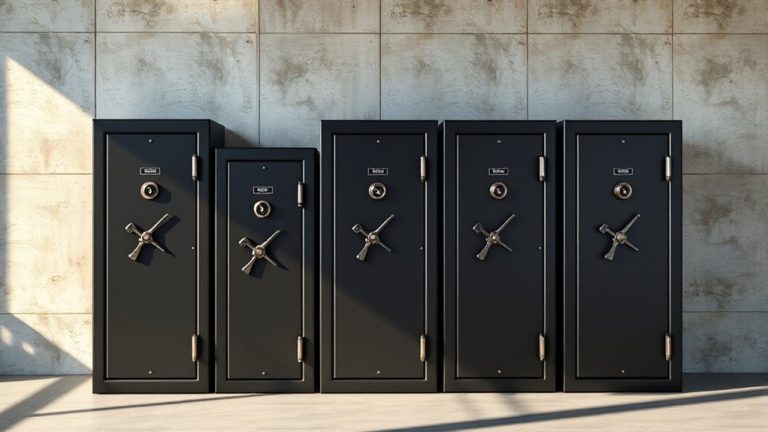
Although gun safe weight varies widely, size remains one of the most significant factors influencing it. Larger gun safes typically weigh more because they require more materials, including thicker steel, fireboard insulation, and extra shelving. This added weight boosts security and storage capacity but can make installation trickier.
| Gun Safe Size | Typical Weight (lbs) |
|---|---|
| Small | 100 – 300 |
| Medium | 300 – 900 |
| Large | 550 – 1100 |
When you’re thinking about gun safes, keep in mind that size has a direct impact on weight. Larger safes, which are built to hold 30 to 60 firearms, need stronger construction, so they end up heavier. Finding the right size means balancing how much you need to store with practical stuff like weight and how easy it is to install.
The Role of Steel Gauge in Gun Safe Weight and Security
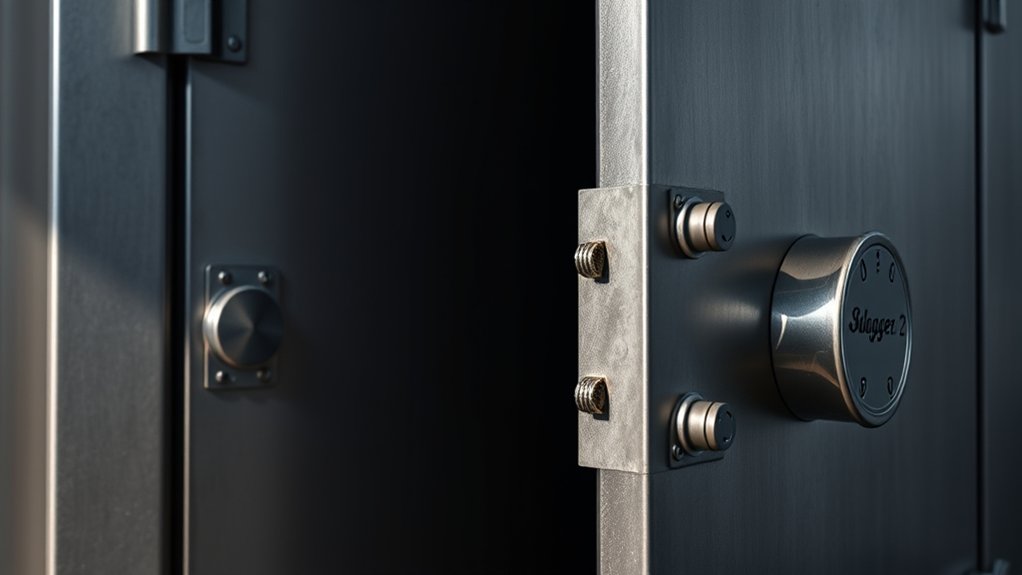
Steel gauge plays an essential role in determining both the weight and security of a gun safe. The gauge measures steel thickness; lower numbers mean thicker, heavier steel that boosts durability and protection.
For example, safes made from 12-gauge steel are significantly stronger than those using 14-gauge, offering superior resistance to break-ins.
Quality gun safes typically weigh more because they use lower gauge steel, often ranging from 7 to 12 gauge, balancing weight with security. The heavier steel increases a safe’s overall mass and burglary resistance, making it harder to breach or move.
When you choose a gun safe, understanding steel gauge helps you assess how weight correlates with security. This way, you can pick a model that meets your protection needs without unnecessary bulk.
It’s all about finding the right balance for you.
How Fireboard Layers Affect Gun Safe Weight and Protection
Beyond the impact of steel gauge on a gun safe’s weight and security, the layers of fireboard insulation also play a significant role in both mass and protection.
You’ll find that safes with thicker or multiple fireboard layers, ranging from 5/8 to 2 inches, weigh more due to added insulating materials. This added weight directly correlates with enhanced fire protection, as increased fireboard thickness improves insulation against extreme heat and flames.
When choosing a gun safe, consider that heavier models often include superior fireboard configurations. This provides greater assurance that your valuables will withstand fire damage.
So, the number and thickness of fireboard layers determine not only the safe’s heft but also its effectiveness in fire protection.
That makes this a critical factor in your selection process. Keep it in mind when you’re shopping around for the right safe.
What Makes Gun Safe Designs Heavier

When you evaluate gun safe designs, the weight often reflects the thickness and quality of materials used, including high-grade steel ranging from 12-gauge to 7-gauge. Gun safes typically weigh more as manufacturers add layers like fireboard insulation, concrete liners, and extra steel to boost security and fire resistance.
These design decisions directly influence the safe’s heft and durability. So, the heavier the safe, usually the tougher it is.
| Design Element | Material Thickness | Impact on Weight |
|---|---|---|
| Steel Gauge | 12 to 7-gauge | Heavier, tougher structure |
| Fireboard Layers | 5/8 to 2 inches | Adds significant weight |
| Concrete Liners | Varies | Increases overall mass |
Understanding these factors helps you grasp why gun safes typically weigh so much. It also shows how design choices balance security with weight.
Weight Ranges for Different Gun Safe Sizes
The weight of a gun safe varies considerably depending on its size and intended use. Entry-level gun safes typically weigh between 200 and 600 pounds. They’re suitable for small collections and offer relative portability.
Mid-range safes fall within the 600 to 1,000-pound weight range. They strike a balance between security and mobility for most users. So, if you want something sturdy but not too heavy, this might be your sweet spot.
High-end gun safes weigh from 1,000 to 1,600 pounds. These offer enhanced protection thanks to thicker steel and additional fireboard layers.
Commercial-grade models are designed for maximum security and range from 2,000 to 5,000 pounds. These weight ranges reflect the connection between size, materials, and security features.
When selecting a gun safe, understanding these weight ranges helps you figure out the level of protection and practicality you need based on your specific storage requirements.
It really comes down to what fits your situation best.
Why Heavy Gun Safe Weight Improves Security and Fire Resistance
Although heavier gun safes might seem cumbersome, their substantial weight directly enhances both security and fire resistance. The heavy gun safe weight, often exceeding 1,000 pounds, comes from thicker steel walls, usually between 12-gauge and 7-gauge, along with multiple layers of fireboard insulation. This combination makes the safe much harder to break into and tough to move or tamper with.
Plus, concrete or composite liners add extra weight and structural strength. That means the safe can better withstand burglary attempts and extreme heat.
The extra weight also means the safe needs a reinforced installation, which helps keep it stable and prevents unauthorized removal.
Comparing Heavy Duty Gun Safe Weight and Security Features
When you’re comparing heavy-duty gun safes, you’ll notice that the heavier the safe, the more secure it tends to be.
That’s because the extra weight usually comes from thicker 12-gauge steel and several layers of fireboard. These materials don’t just add heft—they also boost the safe’s ability to withstand fire and prevent break-ins.
Weight Versus Security
If you want ideal protection for your firearms, you’ll find that heavier gun safes offer remarkably better security features. Gun safes weighing between 1,000 and 1,600 pounds incorporate robust materials and construction techniques that greatly deter theft and resist fire damage.
Their weight comes from thick steel, multiple fireboard insulation layers, and reinforced locking mechanisms, such as 20 solid steel locking bolts. These elements boost both physical security and fire resistance.
Plus, features like concrete or composite liners add structural integrity, making these safes tough to move or break into. When you’re choosing a gun safe, knowing how increased weight links to security strength helps you focus on protection.
That way, you can be confident your firearms stay secure against forced entry and environmental hazards. It’s all about finding the right balance between weight and safety.
Steel Gauge Impact
Because the steel gauge directly affects a gun safe’s weight and durability, understanding this measurement is essential when evaluating security features. The steel gauge indicates thickness: lower numbers mean thicker, heavier steel. For example, 12-gauge steel is considerably thicker and heavier than 14-gauge, offering enhanced resistance against break-ins.
Heavy-duty gun safes often use steel gauges ranging from 10 to 7, which increases their weight, sometimes exceeding 1,600 pounds, and improves durability. This thickness not only adds mass but also strengthens the safe’s structural integrity. That makes it far more difficult for intruders to penetrate.
When comparing gun safes, focus on the steel gauge. It’s a critical factor that directly correlates with both the safe’s weight and its ability to protect your firearms and valuables effectively.
Fireboard Layers Effect
Although steel gauge largely determines a gun safe’s weight and durability, the fireboard layers play a crucial role in enhancing both fire protection and overall mass. These layers, typically ranging from 5/8 to 2 inches thick, notably increase the safe’s weight due to the added insulation material.
When you choose a heavy-duty gun safe, such as one weighing around 689 lbs, the substantial fireboard layers not only boost fire resistance, offering up to one hour of protection at 1875°F, but also enhance security against burglary by increasing the safe’s overall mass.
Keep in mind, the additional weight from these fireboard layers affects installation requirements and flooring support.
How Gun Safe Weight Affects Installation and Flooring Needs
Heavy gun safes exceeding 1,000 pounds demand careful consideration of your home’s flooring and structural support before installation.
Gun safes typically weigh less on concrete floors, which naturally support heavy loads. But if your safe sits on wood or tile, you’ll likely need reinforcement to prevent damage or structural failure.
Concrete floors support heavy safes naturally; wood or tile floors often require reinforcement to avoid damage.
Since gun safes typically weigh hundreds to over a thousand pounds, evaluating the installation area’s load-bearing capacity is vital, especially in multi-story homes.
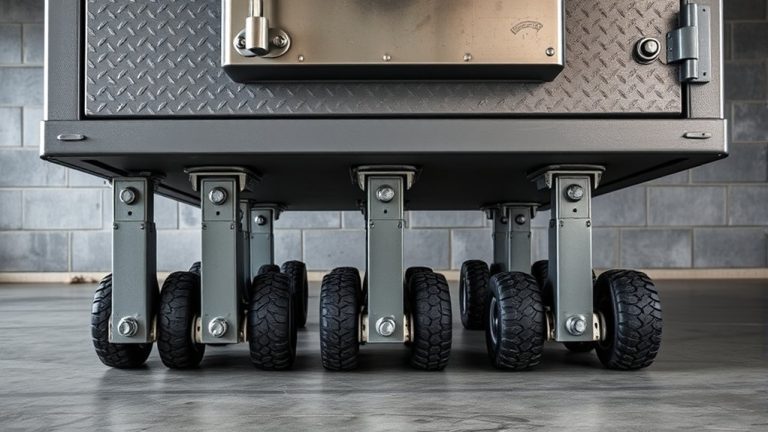
You’ll also require specialized moving equipment to handle the safe safely during transport and positioning.
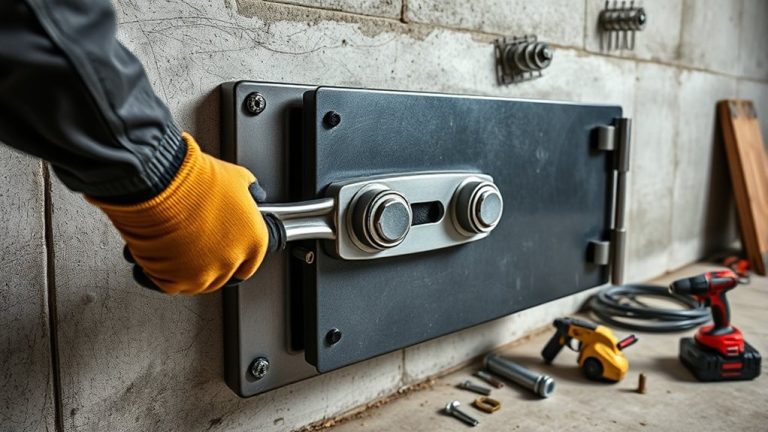
Anchoring the safe to the floor is essential. It stabilizes the unit, preventing tipping and enhancing security against theft.
Ignoring these factors risks costly damage and compromises both safety and protection. So, it’s definitely worth taking the time to get it right.
Tips for Choosing the Right Weight Gun Safe for Your Needs
Selecting the right weight for your gun safe means finding a good balance between storage capacity, security, and how easy it is to install. Gun safes usually weigh anywhere from 600 to over 1,600 pounds. The heavier ones tend to offer more space and better protection.
You’ll want to think about steel thickness and the number of fireboard layers. These add weight but also make the safe more durable and fire resistant. Also, make sure your floor can handle the safe’s weight, especially if it’s over 1,000 pounds. Sometimes, you might need to reinforce the floor.
| Factor | Recommendation |
|---|---|
| Firearm Quantity | Heavier safe for larger collections |
| Steel Thickness | 12-gauge for durability |
| Fire Protection | Multi-layer fireboard preferred |
| Floor Support | Reinforced flooring if >1,000 lbs |
| Installation | Plan for specialized equipment |
Pick a weight that matches your security needs but doesn’t make installation a headache.
Frequently Asked Questions
How Does Humidity Affect the Weight of a Gun Safe Over Time?
Humidity affects your gun safe’s weight over time primarily through moisture impact. As moisture accumulates inside, materials like fireboard insulation absorb water, increasing the safe’s weight.
Without humidity control, rust can form on metal parts, adding corrosion mass. This moisture impact not only raises weight but also compromises structural integrity.
Can Adding Shelving or Accessories Significantly Change a Safe’s Weight?
Yes, adding shelving or accessories can greatly change your safe’s weight. Shelving materials like steel add more pounds compared to lighter composites.
If you install fireboard layers within shelves for extra protection, expect further weight increases.
Door organizers and compartments also contribute extra pounds.
You should analyze the cumulative effect of these additions, as they can increase your safe’s weight by 10 to 50 pounds or more.
This can impact installation and mobility considerations.
Does the Type of Locking Mechanism Impact the Overall Weight?
Yes, the locking mechanism impacts the overall weight considerably.
When you choose a gun safe with solid steel locking bolts or biometric locks, you’re adding extra material and structural reinforcements, which increase the weight.
Digital keypads and multiple locking points also contribute additional components.
So, the complexity and security level of the locking mechanism directly affect the safe’s total weight.
This makes it heavier compared to simpler, traditional locks.
How Does Gun Safe Weight Influence Transportation and Moving Costs?
Gun safe weight directly impacts transportation logistics by increasing the need for specialized moving equipment and trained labor.
You’ll face higher costs because heavier safes often require freight shipping instead of standard delivery.
Plus, you might need to reinforce flooring at the installation site to support the load, which adds expenses.
Insurance premiums rise too, reflecting the greater risk and value during transit.
Planning carefully can help you manage these transportation challenges efficiently.
It’s all about being prepared and knowing what to expect when moving something this heavy.
Are There Weight Limits for Gun Safes Based on Building Codes?
Yes, weight regulations often impose limits on gun safes based on building codes.
You’ll need to take into account your floor’s structural capacity, especially in multi-story buildings. Concrete floors handle heavier safes, but wood or tile may require reinforcement if the safe exceeds 1,000 pounds.
Always check local codes and consult a structural engineer to guarantee your safe complies with weight regulations and doesn’t compromise your building’s integrity.
It’s better to be safe than sorry when it comes to protecting both your valuables and your home’s structure.
Conclusion
When it comes to gun safes, weight isn’t just a number. It’s your first line of defense. You can’t compromise on the size, steel gauge, or fireboard layers without risking security and protection.
Remember, a heavier safe often means stronger resistance against theft and fire. So, before you buy, think about how the weight impacts installation and floor integrity.
After all, a gun safe’s weight carries the heavy burden of safeguarding what matters most to you.