Is a Gun Safe a Faraday Cage?
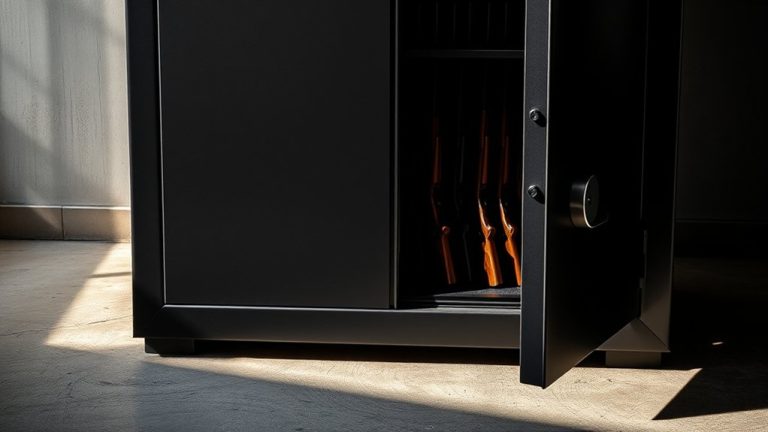
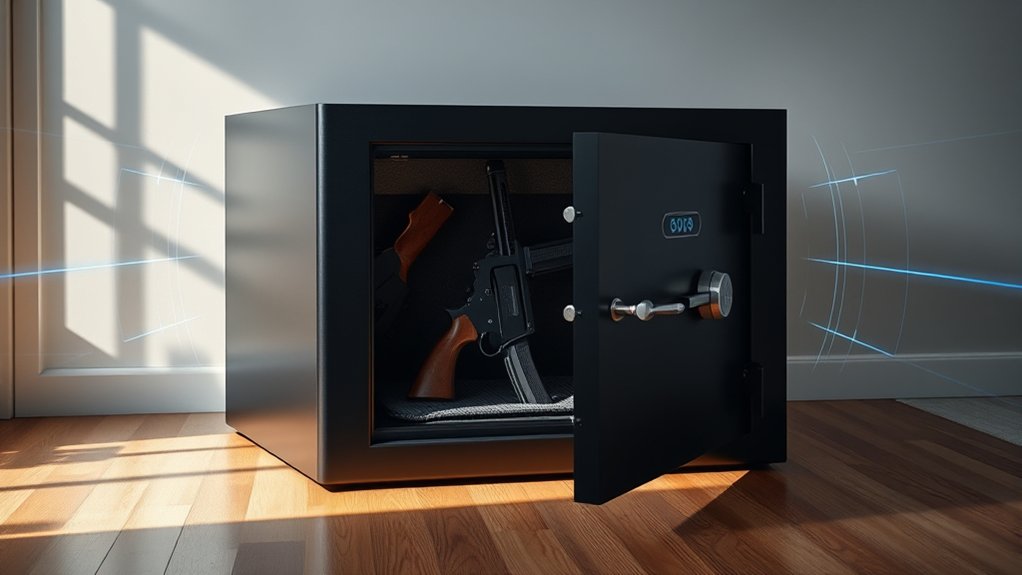
You can’t rely on a standard gun safe as a Faraday cage because its seams and gaps let EMP energy in. This can potentially damage sensitive electronics like digital locks. Without specialized conductive gaskets and shielding, it won’t block electromagnetic pulses effectively.
Mechanical locks do better in these situations. But if you want to protect digital components, you’ll need modifications like conductive seals or adding inner Faraday cages. To learn how to upgrade your safe and test its EMP resilience, keep exploring the critical protection steps.
Can a Standard Gun Safe Effectively Block EMPs?
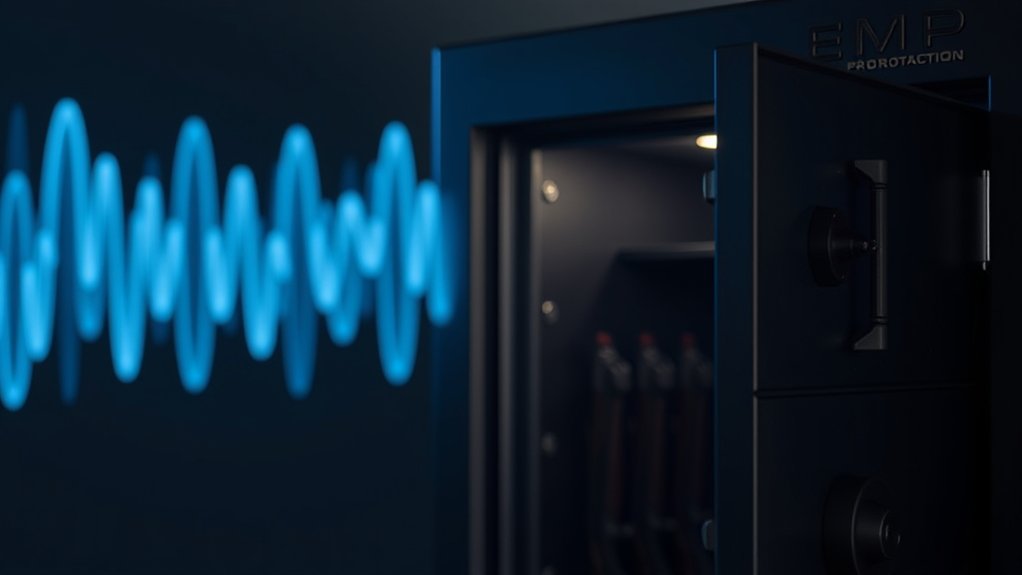
Can a standard gun safe effectively block electromagnetic pulses (EMPs? The short answer is no. Standard gun safes aren’t constructed to function as a Faraday Cage, which is specifically designed to block electromagnetic fields.
Their seams and gaps allow RF radiation from EMPs to penetrate, compromising internal electronics.
Seams and gaps let EMP radiation in, risking damage to electronic components inside.
Without specialized EMP shield features like conductive gaskets or sealed joints, these safes provide limited protection against electromagnetic interference.
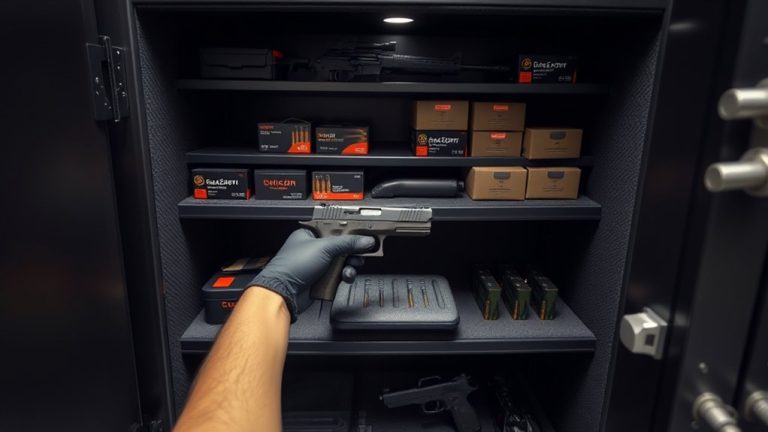
While firearms remain secure, any digital components inside, including electronic locks, remain vulnerable to EMP damage.
To achieve true EMP shielding, significant modifications are necessary, transforming a typical gun safe into a functional Faraday Cage.
Why Digital Locks in Gun Safes Fail During EMPs
While a standard gun safe may keep your firearms secure, its digital lock often remains vulnerable during an EMP event. Digital locks rely on sensitive electronic components that can be irreparably damaged by EMP energy. When an EMP generates high-voltage surges, it induces currents in the lock’s circuitry, causing malfunction or total failure.
Most gun safes lack proper EMP shielding, allowing electromagnetic pulses to penetrate through seams and gaps, directly affecting digital locking mechanisms. This vulnerability means you could be locked out of your safe precisely when access is essential.
Although some shielding methods exist, they rarely guarantee full protection against EMP energy. Understanding this weakness is vital if you depend on digital locks for security during EMP scenarios.
Easy Ways to Shield Your Safe’s Digital Lock
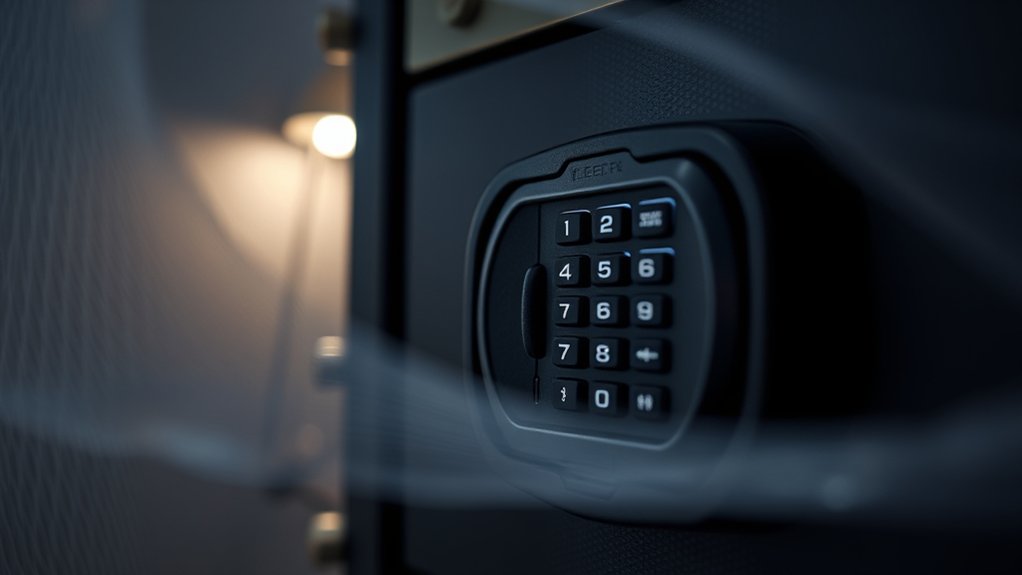
You can protect your safe’s digital lock from EMP damage by covering it with conductive materials like aluminum foil or specialized cloth secured by magnets. It’s a simple trick that works surprisingly well.
Also, making sure your safe door is made of steel and sealing its seams with conductive gaskets helps cut down electromagnetic interference even more.
Plus, don’t forget to keep up with regular maintenance on these barriers—it’s the best way to make sure your lock stays reliably shielded against RF radiation.
Conductive Covers For Locks
Although digital locks offer convenience, they remain vulnerable to electromagnetic pulses (EMPs) unless properly shielded. One effective method to enhance protection is covering your lock with a conductive material, such as aluminum foil or conductive cloth. These materials act as mini Faraday cages, blocking harmful electromagnetic fields that could disable your lock.
You can secure conductive cloth with magnets, allowing quick access while maintaining reliable shielding against RF radiation.
Plus, the steel door itself serves as a conductive surface, which boosts the shield’s effectiveness when combined with proper sealing techniques around the lock.
While conductive covers considerably reduce EMP risks, keep in mind that mechanical locks inherently resist EMPs.
Sealing Door Seams
Because even small gaps in your gun safe’s door seams can let electromagnetic radiation in, sealing these openings is super important to keep your Faraday cage protection working well.
Take some time to check the seams and gaps around the door carefully. If you find any standard rubber stoppers, swap them out for conductive gaskets.
These conductive gaskets make a tighter, more reliable seal, which seriously cuts down the risk of EMP interference. When you apply adhesive conductive gaskets straight to the door frame, it ensures consistent contact. That way, RF radiation doesn’t get a chance to sneak into your safe.
Don’t forget regular maintenance—seals can wear out over time and mess with your protection. By taking care of seams and gaps with conductive materials, you’re boosting your safe’s defenses.
This helps keep its digital lock safe from EMP damage both efficiently and effectively.
How Gaps and Seams Let EMPs Into Your Gun Safe
When gaps and seams exist in your gun safe’s construction, they become entry points for electromagnetic pulses (EMPs) to penetrate and disrupt the electronics inside.
These small openings compromise the Faraday cage effect, allowing EMP energy to bypass the conductive barrier.
Critical vulnerabilities include door seams where panels meet, creating continuous gaps.
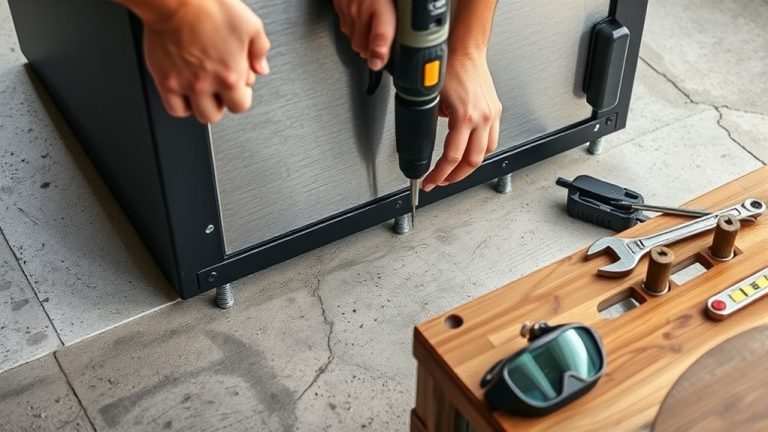
Mounting holes and hardware penetrations break the conductive enclosure.
Inadequate or worn seals fail to maintain conductivity across joints.
Even the smallest gap can greatly degrade your safe’s EMP resistance.
To maintain a true Faraday cage, you need to address these weak points by making sure all seams and gaps are properly sealed with conductive materials.
Without this, your safe’s electronic security measures stay exposed to potentially debilitating EMP interference.
Upgrade Your Safe’s Door Seals to Block EMPs
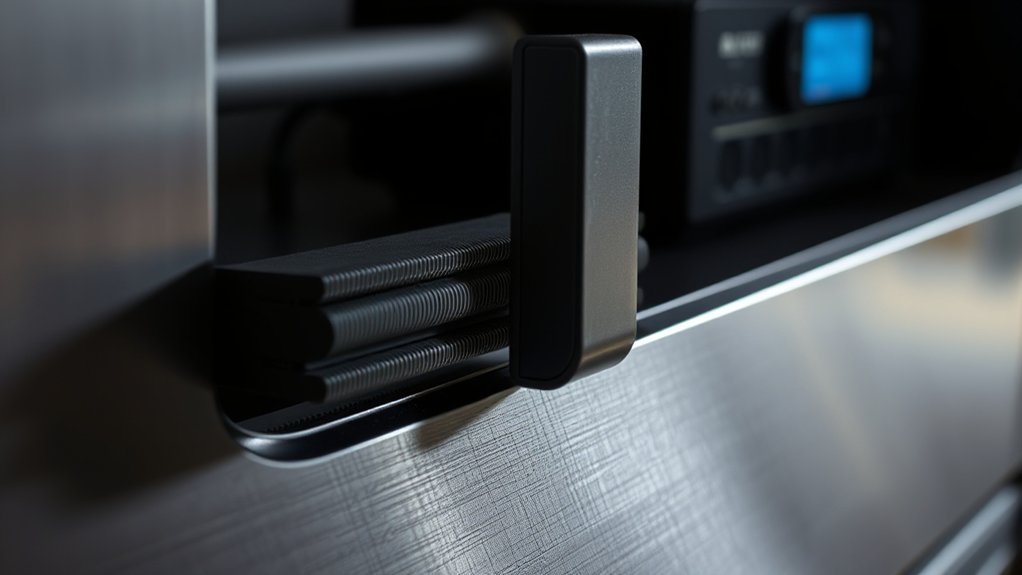
To effectively block EMPs, you need to upgrade your gun safe’s door seals with conductive gaskets that eliminate gaps where electromagnetic radiation can enter.
Standard rubber stoppers won’t provide EMP proof protection. Replacing them with conductive materials greatly enhances the safe’s shielding.
Before installation, sanding down paint on the door frame guarantees proper conductivity and effective grounding of the gasket.
These conductive gaskets fit easily onto your gun safe’s door or frame without hindering its operation. They create a tighter seal against RF energy.
To maintain EMP proof integrity, inspect and maintain these seals regularly.
Wear or damage can compromise protection. Upgrading your safe’s door seals is a critical, straightforward step to reduce vulnerability and improve EMP resilience.
Protect Power Cords and Electronics Inside Your Safe
Upgrading your safe’s door seals greatly reduces EMP penetration, but the protection doesn’t stop there. Power cords for devices inside your safe can act as EMP conduits, bypassing your efforts.
To protect electronics effectively, focus on these key strategies:
Install broadband ferrite cores on all power cords entering the safe to suppress EMP energy before it passes through. Avoid relying on tape around cord entry points; it won’t provide meaningful EMP shielding and may compromise the safe’s integrity.
Verify any modifications preserve the safe’s overall sealing to maintain its EMP-resistant performance.
Regularly inspect ferrites and sealing measures to confirm they remain intact and effective. This layered approach fortifies your safe’s defenses against EMP-induced damage to sensitive electronics inside.
Taking these steps really makes a difference when it comes to keeping your gear safe.
Adding a Secondary Faraday Cage Inside Your Gun Safe
Although your gun safe provides a solid barrier against electromagnetic pulses, adding a secondary Faraday cage inside greatly enhances protection for your sensitive electronics and firearms.
Construct this inner cage from conductive materials like aluminum or copper to effectively block electromagnetic fields. Guarantee all seams and gaps use conductive gaskets to maintain a continuous shield, preventing RF radiation intrusion.
Use conductive materials and gaskets to ensure a seamless Faraday cage that blocks electromagnetic fields effectively.
The space between the safe’s interior and the Faraday cage offers an ideal area to incorporate additional protective layers, improving overall EMP resistance.
This dual-layer approach considerably reduces the risk of damage from electromagnetic interference. By integrating a secondary Faraday cage inside your safe, you create a robust, multi-tiered defense system that maximizes electromagnetic shielding for your valuables and critical electronics.
How to Test Your Gun Safe’s EMP Shielding Effectiveness
Adding a secondary Faraday cage inside your gun safe boosts its EMP protection, but you still need to verify how well your safe blocks electromagnetic interference.
Testing your safe’s EMP shielding effectiveness guarantees it can withstand RF radiation and other threats.
Use these methods to test your safe:
- Place a powered cell phone inside and call it. If it rings, the safe isn’t shielding properly.
- Wrap sensitive electronics in aluminum foil, then put them inside the safe near a microwave. If the device keeps working, that signals inadequate shielding.
- Run a Wi-Fi analyzer app inside the safe to measure signal strength. A significant drop confirms effective RF radiation blocking.
Regularly inspect seals and gaskets to maintain airtight protection against EMPs and electromagnetic interference.
It’s a small step that makes a big difference in keeping your gear safe.
Best Products and DIY Mods for EMP-Proof Gun Safes
When you want to guarantee your gun safe offers robust EMP protection, choosing the right products and implementing effective DIY modifications is essential.
Start by installing conductive gaskets around your safe’s seams to block electromagnetic radiation effectively. Upgrade to EMP-resistant locks to maintain reliable access post-EMP without electronic failure.
Enhancing the safe’s interior with a conductive lining, like aluminum foil or conductive cloth, further strengthens shielding. For safes with power cords, apply broadband ferrite filters to suppress incoming EMP energy.
To verify your modifications’ success, test shielding effectiveness by checking for cell phone reception inside the safe. If there’s no signal, that’s a good sign your EMP blocking is strong.
These targeted upgrades and tests assure your gun safe functions as a reliable shield against disruptive electromagnetic pulses.
What Is a Faraday Cage and How It Protects Your Gun Safe From EMP?
Since a Faraday cage is designed to block electromagnetic fields using conductive materials, it plays a critical role in protecting your gun safe from EMP damage. A Faraday cage creates a continuous conductive barrier that redirects electromagnetic pulses, preventing them from penetrating and damaging sensitive electronics like digital locks.
However, standard gun safes aren’t true Faraday cages because they’ve gaps and seams that allow EMP energy in. To guarantee effective EMP protection, you need to seal seams with conductive gaskets to maintain a continuous conductive surface.
You also want to line the interior with conductive materials to reduce RF radiation exposure.
And it’s a good idea to shield vulnerable digital locks with conductive wraps, such as aluminum foil.
With these proper modifications, your gun safe can be transformed into a functional Faraday cage. This way, you’ll safeguard your firearms and electronics from EMP threats.
Frequently Asked Questions
Can a Gun Safe Protect Against Other Types of Electromagnetic Interference?
Yes, a gun safe can offer some electromagnetic shielding against various interference types, but its effectiveness really depends on the design quality.
You’ll find that metal construction helps block certain frequencies, but gaps in seams or poor seals reduce protection.
To reliably shield against diverse interference, you need conductive gaskets and tight seals.
Regular maintenance is key to making sure the safe continues to provide proper electromagnetic shielding against different interference types you might encounter.
Are There Specific Materials Better Than Aluminum Foil for EMP Protection?
You’ll find copper mesh and steel are among the best shielding materials for EMP protection. They outperform aluminum foil because they’ve better conductivity and durability.
Conductive fabrics with silver or nickel offer flexible, alternative protective methods, especially if you need something portable.
Layering materials like aluminum and copper can boost shielding by combining their strengths.
Carbon-based materials like graphene show some promise, but they’re not mainstream yet.
How Often Should EMP Shielding in a Gun Safe Be Inspected or Maintained?
Picture your gun safe as a fortress against EMP frequency attacks. Don’t let its shielding effectiveness fade. You should inspect and maintain your EMP shielding at least once a year, following strict inspection guidelines.
Include a maintenance routine with biannual functional tests, like the cell phone ring test, to detect leaks.
Environmental shifts can weaken seals, so stay vigilant. Keep detailed records to track performance and guarantee your safe’s defense remains impenetrable.
Can EMP Protection Affect the Safe’s Fire Resistance or Durability?
Yes, adding EMP protection can affect your safe’s fire resistance and durability. When you install conductive materials for shielding, you risk compromising the fireproof materials originally designed to withstand high temperatures.
These additions might create gaps or reduce heat resistance, raising durability concerns.
To keep things balanced, it’s important to carefully weigh EMP shielding against the safe’s fireproof integrity.
Regular inspections are a good idea, too, to make sure neither feature gets weakened over time. That way, you can have peace of mind knowing both protections are working as they should.
Are There Commercial Gun Safes Pre-Built With EMP Protection Features?
Just like a knight’s armor evolves, commercial gun safes now come with built-in EMP shielding.
You’ll find models boasting advanced safe design that integrates conductive materials and sealed enclosures, enhancing security features against electromagnetic pulses.
However, these upgrades often raise cost considerations, so you’ll need to balance protection and budget carefully.
Researching product specs and reviews guarantees you select a safe that meets your EMP protection needs effectively.
Conclusion
You might think your gun safe offers solid EMP protection, but the truth is far less reassuring. Standard safes aren’t designed as Faraday cages. They let harmful pulses sneak through seams and digital locks.
Don’t leave your security to chance. Upgrading seals or adding a secondary Faraday cage inside could be the difference between total protection and unexpected failure. Ready to test and fortify your safe? The security of your arsenal depends on what you do next.