7 Steps to Keep a Gun Safe From Tipping
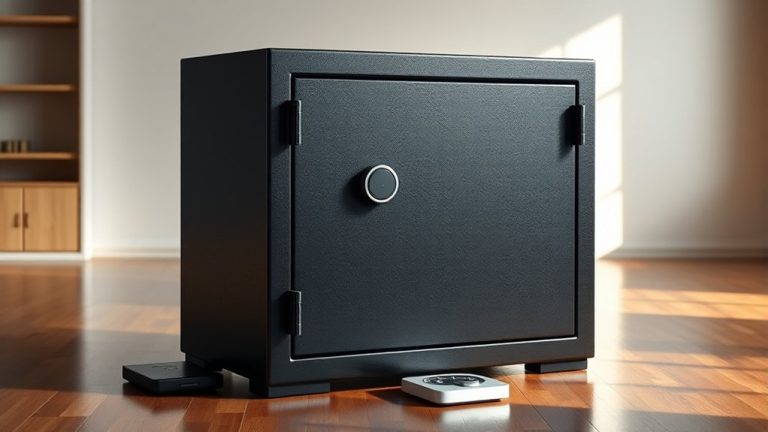
To keep your gun safe from tipping, start by choosing a sturdy, discreet location with suitable flooring. Gather the right tools and anchors for your floor type, whether concrete or wood. Position the safe carefully, mark four anchor points, and drill pilot holes at the correct depth.
Secure the safe using proper anchors or bolts, then add internal weight and attach security cables for extra stability and theft protection. Following these steps guarantees your safe stays secure. Take your time with each part, and you’ll have peace of mind knowing your safe won’t tip over.
Why Anchoring Your Gun Safe Prevents Tipping and Theft
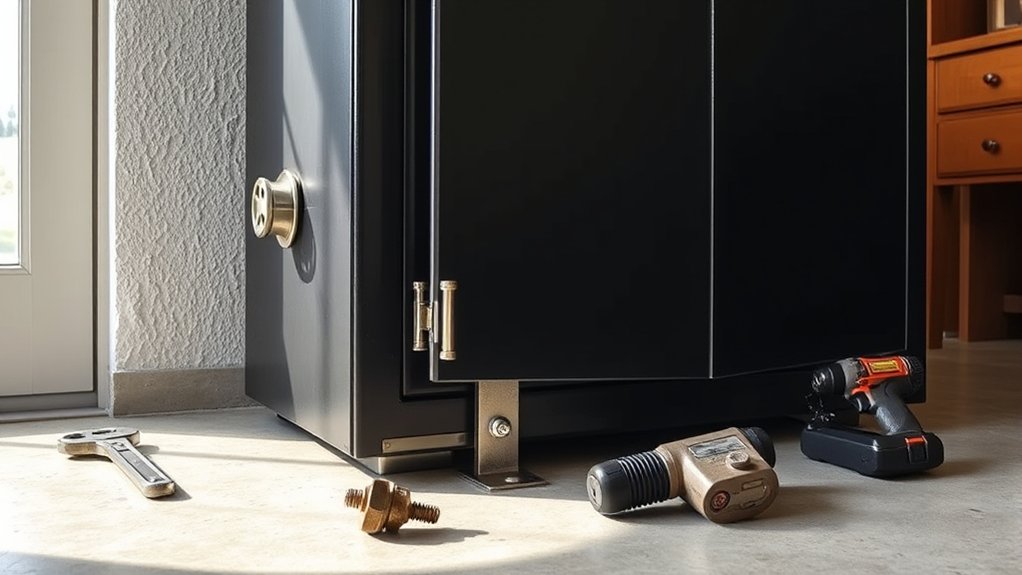
When you anchor your gun safe to the floor, you drastically reduce the risk of it tipping over, especially when the door is open. This helps protect children and pets from injury.
Anchoring transforms your safe into a stable fixture, preventing damage to both the safe’s contents and your flooring.
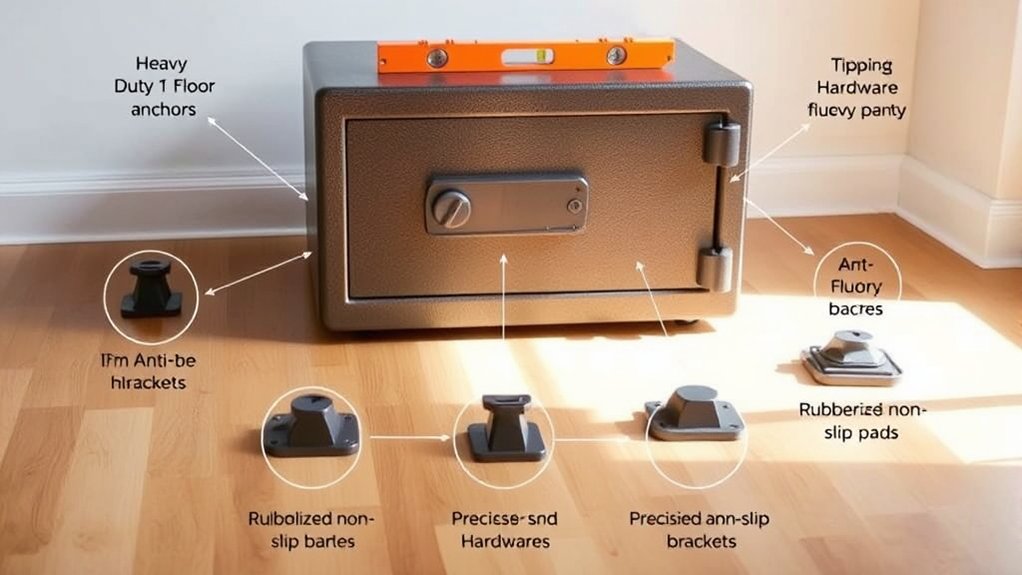
Using the right hardware, like wedge or sleeve anchors for concrete floors, makes sure your safe stays firmly secure. This secure installation also deters theft by making it nearly impossible for burglars to tip or remove the safe during a break-in.
Choosing the proper anchors ensures your safe is securely fixed, enhancing protection against theft and tampering.
Proper anchoring not only safeguards your valuables from physical damage but also increases the overall security of your firearm storage.
Taking these steps guarantees your gun safe remains a reliable and theft-resistant asset in your home. It’s a simple way to keep your firearms safe and your mind at ease.
Choose the Best Location Based on Floor Type and Accessibility
Securing your gun safe by anchoring it firmly is only part of the equation; selecting the right location is equally important to maximize safety and usability.
Choose a location with a structurally sound floor that supports the safe’s weight to prevent damage and guarantee stability. Consider the floor type carefully. Concrete floors require different anchors than wooden floors, so match your anchoring method accordingly.
Avoid high-traffic areas to reduce the risk of accidental tipping from bumps or collisions. Opt for discreet spots like closets or home offices, which enhance security while keeping your safe accessible.
If your safe uses electronic locks or lighting, position it near a power source without compromising stability.
Gather the Right Tools and Anchoring Hardware for Your Gun Safe
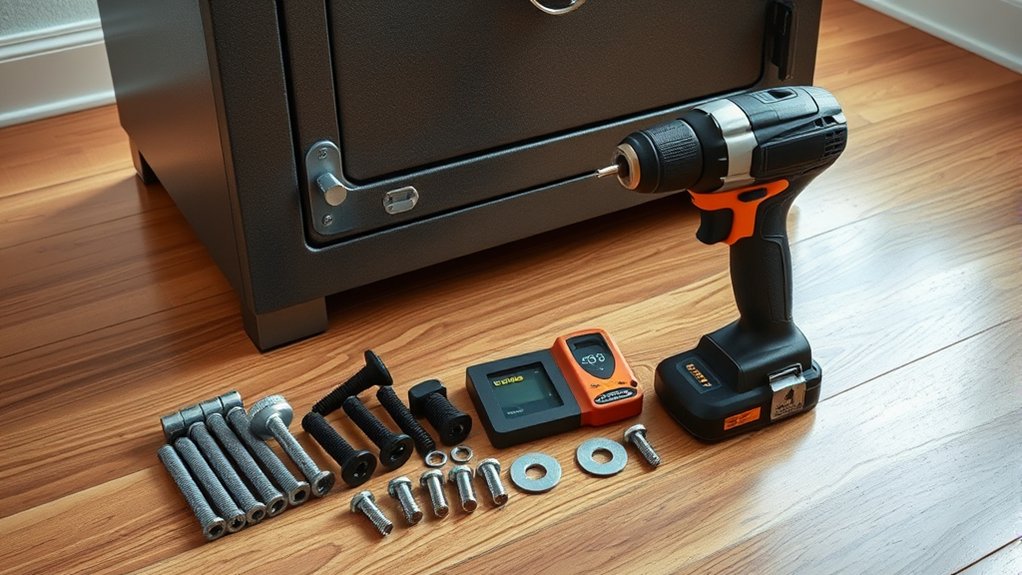
Before you begin anchoring your gun safe, gather the appropriate tools and hardware tailored to your floor type.
For concrete floors, you’ll need a hammer drill and wedge anchors. These provide maximum pull-out strength, which is key for a secure hold.
Brick or block surfaces require sleeve anchors since they offer great versatility.
If you’re working with wood subfloors, get basic drill bits, a socket set, lag bolts, and washers ready. These will help guarantee a stable, secure hold for your safe.
Always make sure you have the correct size drill bits for the anchor bolts to ensure a snug fit.
If your floor includes softer materials, consider using a safe-anchoring kit with the necessary bolts and washers.
Having the right tools and anchor bolts is essential for securely anchoring your gun safe and preventing tipping hazards.
Mark and Prepare Anchor Points on Your Floor
After gathering the appropriate tools and hardware, the next step is to mark and prepare the anchor points on your floor. Start by positioning your safe on a structurally sound floor area. Use a marker to clearly mark the four anchor points, usually at the base corners.
Make sure the safe is level before you move on. Preparing these points properly is key to securing your safe effectively.
| Floor Type | Anchor Preparation Details |
|---|---|
| Concrete | Mark 4 points; drill 3/8-inch deep holes |
| Wooden Subfloor | Mark 4 points; drill 1/4-inch holes carefully |
| Anchor Location | Typically safe base corners |
| Safety Check | Confirm no piping or wiring under holes |
This method helps you create secure anchor points without damaging your floor. It’s all about being precise and careful!
Drill Anchoring Pilot Holes Based on Your Floor Type
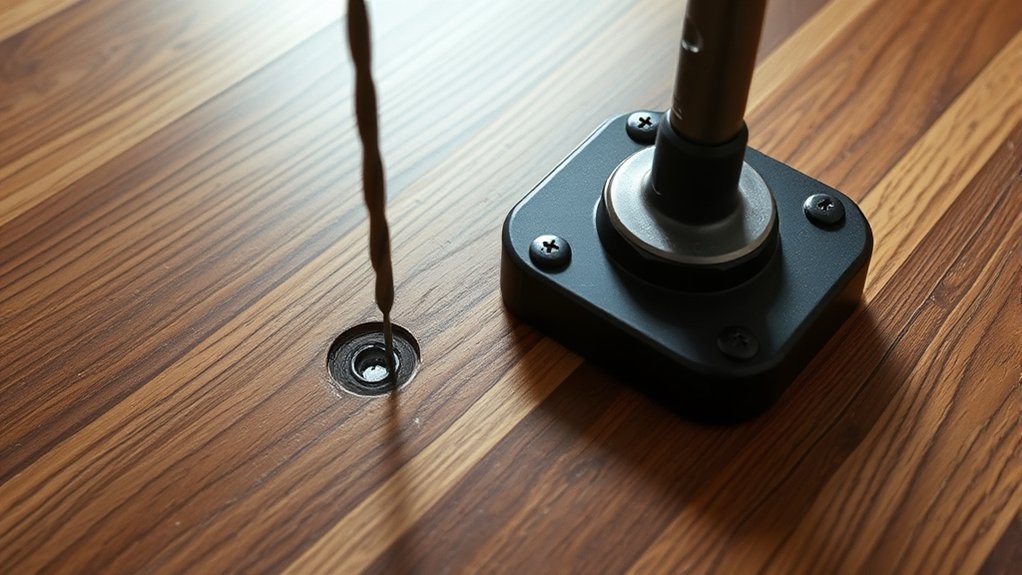
Start by drilling four pilot holes at your marked anchor points, tailoring the drill size and technique to your floor type.
If you have wood floors, use a ¼-inch drill bit to create pilot holes that fit lag bolts securely.
For concrete floors, switch to a hammer drill with a 3/8-inch bit to guarantee you penetrate deeply enough for wedge or sleeve anchors.
Before drilling, remove the safe’s floor panel and caps so you can access the anchor holes properly.
Drill each hole straight and to the right depth to accommodate your anchors and bolts.
Precise pilot holes are critical because they guide the anchors and bolts, maximizing the safe’s stability and helping prevent tipping effectively.
Secure Your Gun Safe Using the Correct Anchors or Bolts
While selecting the right anchors or bolts might seem straightforward, choosing those that match your floor type is essential for securing your gun safe effectively.
For solid concrete floors, use wedge anchors. Drill 3/8-inch anchor holes with the appropriate drill at designated points.
For solid concrete floors, secure your safe with wedge anchors drilled into 3/8-inch holes at designated spots.
For wooden subfloors, lag bolts are your best choice. You’ll need to drill ¼-inch pilot holes precisely to fit. Always use washers with lag bolts to distribute weight evenly and enhance stability.
Tighten all bolts firmly using the correct socket size. Typically, that’s ½-inch for concrete and 9/16-inch for wood. This will help secure the safe against tipping.
Following these exact steps guarantees that your gun safe remains firmly anchored. If you’re uncertain, consider professional assistance to assure a safe installation.
Add Extra Security to Your Gun Safe With Weight and Cables
You can really boost your gun safe’s security by adding some internal weight, like sandbags or concrete blocks. This helps prevent it from tipping over or moving around.
When you spread heavy items evenly inside the safe, it becomes much more stable.
On top of that, using sturdy security cables anchored to a solid structure adds an important extra layer of theft protection.
Putting these methods together makes your safe way harder for thieves to steal or tamper with.
It’s a smart, simple way to keep your valuables more secure.
Adding Internal Weight
To maximize stability, place heavier items centrally within the safe, which improves weight distribution and minimizes tipping risk.
It’s essential to balance added weight with your floor’s load capacity to maintain structural integrity and avoid damage.
Using Security Cables
Weight inside your gun safe improves its stability, but anchoring it with security cables takes protection a step further.
Security cables add essential added security by firmly anchoring your safe to a permanent structure, making theft or tipping considerably harder.
To effectively use security cables and anchor a safe, follow these key steps:
- Choose heavy-duty cables, preferably stainless steel around 12mm thick, to resist cutting and tampering.
- Attach cables tightly to both the safe and a solid anchor point, ensuring maximum stability.
- Combine cables with internal weight to enhance resistance against tipping and theft.
- Regularly inspect cables for wear or damage and replace them promptly.
This method provides a robust defense, securing your gun safe against movement and unauthorized access.
It’s a straightforward way to add peace of mind to your security setup.
Frequently Asked Questions
How Often Should I Check the Anchors for Stability?
You should check your gun safe’s anchors for stability every six months to meet safety standards and guarantee effective anchoring techniques.
This regular inspection helps you spot any loosening bolts, rust, or corrosion that could weaken the setup.
Also, assess floor stability since damage or settling can compromise the anchors.
Staying proactive guarantees your safe remains secure, preventing tipping hazards and maintaining the highest level of protection for your firearms.
Can I Anchor a Gun Safe on Carpeted Floors?
You shouldn’t anchor a gun safe directly on carpeted floors because carpet stability is compromised under the safe’s weight. This can cause movement and tipping risks.
Imagine pushing a heavy box on a thick rug—it shifts easily.
Instead, place your safe on a solid platform to protect your flooring and improve stability. If you must anchor, it’s a good idea to consult a professional first. That way, you can guarantee a secure installation without damaging the floor or the safe.
This helps maintain both safety and flooring protection. Taking these steps ensures your gun safe stays put and your carpet stays in good shape.
Are There Specific Anchor Types for Different Safe Brands?
Yes, different safe brands often recommend specific anchor materials and installation techniques to guarantee maximum stability. For example, Liberty Safe suggests wedge anchors for concrete and lag bolts for wood floors.
You should always check your safe brand’s user manual for compatible anchors, as manufacturers design pre-drilled holes for particular anchor types.
If you’re unsure, it’s a good idea to consult the manufacturer or a certified technician. They can help you select the best anchor materials tailored to your safe’s weight and design.
This way, you ensure your safe is properly secured and stable.
What Maintenance Is Needed for the Anchoring Hardware?
Just like a captain checks his ship before sailing, you need to perform regular hardware quality assessments on your gun safe’s anchors.
Inspect for wear or corrosion, tighten loose bolts, and clean debris to maintain strength.
Be sure to follow anchor installation tips carefully, especially after any safe relocation. This helps guarantee stability and keeps everything secure.
Replace damaged hardware promptly, and always stick to manufacturer guidelines.
Doing this keeps your safe secure and prevents tipping hazards efficiently.
Can Anchoring Affect My Home Insurance Coverage?
Yes, anchoring your gun safe can impact your insurance coverage. Many insurers have specific coverage requirements that include securely anchoring safes to reduce theft risk.
If you don’t meet these requirements, it could lead to denied claims or increased liability issues if a theft or damage happens. So, it’s really important to review your policy’s insurance implications carefully.
You should also chat with your agent to make sure your safe’s anchoring complies. This way, you’re protecting both your property and your coverage.
Conclusion
By anchoring your gun safe firmly, you’re planting a steadfast guardian in your home. This prevents tipping and helps deter theft.
Choose the right spot, gather precise tools, and secure it with anchors that bite deep into your floor. Think of your safe as a fortress. Weight and cables add layers of protection, making it unshakable.
Follow these steps, and you’ll lock down peace of mind like a steel trap. This keeps your valuables secure and steady.